

The Table That Refuses to Let You Eat Alone
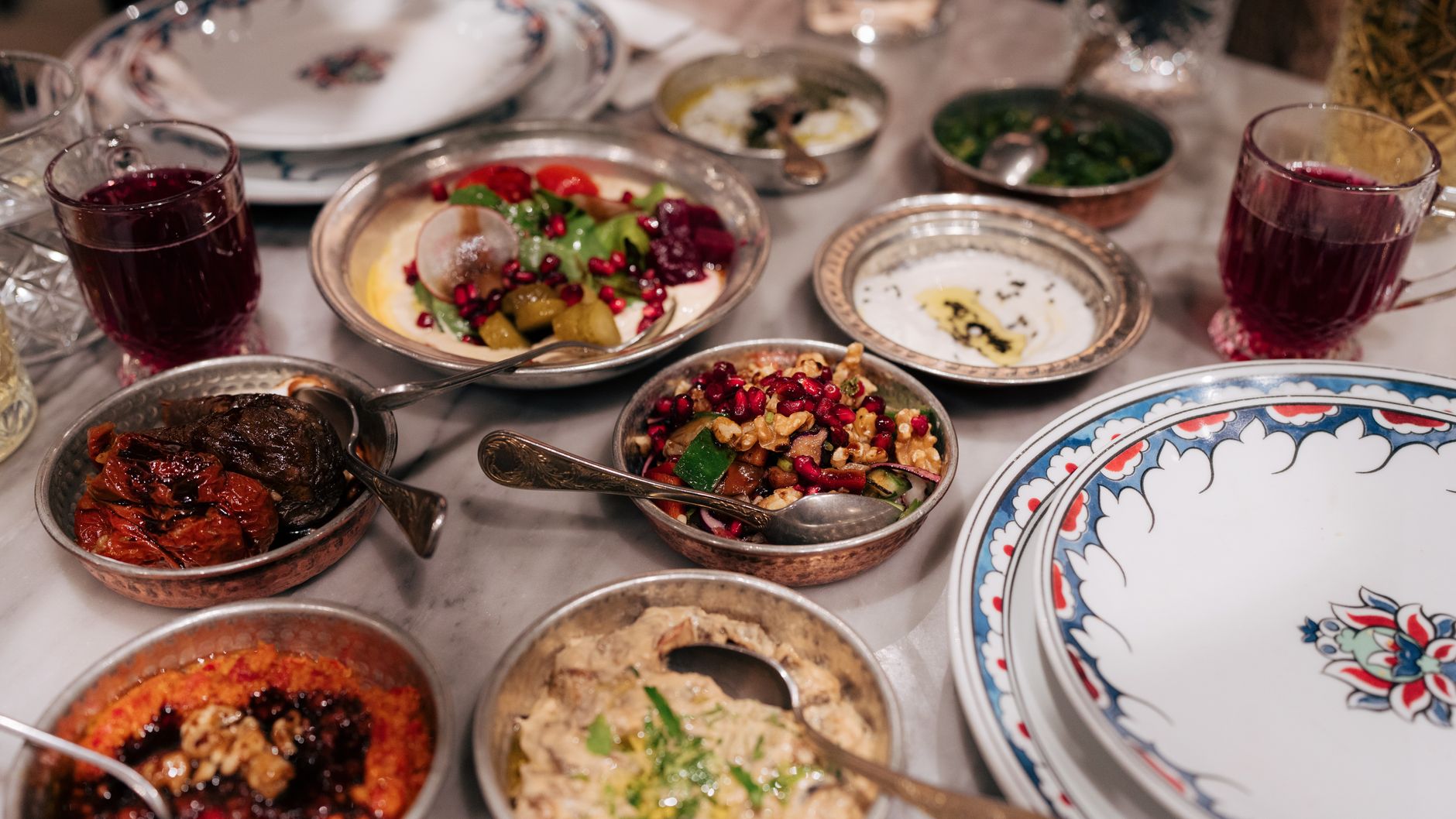
In Türkiye, dinner rarely begins with a plate set in front of one person. It begins with a table disappearing under small dishes — bowls of olive oil–slicked greens, whipped yoghurt, smoky aubergine, tiny stuffed vegetables, glistening seafood — until there is barely room for a glass. This is meze, and it is less a course than a philosophy: food exists to be shared, discussed, argued over and enjoyed slowly, in good company.
The word itself hints at the pleasure principle behind it. Meze is often traced to the Persian maza, meaning "taste" or "snack" — a small something that sharpens the appetite and, more importantly, the conversation. Across the Aegean coast, in Istanbul's backstreets, and in the great southeastern city of Gaziantep, the meze table is where Turks do their best talking, laughing and lingering.
For travellers, few experiences capture Turkish hospitality so completely. You do not order a meze spread so much as compose it, and then let the evening take its course. Here is how to do it well.
What Actually Counts as Meze?
Almost anything small, delicious and shareable qualifies. A classic spread moves through several families of dishes. There are the yoghurt-based mezes: thick strained yoghurt with garlic and cucumber (cacık), or whipped with nuts and herbs. There are the vegetable mezes: smoky roasted aubergine mashed with lemon and olive oil (patlıcan salatası), braised green beans, artichoke hearts, spinach with yoghurt. There are the legume and grain mezes: hummus, spicy muhammara made with red pepper and walnut, and the bulgur salad kısır.
Then come the seafood mezes that define a night at a coastal meyhane: marinated anchovies (hamsi), grilled octopus, fried calamari, mussels stuffed with spiced rice. And the fried and pastry mezes: crisp cheese rolls (sigara böreği), fried liver, pastries filled with cheese or potato.
A few standouts deserve special mention. Haydari — thick yoghurt with garlic, herbs and sometimes walnuts — is the quiet hero of many tables. Atom blends spicy pepper paste with yoghurt and sometimes dried aubergine. Tarama, whipped fish roe, is a pale pink classic. And ezme, a finely chopped tomato and pepper salad with pomegranate molasses, delivers a bright, spicy punch that wakes up everything that follows.
How to Order a Meze Spread Without Panic
The golden rule: you do not need to order everything yourself. At most meyhanes and ocakbaşı restaurants, the easiest and most enjoyable approach is to let the kitchen guide you. Say "karışık meze" — mixed meze — and a parade of small plates will arrive, chosen by the house to show off its strengths.
If you are ordering à la carte, aim for variety over volume. A good rule of thumb for two people is four to six mezes to start, then more if you are still hungry. Balance is everything: pair something creamy with something sharp, something fried with something fresh, something mild with something fiery.
Useful phrases go a long way. "Ne tavsiye edersiniz?" — what do you recommend? — will usually get you the freshest dish of the day. "Acı mı?" — is it spicy? — is worth asking if you are sensitive to heat. And "Hepsi güzel görünüyor" — it all looks wonderful — has never hurt anyone.
Do not be shy about pacing. Meze is designed to unfold slowly, plate by plate, so that the table never feels rushed and the conversation never runs dry. Order in waves. There is no shame in asking for more later.
An Evening at the Meyhane or Ocakbaşı
Two kinds of venue define the classic Turkish evening, and both are perfect for meze.
A meyhane is a tavern, traditionally Istanbulite and Aegean, built around rakı, seafood and a long, unhurried table. Expect white tablecloths, waiters balancing towers of small plates, and a soundtrack of clinking glasses and laughter that swells through the night. A good meyhane is loud, warm and generous — the opposite of a quiet, formal restaurant.
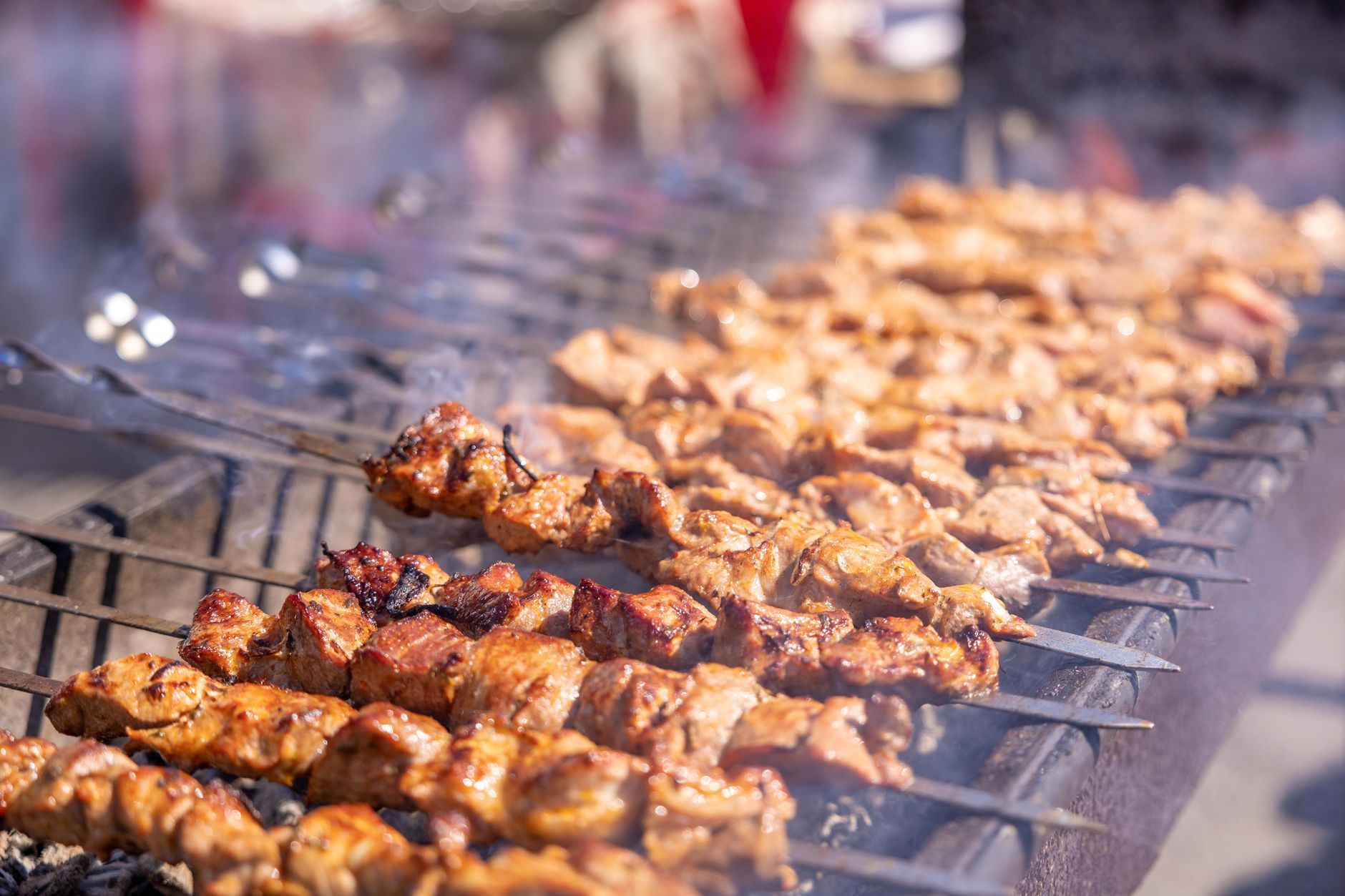
An ocakbaşı — literally "at the hearth" — is a grill house, often in the southeast or in city neighbourhoods, where you sit near the open fire and watch skewers of meat, liver and vegetables cook over coals. Here meze acts as the overture to a grilled main event, and the pacing is just as sociable: plates appear, glasses are raised, and the evening stretches comfortably toward midnight.
In both settings, the rhythm is the same. You sit. Meze arrives. You talk, nibble, pour, clink glasses with everyone at the table — şerefe! — and repeat. A main dish may follow, or may not. Dessert might be fruit, or nothing at all. The point was never the finale; it was the company along the way.
Rakı, Tea and the Art of Pacing
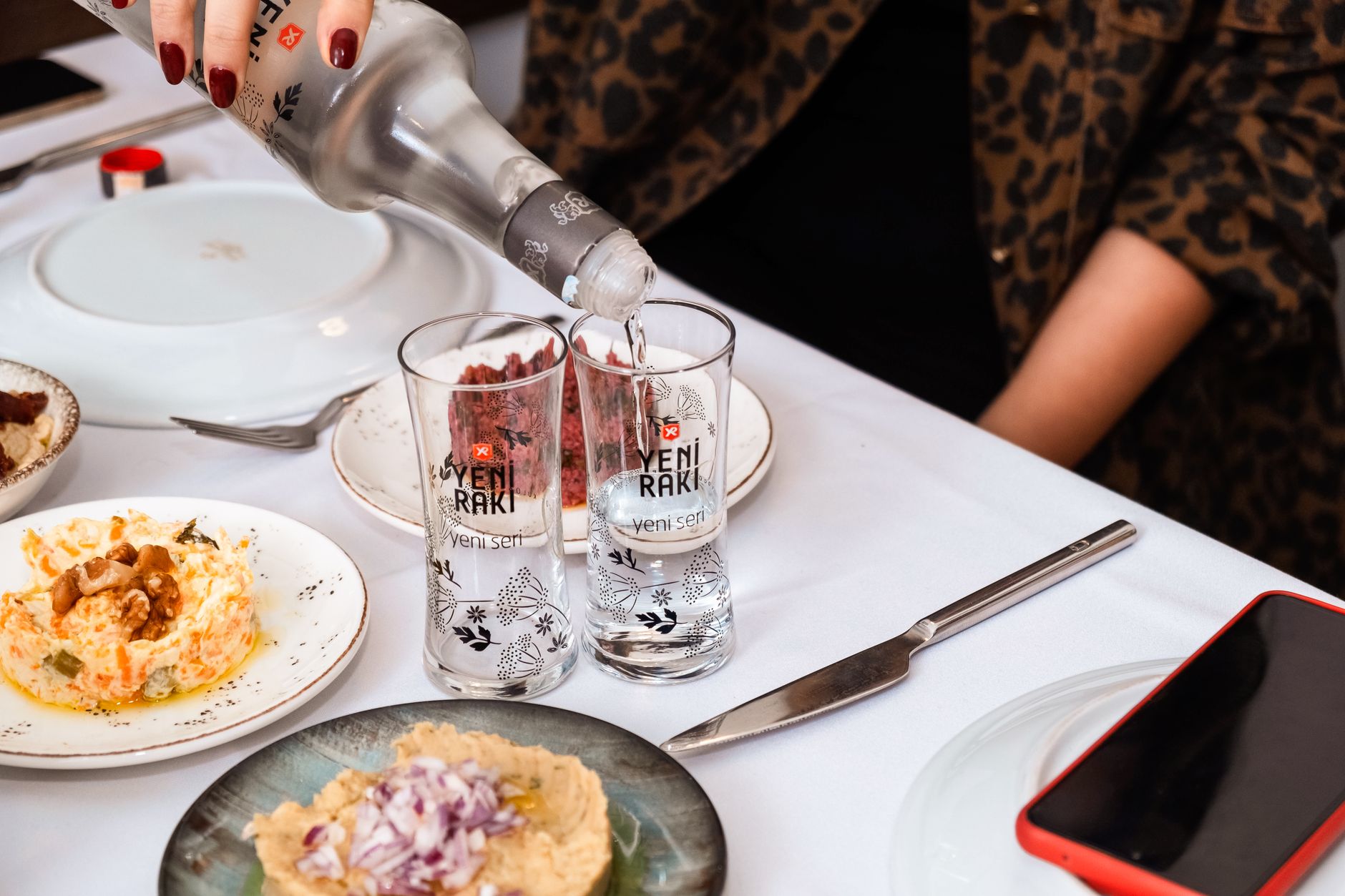
Rakı is the traditional companion to meze: a clear anise spirit that turns cloudy when mixed with water, sipped slowly alongside the food. The classic pairing is rakı with seafood mezes, but it works beautifully with almost anything on the table. Drink it the Turkish way — watered down, in small glasses, over a long evening — rather than in quick rounds.
The golden rule of rakı is simple: eat as much as you drink. The meze table exists partly to make this possible, keeping the pace gentle and the mood bright. Between sips, reach for bread, cheese, a forkful of aubergine, a piece of fried calamari.
If alcohol is not for you, Turkish tea is a wonderful alternative. Endless small glasses of çay keep the table alive without the alcohol, and in many establishments tea arrives automatically after the meal — a signal that the feast is winding down but the conversation is not. Ayran, a chilled yoghurt drink, is another refreshing partner for heavier grilled dishes.
"Meze is not a starter. It is a way of turning a meal into a memory, and strangers into friends."

From the Aegean to Gaziantep: Regional Variations
Meze changes character as you travel across Türkiye, and tasting those differences is half the pleasure.
On the Aegean coast — Izmir, Bodrum, Çeşme, Ayvalık — the emphasis falls on olive oil, wild greens, herbs and seafood. Expect simple, bright, almost Mediterranean plates: boiled greens dressed with lemon, stuffed courgette flowers, octopus salad, and an abundance of fish. The olive oil here is a star in its own right.
In Istanbul, the meyhane tradition blends Aegean seafood with Armenian, Greek and Jewish influences, producing a gloriously eclectic table. This is where you find refined versions of classics and a strong culture of rakı-soaked sociability.
Head southeast to Gaziantep, and the meze table turns bold, spicy and generous. This city is famous for its pistachios, its pepper pastes and its mastery of aubergine. Mezes here lean on biber salçası (pepper paste), walnuts, pomegranate and dried vegetables, delivering deep, smoky, fiery flavours. Antakya, nearby, adds its own distinctive touches, with tangy, herb-forward dishes.
In the Black Sea region, look for anchovy and cornmeal, while central Anatolia offers humbler, grain-based mezes shaped by the steppe. Every region claims its own classics, and locals will happily argue about which is best — a debate best settled at the table, with another plate.
Etiquette, Tips and Small Kindnesses
Meze culture runs on small courtesies. Share from the centre, not from your own plate. Wait for the oldest or the host to begin. Say "şerefe" when glasses are raised, and meet the eyes of the people you toast. Do not finish the last bite of a shared dish without offering it around first.
A few practical notes will make your evening smoother. Tap water is fine and often free; ask for su. Bread is usually on the house and keeps coming. Tipping around 10 percent is appreciated in restaurants. And when the bill arrives, do not rush — in Türkiye, lingering after a meal is not lazy, it is polite.
Above all, come hungry, curious and unhurried. Meze rewards the traveller who leans in, tries the unfamiliar dish, and lets one more glass be poured. Türkiye has given the world an enduring gift: a way of eating that is really a way of being together. Pull up a chair, and let the table fill.
Thinking about a trip to Turkey?
Share your contact details and a vetted local expert will follow up with a plan built around you — free, no obligation.