

Walk into any good hamam in Türkiye and you will notice the towels before you notice anything else. They are thin, flat-woven, softly fringed, and they dry in minutes. These are pestemal — the traditional Turkish hammam towel — and they are among the most quietly sophisticated textiles the country produces. Unlike the plush terry towel most visitors expect, a pestemal is woven flat on a handloom or shuttle loom from cotton (sometimes linen or bamboo blends), with hand-knotted fringes that can take as long as the weaving itself.
What makes them worth a detour is not just the object but the place. Türkiye's weaving villages are living workshops, where dye pots steam in courtyards and the clatter of looms drifts out of open doors. This guide takes you to the regions where pestemal and hamam textiles are still made with real craft — and tells you how to buy well and keep your towel beautiful for decades.
What Exactly Is a Pestemal — and Why It Beats a Terry Towel
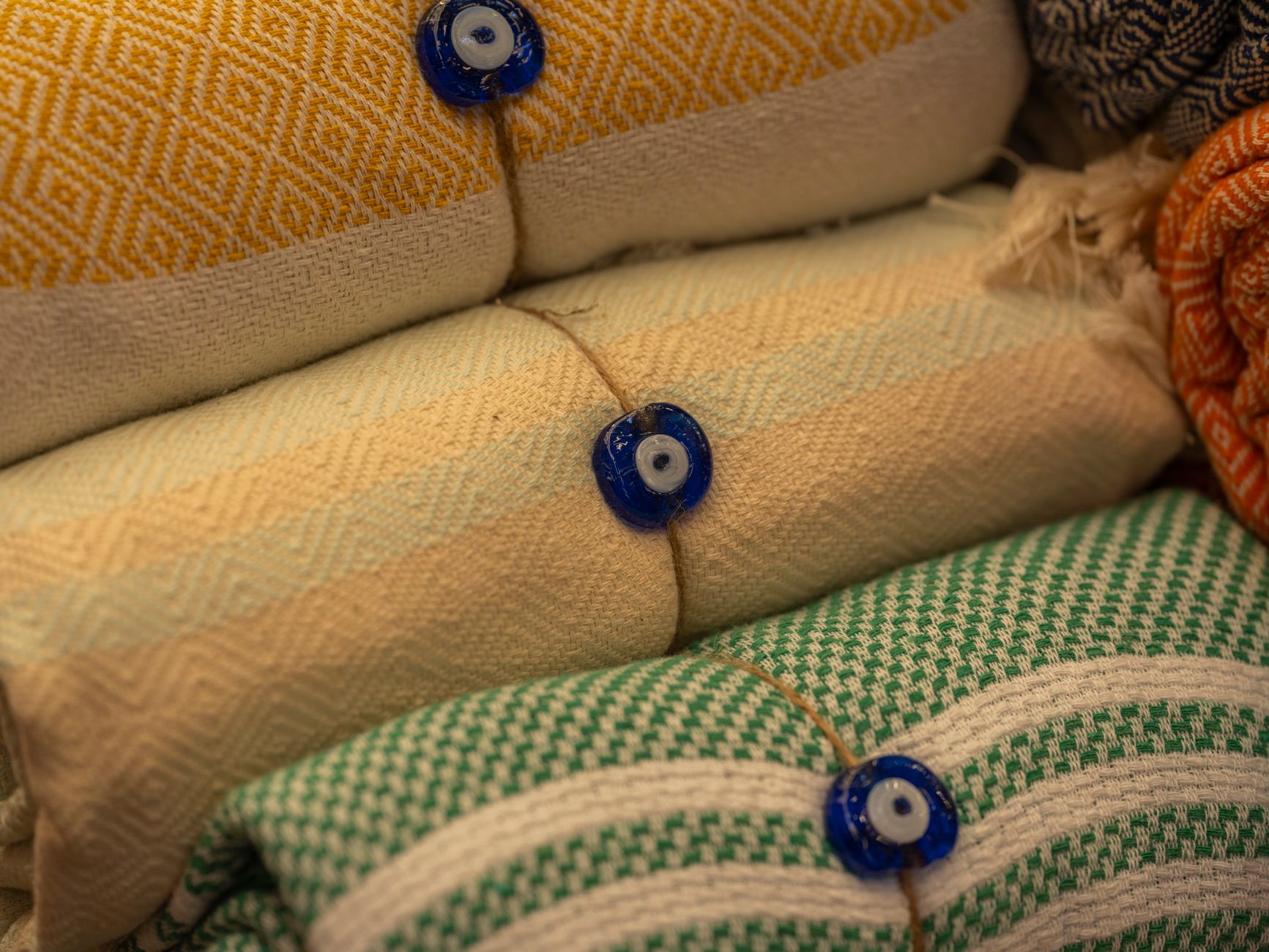
The word pestemal (also written peştemal) describes a flat-woven rectangle of cloth traditionally wrapped around the body in the hamam. It is lightweight, highly absorbent despite its thin profile, and dries in the sun in a fraction of the time a thick towel needs. The flat weave also means it packs down to almost nothing — a detail that has made pestemal a favourite of travellers, sailors, and beach-goers far beyond Türkiye.
Authentic pieces are recognisable by their selvedge: the edges are woven, not cut and sewn. The fringe at each short end is usually twisted and knotted by hand, and on finer pieces you may see a decorative havlu border or a subtle stripe running the length of the cloth. Good cotton pestemal soften dramatically after a few washes — a stiff, slightly rough new towel is normal and is actually a sign of honest weaving rather than a defect.
Because the weave is flat, the towel doubles as a wrap, a sarong, a picnic blanket, a scarf, or a light throw. That versatility is exactly why the craft has survived: the object is ancient, but it fits modern life effortlessly. If you are assembling a travel kit around slow, durable objects, this is the piece that earns its space in the bag.
Denizli: The Heartland of Turkish Towel Weaving
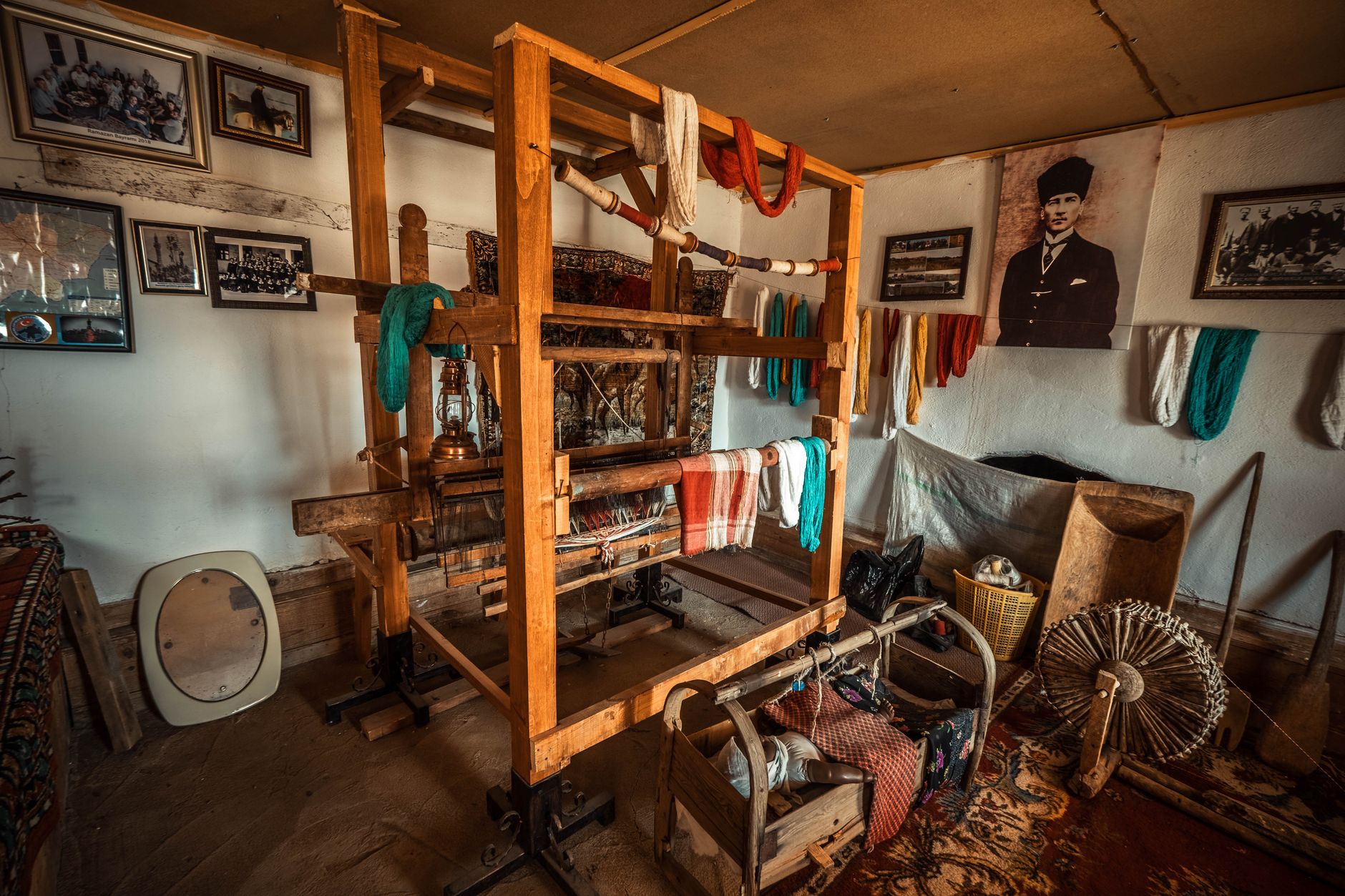
Ask any Turk where towels come from and the answer is usually Denizli, an inland province in the Aegean region that has been a textile centre for centuries. The town of Babadağ, up in the mountains above the plain, is the historic cradle of the trade — families here wove on handlooms for generations before mechanisation arrived, and many still keep a loom in the back room.
Around Denizli you will find the full spectrum: large, modern factories producing for export, mid-sized family ateliers that combine shuttle looms with hand-finishing, and small workshops where a single weaver might produce a handful of pieces a day. Many ateliers welcome visitors by appointment, and it is here that you can watch the whole chain — warping the loom, weaving the body of the cloth, and the patient hand-twisting of fringes — in a single afternoon.
The region is also your best bet for variety. Denizli weavers work in classic white, natural undyed cotton, deep indigo, olive, and terracotta, and increasingly in linen-cotton blends. If you want a piece you will actually use daily, this is the place to buy two: one crisp white for the hamam, one coloured for the beach.
Buldan: The Aegean Village That Still Weaves by Hand
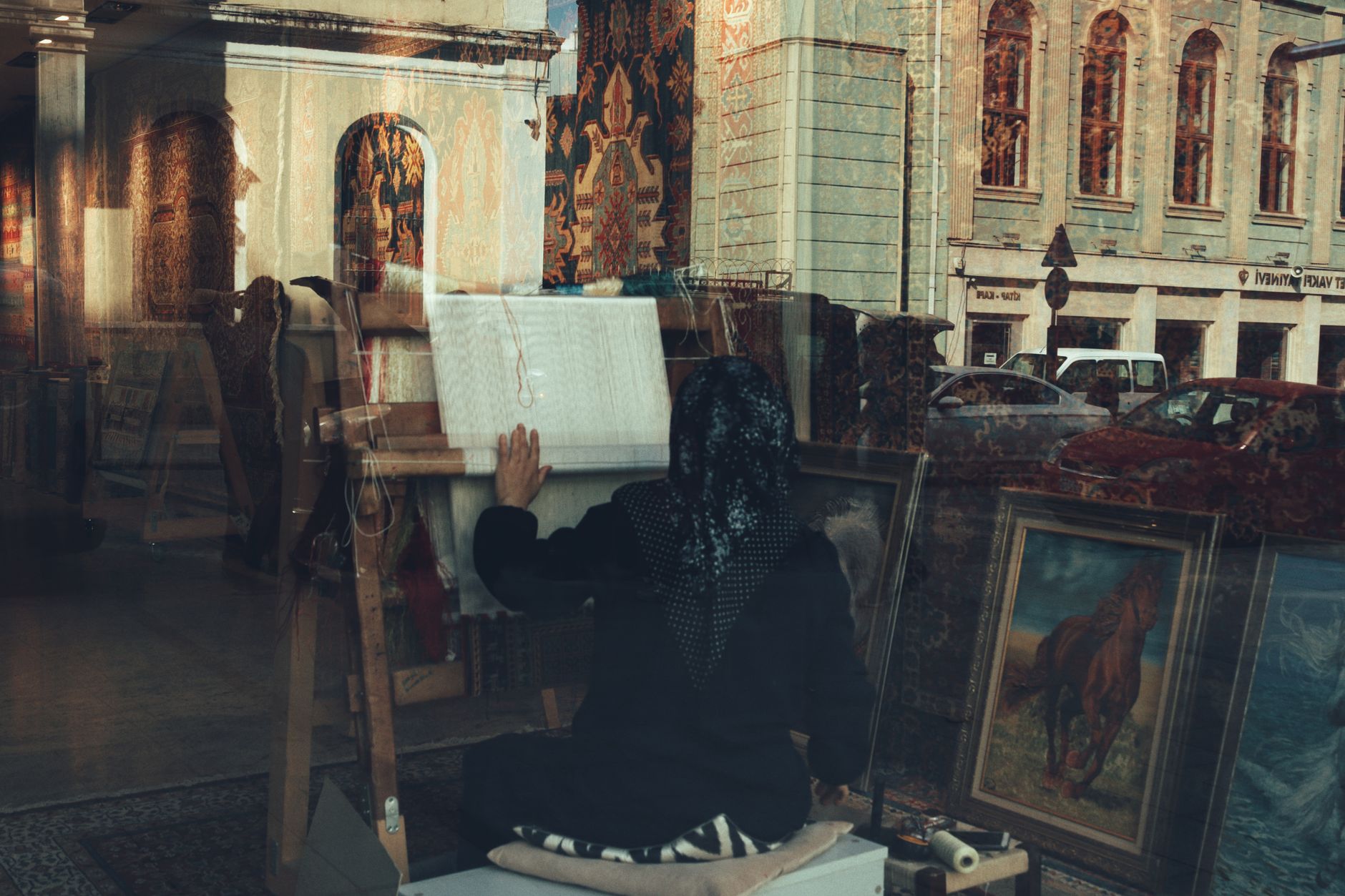
Not far from Denizli, the hillside town of Buldan has an identity built almost entirely around cloth. Its narrow streets are lined with small shops selling Buldan bezi — a loosely woven cotton fabric traditionally used for shirts, scarves, and pestemal. Many workshops here remain genuinely small-scale, with handlooms operated by weavers who learned the trade from a parent.
What makes Buldan special is the texture. The local cotton cloth has a soft, slightly crinkled hand that feels different from factory-perfect towel fabric — more human, more breathable. You will find fringed pestemal, peshtemal-style scarves, and simple bath wraps in muted, plant-inspired colours. Prices are often lower than in Istanbul's Grand Bazaar, and the buying experience is calmer: you are usually talking to the person who wove the cloth or their family.
Plan a half day here. Wander the market street, ask to see the looms, and take time to feel the difference between a loosely woven piece and a denser one — the former is lighter and faster-drying, the latter more absorbent and better for cool weather.
Other Weaving Villages and Towns Worth the Detour
Türkiye's textile craft is not confined to one province. Several other places reward a visit, particularly if you are already travelling through their regions.
- Kula, Manisa province: known for fine flat-weaves and traditional kilims, with small workshops where weaving and natural dyeing are demonstrated.
- Hereke, near Istanbul: historically famous for silk and velvet weaving, including textiles made for the Ottoman palace — a fascinating stop for anyone interested in the luxury end of the craft.
- Antakya (Hatay): home to silk and cotton weaving traditions with distinctive local patterns, plus a strong tradition of soap-making and craft that has been rebuilt with determination since the 2023 earthquakes.
- Gaziantep and Şanlıurfa: southeastern centres where coarser, hard-wearing flat-weaves and colourful textiles are still produced in family workshops.
If you are planning a route around these workshops, our suggested routes and itineraries can help you string together Aegean and southeastern stops without excessive backtracking.
How to Buy a Pestemal: A Practical Checklist
Buying well is mostly about slowing down. A few checks will separate a piece that lasts decades from one that pills and frays within a season.
- Check the selvedge. Genuine woven edges are a good sign. Seamed, cut edges suggest a cheaper cut-and-sew product.
- Feel the weight. Hold the cloth up to the light. A good pestemal is dense enough to be opaque but light enough to dry quickly.
- Inspect the fringe. Hand-knotted fringes are uneven in a charming way; machine-cut fringes are perfectly uniform and often glued or overlocked.
- Ask about fibre. 100% cotton is classic; linen-cotton blends are crisper and more absorbent; bamboo is silky but less durable. Beware vague "bamboo" claims without fibre content.
- Smell it. Natural dyes and clean cotton smell neutral. A strong chemical smell can indicate industrial dye residue.
- Ask who wove it. A seller who can name the weaver or the village is usually selling honestly.
Prices vary widely: a simple machine-woven cotton pestemal might cost a few hundred lira, while a hand-woven, naturally dyed piece from a small atelier can be several times that. Pay for the craft, not the label. For more on responsible buying and navigating local markets, see our travel guides and the travel tools section.
Caring for Your Towel: So It Softens, Not Shrinks
The first wash matters. Soak your new pestemal in cool water for a few hours (some weavers recommend a spoon of white vinegar to set colour in naturally dyed pieces), then wash on a gentle cycle at 30°C with a mild detergent. Avoid fabric softener — it coats the cotton fibres and reduces absorbency. Skip the tumble dryer, or use a low setting sparingly; line-drying is traditional, gentler, and keeps the weave tight.
New pestemal will shrink slightly, usually around 5%, so choose a size a little larger than you think you need. Over time, the cloth will develop a soft, slightly rumpled texture that many consider its best quality. Store folded rather than hung on a wire, which can distort the weave, and rotate between two towels so each has time to fully dry.
Small repairs are easy: if a fringe loosens, re-knot it rather than cutting it. A well-kept pestemal can last a decade or more, softening with every wash — a quiet rebuke to disposable consumerism.
Why It Matters: Buying Craft, Not Just Cloth
Every handwoven pestemal carries a chain of labour that is increasingly rare: the grower, the dyer, the warper, the weaver, the finisher. When you buy directly in a weaving village, a meaningful share of the price stays with the people who made the object. That is not sentimentality; it is the practical reason the craft survives. Visitors who ask questions, watch the process, and pay fairly are part of the ecosystem that keeps looms running.
Türkiye has a long, rich weaving heritage, and the pestemal is one of its most accessible expressions. Whether you visit Denizli's ateliers, wander Buldan's market street, or simply seek out a small workshop in Istanbul, take the time to meet the maker. To plan a trip built around craft and culture, browse our destinations and connect with local experts who can arrange workshop visits. Then, when you get home and wrap yourself in that thin, sun-dried cloth, you will remember exactly whose hands made it.
Thinking about a trip to Turkey?
Share your contact details and a vetted local expert will follow up with a plan built around you — free, no obligation.