

Water made the empire. From the 4th century AD onward, Roman engineers carved, arched, and tunneled their way across Anatolia to feed booming cities, and the Ottomans later refined the same art with gravity-fed kemers, domed cisterns, and elegant stone bridges. Today, Türkiye is one of the best places on earth to walk through that story: aqueducts you can stroll beneath, underground reservoirs you can wander through in cool silence, and bridges that still carry traffic — or nothing but your footsteps.
This guide gathers the most rewarding, accessible water-engineering heritage around Istanbul, İzmir, and the southeast, with practical notes on dates, conditions, and photography. Bring sturdy shoes, a tripod or a steady hand, and a little patience for low light — these sites reward the curious.
Why Roman and Ottoman Waterworks Still Matter
Roman aqueduct systems were astonishingly precise. Using surveying tools like the chorobates and groma, engineers held gradients as shallow as 1 in 1,000 across tens of kilometres, letting water glide — not rush — into city centres. Valens Aqueduct in Constantinople, completed in AD 368 under Emperor Valens, once stretched roughly 970 metres and was part of a network feeding the city's baths, fountains, and palaces.
The Ottomans inherited and upgraded this infrastructure. Sultan Suleiman the Magnificent commissioned architect Mimar Sinan to repair and extend the city's supply lines in the 16th century, and the Kırkçeşme system he engineered served Istanbul for centuries. Walking these structures is not just a lesson in hydraulics — it is a walk through the administrative muscle of two empires that understood that a city without water is a city without a future.
Standing under a 1,600-year-old arch, you realise the Romans were not just conquerors — they were the most ambitious plumbers in history.
Istanbul: Aqueducts and Underground Cathedrals
Start at Valens Aqueduct (Bozdoğan Kemeri), the monument that splits Istanbul's Historic Peninsula between the Grand Bazaar and Fatih. The span crossing Atatürk Boulevard is the easiest to see, and you can walk along the leafy path parallel to it on the Fatih side. It is open-air, free, and best photographed in early morning light or after sunset when the arches are floodlit. Note that traffic noise is constant — this is a living city, not a ruin field.
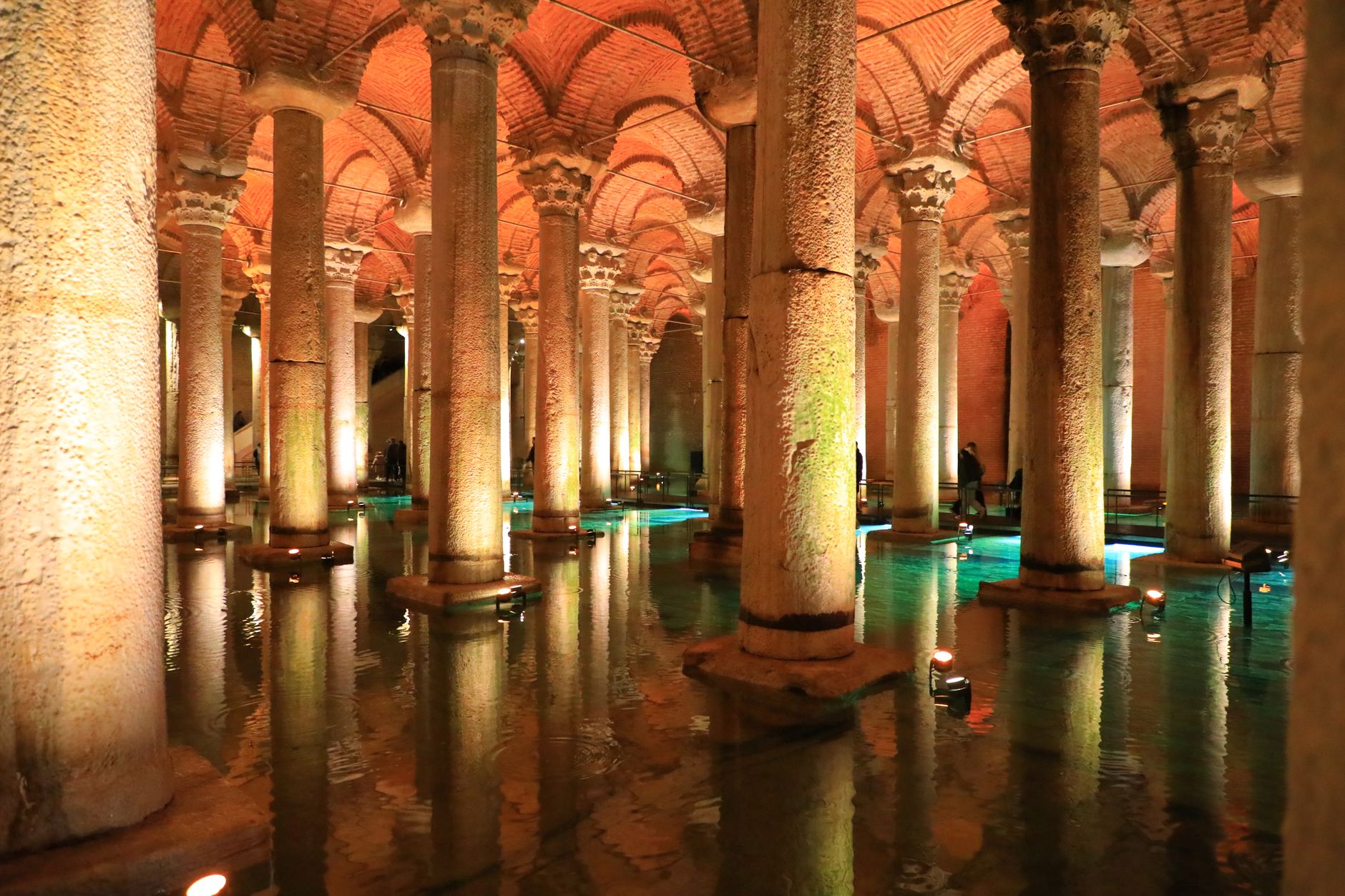
From there, descend into the Basilica Cistern (Yerebatan Sarnıcı) in Sultanahmet. Built in the 6th century under Justinian I, it holds 336 columns and was fed by the Valens line. Visiting conditions: it is cool, dim, and sometimes slippery underfoot. Timed-entry tickets are advisable in peak season, and the site occasionally hosts evening installations that change the atmosphere. Look for the two Medusa heads at the far end, reused as column bases — a wonderful detail for photographers who like a story in the frame.
Smaller but no less atmospheric is the Cistern of Philoxenos (Binbirdirek), also in Sultanahmet. It is calmer and less crowded than the Basilica, with 224 columns and a small café above. The Şerefiye (Theodosius) Cistern, near the Sultanahmet tram stop, is a beautifully restored example with a glass walkway — excellent for wide-angle shots of the brick vaults.
İzmir and the Aegean: Arches Over Olive Groves
İzmir's region is dotted with aqueducts that are blissfully uncommercial. The Kadifekale (Pagos) aqueduct remains and the Roman-era lines feeding ancient Smyrna's acropolis hint at the scale of the city's thirst. More dramatic is the Şirince-area and Selçuk countryside, where standing arches punctuate groves of olive and fig; local walks link them to Ephesus, whose own aqueducts once carried water from the hills to the great city.
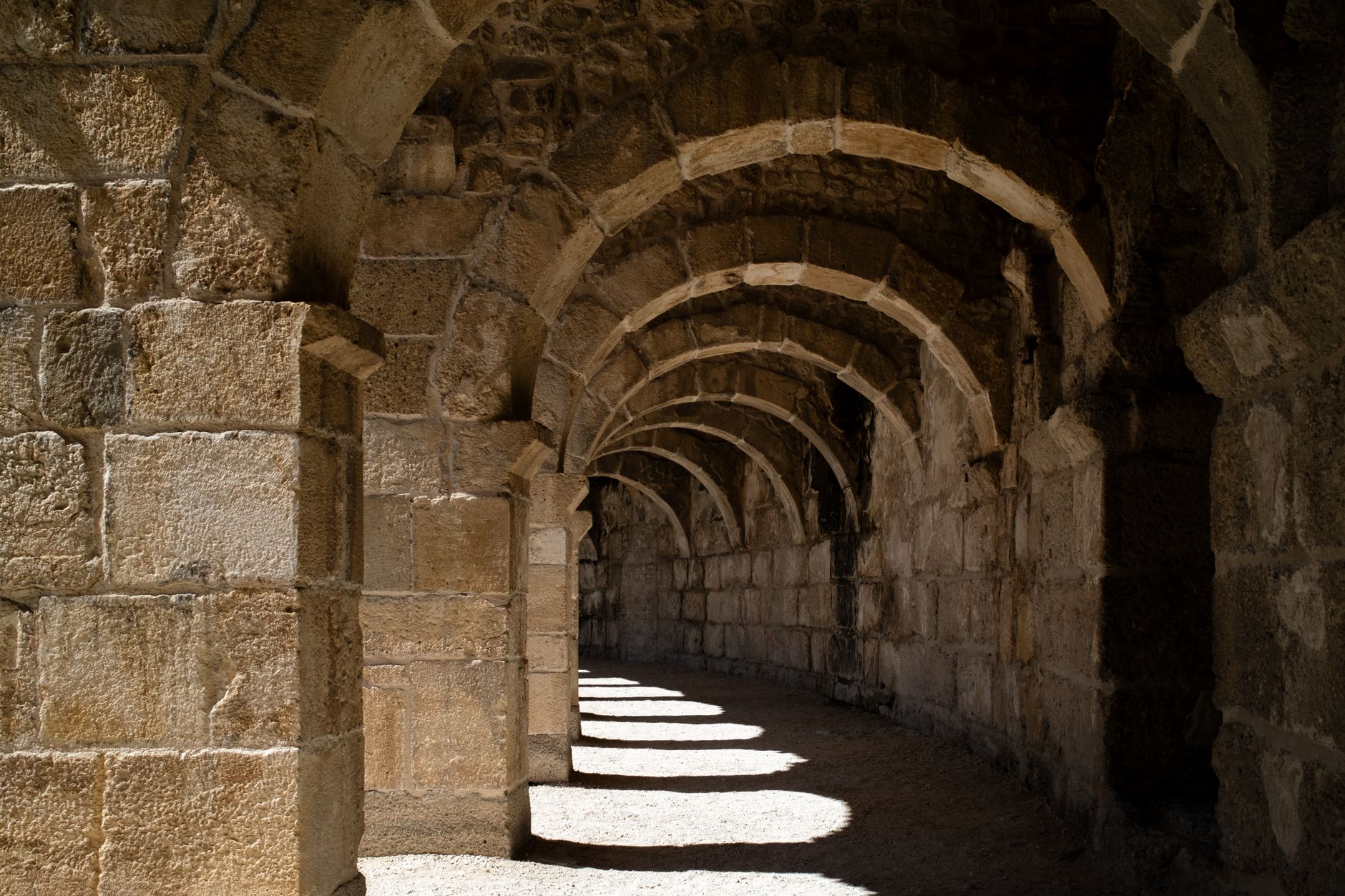
South of İzmir, the Aqueduct of Aspendos — near Serik, Antalya province — is one of the most photogenic in Türkiye. Its soaring double-tiered arches, built in the 2nd century AD, were part of a 25-kilometre line from the Köprüçay river to the city. The site is unsigned and free; park near the village of Belkıs and walk up the rise. Conditions are hot and unshaded in summer, so go early or late, carry water, and watch for loose stones.
For an easy city day, the Kızılçullu (Şeytan) Aqueduct in the Buca district of İzmir offers a short walk with arches framed by pines. It is quiet on weekdays and a favourite with local photographers at golden hour.
The Southeast: Bridges That Still Stand the Test of Time
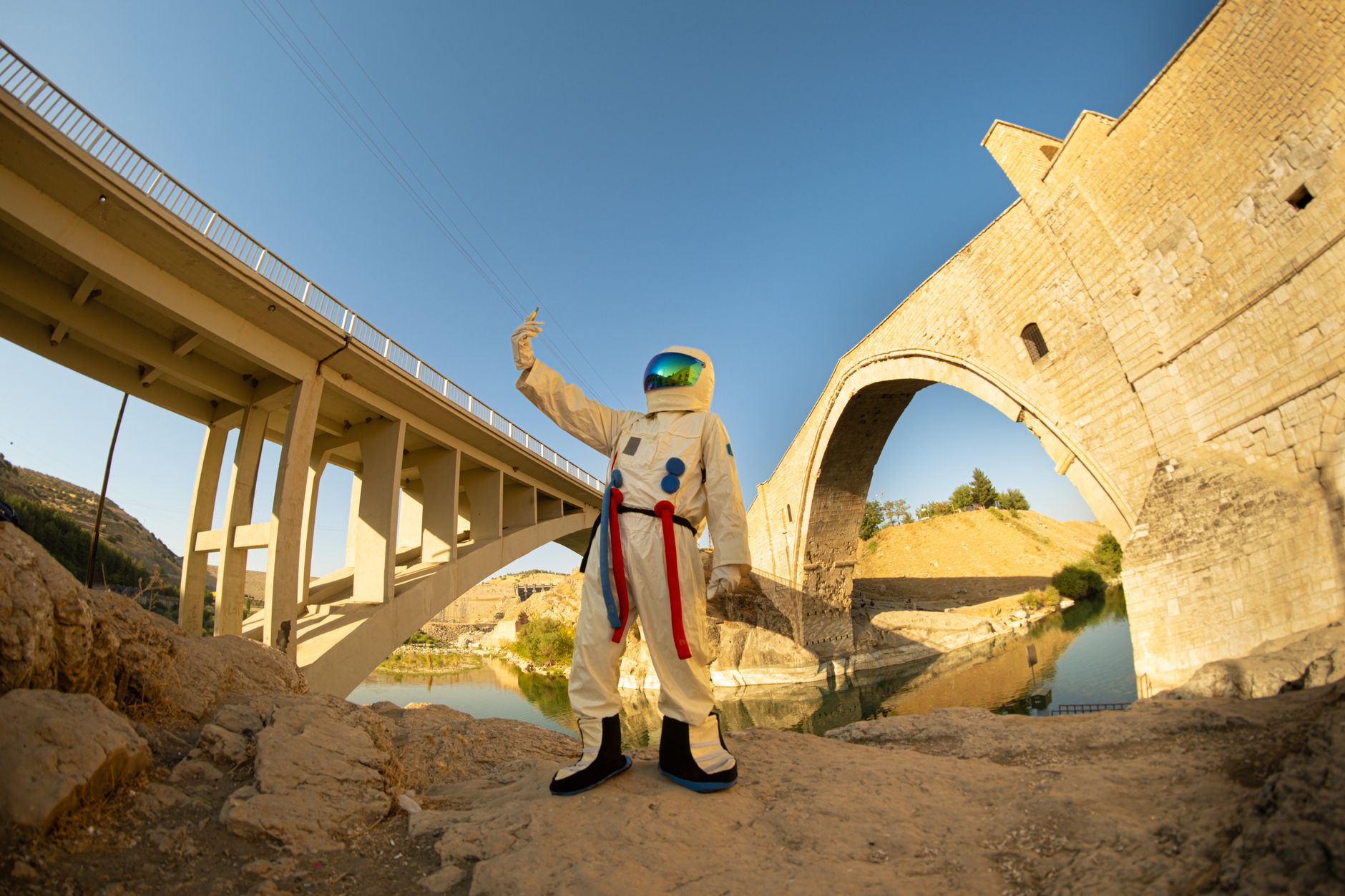
The southeast's rivers demanded engineering of a different kind: bridges. The Malabadi Bridge over the Batman River, built in 1147 by the Artuqids, is a masterpiece of Seljuk stonework — a single pointed arch spanning 38 metres, with rooms inside the piers once used by travellers. It is walkable, the light on the golden stone is superb in late afternoon, and nearby tea houses make it a relaxed half-day from Batman or Diyarbakır.
At Hasankeyf on the Tigris, the remains of the 12th-century bridge hint at what was once the widest arch in the world; the site has been reshaped by the Ilısu Dam reservoir, so expect a different, quieter landscape than older photographs show. Further west, the Dicle (Tigris) and Cizre bridges and the Roman-era spans around Şanlıurfa reward slow travel. Always check local road and security conditions before driving in the southeast, and travel with a local guide where possible.
On the Euphrates side, the Zeugma (Birecik) area and nearby Rumkale offer a taste of river-crossing history; access can be restricted, so confirm with local authorities or a licensed operator. The reward — Roman foundations meeting a wide, slow river — is worth the planning.
Walking, Photography and Practical Notes
Most aqueduct and bridge sites in Türkiye are free or low-cost, with no fixed opening hours. That freedom comes with responsibilities: paths can be uneven, edges unguarded, and signage sparse. Wear grippy shoes, avoid walking on the aqueduct stonework itself when signs ask you not to, and never enter closed cisterns without permission.
- Best seasons: March–May and September–November for comfortable temperatures and soft light.
- Photography: shoot aqueducts at golden hour for warm stone tones; use a tripod and high ISO in cisterns, and bring a wide lens for arches.
- Logistics: Istanbul and İzmir sites are easily reachable by public transport. Southeast bridges are best by car with a local driver.
- Respect: many cisterns and bridges sit in living neighbourhoods. Keep noise down and ask before photographing people.
Above all, take your time. These waterways were built to be patient — and they reward the same patience in the traveller who walks them today.
Thinking about a trip to Turkey?
Share your contact details and a vetted local expert will follow up with a plan built around you — free, no obligation.