

Why Autumn Is the Season for a Floating Dinner
There is a particular hour in early October when the Aegean sun drops behind the pine ridges and the water stops moving. On a gulet drifting through the reed channels of Dalyan, or anchored in a quiet bay near Göcek, that hour stretches longer than it does in July. The light is softer, the air carries the first cool breath of evening, and the sea itself seems to exhale.
This is the quiet secret of Türkiye's Turquoise Coast: the best nights afloat are not in high summer, but in September and October. The crowds that fill the marinas in August have thinned. Water temperatures still hold the warmth of a long summer — often 24–26°C into early October — while the air cools enough that a light sweater feels welcome after sunset. The result is an evening you can actually savor slowly, without heat, without hurry, without the sense that you are sharing the view with a thousand other boats.
On a gulet, dinner is not a stop along the way. It is the event itself. The crew anchors or moors in a sheltered spot, the engine falls silent, and the galley begins to produce a stream of small plates that no restaurant ashore can quite replicate — because half the flavor is the setting. If you are still deciding when to travel, our guide to the best time to visit Türkiye explains why this shoulder season is the sweet spot for the coast.
Dalyan: Dinner Among the Reeds
Dalyan is the opposite of a postcard harbor. There is no sweeping bay lined with yachts, no promenade of glittering boutiques. Instead, the Dalyan Çayı winds inland from İztuzu Beach through a maze of tall reeds, past the weathered rock tombs of Kaunos carved into the cliff face, and into a network of channels that feel almost riverine rather than coastal. A gulet here moves slowly, often under little more than its own momentum, and the sounds that reach you are frogs, distant sheep bells, and the occasional splash of a mullet breaking the surface.
An autumn dinner cruise on the Dalyan channels typically departs late afternoon, giving you time to pass the Kaunos tombs in golden light before the boat settles for the evening. Many operators moor near the sulphur mud baths or along a quiet stretch where the reeds close in on both sides. As darkness falls, the cliff tombs are sometimes lit from below — an image that has graced a thousand travel photographs and still manages to surprise people in person.
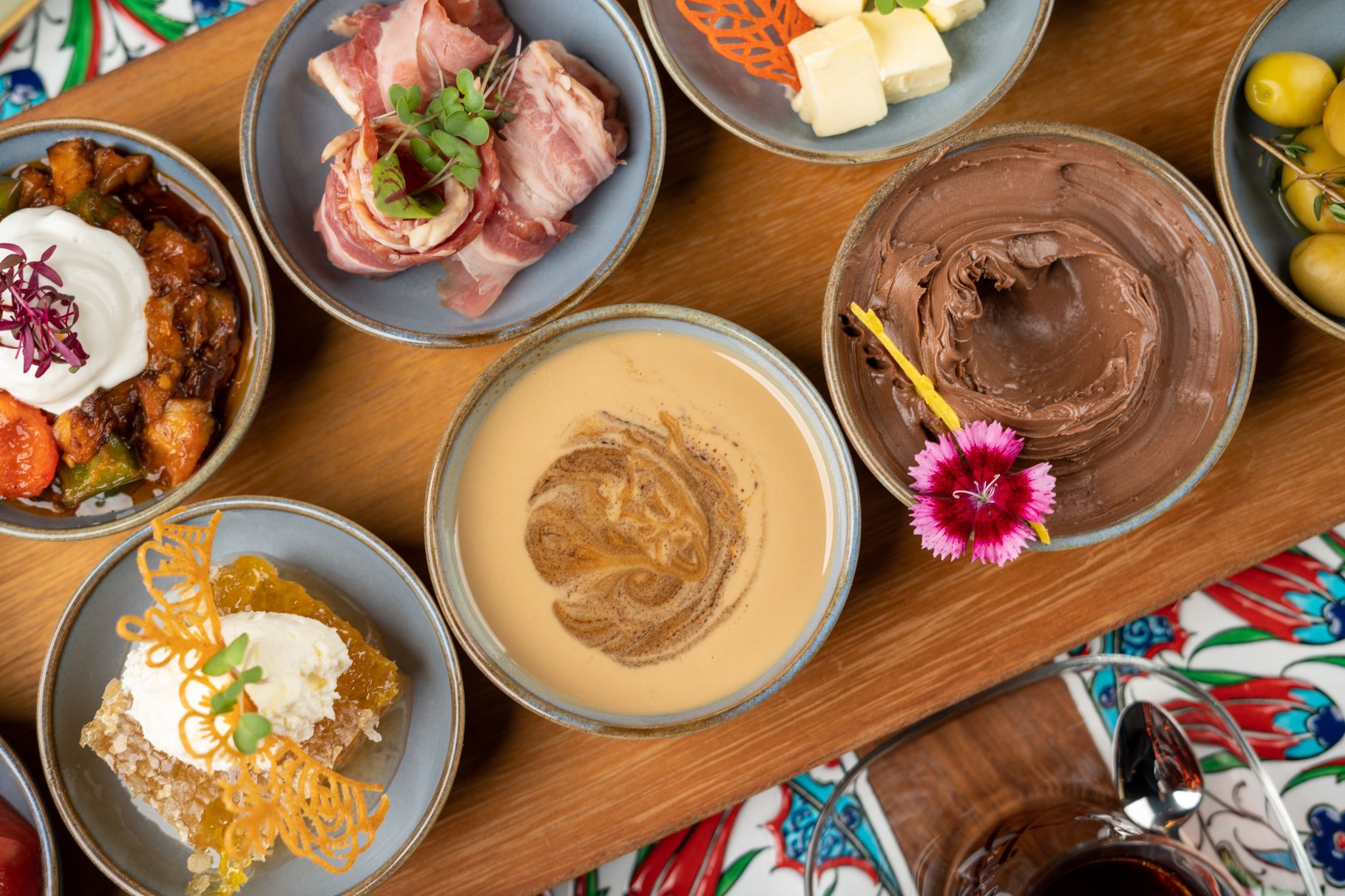
The menu on a Dalyan gulet dinner leans heavily on what the river and nearby lagoons provide: sea bass, sea bream, sometimes crab from the Dalyan delta, and a parade of meze that begins the moment you sit down. Expect haydari thick with garlic and strained yogurt, smoky patlıcan salatası, stuffed vine leaves, a bowl of olives from the surrounding hills, and bread that never quite stops arriving. The service is unhurried because the boat is not going anywhere, and neither are you.
Because Dalyan sits slightly inland, the evening air here cools faster than on the open coast. By mid-October, a light jacket is genuinely useful after the sun disappears behind the ridge — a small detail that makes the whole experience feel more like an autumn evening at home, only with better food and a river instead of a fireplace.
Göcek: Bays, Stars, and a Longer Table
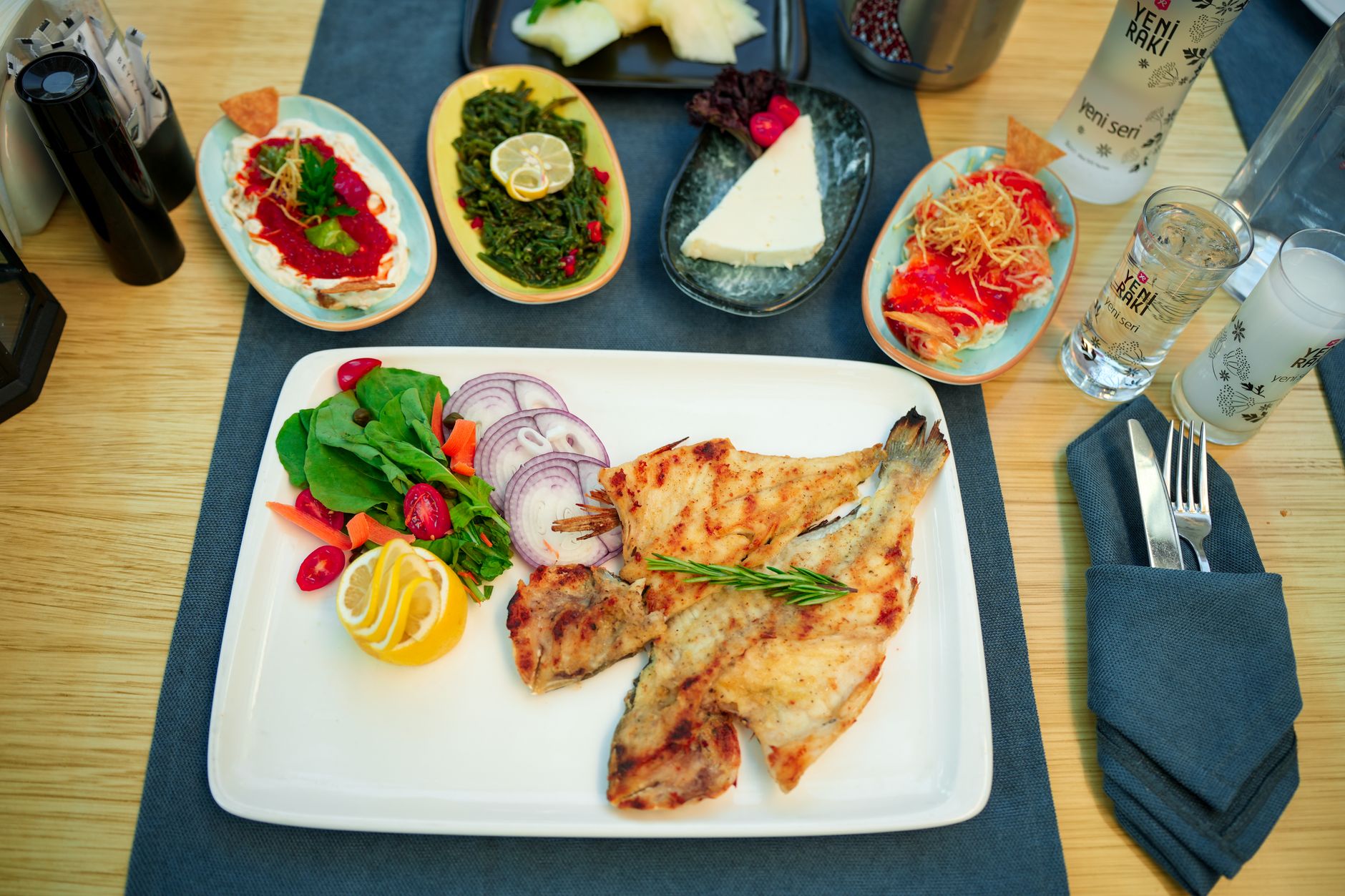
Göcek is a different creature entirely. Tucked into a labyrinth of protected bays between Fethiye and Dalaman, it has long been a favorite of sailors precisely because the water is so calm and the anchorages so numerous. The Gulf of Göcek is part of a protected marine area, and the result is water of a clarity that feels almost unlikely — you can see the anchor chain disappear into the blue and follow it down for meters.
In autumn, the bays empty out. The flotillas of August have gone, and a gulet can find a quiet cove — Yassıca Islands, Bedri Rahmi Bay with its painted rock, or any of the smaller inlets with nothing but pine trees running down to the waterline — and moor for the night with the sense of having the place almost to yourself. Dinner is often served on deck, at a long table, with lanterns strung overhead and the mountains turning from gold to violet to black.
The food in Göcek tends toward the Aegean and Mediterranean palette: grilled fish brought in that morning, octopus that has been tenderized properly, zucchini fritters, a salad of tomato and cucumber that tastes of sun, and — depending on the boat — perhaps a slow-cooked lamb or a vegetarian spread built around whatever the market in Fethiye had that day. Dessert is often fruit, or a simple syrup-soaked cake, with Turkish coffee served while the crew quietly clears the table.
What makes a Göcek evening special is the silence between courses. With no engine, no generator humming, and no neighboring boats, the dominant sound is water lapping the hull. On a clear October night, the stars in Göcek are genuinely impressive — the kind of sky that people from cities forget still exists. If you are drawn to this part of the coast, our destinations pages can help you place Göcek within a wider Aegean itinerary.
Meze, Fish, and the Ritual of a Slow Table
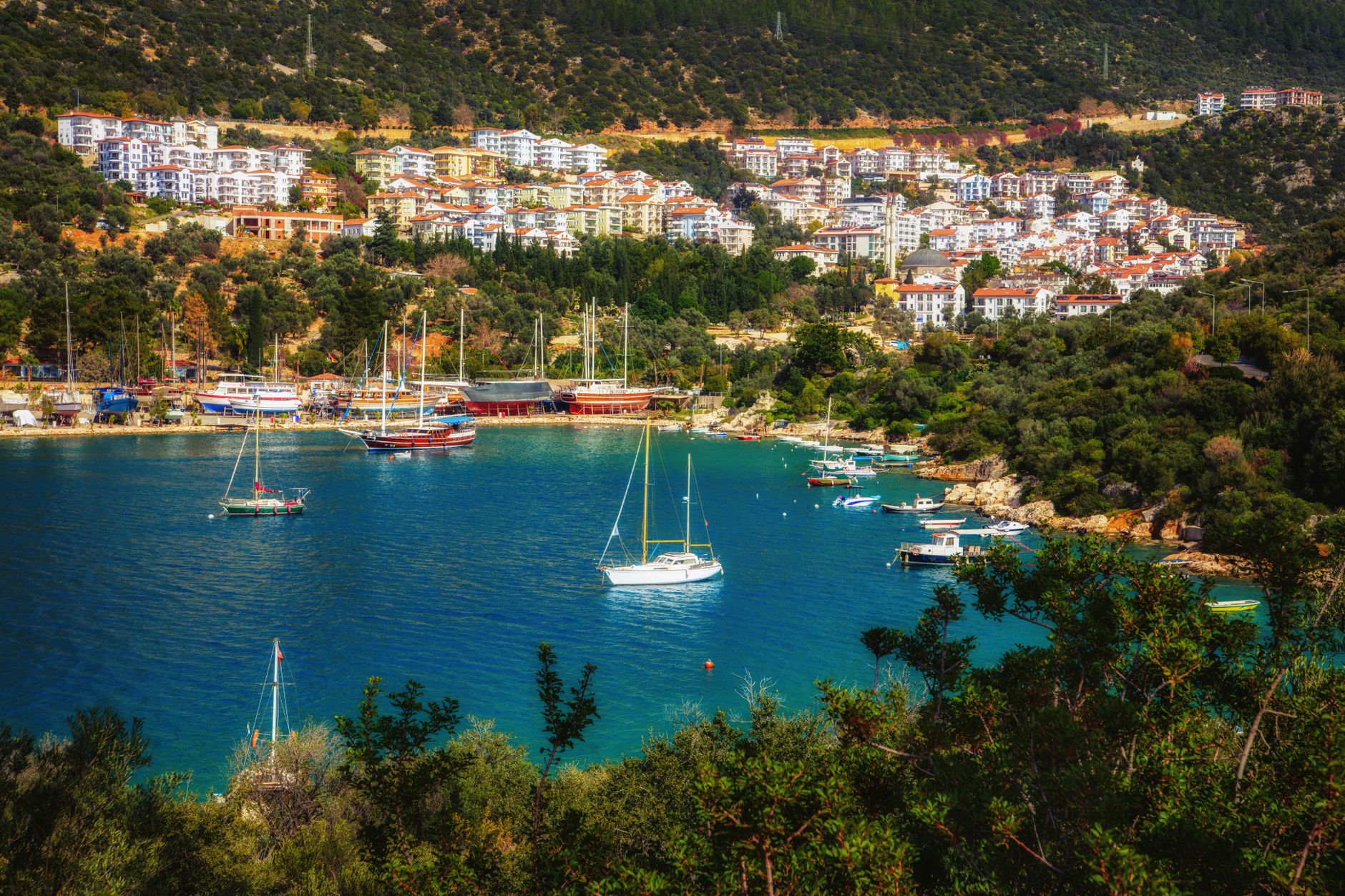
The meal itself follows a ritual that has been refined over generations on this coast. It begins with meze — many small plates, served cold or at room temperature, meant to be eaten slowly with bread and conversation. There is no rush, because there is nothing to rush toward. The main course, when it comes, is usually fish, grilled simply with olive oil, lemon, and perhaps a little salt. This is not a cuisine that hides its ingredients. It is a cuisine that trusts them.
On a well-run gulet, the fish is bought the same day, often from a small harbor or directly from a fisherman. The crew will typically ask in advance about allergies and preferences, and vegetarian or pescatarian menus are entirely possible with notice. Raki, wine, and beer are usually available, though many guests find that a glass of cold water and a plate of meze are enough.
What distinguishes a floating dinner from a restaurant meal is the absence of a fixed ending. Nobody is waiting for your table. The courses arrive when they are ready, the plates are cleared when you are finished, and the evening continues for as long as anyone wants it to. This is the real luxury of the format: time without pressure, in one of the most beautiful settings in the Mediterranean.
For travelers who care about food as much as scenery, this is a rare chance to eat the way coastal Turks eat when they are not rushed — long, seasonal, and shared. It is one of the reasons autumn is such a rewarding time to travel here, as we explore further in our travel guides.
Booking Well: Licensed Operators and What to Expect
Not every boat offering a "dinner cruise" is the same. In Türkiye, gulets operating commercially for tourism must be registered and their crews licensed, and the most reliable way to book is through an established operator, a reputable travel planner, or a hotel concierge who knows the local fleet. Prices vary with the size of the boat, the menu, and whether alcohol is included, but the difference between a well-run and a poorly run trip is usually obvious in the details: a knowledgeable captain, a clean galley, a clear menu in advance, and reasonable group sizes.
Ask specific questions before you book. How many guests will be on board? Is the fish fresh or frozen? What is the cancellation policy if the weather turns? Does the boat have a shaded deck and a working toilet? On Dalyan, some boats focus on the river channels; on Göcek, some stay in a single bay while others move between two or three. Knowing which style you prefer helps you choose the right trip.
If you would rather not assemble the details yourself, our trip planner and our network of local experts can match you with operators who run these evenings consistently well. It is also worth reading our trust and safety page for general guidance on booking licensed travel services in Türkiye.
One more practical note: because these dinners depend on calm water and mild weather, September and early October are the most reliable weeks. By late October, evenings can be genuinely chilly and some operators wind down for the season. Booking a week or two ahead is usually enough in autumn, unlike the peak summer months when popular boats fill weeks in advance.
What to Bring for a Cooler Evening Afloat
Temperatures on the water drop faster than on land, and a gulet at anchor in the evening can feel several degrees cooler than the harbor you left. A light layer — a sweater, a shawl, a soft jacket — is the single most useful thing you can bring. Flat, non-slip shoes are practical for moving around a deck that may be slightly wet. A small torch or phone light helps when stepping off the boat after dark.
If you plan to swim before dinner, bring a swimsuit and a quick-dry towel; October water on this coast is often still pleasant, though the air afterward feels cooler. Sunscreen is worth packing for the late-afternoon sail, and a hat is useful until the sun drops. Photography lovers should bring a camera that handles low light — the blue hour over the Kaunos tombs or a Göcek bay is one of the most photogenic moments on the coast.
Finally, bring patience and appetite. These dinners reward people who are willing to sit, talk, and let the evening unfold at its own pace. The point is not to see everything. The point is to be somewhere beautiful, on the water, with good food and good company, while autumn quietly settles over Türkiye's protected coast. If you want to see how other travelers have experienced it, our gallery offers a glimpse of these evenings at their best.
Thinking about a trip to Turkey?
Share your contact details and a vetted local expert will follow up with a plan built around you — free, no obligation.