

Why Caves Are Türkiye's Best-Kept Summer Secret
Every July and August, millions of travelers crowd the Turkish Riviera looking for shade. They find it on pebble beaches, under café awnings and beneath the pines of the Taurus Mountains. But the coolest place of all is underground. Türkiye sits on one of the world's great karst belts: limestone that rainwater has been dissolving for millions of years, carving out thousands of caves, sinkholes and subterranean rivers. A surprising number of them are open to the public with safe, well-marked walkways.
The numbers are the selling point. Many show caves hold a near-constant temperature between 16 and 18°C (60-64°F), regardless of whether it is 40°C on the coast. That is a 20-degree drop the moment you step through the gate — no air conditioning required. For families with children, grandparents or anyone who wilts in the heat, a cave visit is the perfect midday activity, slotted between a morning swim and an afternoon nap.
What makes Türkiye especially appealing is accessibility. You do not need to be a caver, carry ropes or crawl through mud. The country's flagship show caves — Karain and Damlataş near Antalya, Altınbeşik in the Beydağları, Ballıca in Tokat province — all have concreted paths, railings, lighting and, in most cases, ticket offices and visitor centers. Some are compact 30-minute stops; others are proper walks of an hour or more under the mountain.
This guide focuses on the four caves that best combine "long walk" with "easy access": Karain, Damlataş, Altınbeşik and Ballıca, plus a few honorable mentions. It also covers the practical stuff — footwear, lighting, what to bring — and how to weave these underground detours into a wider coastal or highland itinerary.
Karain Cave: Archaeology, Cool Air and a View Over the Plain
About 27 kilometers northwest of Antalya, in the foothills of the Taurus Mountains near Yağca village, Karain Cave is often described as one of the oldest inhabited caves in Anatolia. Excavations have uncovered evidence of human occupation stretching back hundreds of thousands of years, along with finds linked to Neanderthal and early modern human activity. For curious travelers, the appeal is double: cool air and genuine history in the same visit.
You approach through a pleasant, shaded path with a few stairs, then enter a series of large chambers and galleries. The route inside is walkable and lit, but this is not a polished theme-park cave — expect uneven surfaces in spots, some low passages and the occasional puddle after rain. That rawness is part of the charm. Standing in a vast limestone hall where people sheltered long before recorded history is genuinely memorable for older kids and teenagers.
Practical notes: Karain is usually reached by car or on an organized tour from Antalya, and it pairs well with the archaeological museum in the city or a stop in the nearby countryside. The walk up to the cave entrance is short but can be steep in the heat, so save it for morning or late afternoon and carry water. Because the temperature inside stays mild year-round, a light layer is welcome even in August.
Karain is also a great introduction to karst geology for families. Before you go in, point out the dripstone formations and explain that every stalactite grows by fractions of a millimeter per year. Then, on the drive back to the coast, you have a built-in conversation about how water shapes stone — one that will pay off at every cave you visit afterward.
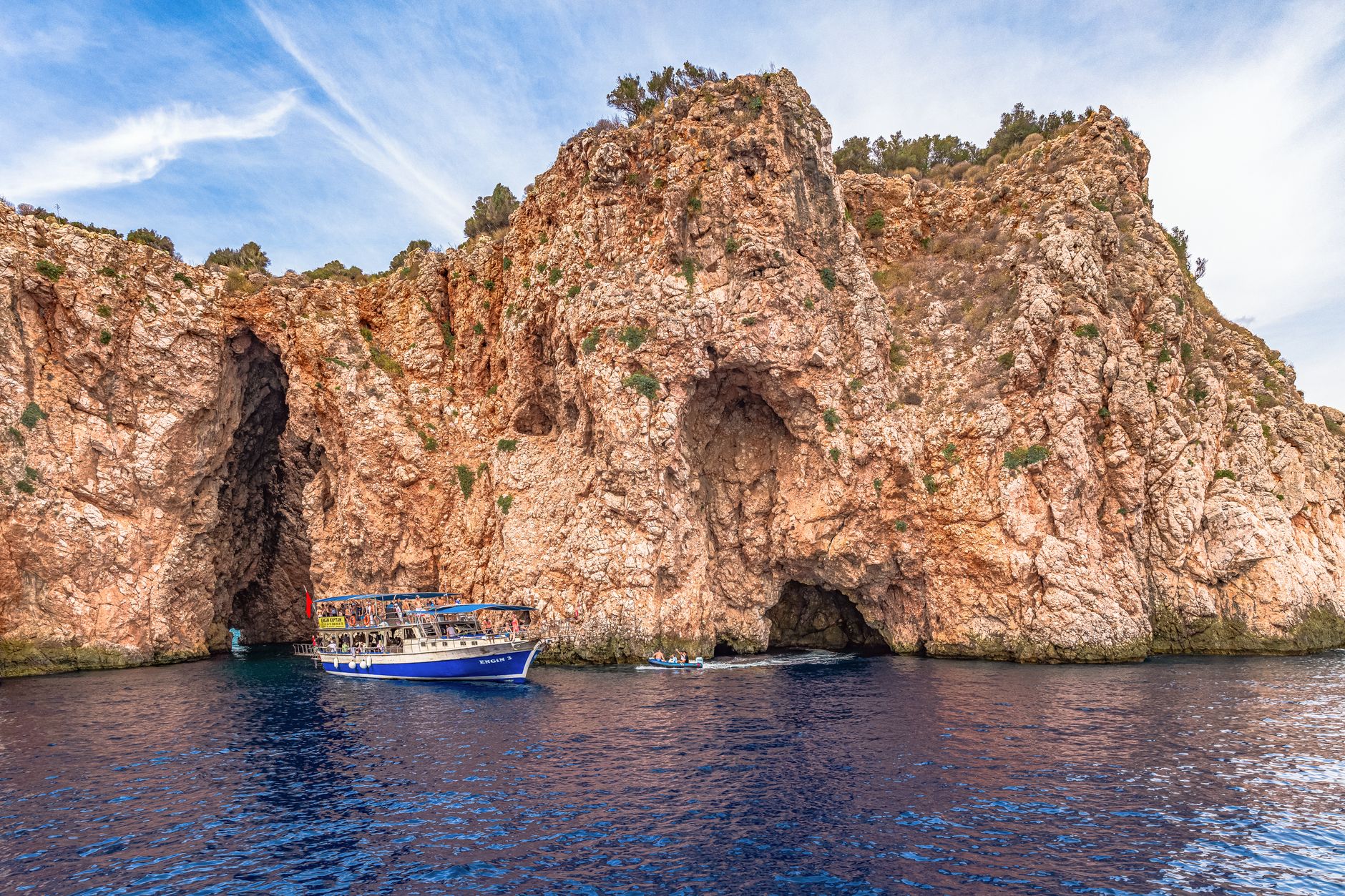
Damlataş Cave: Alanya's Legendary Easy Stop
If you want the shortest possible walk to the biggest possible payoff, head to Damlataş Cave in Alanya. Tucked just below Alanya Castle and a short stroll from Cleopatra Beach, it is one of the most visited show caves in Türkiye and one of the easiest: a few steps down, a short tunnel, and you are standing inside a glittering chamber of stalactites, stalagmites and columns. The whole loop takes about 15 to 20 minutes at a relaxed pace, which makes it ideal for small children, strollers (with help) and anyone with limited mobility.
The cave's reputation goes beyond its beauty. Damlataş has long been famous for its humid, mineral-rich air, and in the mid-20th century it was even studied for its purported benefits for respiratory conditions. Today it is simply a delightful, cool stop — the kind of place where you can escape the beach crowd, take a few atmospheric photos and be back on the sand within an hour. Entry is inexpensive, and the site includes a café and gift shop area.
The real advantage is location. Because Damlataş sits inside Alanya itself, you can combine it with the castle, the Red Tower, a boat trip or a lazy afternoon at the beach without any complicated logistics. For families staying in Alanya or Side, it is the definition of a low-effort, high-reward excursion — perfect for the hottest part of the day when nobody wants to walk far.
One tip: check opening hours, since they shift seasonally, and arrive early or late to avoid the midday tour-bus rush. The cave is small enough that a crowded moment can feel cramped, but the flow of visitors is usually quick. And do not skip the terrace outside — the view over the harbor and the Mediterranean is one of Alanya's best free bonuses.
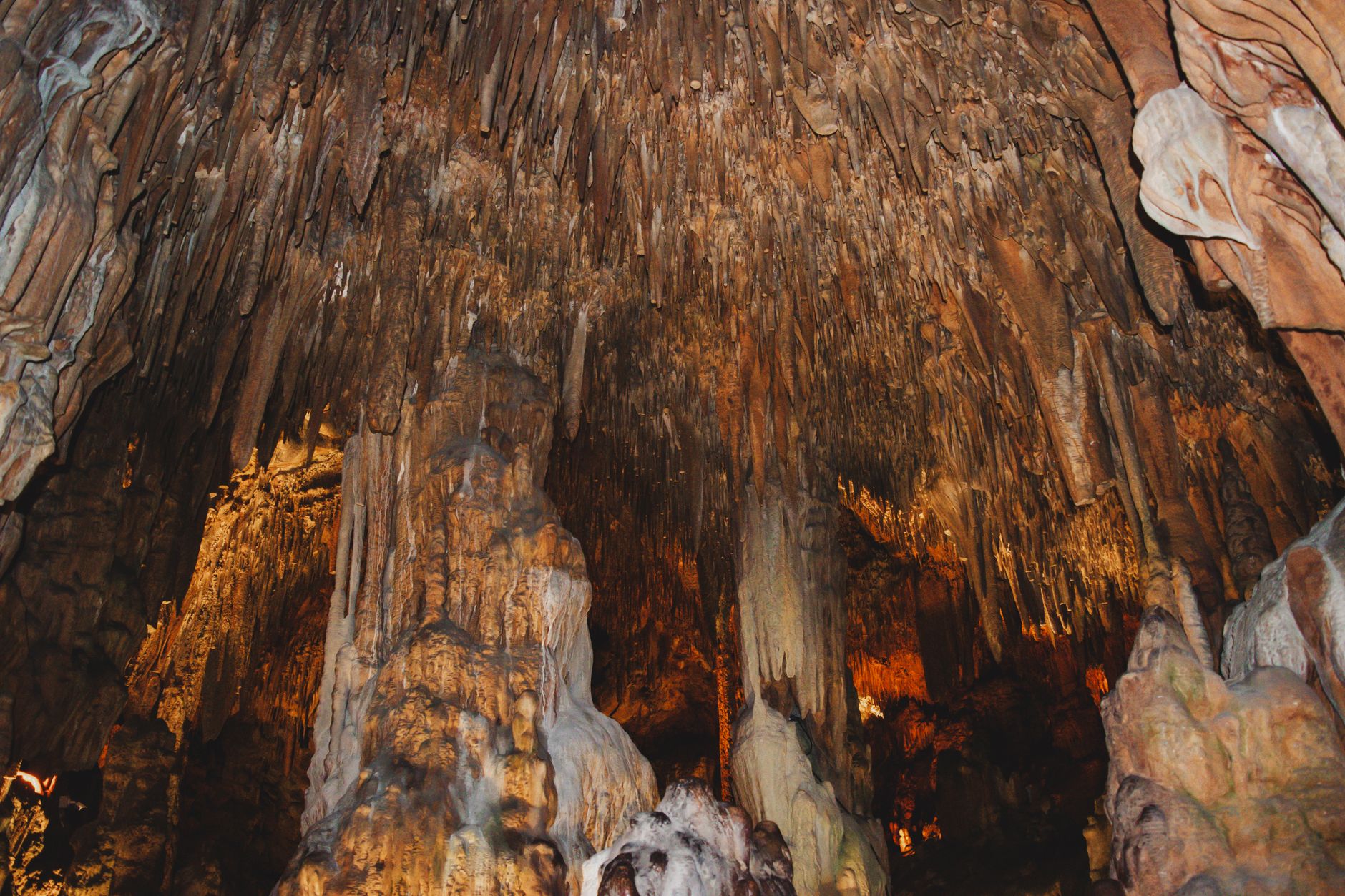
Altınbeşik Cave: An Underground River and Lake in the Beydağları
For many travelers, Altınbeşik is the star of this list. Located in the Beydağları mountains of Antalya province, near the village of Ürünlü and the historic town of Ibradı, it is the largest underground lake in Türkiye and one of the biggest in the world. A stream disappears into the mountain here, forming a chain of lakes inside a vast chamber. The site is protected as a national park, and the approach through pine forest and rocky valley is beautiful in its own right.
Inside, a metal walkway and railing follow the first lake, letting you peer into clear water and look up at a ceiling that vanishes into darkness. Depending on water levels and park conditions, short boat trips have historically been offered deeper into the system — one of the most magical experiences in Turkish tourism, drifting quietly on an underground lake with only the sound of water. Availability varies by season and management, so treat a boat ride as a bonus rather than a guarantee.
The journey is part of the adventure. The road from Ibradı is winding and narrow, and the final stretch to the cave entrance may require a short uphill walk. Sturdy shoes are strongly recommended. Toilets and basic facilities exist near the entrance, but services are limited, so bring water and snacks for the drive.
Altınbeşik fits naturally into a highland-and-coast itinerary: stay in Antalya or Kemer, drive up into the Beydağları for the cave and mountain views, then return to the sea for dinner. It is also a good reminder that many of Türkiye's most spectacular caves are less about tourist infrastructure and more about raw natural drama — a theme your family will remember long after the beach tans fade.
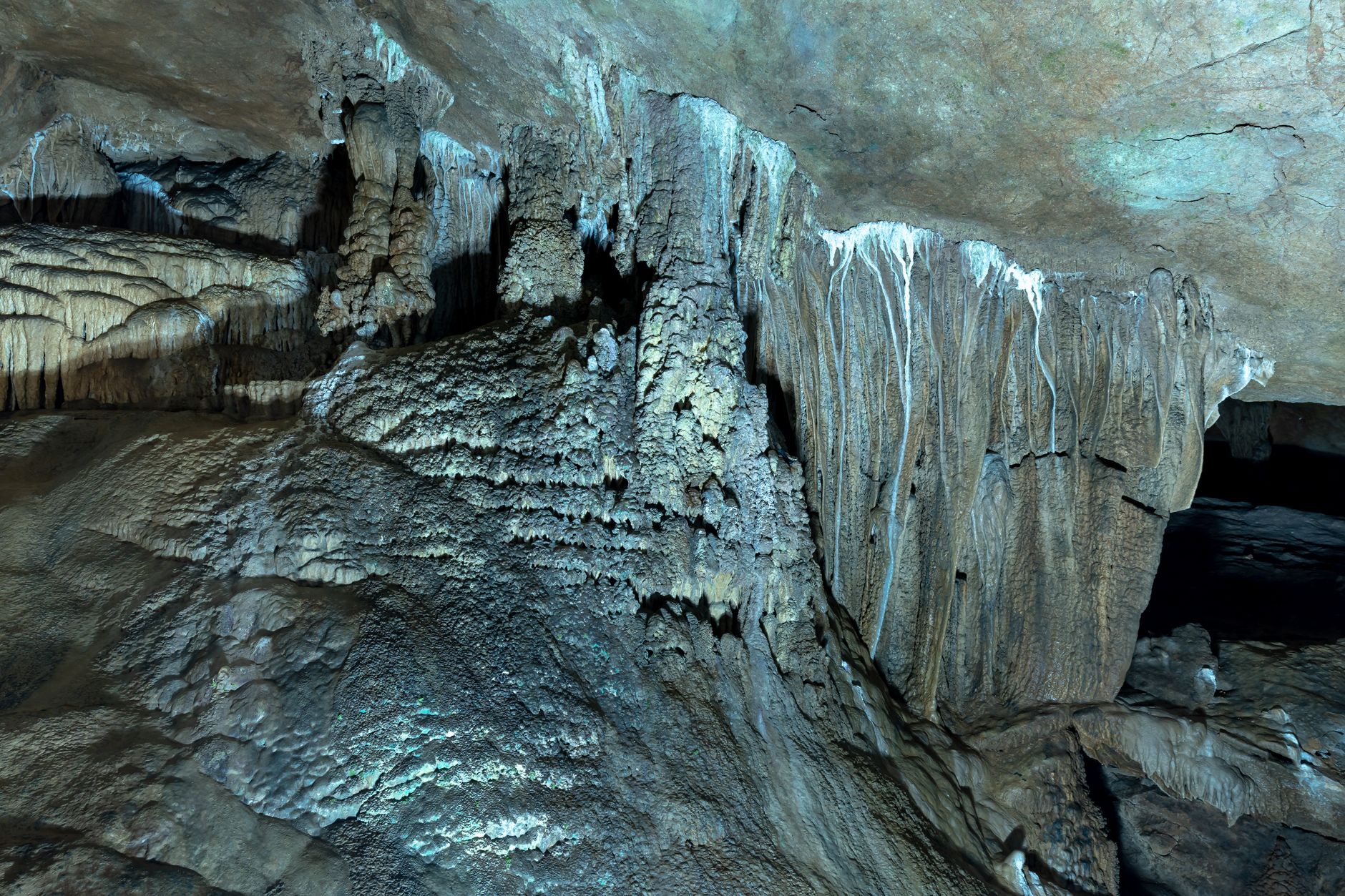
Ballıca Cave: Türkiye's Fairy-Tale Underground
Far to the northeast, in the hills of Tokat province, Ballıca Cave is regularly ranked among the most impressive show caves in the world. Its signature feature is a forest of unusually shaped stalactites and stalagmites — thin, twisted, sometimes translucent formations that look like a frozen fairy tale. The cave is large, with multiple halls, and the visitor route includes stairs and platforms that let you descend through different levels of the system.
The word "walk" applies here more than anywhere else on this list. Ballıca's public route is a genuine descent of several hundred meters with staircases and landings, taking most people 45 to 60 minutes. Temperatures stay cool and humidity is high, so it is a welcome relief during the hot Anatolian summer. The lighting design highlights the formations dramatically, making it a favorite for photographers.
Ballıca is a little more demanding physically: there are many stairs, some narrow sections and slippery patches, so good footwear and a reasonable level of fitness matter. It is not ideal for very small children or anyone with significant mobility issues, but older kids and teenagers tend to love it. The surrounding region — with its vineyards, mountain villages and the historic city of Tokat — offers a satisfying highland contrast to the Mediterranean coast.
Because Ballıca is inland, it works best on a broader Anatolian road trip rather than a beach holiday add-on. If your route passes through the Black Sea or Central Anatolia, build in a day for the cave and the nearby landscapes. It is the kind of stop that surprises travelers who assume Türkiye's underground treasures are only in the south.
Practical Tips for a Great Underground Day
Footwear: Wear closed shoes with decent grip. Boardwalks and concrete paths are usually fine, but caves are damp, and stone can be slick. Avoid flip-flops and smooth-soled sandals, and skip new white sneakers if you mind mud. For Ballıca and Altınbeşik especially, hiking shoes or trail sneakers are ideal.
Lighting and warmth: Show caves are illuminated, but the effect is often dim and moody. A light jacket or long-sleeved shirt is genuinely useful, since 16-18°C feels chilly after a 35°C beach day. A small flashlight or phone light helps in transitions and lets kids look at details safely. Do not touch the formations — skin oils stop them from growing.
Timing and tickets: Go early or late in the day to avoid tour groups, check seasonal opening hours online or by phone, and confirm whether boat trips or special sections are running. Keep an eye on children near railings and wet steps, and never leave marked paths. For caves in protected areas, remember that you are a guest in a fragile ecosystem.
Combining stops: Near Antalya, pair Karain with a coastal afternoon; in Alanya, slot Damlataş into a castle-and-beach day; Altınbeşik pairs with Beydağları highland scenery; Ballıca pairs with Tokat's villages and vineyards. To build a full trip, browse the destination ideas and ready-made itineraries on our site, and use the best-time guide to plan around the heat. If you want a custom family route that mixes caves, coast and highlands, the trip planner and our local experts can help.
Making It a Family Memory
Underground places change how children see the world. A dark hall with dripping water, a river that vanishes into a mountain, a stone forest that took a hundred thousand years to grow — these are the stories kids retell long after the trip. The fact that everyone stays cool, the walking is manageable, and the stops fit easily into a beach or highland day makes caves a rare win for every generation in the group.
Türkiye has the geology, the accessibility and the variety to make an underground day out genuinely easy. Start with Damlataş if you are near Alanya, choose Karain for history near Antalya, save Altınbeşik for a highland adventure, and put Ballıca on the list for a future Anatolian road trip. Bring good shoes, a light layer and a sense of wonder — the mountain will handle the rest.
Thinking about a trip to Turkey?
Share your contact details and a vetted local expert will follow up with a plan built around you — free, no obligation.