

Why the Kiln, Not the Showroom
Every Turkish ceramics bazaar has its seductive moments: a wall of cobalt tulips, a shelf of turquoise Iznik-style plates, a shopkeeper offering tea while you admire a hand-painted vase. But the shop window is where the story ends, not where it begins. The real drama of Anatolian pottery happens behind the counter, in courtyards and ateliers where clay is wedged, wheels spin, and a modest electric or gas kiln holds court like a temperamental guest of honor.
Visiting a working studio changes what you see. You notice how a potter's thumb leaves ridges in a bowl that will later be glazed over, how a painter's brush holds a half-load of pigment, how the kiln door crack is propped open a finger's width during cooling so the glaze does not craze. You also learn why the price on that plate is what it is: a single richly decorated piece may pass through four or five pairs of hands and two firings.
Turkey is unusually generous in this regard. Ceramic towns are proud of their craft, and most workshops are small enough that a polite request, a bit of advance notice, and a purchase or a workshop fee will get you much closer to the fire than you might expect. This guide covers the three great pottery destinations — Avanos in Cappadocia, İznik near Lake İznik, and Kütahya in the western interior — plus what to expect from a firing, how to try the wheel, and how to get fragile treasures home in one piece.
Avanos: Clay from the Red River
Avanos sits on the banks of the Kızılırmak, the Red River, whose alluvial clay has fed local potters for centuries — some say since Hittite times. The town's craft leans earthy and sculptural: unglazed terracotta, warm reddish-brown wares, and the famous testi amphorae and wine jugs. You will also see plenty of glazed decorative pieces and the mischievous clay figures sold along the main street.
Because Avanos is on nearly every Cappadocia itinerary, the tourist-facing workshops are numerous and usually welcoming to drop-in visitors. Many offer short demonstrations on a kick wheel — the potter centers a lump of Kızılırmak clay, pulls a cylinder, and shapes a jug while narrating in several languages. Look past the front-row demonstration rooms for the working end of the atelier, where rows of drying greenware sit on shelves and a kiln hums in the corner.
Avanos is a good place for a first wheel experience. Instructors are used to beginners, sessions are short, and the clay is forgiving. Ask whether your piece can be bisque-fired and glazed for pickup or shipping; small studios often fire once a week, so timing matters if you are moving on quickly.
İznik: The Cobalt and Coral of the Ottoman Golden Age
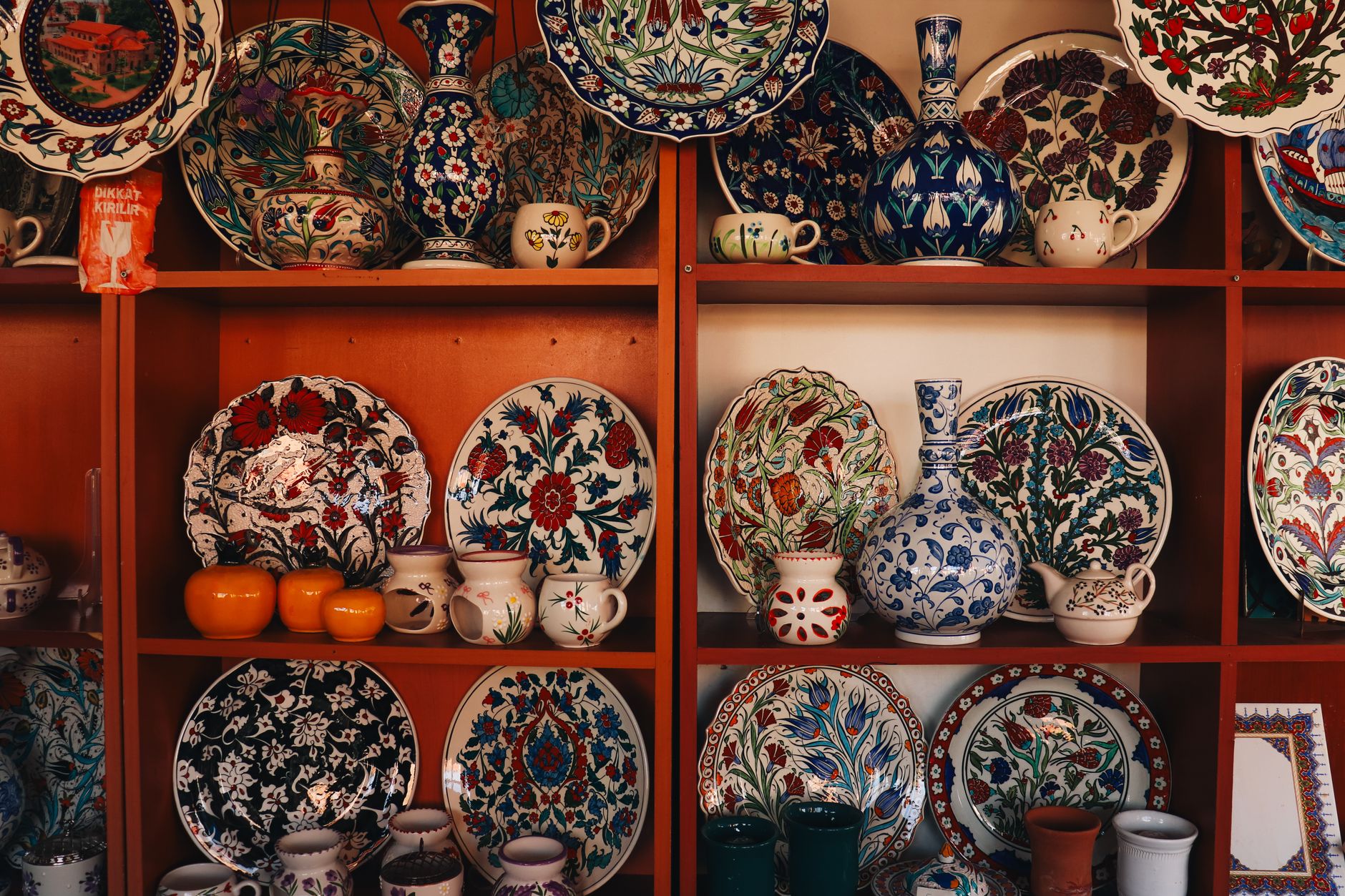
İznik is where Ottoman tile art reached its peak in the sixteenth century, and the town is still defined by it. The palette is instantly recognizable: deep cobalt blue, turquoise, the famous bole red — a raised, tomato-colored slip that sits proud of the surface — and crisp white ground, often decorated with tulips, carnations, hyacinths and vines.
Modern İznik production is a revival story. The historic kilns fell silent centuries ago, and today's workshops reconstruct the old techniques with admirable dedication, sometimes mixing their own quartz-rich paste and grinding pigments by hand. Studios in and around town welcome visitors who want to watch the painting stage, which is often the most mesmerizing part: a painter outlines a tulip in fine black-gray strokes, fills it with red slip, and adds blue leaves, all without a stencil.
Because many İznik workshops are smaller and more research-minded than the Cappadocian demonstration rooms, advance contact is wise. Call or email a day or two ahead, ask whether a firing is scheduled during your visit, and be upfront that you would like to see the kiln area, not just the showroom. Small operations may fire less frequently — sometimes only when a shelf is full — so a firing is never guaranteed, but the painting benches nearly always are.
Kütahya: The Everyday Art of Çini
Kütahya, southeast of Istanbul in the western interior, is the other great historic center of Turkish çini (tile and glazed ceramic work). Where İznik is associated with imperial masterpieces, Kütahya is associated with abundance and accessibility: pitchers, bowls, coffee cups, mirrors, figurines, and tiles that have furnished homes and mosques for generations.
The city's ceramics quarter is dense with family workshops, many of them multigenerational. You can often follow the whole chain in a single afternoon — clay preparation in a back room, throwing or slip-casting, drying racks, hand-painting, dipping in glaze, and the kiln. Kütahya's decorative tradition is broad, from Ottoman-inspired floral work to figurative pieces and bold modern color.
Kütahya rewards travelers who spend the night. Day-trippers see the showrooms; overnighters can catch a morning loading of the kiln or the satisfying moment when a cooled shelf is opened and the week's output is revealed. If you are building a western Anatolia route, this pairs naturally with a broader craft-and-city itinerary — see our itineraries for pacing ideas.
What Actually Happens in a Firing
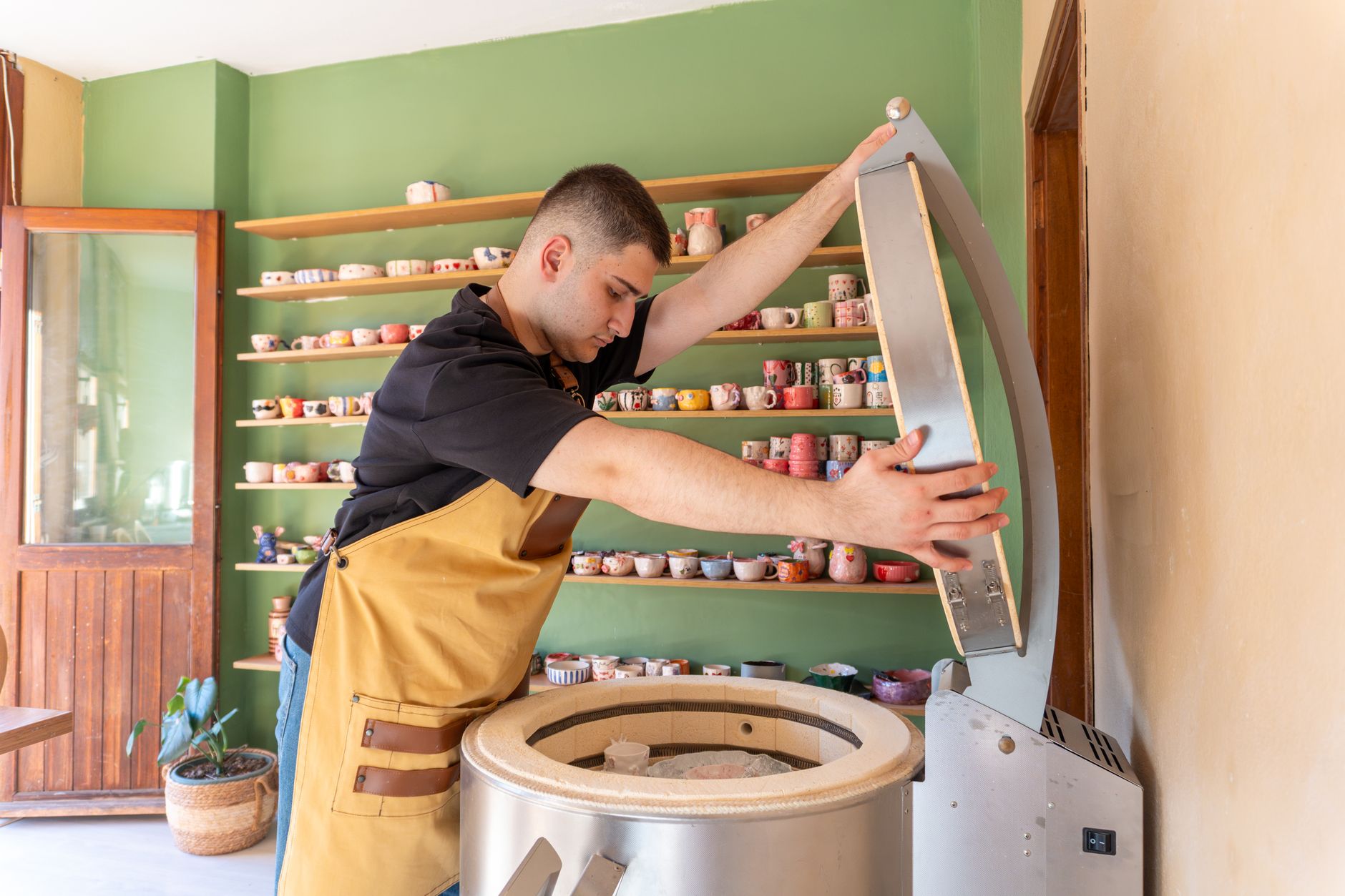
Most Turkish studio ceramics are fired twice. The first firing, the bisque, hardens raw clay at roughly 900–1000°C, driving off water and making the piece strong enough to handle. The second, higher-temperature firing fuses the glaze — for many traditional wares somewhere in the 950–1050°C range — turning powdered minerals into glass. Modern studios mostly use electric or gas kilns; wood-fired kilns exist but are less common in these three towns.
Here is what travelers can realistically see. Loading is quiet and careful: pieces are arranged so glazed surfaces never touch, and kiln shelves are dusted with a protective wash. Firing itself is a long, mostly unwatched process — often ten to fourteen hours with slow ramps up and down — so nobody stands around watching the flames. The rewarding moment is the unload, when the door opens after a full day of cooling and shelves of glossy color emerge.
Ask politely, arrive when invited, and never reach into a kiln area unasked — a cooling kiln radiates serious heat, and the shelving is loaded with someone's week of work.
Practical tip: when you contact a workshop, ask plainly, "Is there a firing or an unload during my dates?" That is a far better question than "Can I see the kiln?" Most potters will happily tell you their firing schedule.
Try the Wheel: Etiquette and Expectations
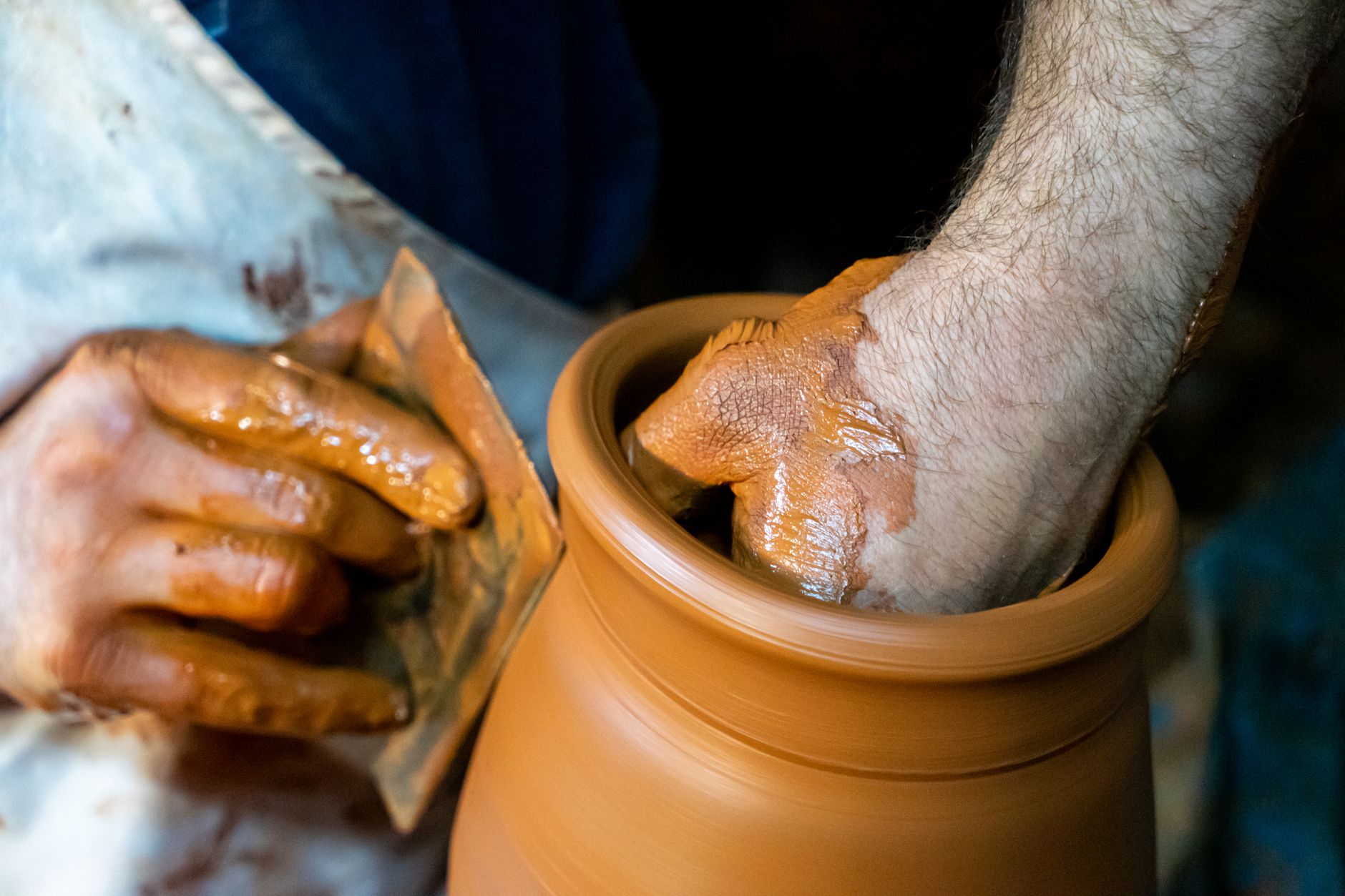
Wheel sessions are offered in Avanos more than anywhere else, and increasingly in Kütahya and İznik too. Expect a short lesson of roughly twenty to forty minutes. The instructor will center the clay for you — centering is the hard part — then guide your hands to open and pull a cylinder. The result is usually a small bowl or cup, imperfect and entirely yours.
- Wear clothes you can dirty. Clay rinses out, but glaze pigment and iron-rich slip can stain. Avoid white sleeves and loose cuffs.
- Trim your nails and remove rings. Long nails gouge the wall of a pot; jewelry catches in wet clay.
- Ask about finishing costs up front. Firing, glazing and shipping are usually separate from the lesson fee.
- Expect a wait for the finished piece. Many studios will fire and glaze within one to three weeks, then ship — ask for a photo before dispatch.
- Accept help gracefully. Letting the potter rescue your sagging cylinder is not cheating; it is how the craft is taught.
If you would rather watch than touch wet clay, say so. Painters and throwers are generally happy to be observed at a respectful distance.
Booking a Workshop: A Practical Checklist
Reserve directly whenever possible — through a workshop's own contact channels or a reputable local guide rather than a reseller with a hefty markup. State your group size, preferred language, dates, and whether you want a demonstration, a hands-on wheel session, or simply to observe production.
Ask these questions in advance:
- What is the total cost, including materials, firing and glazing?
- Is there a firing or unload during my visit, and may I watch?
- Can you ship finished pieces, domestically or internationally?
- How long will my piece take to be ready, and who packs it?
- Are photos allowed in the workshop? (Usually yes; ask before photographing people.)
For broader trip logistics — when to visit, how to sequence towns — our best time to travel guide and trip planner can help you slot a studio day into a longer route. If you want a craft-focused itinerary assembled for you, our local experts know which workshops genuinely welcome visitors.
Carrying Ceramics Home Safely
The single best protection is the potter's own packing. Ask the workshop to wrap your purchase in bubble wrap and foam, double-boxed if shipping is not an option. Turkish studios are expert at this; a well-packed plate in a sturdy carton can survive a lot.
- Carry-on beats checked luggage for small, precious pieces. Wrap in clothing and place in the center of a soft bag.
- Ship large or heavy pieces. Insured international shipping is common from İznik and Kütahya workshops; confirm tracking and packing responsibility in writing.
- Pack hollow vessels with soft paper inside so walls do not flex and crack.
- Hand-carry plates vertically in a padded sleeve; flat-packed horizontally under weight, they crack.
- Check customs rules for your home country — glazed ceramics are usually fine, but antiques and archaeological material are not, and genuine old wares require export permission. Only buy new work from working studios.
Slow Down and Watch the Colors Come Out
The pleasure of a kiln visit is the pleasure of patience. Anatolian ceramics are made at human speed: clay dug and aged, shapes thrown or cast, pigments ground, patterns painted brushstroke by brushstroke, then a long wait while fire turns dull powder into glassy color. Standing at the kiln door when it opens is a small, satisfying ceremony — shelves of blue, red and turquoise fresh from the heat, still warm to the air.
Travelers who build a studio day into their Turkish itinerary come home with more than a plate: they know whose hands made it. Browse our travel guides for more craft and culture ideas, or start sketching your own route on our route suggestions page.
Thinking about a trip to Turkey?
Share your contact details and a vetted local expert will follow up with a plan built around you — free, no obligation.