
The Door You Almost Walk Past
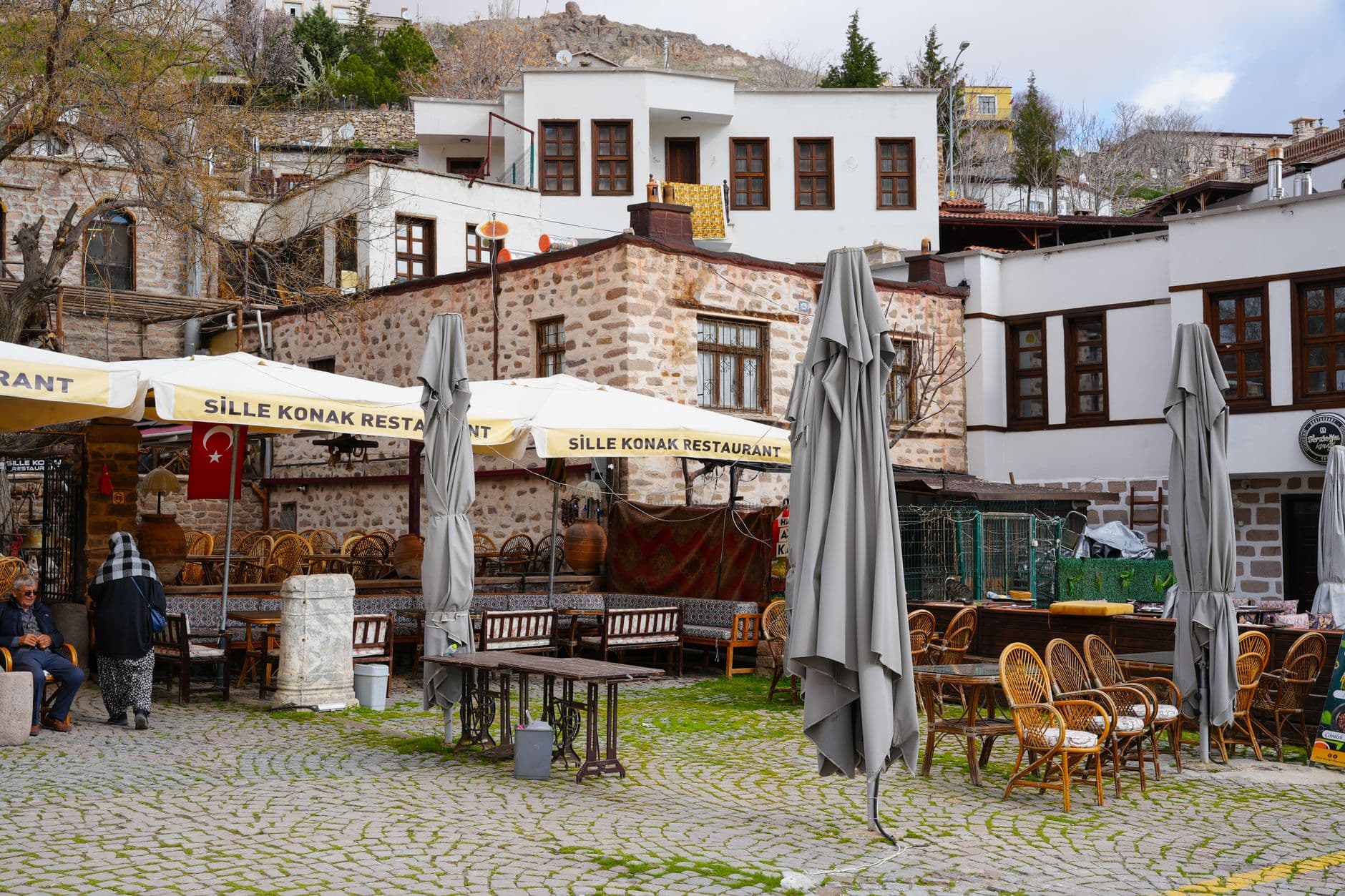
Somewhere in almost every Turkish town there is a doorway you will walk past twice without noticing. It is usually low, often wooden, sometimes propped open with a brick. Through it, a few steps down a cool stone passage, is a courtyard: grapevines on a wire frame, mismatched wooden chairs, a single lemon tree, a cat asleep on a cushion that has clearly been there for years. A man is carrying a tray of tulip-shaped glasses. Nobody is in a hurry.
These garden cafés and courtyard tea houses are the great bargain of traveling in Türkiye — not just because a glass of tea costs less than a bottle of water in many European cities, but because they are where Turkish social life actually happens. They are not attractions. They are rooms without ceilings where people read newspapers, argue about football, chain-smoke, shell sunflower seeds, and let an afternoon dissolve.
This guide is about finding those places as a traveler: the clues that give them away, the etiquette that keeps them welcoming, and the small, cheap things to order so you can sit for two hours without feeling like a squatter.
Why Locals Linger (And You Should Too)
Turkish hospitality has a word for the state of being served without being rushed: ağırlamak, to host generously. In a tea house, hosting is measured in refills. Order one çay and you have not ordered a drink; you have entered an agreement. The glass will be cleared and replaced, often without asking, and the bill is settled at the end by counting the empties on the tray or the saucers stacked beside you.
The economics are the point. These places are cheap by design, subsidized by volume and by the fact that no one expects you to leave. A garden café in a big city might charge the price of a sandwich for a coffee, but its courtyard cousin in a smaller town is still a place where students, retirees, and taxi drivers share the same tables. That mix is why they feel alive.
For travelers, they are also a perfect midday strategy. When museums are hot and crowded and your feet have opinions, a shaded courtyard costs almost nothing and resets the whole day. It is the opposite of a sightseeing sprint: you sit, the shade does its work, and the town comes to you.
How to Find the Good Ones
Follow the tea trays, not the signs
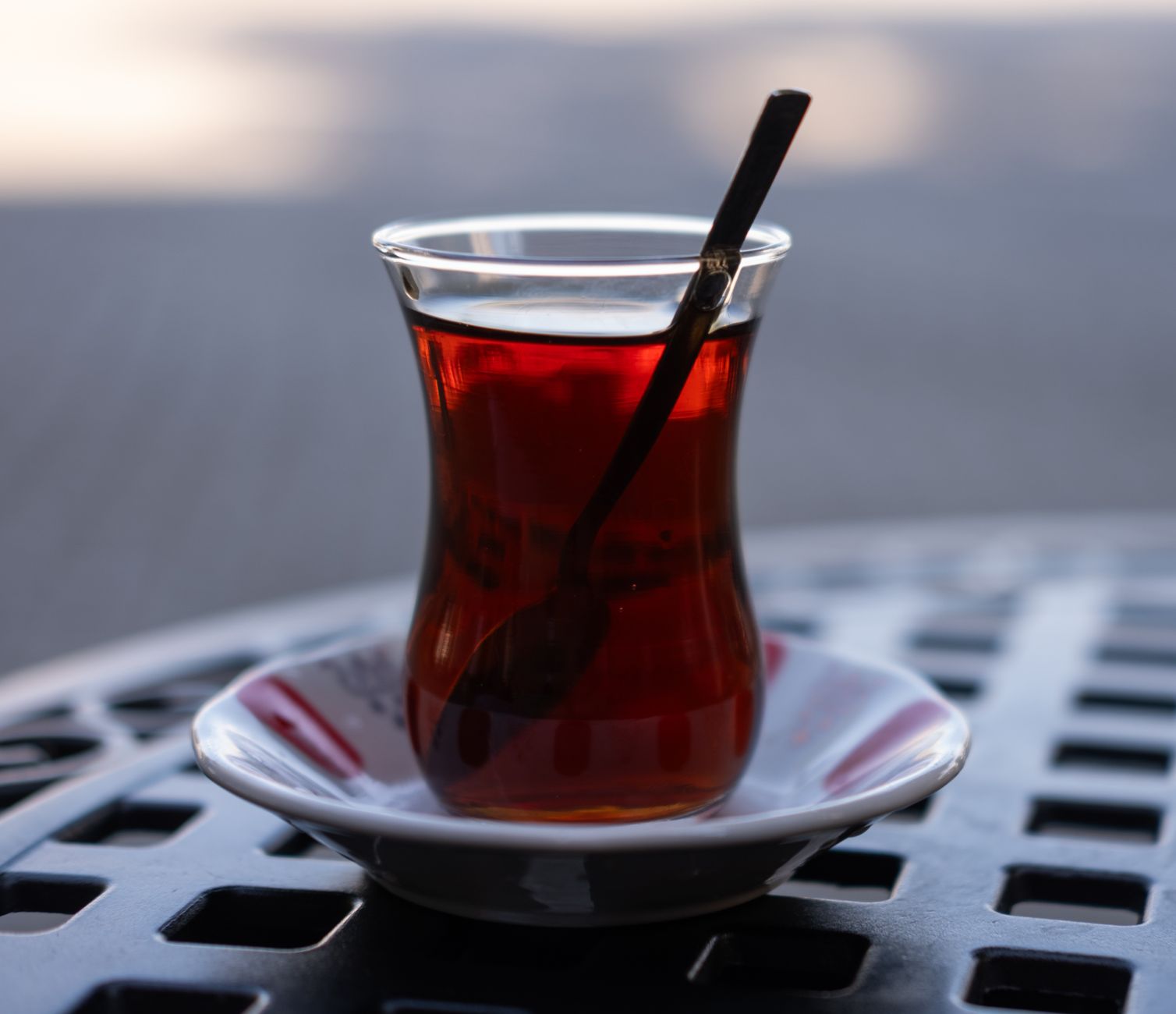
The best courtyard tea houses rarely advertise. Look instead for the telltale traffic: a young waiter crossing an alley with a tray held high, or a cluster of men at 4 p.m. sitting on plastic chairs in a space that looks, from the street, like a parking garage. Follow the trays. If the trays keep coming back empty and going out full, you have found the neighborhood's living room.
Look up, look down, look sideways
Garden cafés hide in the vertical dimension. In Istanbul's older neighborhoods, walk the alleys behind the main streets and look for vines spilling over a wall, or a hand-painted sign reading bahçe (garden) with an arrow. In Aegean and Mediterranean towns, check the uphill lanes away from the harbor: the courtyards with the best shade are often the ones without the best view. In Central Anatolia, courtyards are tucked behind caravanserai walls and old hans, where a tea garden occupies what was once a merchant's loading yard.
Ask a shopkeeper, not a guidebook
The most reliable method is embarrassingly simple: buy something small — simit, a bottle of water, a postcard — and ask, "Is there a tea garden nearby where locals sit?" Ask in the afternoon, when the answer comes with directions. Locals are proud of their courtyards and will often walk you to the door. This is a good moment to check our local experts if you want someone to plan these pauses into a longer route.
Time it right
Courtyard life has rhythms. Early morning belongs to retirees and the newspaper crowd. Mid-afternoon is the peak of shaded lingering. After sunset, tea houses empty while meyhane and cafés fill. On Fridays, expect a surge after midday prayer; during Ramadan, the courtyard is quiet by day and electric after iftar, when the tea trays don't stop until well past midnight.
What to Order (And How Not to Overpay)
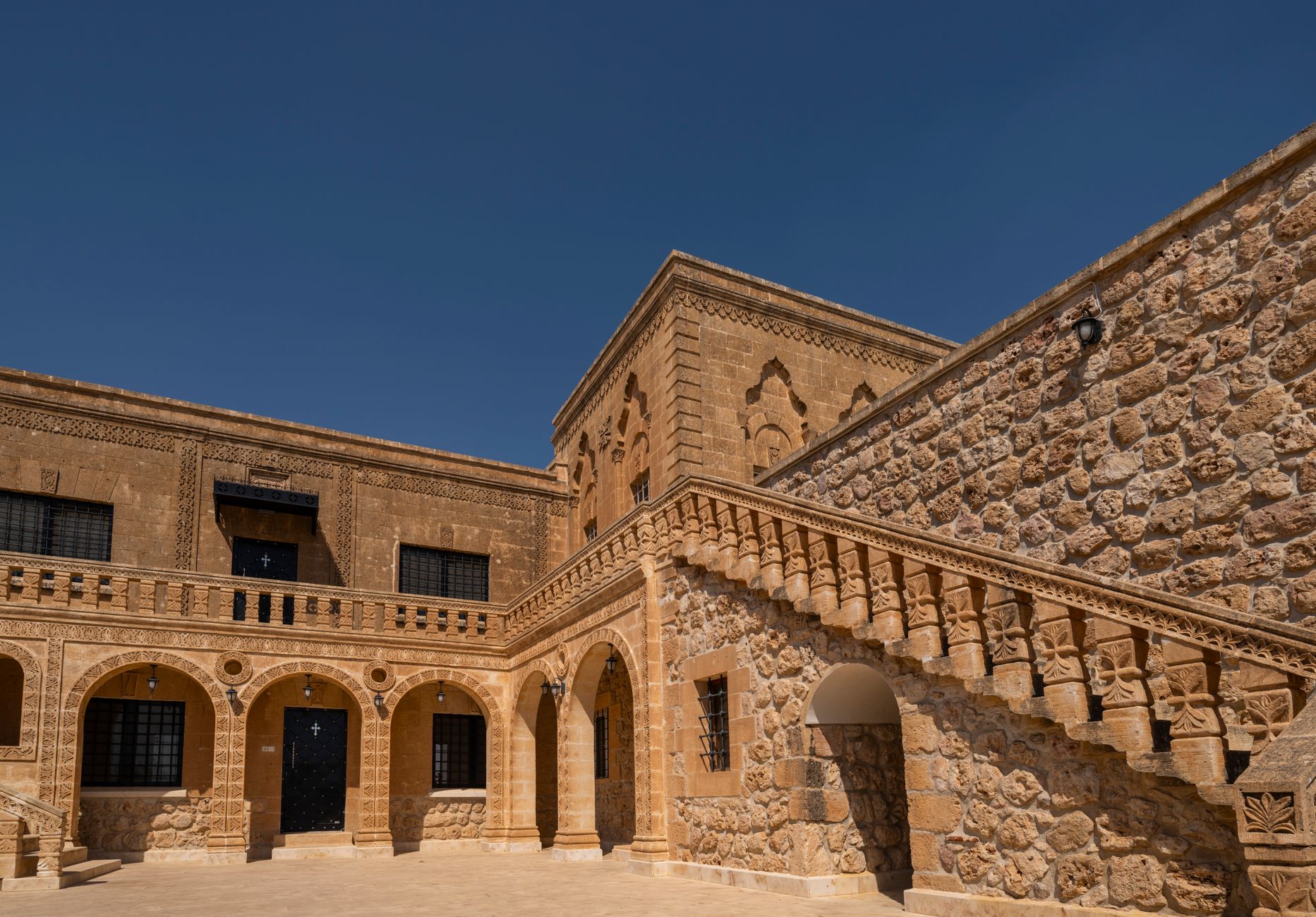
The tea house is a masterclass in cheap ordering. Your default is çay, black tea brewed strong and served in a tulip glass, usually with sugar cubes on the saucer. It is normal to drink three or four. If you want something herbal, ask for ıhlamur (linden flower) in winter or adaçayı (sage tea) year-round; both arrive with a spoon and a small dish of sugar.
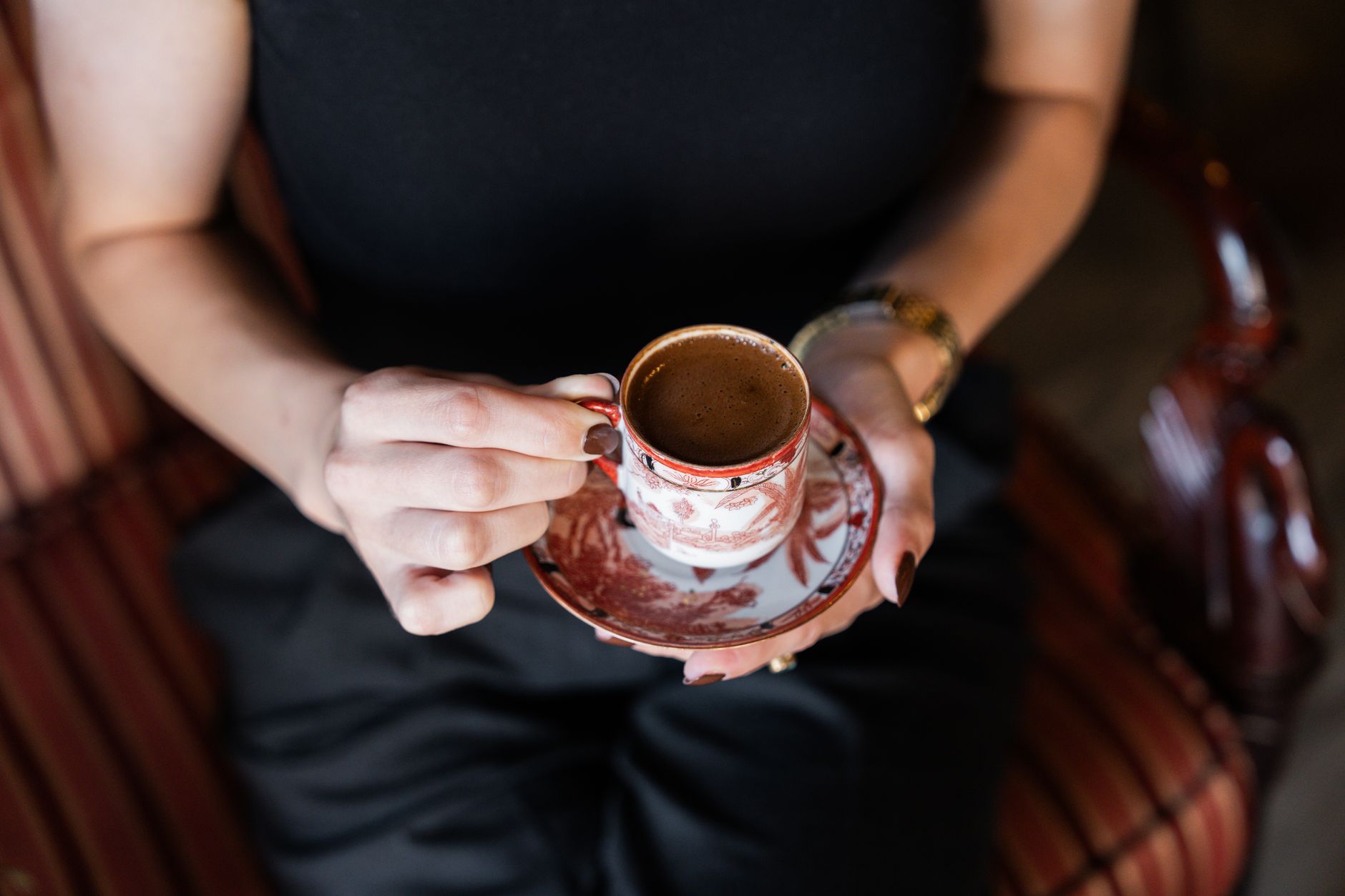
Turkish coffee (Türk kahvesi) is the other essential, and it is a different ritual: small cup, thick foam, no milk, and a glass of water alongside. Order it sade (no sugar), orta (medium), or şekerli (sweet). At a courtyard café, you might also find menengiç, a caffeine-free coffee made from wild pistachio, which is nutty and excellent in the southeast.
- Nargile (water pipe) is common in garden cafés, especially in the southeast and in Istanbul's courtyard spots. If it is on offer, it is a slow-drinking affair meant to be shared.
- Limonata, fresh-squeezed lemonade, is the summer move in Aegean courtyards and often made with mint.
- Ayran, salted yogurt drink, pairs with everything and costs very little.
- Simit or poğaça at the counter if the café sells snacks; otherwise, buy pastry first and bring it in — often fine, but ask.
- Kahvaltı at garden cafés on weekends: a spread of cheese, olives, jam, eggs, and endless tea, usually priced per person and worth it.
On price: tea is charged per glass, so keep track of your saucers if you want to know the total. Tipping is modest — rounding up is enough. And if the owner insists you try something on the house, accept it; refusing generosity is the one real faux pas.
Etiquette for Settling In Like a Regular
The unwritten rules are gentle. Greet the room when you enter with a quiet merhaba or kolay gelsin ("may it come easy") if someone is working. Sit where you are gestured to sit; the shaded corner may be "someone's" seat at that hour. Don't move chairs between tables without asking. And when your tea arrives, don't immediately reach for your wallet — the whole rhythm depends on paying at the end.
Conversation is normal and welcome, but so is silence. A courtyard tea house is one of the few public places where a lone traveler can sit for an hour with a book and be left entirely in peace while still feeling part of something. If someone does strike up a conversation, it will probably begin with where you are from and end with an offer of tea, and the polite exit is a compliment to the courtyard, a thank you, and a slow departure.
Photography: a quick shot of your tea and the vines is fine. Photographing the people at the tables is not, unless you ask and are clearly welcomed. Many men in tea houses are there precisely to be unobserved.
"In a good courtyard, the tea is almost incidental. You come for the shade and you stay because nobody has decided that you should leave."
Where the Courtyard Tradition Runs Deep
Istanbul's old quarters are full of them: the lanes behind the bazaars, the tea gardens tucked into the slopes above the Bosphorus, the vine-covered courtyards of Beyoğlu backstreets where a café occupies what was once a courtyard house. The tea gardens of the city's hilltop parks are the public version of the same idea — cheap tea, plastic chairs, and an entire skyline for free.
In the southeast, courtyard culture is inseparable from the region's architecture. In Mardin and Şanlıurfa, stone courtyards stay cool in punishing heat, and a tea house may be the quietest place in town. In Gaziantep, garden cafés lean toward menengiç and baklava; in the Aegean, toward lemonade and long breakfasts under fig trees. Central Anatolia's hans and caravanserais have been repurposed into tea gardens where the acoustics of the old stone make even a full courtyard feel hushed.
You can build a whole trip around these pauses rather than treating them as filler. Our itineraries and routes are easy to slow down, and if you're choosing a season, the best-time guide explains why late spring and early autumn are the courtyard sweet spots — long shade hours, no need to fight the sun for a chair.
Making It Part of Your Day (And Your Budget)
Treat a courtyard stop as a scheduled non-activity. One tea house in the late morning, one garden café in the hot middle of the afternoon. Two stops cost less than a museum ticket in most Turkish cities, and they will probably be the hours you remember most clearly. In a big city, use them to break up sightseeing districts; in a small town, use them to watch the whole town pass through one doorway.
Practical kit: small cash for tea, a light layer for shade that turns cool after sunset, and a low tolerance for rushing. If the tray comes by and you're not ready to leave, you only need one word: bir tane daha — one more.
For more on how to pace a Turkish trip without wearing yourself out, browse our travel tools and the full blog. The garden café is not a secret, exactly — it is simply easy to miss. Once you learn to see the low wooden door, you will find one on almost every street, and you may never sprint through a town again.
Thinking about a trip to Turkey?
Share your contact details and a vetted local expert will follow up with a plan built around you — free, no obligation.