

There is a particular kind of magic that settles over a city's railway station at dusk. The light falls golden through tall arched windows, the announcement chime echoes off stone walls, and for a moment you are part of a story that began more than a century ago. In Türkiye, that story is especially rich. From the Marmara shores of Istanbul to the Anatolian steppe and the rugged east, the country's historic stations and grand terminals are not merely transit points; they are architectural treasures, witnesses to empire and republic, and gateways that reward the traveller who chooses to linger.
Haydarpaşa: The Crown Jewel of Istanbul
No journey through Türkiye's railway heritage can begin anywhere but Haydarpaşa. Standing on the Asian shore of the Bosphorus, this neo-Renaissance terminal opened in 1908 as the western terminus of the Baghdad Railway, the ambitious line that once promised to link Berlin to the Persian Gulf. Its twin towers, steep mansard roofs, and grand facade were designed by German architects Otto Ritter and Helmut Cuno, and for generations it was the departure point for travellers heading east — a place of tearful goodbyes and hopeful beginnings.
Even today, as renovation work continues to restore its former glory, Haydarpaşa retains a solemn dignity. The ferry crossing from Eminönü or Karaköy to the nearby pier is itself a ritual, offering a slow approach by water that heightens the anticipation. Walk along the quay, look up at the stonework, and you can almost hear the whistle of the Orient Express echoing in the salt air.
Because the building has been under restoration, access to the interior can be limited. Check locally before you go, and treat any glimpse of the concourse as a privilege. The exterior, however, is always worth the trip — especially in the late afternoon, when the sun sets behind the European skyline and the station glows like a lantern across the water.
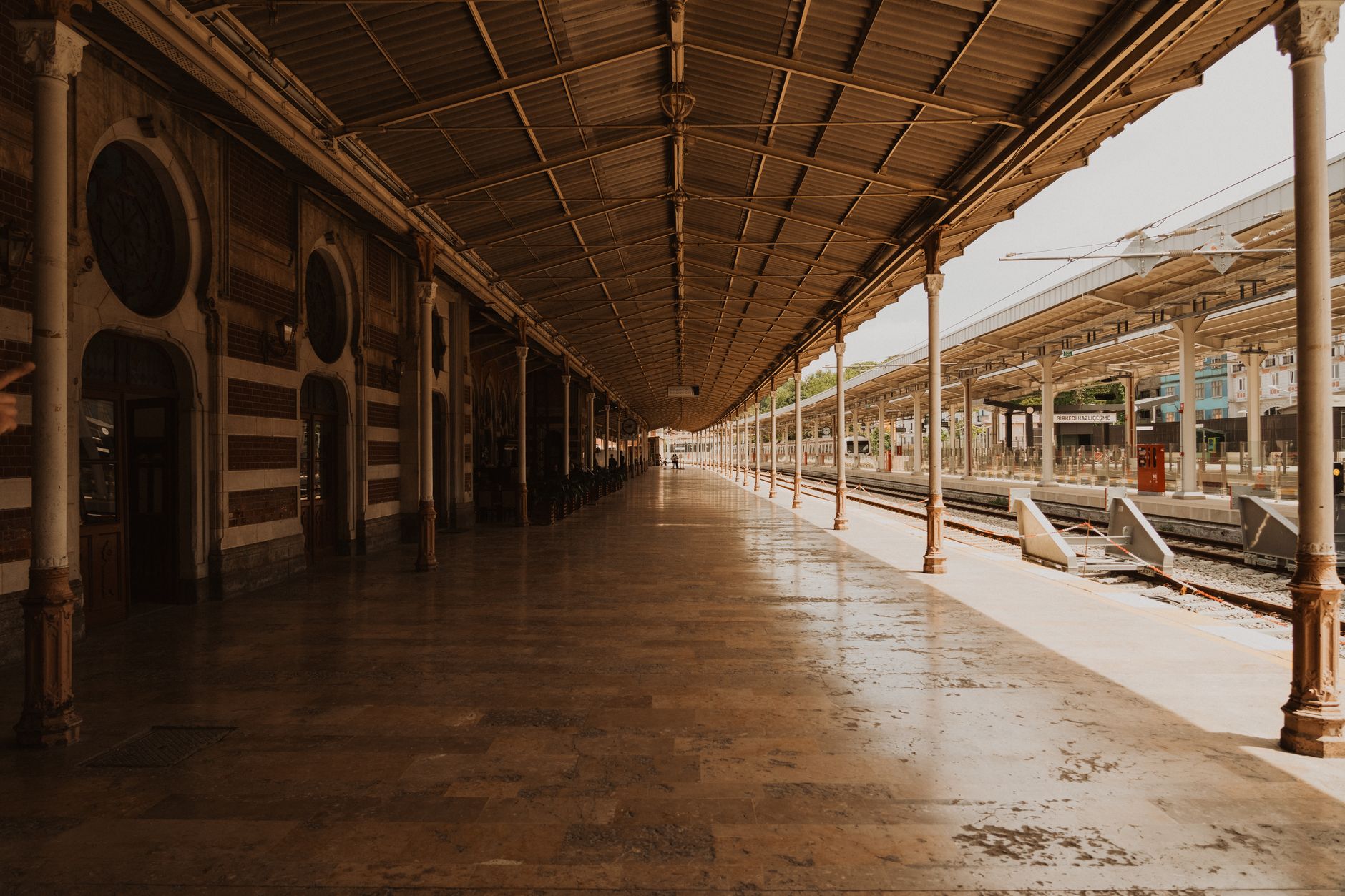
Sirkeci: The Gateway to the Orient Express
On the European side, tucked between the Spice Bazaar and the Topkapı Palace walls, Sirkeci Station is the other half of Istanbul's railway soul. Opened in 1890, it was the eastern terminus of the legendary Orient Express, the train that carried Agatha Christie, kings, spies, and adventurers from Paris to the edge of the Bosphorus. Its red-brick facade, arched windows, and Ottoman-Moorish detailing make it a warm, intimate counterpoint to Haydarpaşa's grandeur.
Today Sirkeci serves local commuter lines and the Marmaray tunnel connection, but it also houses a small railway museum and a restaurant that evokes the golden age of travel. The station's scale is human — you can imagine porters with brass trolleys, the hiss of steam, and the clink of champagne glasses in the dining car.
Visiting Sirkeci is easy: it sits in the heart of the historic peninsula, a short walk from Eminönü. Pair it with a morning at the bazaar and a ferry ride across to Haydarpaşa for a full day of railway nostalgia.
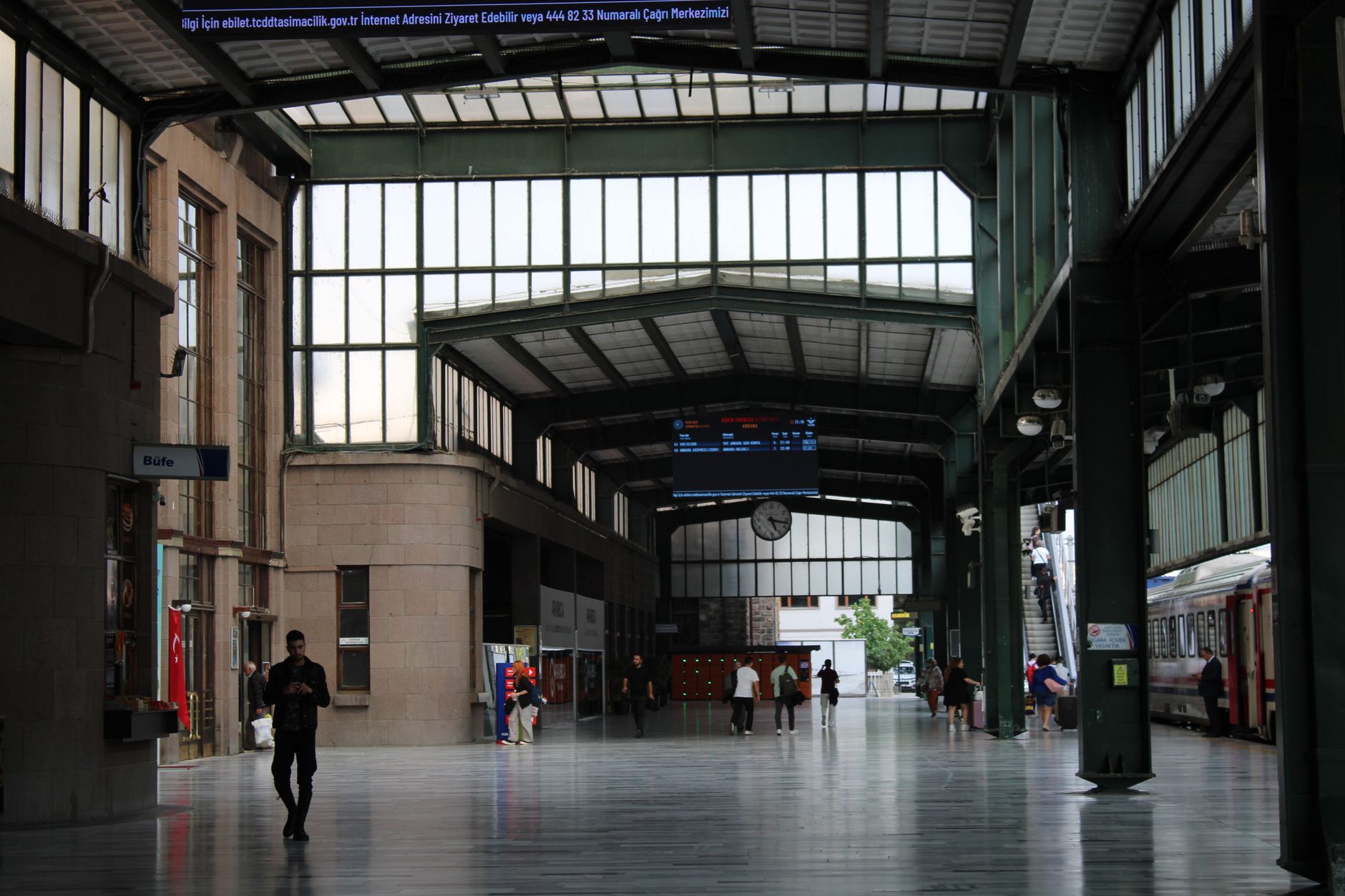
Selçuk: A Fairy-Tale Station for Ancient Wonders
Far from the bustle of Istanbul, the little station at Selçuk feels like something out of a storybook. Its pale stone building, climbing roses, and palm trees create a gentle, sun-washed welcome to the nearby ruins of Ephesus. The station was built during the early Republican era, and its clean, modest lines reflect a period when the new republic was laying rails across Anatolia as a symbol of modernity and national unity.
For travellers, Selçuk is the perfect base for exploring Ephesus, the Basilica of St. John, and the Temple of Artemis. Arriving by train — especially on the scenic line from İzmir — is a delight, as the route winds through olive groves and small towns before pulling into this tranquil stop.
Allow time to sit on a bench outside the station and watch the light change over the surrounding hills. The atmosphere is unhurried, and the station's small café serves strong tea and simple snacks, making it a lovely spot to pause before or after a day among the ruins.
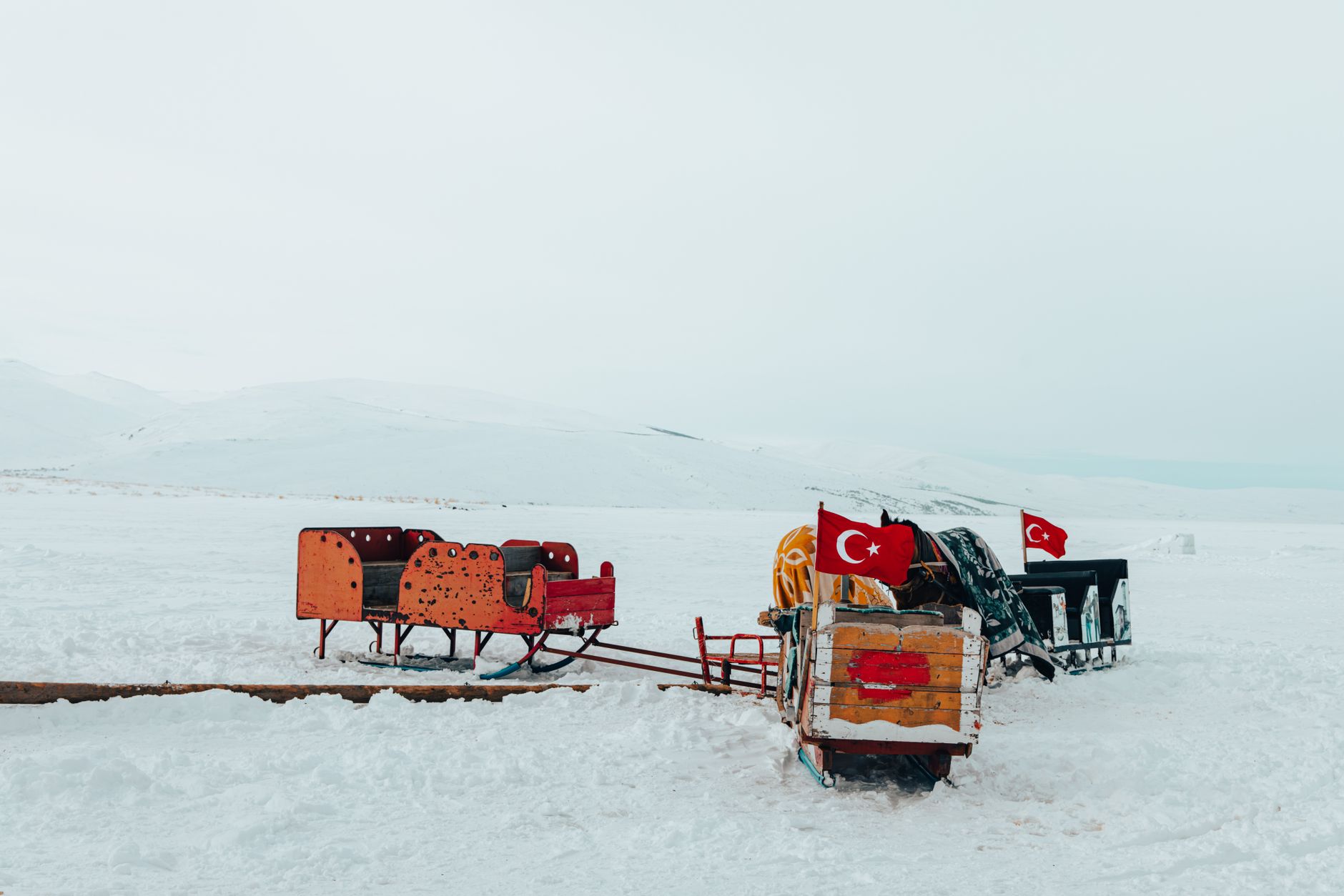
Kars: The Frontier Station at the Edge of the East
If Haydarpaşa is the crown, Kars is the wild frontier. This station, at the eastern edge of Türkiye, is the terminus of the legendary Doğu Express, a train journey that many consider one of the most beautiful in the world. The station building itself is modest but evocative, set against a backdrop of wide skies, rolling steppe, and the distant Caucasus mountains.
Kars has a complex history — Russian, Ottoman, and Turkish — and its architecture reflects that layered past. The station area, with its old stone buildings and wide platforms, feels like a place where empires once met and parted. In winter, snow blankets the tracks and the whole scene takes on a hushed, cinematic quality.
The Doğu Express from Ankara to Kars takes around 24 hours and is best experienced in a sleeper compartment. Book well in advance, especially in summer and during holidays. The journey is not about speed; it is about watching the landscape transform from city to farmland to vast, empty plains, and finally arriving at this remote, romantic outpost.
Other Gems: Ankara, İzmir, and Beyond
Ankara's old station, though less ornate than Istanbul's terminals, played a central role in the early Republic and still retains a dignified, functional charm. İzmir's Alsancak station, with its neoclassical facade, is another handsome survivor of the late Ottoman and early Republican railway boom.
Further east, stations like Erzurum and Elazığ serve as reminders of the ambitious rail projects that knit the country together. Many are simple, but their setting — mountains, rivers, and endless sky — gives them a quiet grandeur. For the dedicated railway romantic, a journey along the Van Lake Express or the Fırat Express offers a chance to experience these stations in their natural rhythm.
Wherever you go, remember that these stations are working pieces of infrastructure, not museums. Respect the passengers, the staff, and the daily life that continues around you.
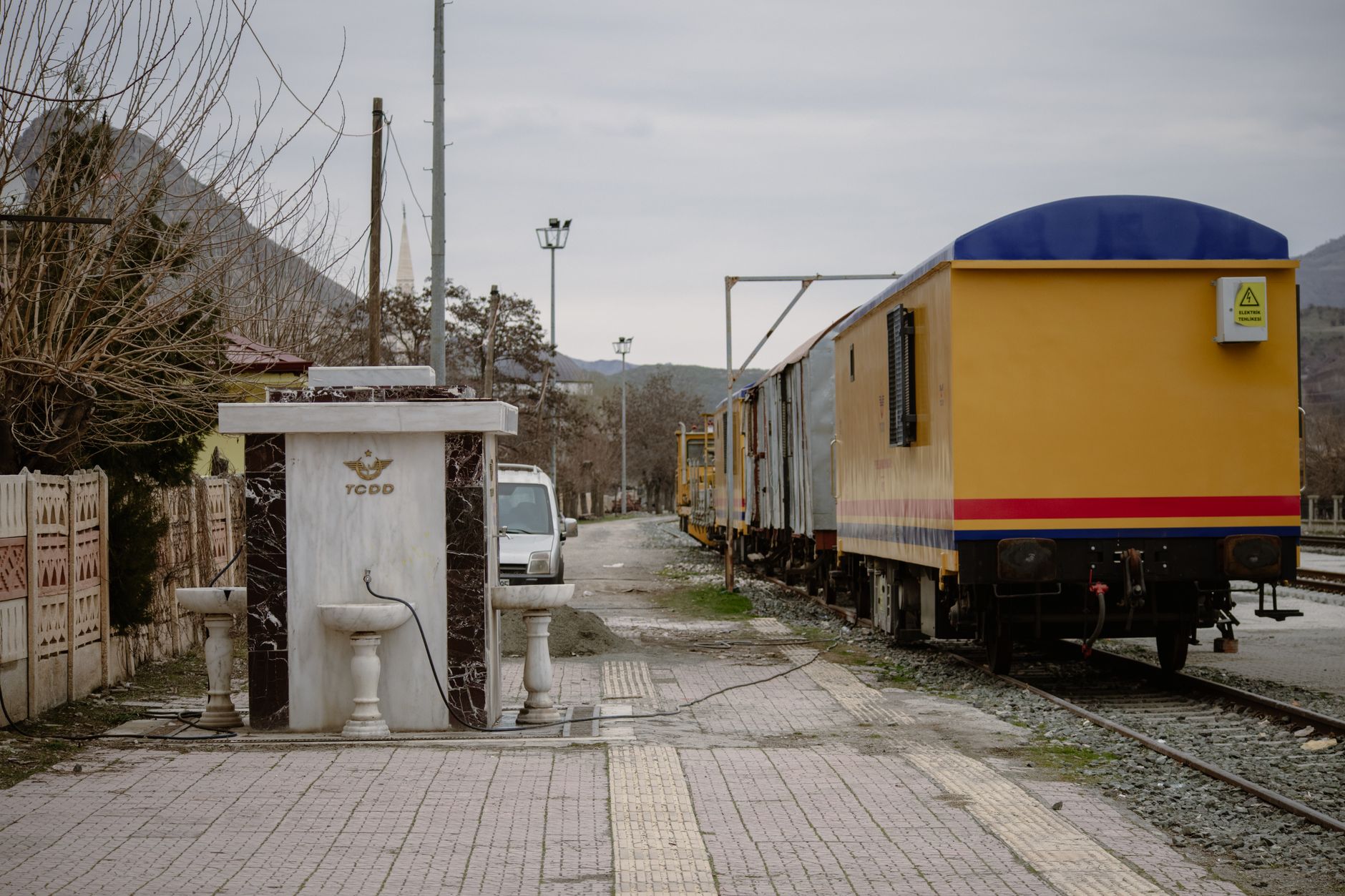
Practical Advice: Routes, Timing, and Photography Etiquette
Routes: The most rewarding historic railway journeys include the Istanbul–Kars route (via Ankara and the Doğu Express), the İzmir–Selçuk line, and the Ankara–Kars leg. The Marmaray tunnel now connects the European and Asian sides of Istanbul, making it easy to visit both Sirkeci and Haydarpaşa in a single day.
Timing: Spring and autumn are ideal — temperatures are mild, and the light is beautiful. Summer can be hot and crowded, especially on popular routes; winter offers dramatic snowscapes in the east but requires warm clothing and flexible plans. Always check schedules in advance, as seasonal changes and maintenance can affect services.
Photography etiquette: Stations are public spaces, but they are also places where people work and travel. Ask before photographing individuals, avoid blocking platforms or doorways, and never enter restricted areas. Tripods can be a nuisance in busy concourses; a small camera or phone is usually sufficient. If you are lucky enough to be granted permission to photograph inside a historic building, be respectful and follow any instructions from staff.
Booking: Use the official TCDD website or app for tickets. Sleeper compartments on long-distance trains sell out quickly, so plan ahead. For the Doğu Express, consider booking a private compartment for comfort and privacy.
Why These Stations Matter
Türkiye's historic railway stations are more than architecture. They are memory palaces — repositories of departures and arrivals, of hopes and homesickness, of a nation's determination to connect its far-flung corners. They remind us that travel is not only about the destination but about the threshold, the moment of transition, the romance of the platform.
So next time you plan a trip through Türkiye, build in time for the stations themselves. Have a glass of tea at Haydarpaşa, wander the halls of Sirkeci, sit in the sun at Selçuk, and watch the sunset from the platform at Kars. These are not just places to pass through; they are places to linger, to imagine, and to fall in love with the slow, elegant art of railway travel.
Thinking about a trip to Turkey?
Share your contact details and a vetted local expert will follow up with a plan built around you — free, no obligation.