
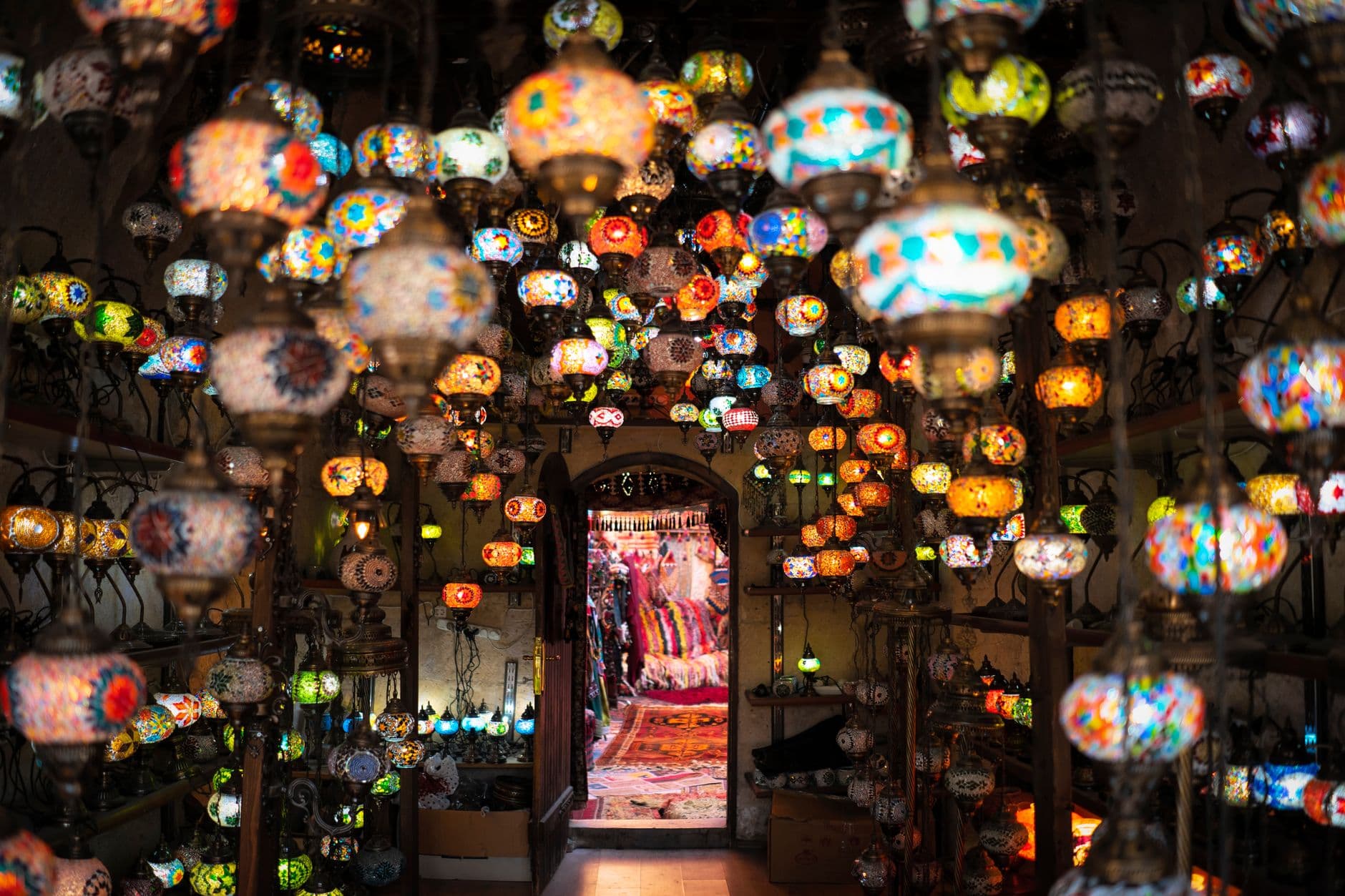
Why a Mosaic Lamp Workshop Belongs on Your Türkiye Itinerary
Most souvenirs from Türkiye are bought. A mosaic lamp is made. That distinction matters more than it sounds. Sitting at a workbench with a bowl of colored glass chips, a brass frame and a small dish of silicone glue, you learn in about twenty minutes why Ottoman craftsmen guarded their trade secrets: patterns that look spontaneous on a finished lamp turn out to be the product of very deliberate geometry.
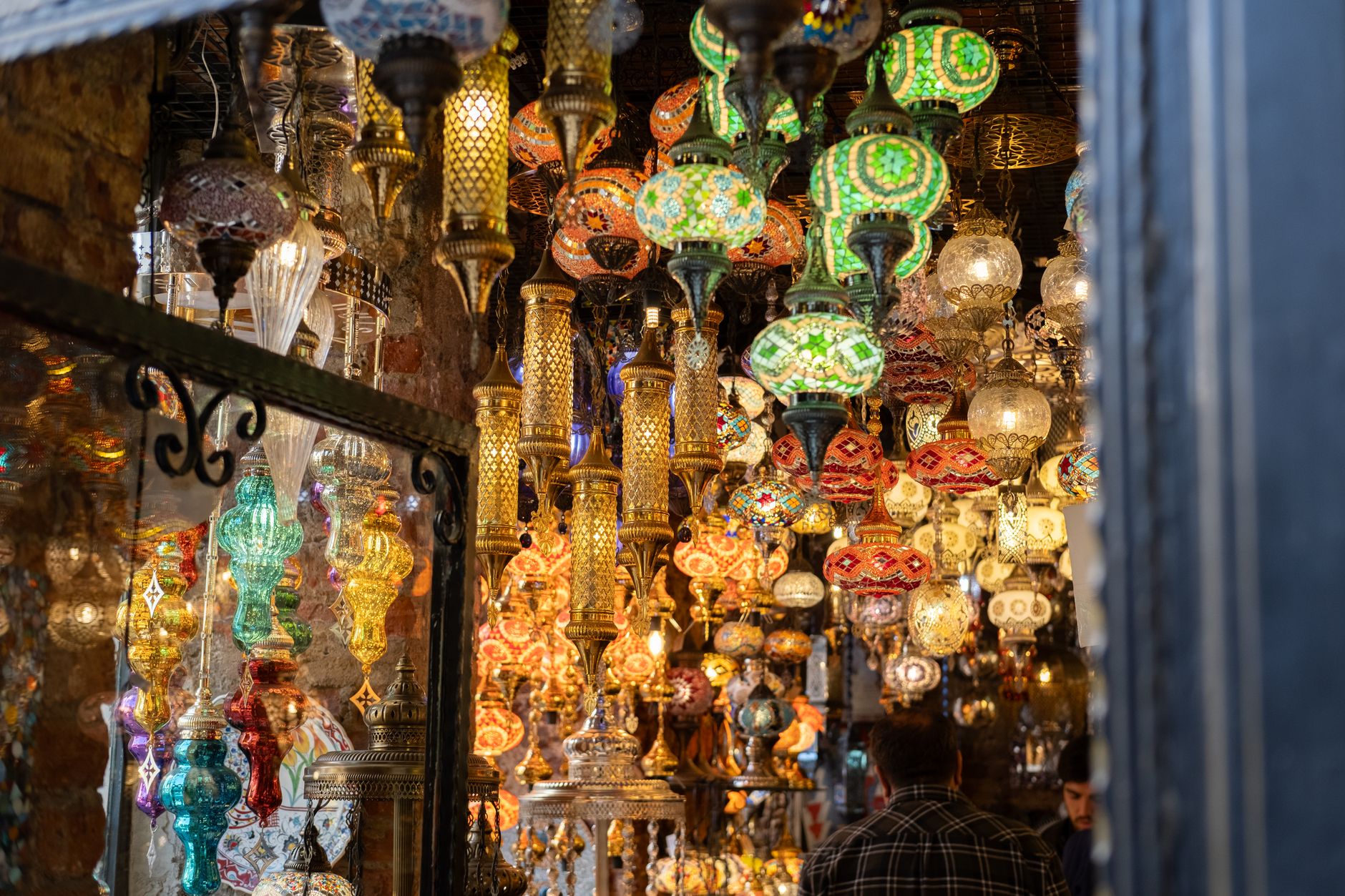
The craft itself descends from the çini tile tradition of İznik and Kütahya, and from the glasswork that once lit mosque courtyards, hamams and Ottoman coffee houses. Contemporary workshops simplify the technique — no kiln firing, no leaded glass — but they keep the essential gesture: cutting, sorting and arranging translucent glass into a frame so that light passing through it becomes a pattern rather than an illustration.
A class typically runs two to four hours, costs between €25 and €70 depending on the lamp size and studio, and includes all materials and packing. You do not need artistic ability. You do need patience for small pieces, and a willingness to accept that your first row of diamonds will be slightly less perfect than the sample on the wall. That imperfect row is usually the one you will point out to friends back home.
What Actually Happens in a Turkish Lantern Workshop
The first hour: choosing and designing
A good instructor begins by explaining the geometry of the craft rather than handing you a template. You will look at how a traditional çini motif — a tulip, a carnation, a stylized vine — is built from repeated units, and how the same units work in glass. Then comes the fun part: choosing a frame. Standard sizes run from small tealight holders to table lamps of roughly 30–45 cm and standing floor lanterns that can reach 120 cm, the tallest being the most difficult to transport and the least forgiving to assemble.
Beginners should choose a table lamp. It is large enough to feel like a real project, small enough to finish comfortably, and easy to pack. If you are traveling onward for weeks, ask about the smallest option — many studios offer palm-sized lanterns that fit in a daypack or carry-on.
Next you select glass. Studios stock chips in the colors of İznik ceramics: cobalt blue, turquoise, coral red, olive green, amber and clear. Do not fill your tray with every color available. Two or three dominant tones plus one accent will read as intentional; eight colors will read as a craft-fair explosion.
The middle hours: cutting, laying and gluing
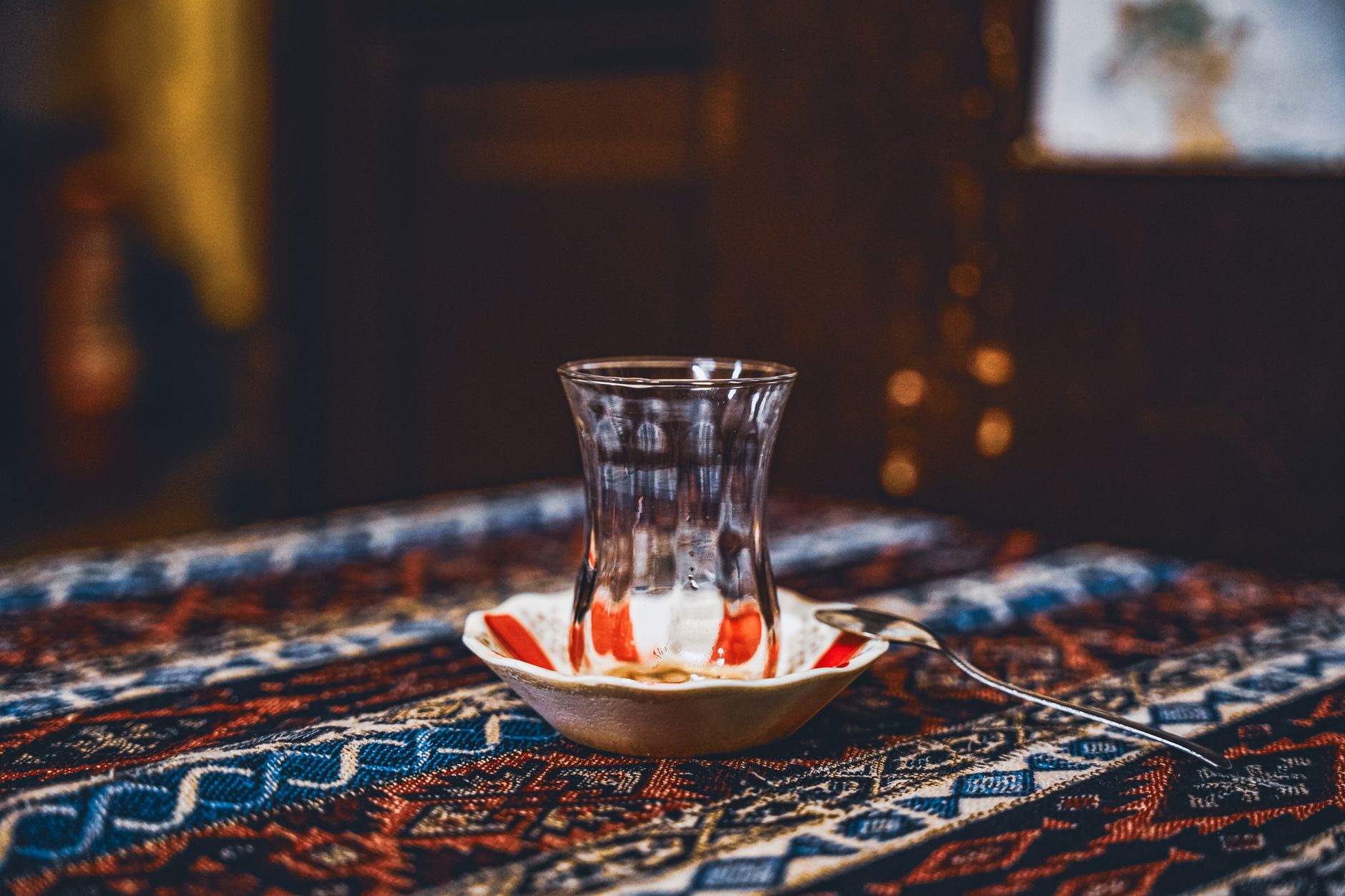
This is the quiet, absorbing part. You break glass with small pliers, lay pieces onto a sticky template, adjust, remove, adjust again, and finally fix them in place with clear-drying adhesive. Instructors circulate with tea and gentle corrections. Expect your neck to ache a little and your sense of time to disappear entirely — most people describe the session as meditative rather than difficult.
Some studios finish your piece with a protective coating or a grout line and hand it back to you the same day; others need a few hours or an overnight for the adhesive to cure fully. Always confirm the collection time before you pay, especially if you have an early flight or a bus to your next destination.
The lamp is not the souvenir. The lamp is the evidence that you spent an afternoon making something with your hands in a city that has been making beautiful things for centuries.

Where to Find Vetted Studios: Istanbul, Cappadocia and the Aegean
Istanbul
Istanbul has the largest supply and the widest quality range. Clusters are in Sultanahmet and the bazaar district around the Grand Bazaar and the Arasta Bazaar, plus a newer crop in Karaköy, Galata and Kadıköy aimed at residents rather than tour groups. Studios in Sultanahmet cater heavily to cruisers and same-day visitors, so they tend to be efficient and a little hurried; Karaköy and Kadıköy studios usually run longer sessions, cap groups at six to ten people, and let you work at your own pace.
The strongest signal of a vetted studio is not its Instagram: it is whether the instructor can explain the history of the motif you are copying, whether the glass pieces come from Kütahya or from a generic supplier, and whether the glue is a proper low-VOC mosaic adhesive rather than hot glue. A studio that offers hot glue is a studio that expects your lamp to fall apart in a suitcase.
In winter, book at least a day ahead; in July and August, a week for weekend slots is sensible. Many Istanbul studios also offer Turkish delight, baklava and endless tea as part of the session — a small thing that makes a rainy afternoon in the old city memorable. If your schedule is tight, check our itineraries for how a workshop can slot between a Bosphorus cruise and a mosque visit.
Cappadocia
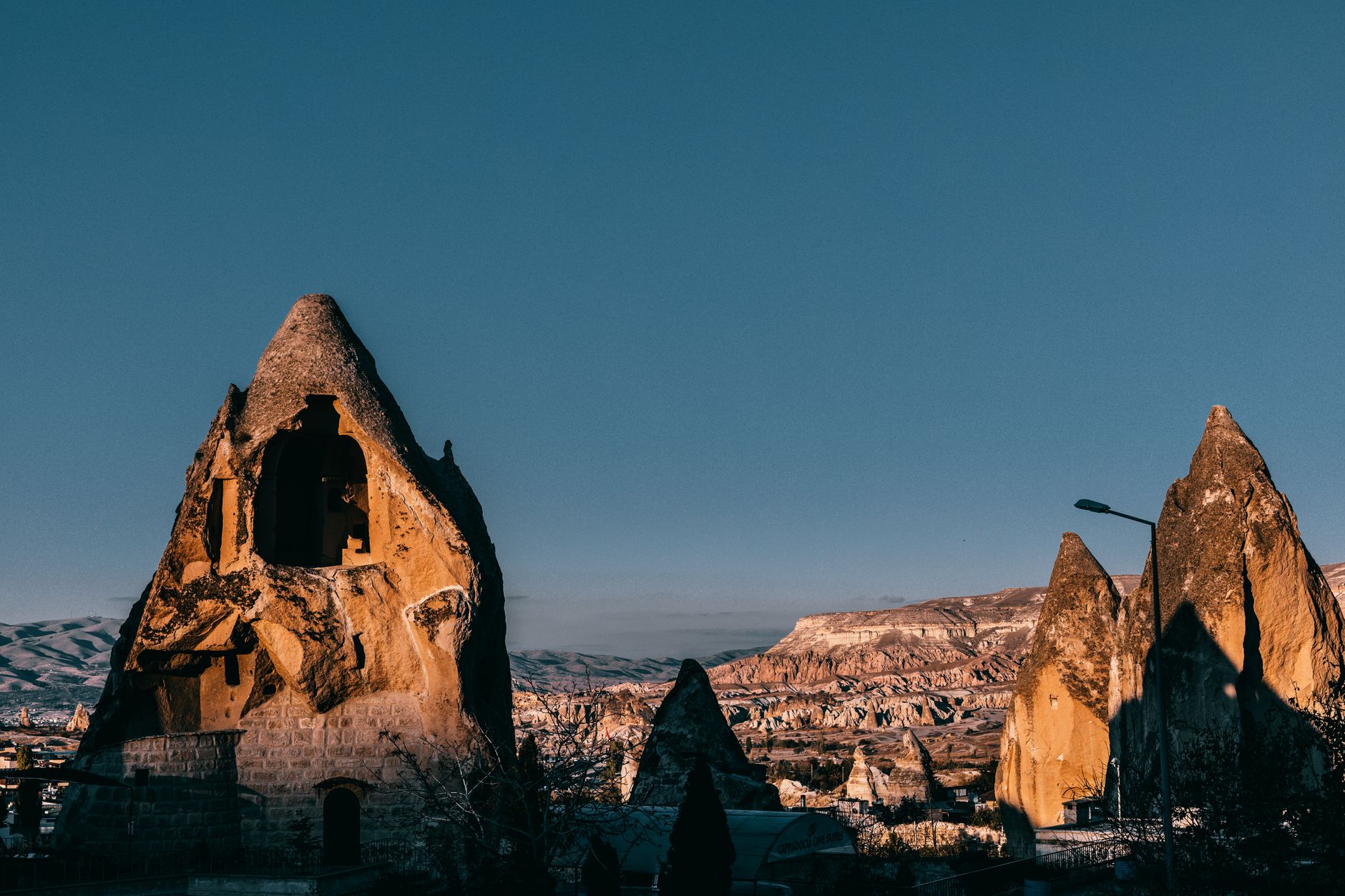
Göreme, Uçhisar and Ürgüp all have workshops, frequently attached to ceramics studios that work in the Avanos tradition. The advantage here is the setting: a class in a cave-carved space, with snow outside or a warm autumn light through the window, is a different experience from a bright shop off a bazaar lane. Cappadocian studios often combine mosaic lamp-making with pottery painting, so you can make a lantern one afternoon and paint a bowl the next.
Because many travelers arrive in Cappadocia on a two-night stay organized around balloon flights, timing matters. Balloon mornings end early; a 10:00–10:30 workshop start is realistic if you are not flying. Do not book a workshop for the afternoon before a night bus — cure times can run longer than advertised.
The Aegean coast
İzmir, Alaçatı, Bodrum, Selçuk and Kuşadası have smaller but often more personal studios. İzmir and the surrounding region are close to the ceramics heartland of Kütahya, and several Aegean workshops sell genuinely local tiles alongside their class offerings. In Selçuk, workshops near the Ephesus route pair well with a slow half-day; in Bodrum and Alaçatı, expect boutique studios with high-season prices and a resort-town pace.
Coastal studios are more seasonal than Istanbul or Cappadocia: some close entirely between November and March. If you are traveling in the shoulder months, email before you build your day around a class. Our guide to the best time to visit covers how the seasons affect coastal openings.
How to Judge a Workshop Before You Book
Ask four questions by email or WhatsApp before paying a deposit. First: how many people are in the class, and how many instructors? A ratio worse than eight students per instructor means you will be waiting for help. Second: what is the maximum size of the finished lamp, and is packing material included? Third: when is the piece ready for collection, and what happens if it is not? Fourth: do you use hot glue or mosaic adhesive?
Then read recent reviews for one specific phrase — “I had to finish it myself” — which usually indicates a busy studio pushing people out the door. Look also for reviews mentioning that the instructor discussed pattern history or showed examples of old İznik tiles. Studios that teach the tradition tend to be the ones that do not rush.
Payment norms are relaxed: most studios accept cash in lira or euros, some take cards, and a few ask for a small deposit by bank transfer. Deposits of 20–30% are normal. If you are booking for a family or group, ask whether children can participate — many studios welcome ages eight and up with a simplified design, but small glass chips and pliers make this an unsuitable activity for toddlers.
What to Wear, Bring and Expect
- Wear: sleeves you can push up, and clothes you do not mind getting glue on. Adhesive does not wash out of linen.
- Bring: reading glasses if you use them — you will be working close — and a phone charger, since sessions run long.
- Leave behind: your hotel key pressure and your watch. Phones go face-down here.
- Budget: expect €25–40 for a tealight or small lantern, €40–70 for a table lamp, and more for large standing pieces. Group discounts are common.
- Duration: two hours for small pieces, three to four for table lamps. Large lanterns may span two sessions.
- Language: English instruction is standard in tourist areas; elsewhere, ask in advance.
Allergies and sensitivities matter here: adhesives smell stronger in warm, enclosed rooms, and some people find the fume noticeable for the first fifteen minutes. Ask for a spot near a window. If you have cut-resistant needs or hand strength issues, tell the instructor at the start — the glass-breaking step can almost always be done for you.
Getting Your Finished Lamp Home Safely
This is where most travelers get into trouble, and it has nothing to do with craft skill. A mosaic lamp is a glass shell around a metal frame. It does not survive a soft bag in an overhead locker, and it will not survive a checked suitcase without proper packing.
Packing for carry-on or checked luggage
- Ask the studio to pack it. Good studios wrap the lamp in bubble wrap, then foam, then a rigid cardboard box with the frame braced. This packing is usually free or a few euros, and it is better than anything you can improvise at a hotel.
- Carry it if you can. Small and medium lanterns fit in a rigid box inside a 55×40×20 cm cabin bag. That is the safest option by a wide margin.
- If checked, treat the box as fragile cargo. Put the box in the center of your suitcase, surrounded by clothing on all six sides. Nothing rigid should press against the lamp.
- Remove and carry the glass shade separately if the design allows. Many table lamps separate at the neck; ask your instructor to show you how, and carry the shade in your hand luggage.
- Label the box with your name, destination and a “fragile — glass” note in English and Turkish.
Note that airlines differ on whether craft items count as a personal item. If your lamp is boxed and bulky, check with your carrier before the airport day, and keep the receipt in case you need to prove it is a souvenir rather than merchandise.
Shipping instead
Studios in Istanbul and Cappadocia increasingly offer shipping through Turkish cargo companies such as Aras, Yurtiçi Kargo or UPS, usually costing €25–60 to Europe and more to North America, with delivery in one to three weeks. Ask three things: whether the shipment is tracked and insured for the full value, whether the studio has shipped to your country before, and what happens if the lamp arrives broken. Get the tracking number in writing before you leave the shop — not as a promise to send it later.
Some travelers prefer to ship and buy nothing else bulky, which keeps the rest of the trip light. Others carry the lamp and ship the ceramics. Either way, keep the original box for the flight home and photograph the lamp before packing, in case you need to make an insurance claim. For general pre-departure logistics, our travel tools page is a good place to start.
Making a Day of It: Pairing Workshops With the Rest of Your Trip
A workshop is best as an anchor, not the whole day. In Istanbul, pair a morning class in Sultanahmet with the Hippodrome, the Basilica Cistern and a long lunch, or an afternoon class in Karaköy with the Galata Tower and the waterfront. In Cappadocia, put a workshop on the day you are not ballooning and pair it with a walk through Göreme's valleys or a visit to the Open Air Museum. On the Aegean, pair a Selçuk class with Ephesus and a Bodrum class with the castle and marina.
Families do especially well with this format: the craft session gives children a concrete task while adults get a genuine rest, and everyone leaves with something to show. Couples tend to book the longer table-lamp session and treat it as a slow afternoon. Solo travelers often find the small-group studios the most sociable hours of the trip.
If you want help fitting a specific studio into a broader route, our trip planner and local experts can build the day around your dates, and our FAQ covers practical questions like tipping and cash. Whichever city you choose, book the class early in your stay rather than the last day — you will want the buffer for cure time, and you may want to go back for a second, smaller lamp. Many people do.
Thinking about a trip to Turkey?
Share your contact details and a vetted local expert will follow up with a plan built around you — free, no obligation.