
Why Türkiye's Municipal Beaches Are the Coast's Best-Kept Secret
Most travellers arrive in Türkiye expecting to pay resort prices for a patch of sand. The reality is very different. Along huge stretches of the Aegean and Mediterranean coast, local municipalities (belediyeler) run public beaches that are free to enter and equipped with showers, changing cabins, toilets, sunbeds and umbrellas — often at no charge at all, sometimes for the price of a tea.
This is a deliberate part of Turkish civic life. Beaches are treated as public infrastructure, the same way a park or a promenade is. Municipalities invest in cleaning crews, lifeguard stations, accessibility ramps and shaded picnic areas, and they keep the sand raked through the summer season. For families, this changes the economics of a coastal holiday entirely: you can spend two weeks on the sea without ever paying an entrance fee.
What makes these beaches genuinely special, though, is the culture around them. Turkish families arrive in the late afternoon with coolers, tea flasks, watermelon and backgammon boards. Grandmothers swim in the shallows, teenagers play volleyball, and someone always offers you a slice of something. It is warm, unpretentious and refreshingly uncommercial. If you want to understand how locals actually holiday, this is where to look.
Cleanliness and safety are consistent themes. Blue Flag certification is widespread, showers and taps are standard, and lifeguards patrol the busiest municipal stretches from June to September. Below is a practical guide to the best free-amenity stretches on the Antalya, Muğla and İzmir coasts, plus tips on pairing them with the cafés just behind the sand.
The Antalya Coast: Long Sandy Municipal Beaches in the City and Beyond
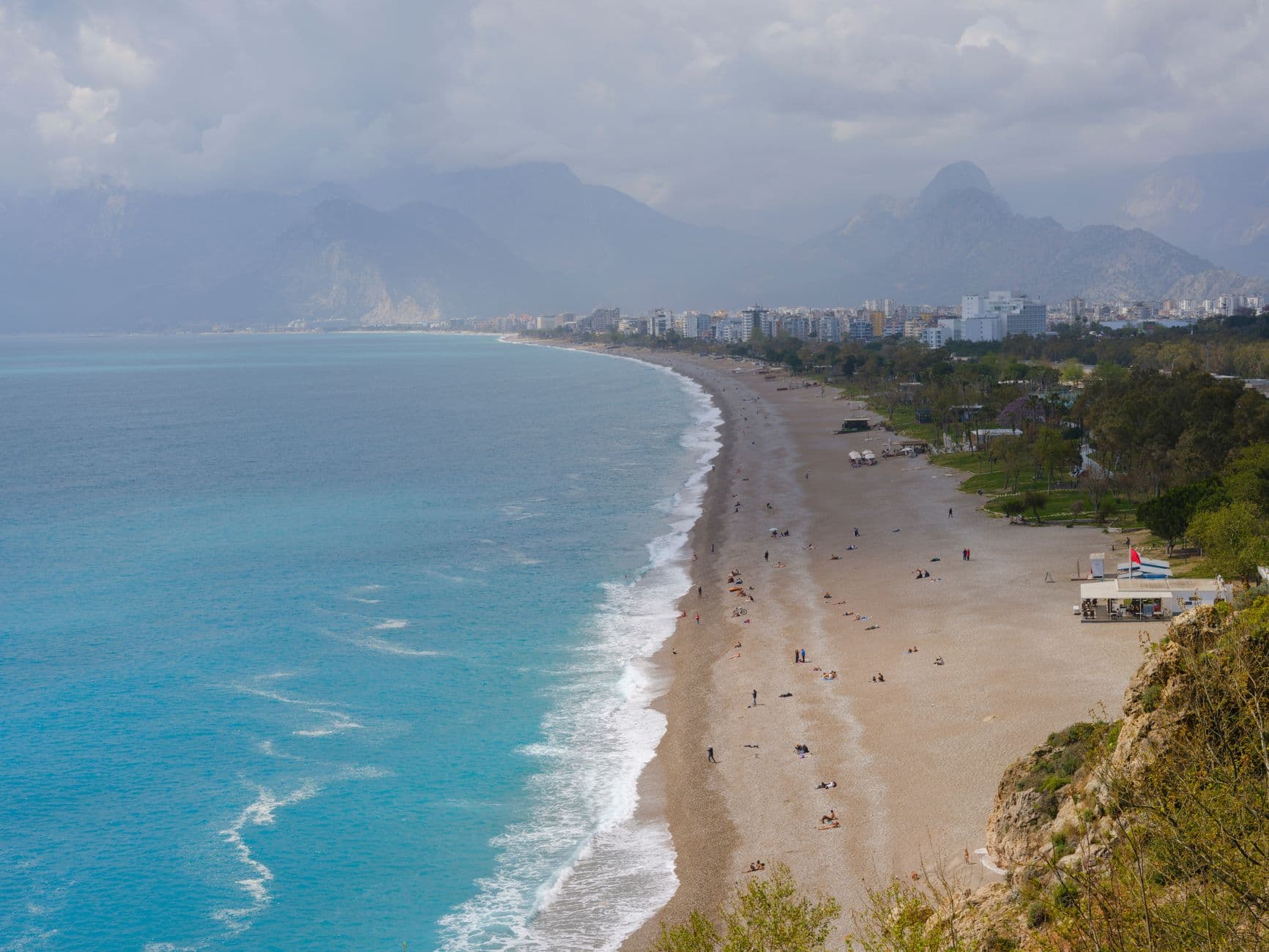
Antalya is the easiest place in Türkiye to experience a fully serviced free beach. Konyaaltı Beach, stretching west from the city centre, is the flagship: a long pebbly-sand shore backed by the Beydağları mountains, with free entry, outdoor showers, changing rooms, toilets, lifeguard towers and a wide promenade full of bikes and tea gardens. Sunbeds and umbrellas are managed by small licensed operators, and the municipal sections are free to use if you bring a towel.
Further east, Lara Beach offers finer sand and a longer shallow shelf, which makes it excellent for small children. The public sections between the resort hotels are municipal and free, with showers and shaded picnic tables. Because the water deepens gently, families tend to settle here for whole afternoons.
Beyond the city, head west to Adrasan and Olympos for a wilder, greener version of the same principle: public access, basic showers, and pine-covered slopes running down to the water. If you are building a route around the region, our itineraries pair Antalya beaches with the ancient sites inland, and our best-time guide explains why late May and September are the sweet spots for warm sea without peak crowds.
Practical tip: arrive before 10:00 to claim a shady spot under a municipal pergola, and bring water shoes for the pebbly sections around Konyaaltı. Showers are typically cold-water and open-air near the promenade stairs — perfect after a swim, less so for a full shampoo.
Muğla: Free Showers and Shade Along the Turquoise Coast
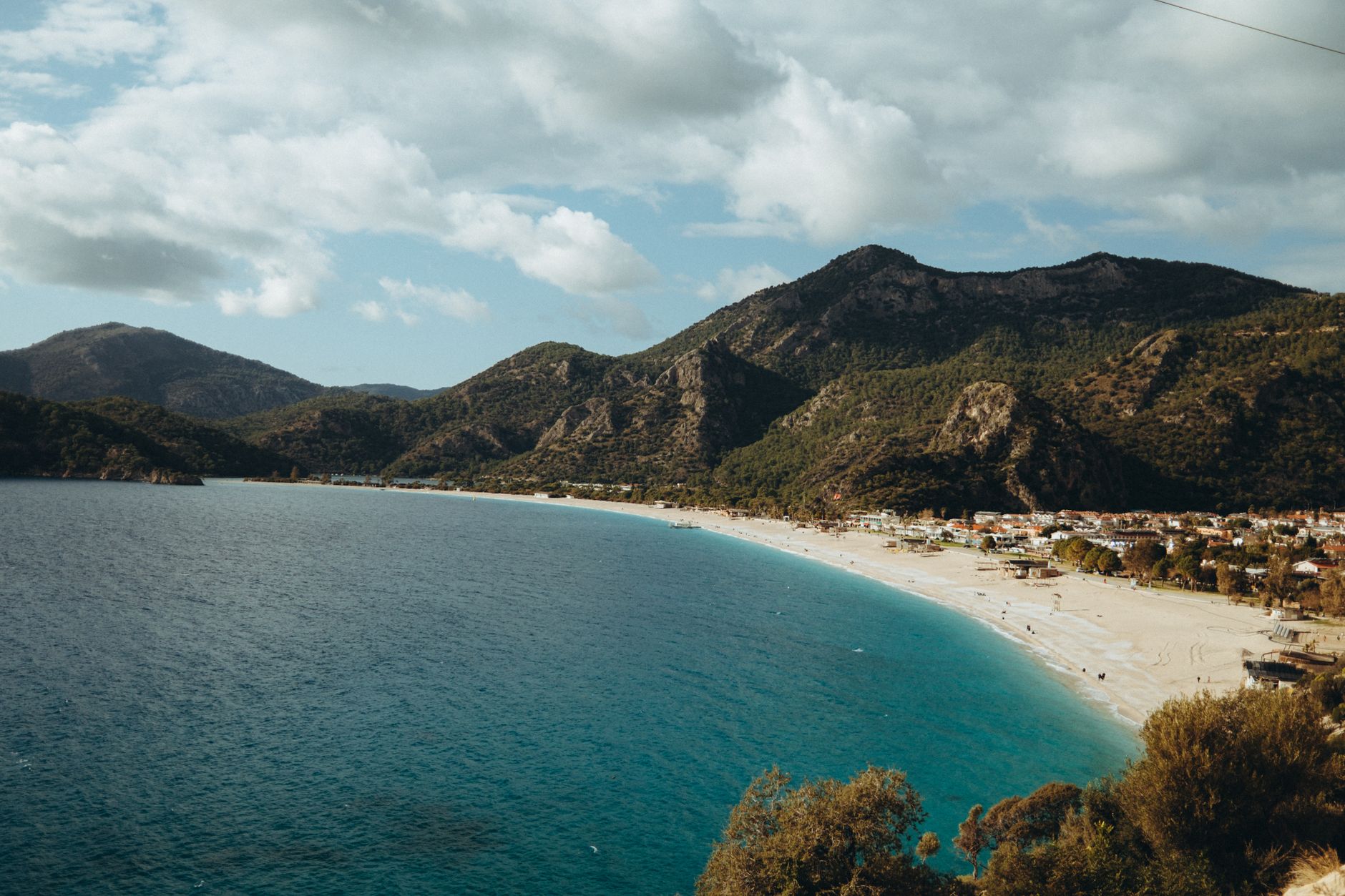
Muğla province covers the postcard stretch — Bodrum, Marmaris, Fethiye, Ölüdeniz, Dalyan — and its municipalities have quietly built some of the best public beach infrastructure in the country. Ölüdeniz Belcekız Beach is a national park with paid entry, but the public beach at the southern end has free access, showers and lifeguards, with the lagoon's unreal blue on one side and cafés on the other.
In Fethiye, Çalış Beach is a long, free, pebbly-sand municipal stretch famous for its sunset, with showers, toilets and a promenade of inexpensive cafés — a great base for families who want to walk everywhere. Marmaris Public Beach in the town centre is similarly free, well maintained and steps from the marina, with regular cleaning and lifeguard cover in season.
For a quieter version, try Akyaka or İçmeler, where municipal beaches sit beside pine trees and shallow, calm water. Smaller coves around Datça and the Bozburun peninsula often have simple municipality-run facilities — a shower block, a few benches — and a single family-run café serving gözleme and tea.
Muğla's beach culture is relaxed and family-first. You will see generations swimming together, and nobody minds if your children borrow a bucket. Do note that some parts of the province are pebbly; a pair of cheap sea shoes, sold at every market, is worth the small cost.
İzmir: City Beaches and the Aegean's Friendliest Promenades
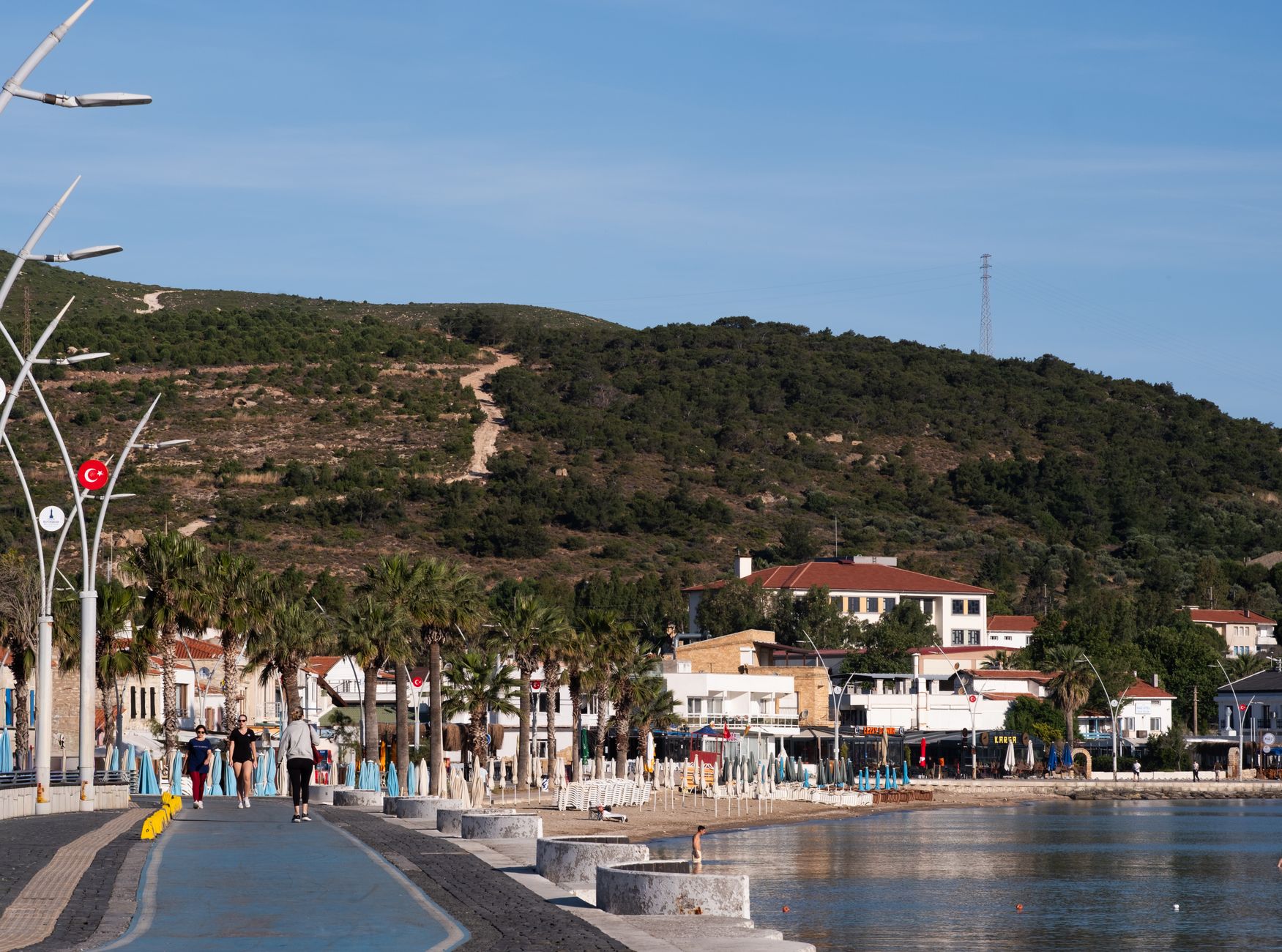
İzmir treats its coastline as a public living room. The Kordon promenade in the city centre has direct sea access, showers and grassy picnic areas, though swimming is better at the dedicated beaches further out. İnciraltı and Göztepe have free public swimming spots with basic facilities, popular with students and early-morning swimmers.
For a proper beach day, head west to Çeşme and Ilıca, where the municipality maintains free public beaches with showers, changing cabins, lifeguards and shallow, warm water. Ilıca Plajı is especially good for young children because the sea stays waist-deep for a long way out.
North of the city, Foça and Dikili offer quieter municipal beaches with a strong local feel: fishing boats, tea gardens, and seafood cafés where a full lunch costs less than a single resort cocktail. These are the places where the beach is genuinely shared, and where you will be welcomed rather than upsold.
İzmir's Aegean water is cooler and often breezier than the Mediterranean, which locals will tell you is a feature, not a bug — it makes August afternoons far more comfortable. Pair a beach morning with the region's archaeological sites using our routes.
How to Combine Free Beaches with Great Local Cafés
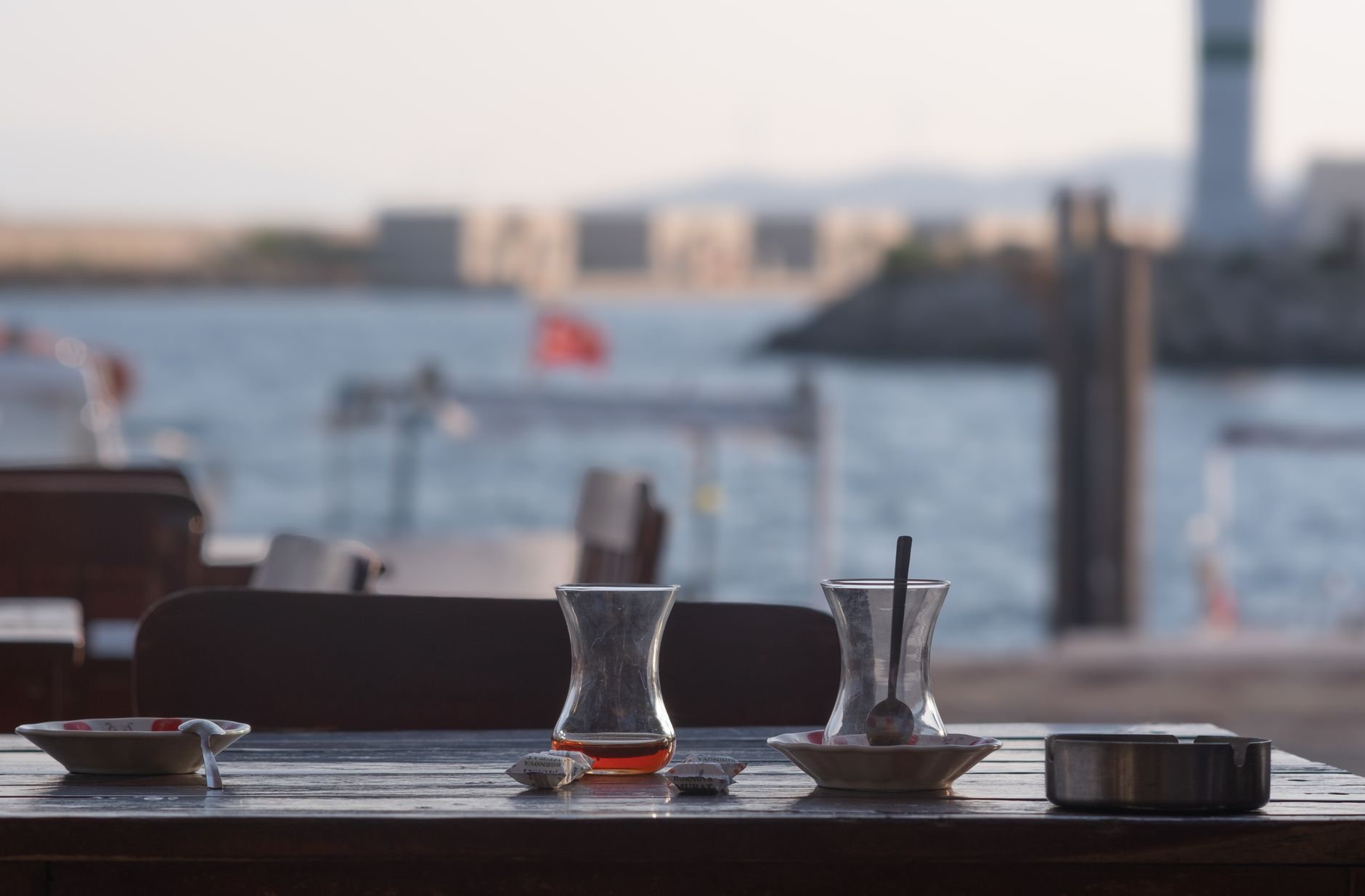
The secret to a cheap, happy beach day in Türkiye is the café just behind the sand. Municipal beaches are rarely far from a tea garden (çay bahçesi), where a glass of tea costs a token amount and you can sit under a vine for an hour. These cafés are where you will find the best value food on the coast: gözleme (stuffed flatbread), tost (grilled cheese sandwich), simit, fresh fruit and, near the Aegean, plates of fried calamari.
Rather than buying resort day passes, plan your day in three parts: morning swim at the free municipal beach, lunch at a family café two streets back, then a shaded afternoon walk or siesta before returning for the golden-hour swim. This rhythm matches how locals use the coast and keeps costs remarkably low.
A few etiquette notes help you fit in. It is normal to bring your own water, fruit and tea flask to public beaches. It is also normal to buy something small from the café whose sunbeds you borrow — a tea or a cold drink is a gracious way to say thank you. Tipping is modest but appreciated.
For more on planning affordable, seasonal trips, see our guides and the travel tools page, where you can compare transport options between coastal towns.
Cleanliness, Safety and Beach Etiquette: What to Expect
Turkish municipal beaches are cleaned daily in high season, and bins and recycling points are common. Blue Flag status is a reliable marker of water quality and facilities, and it is displayed at the beach entrance. Showers and taps are usually free and located near the main access points; some take a coin or a small fee, so keep a few coins handy.
Lifeguards patrol the busiest municipal beaches from roughly June to mid-September, usually between 09:00 and 18:00. Watch for flag systems, and note that some beaches have sharp drop-offs or strong currents — ask a local before swimming far out. Children should stay within the marked shallow zones, which are generally well defined.
Beach culture here is modest and family-oriented. Swimwear is fine on the sand; cover up when walking into town or into cafés. Public displays of affection are best kept low-key. Alcohol is generally not part of the municipal beach scene, though it is served in nearby venues.
Finally, respect the shared space. Do not reserve sunbeds with towels for hours, keep music low, and leave the sand as you found it. The reason these beaches stay free and well kept is that everyone treats them as their own.
Planning Your Coastal Holiday: A Few Practical Shortcuts
The best-value window is late May to mid-June and September to early October: warm sea, thinner crowds, and full municipal services still in operation. July and August are busiest, so arrive early and choose beaches with shade. Public transport reaches most municipal beaches cheaply — dolmuş minibuses run frequently from town centres.
Pack light but smart: a quick-dry towel, sea shoes, a refillable water bottle, sunscreen and some coins for showers. Many beaches have free Wi-Fi near the promenade, and parking is often free or very cheap. If you want expert help stitching together a coastal route, our trip planner and local experts can tailor an itinerary, while the FAQ covers common questions about costs and accessibility.
Türkiye's public beaches prove that a world-class coastal holiday does not need a resort bill. With free showers, clean sand, lifeguards and a genuinely welcoming local culture, the country's municipal beaches are the coast's best-kept secret — and once you have spent a day on one, you will wonder why anyone pays for a sunbed at all.
Thinking about a trip to Turkey?
Share your contact details and a vetted local expert will follow up with a plan built around you — free, no obligation.