

The Call of the Open Road Along Türkiye's Coastlines
There is a moment on Türkiye's coastal highways when the world tilts: pine forests tumble toward turquoise water, ancient Lycian tombs glow in the afternoon sun, and the road ahead unfurls like a ribbon between sea and sky. Türkiye is a country built for drivers — its coastline stretches over 8,000 kilometers, and the serpentine roads that trace it are destinations in themselves.
For travelers who love the journey as much as the arrival, Türkiye offers something rare: the freedom to chase the sun from the Aegean to the Mediterranean, to stop at a roadside tea garden because the view demands it, and to discover hidden coves that no tour bus will ever reach. Renting a car here is not just practical — it is transformative.
This guide celebrates the most dramatic coastal and mountain routes, with practical advice on car rental, tolls, fuel stops, and the stretches you simply must not miss. Whether you have two weeks or two months, the road is waiting.
The D400: Türkiye's Legendary Mediterranean Highway
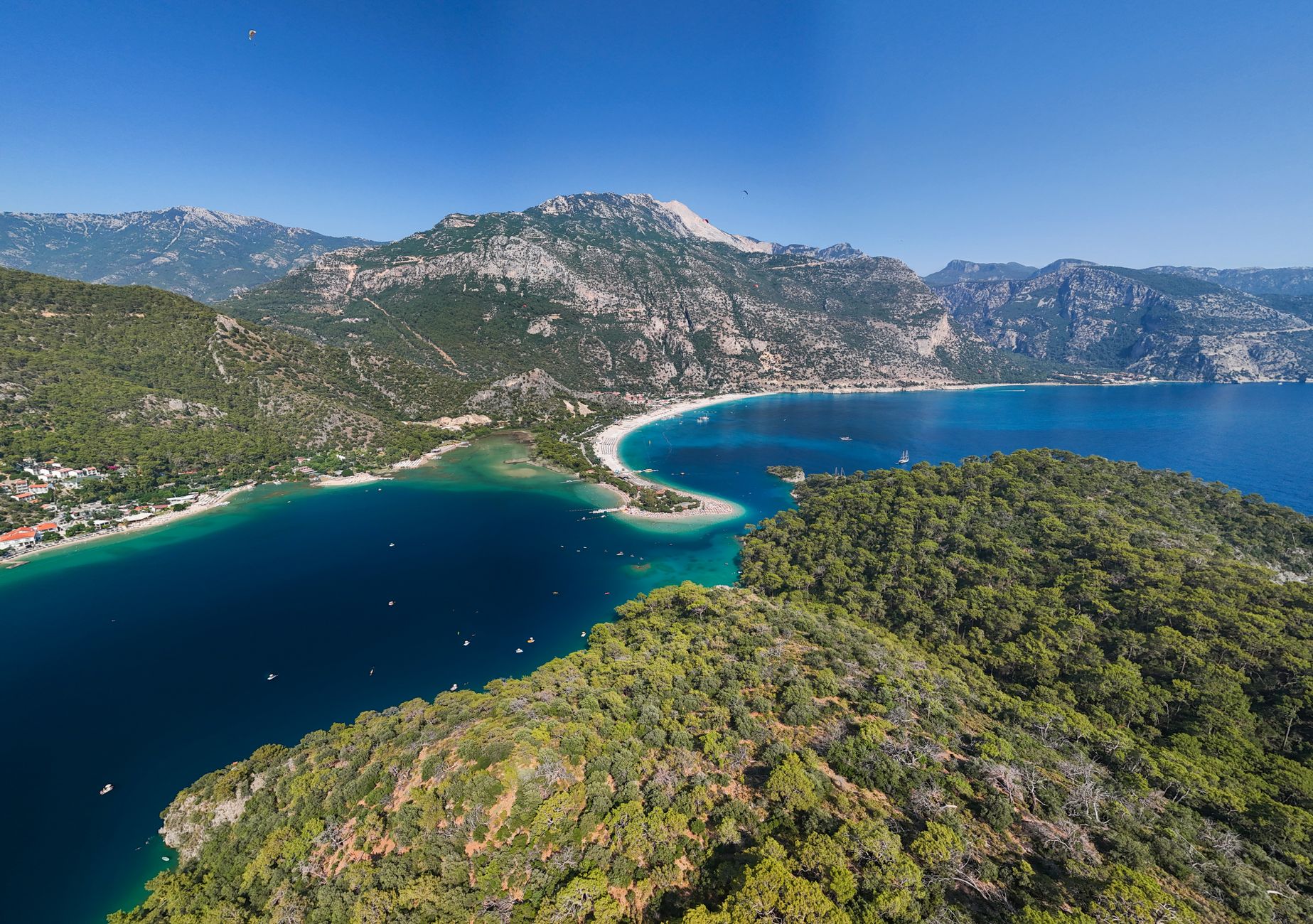
The D400 is the crown jewel of Turkish coastal driving. Stretching roughly 1,600 kilometers from the Aegean resort town of Datça all the way east to the Iranian border, it hugs the Mediterranean with a devotion that will leave you breathless. The most celebrated section runs between Fethiye and Antalya — a rollercoaster of hairpin turns, cliffside tunnels, and panoramic pull-offs overlooking the Lycian coast.
Highlights include the Ölüdeniz Blue Lagoon viewpoint near Fethiye, the dramatic descent into Kalkan with its whitewashed houses cascading to the harbor, and the stretch past Kaş, where the road clings to the mountainside above water so clear you can count the rocks below. Between Demre and Finike, you will pass ancient Lycian rock tombs and the ruins of Myra — a reminder that this route has been traveled for millennia.
Allow at least three to four days to drive the Fethiye–Antalya leg properly. The road is well-maintained and mostly two lanes in each direction, but the curves demand attention. Pull over often. The views are the point.
"The D400 is not a road you drive to get somewhere. It is a road you drive to remember how it feels to be alive."
The Black Sea Coast: Misty Mountains and Tea-Colored Rivers
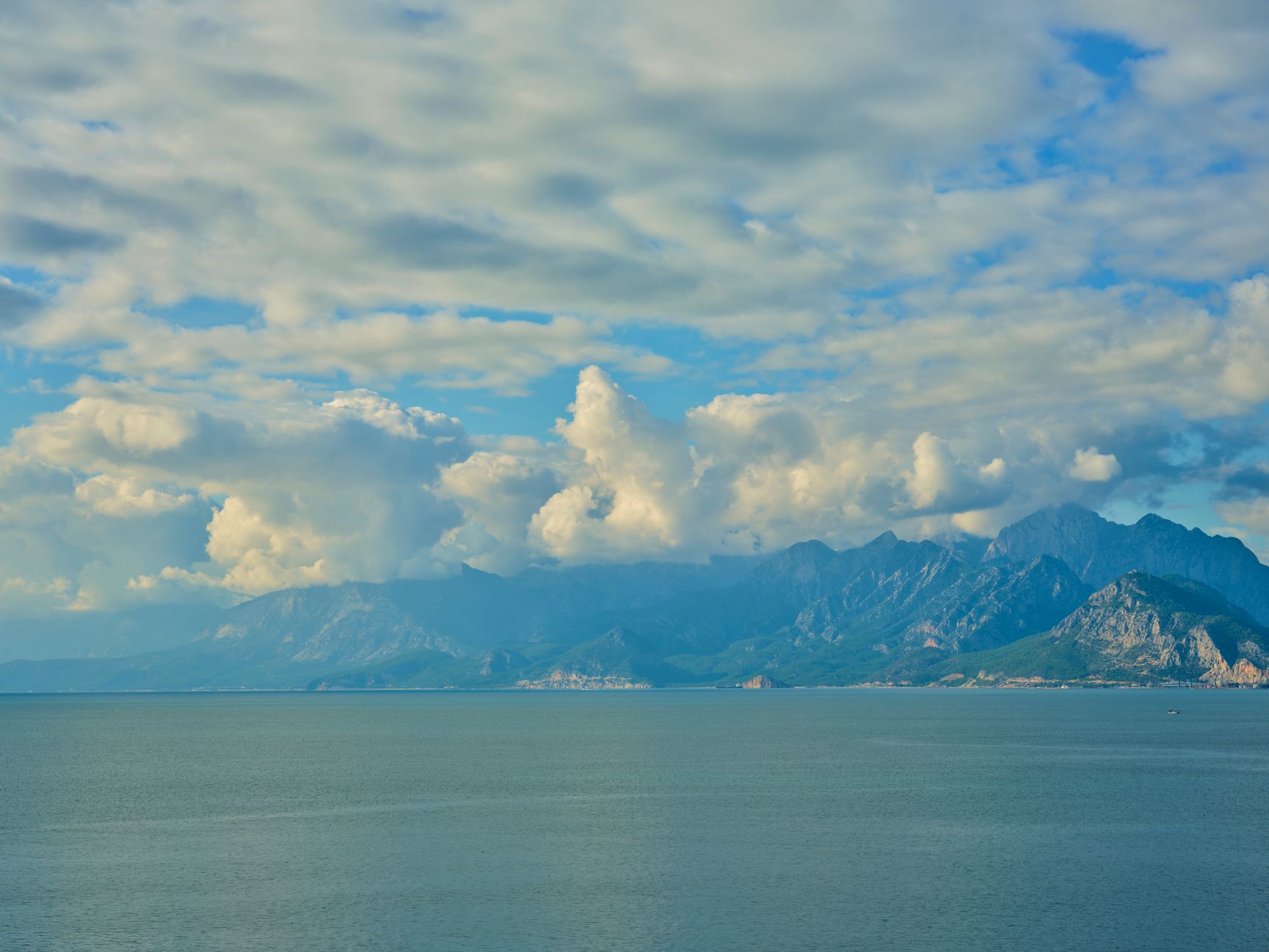
If the Mediterranean is Türkiye's glamorous sibling, the Black Sea is its wild, poetic soul. The D010 highway runs from Istanbul all the way to the Georgian border, threading through lush green valleys, past tea plantations, and along a coastline where the mountains seem to fall directly into the sea.
The most spectacular stretch lies between Trabzon and Rize, where the road skirts the edge of the Pontic Mountains. Here, the air is thick with moisture, and the hillsides are blanketed in emerald tea bushes. Stop in Rize for a glass of çay at a roadside çay bahçesi, and watch the mist roll down from the peaks. Further east, near Artvin, the road climbs through the breathtaking Çoruh River Valley — a paradise for those who love mountain driving.
Do not miss the chance to detour inland to Uzungöl, a serene lake village surrounded by pine forests, or to the Sümela Monastery, carved into a sheer cliff face. The Black Sea route is slower, quieter, and utterly enchanting. It rewards patience and curiosity.
Car Rental in Türkiye: What You Need to Know
Renting a car in Türkiye is straightforward, but a little preparation goes a long way. International chains like Avis, Hertz, and Europcar operate at major airports, as do reputable local companies such as Garenta and Enterprise. For coastal road trips, pick up your car in Izmir, Antalya, or Dalaman, and drop it off in a different city — one-way rentals are common and affordable.
You will need a valid driver's license from your home country (an International Driving Permit is recommended but often not required for stays under 90 days), a passport, and a credit card for the deposit. Expect to pay between 700 and 1,500 Turkish Lira per day for a compact car in 2026, depending on the season. Booking in advance is wise, especially in July and August.
Türkiye's roads are generally in excellent condition, and drivers are courteous and skilled. Speed limits are 50 km/h in towns, 90 km/h on two-lane roads, and 120 km/h on motorways. Radar checks are common, so keep an eye on your speedometer. Fuel stations — Petrol Ofisi, Shell, Opet, and BP — are plentiful along the D400 and D010, often with clean restrooms and attached cafés serving gözleme and strong coffee.
Tolls, Fuel, and Roadside Culture
Türkiye's toll system is modern and easy. Most motorways (otoyol) use the HGS electronic system — your rental car will usually come with a transponder, and tolls are deducted automatically. If not, you can purchase an HGS card at post offices (PTT) or service stations. Toll costs are modest: a drive from Izmir to Antalya might cost around 200–300 TL in total.
Fuel is widely available, but prices fluctuate. As of 2026, expect to pay roughly 45–50 TL per liter for gasoline (benzin) and slightly less for diesel (motorin). Fill up before long stretches on the D400 between Kaş and Demre, and on the Black Sea route between Trabzon and Rize, where stations become more spaced out.
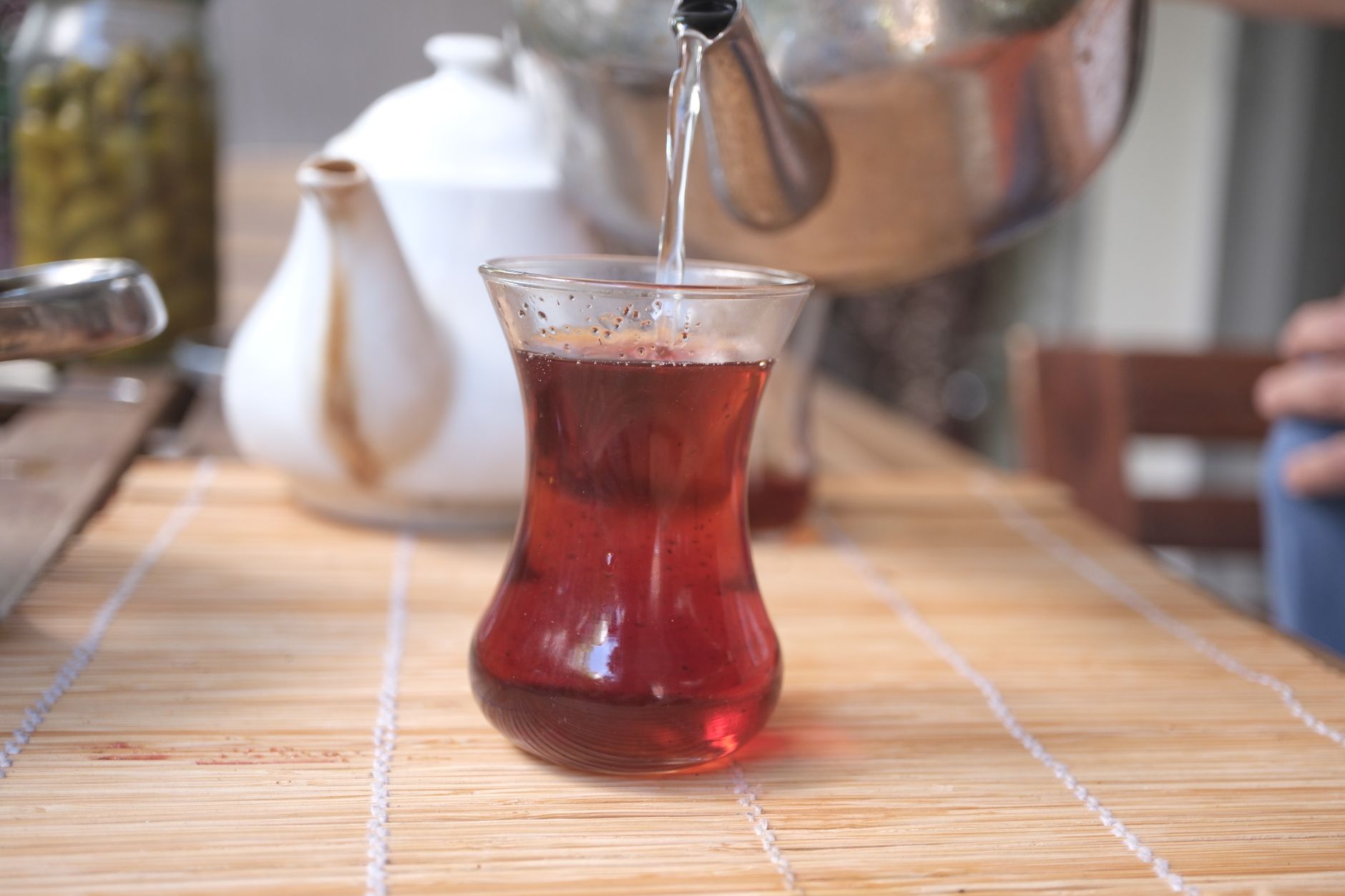
Roadside culture is one of the great joys of driving in Türkiye. You will find tea gardens perched on cliffs, fruit stands selling freshly picked oranges and pomegranates, and family-run lokantas serving home-cooked stews. Do not rush past them. A stop for çay and a chat with a local farmer is part of the journey.
Best Stretches of the D400 and Black Sea Highways
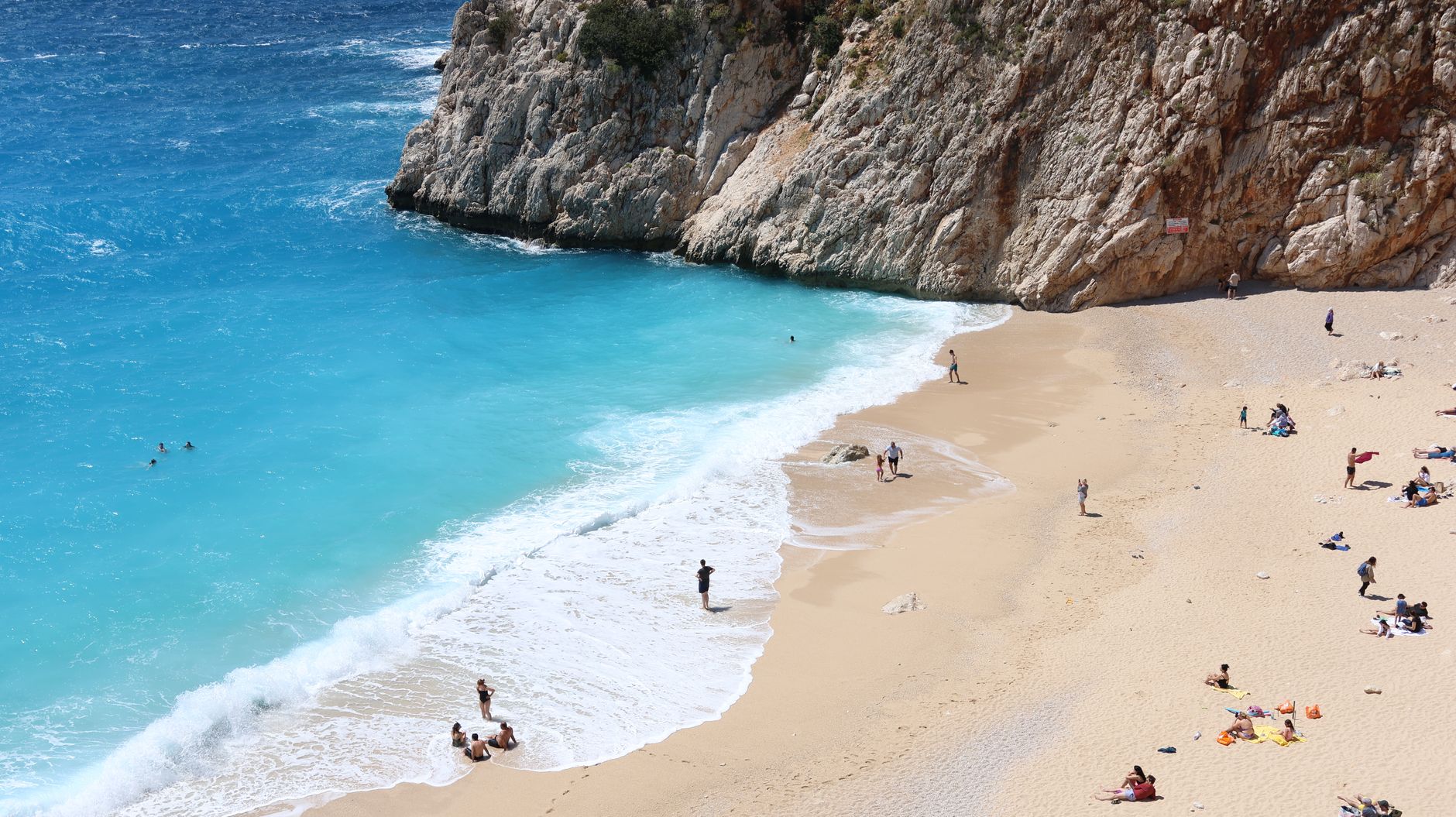
On the D400, the stretch from Kalkan to Kaş is pure magic — swooping curves, hidden beaches, and the sunken city of Kekova visible from the road. Further east, the road between Gazipaşa and Anamur hugs the coast so closely you can smell the salt spray. For mountain drama, detour onto the D635 from Korkuteli to Elmalı, winding through cedar forests and high plateaus.
On the Black Sea, the D010 between Of and Sürmene offers a masterclass in coastal driving, with tunnels cut through rock and bridges spanning rushing rivers. The route from Rize to Hopa, near the Georgian border, is particularly stunning in spring, when the hillsides explode with wildflowers and waterfalls cascade down cliff faces.
If you have time, venture onto the D915, known as the "Road of the Seven Lakes" near Trabzon — a high-altitude pass that is only open in summer but rewards drivers with alpine meadows and glacial lakes. It is one of the most exhilarating drives in the country.
Practical Tips for an Unforgettable Road Trip
Drive during daylight hours when possible, especially on mountain roads where guardrails can be sparse. Carry cash for small tea houses and roadside stalls. Download offline maps — signal can be spotty in the mountains — and keep a paper map as backup. Most importantly, build in flexibility. The best moments on Türkiye's coastal roads are unplanned: a spontaneous swim in a hidden bay, a sunset that demands you pull over, a conversation with a fisherman that lasts an hour.
Türkiye's serpentine coastal roads are more than a means of transport. They are an invitation to slow down, to breathe in the scent of pine and sea, and to remember why we travel in the first place. So rent that car, roll down the windows, and let the journey be the destination.
Thinking about a trip to Turkey?
Share your contact details and a vetted local expert will follow up with a plan built around you — free, no obligation.