

The Sweetest Season: How Turkish Holidays Transform the High Street
Walk down any Turkish shopping street in the days before a religious holiday and you will notice the change before you can name it. Dozens of small shops that sell sweets all year suddenly bloom outward: trays of sugar-dusted lokum are stacked into pyramids, strings of wrapped akide şekeri hang like garlands, and whole windows are rebuilt around towers of helva glittering with pistachio. It is one of the most joyful, generous spectacles in Turkish daily life — and as a visitor you are gently, warmly invited into the middle of it.
There are two great sweet-shop seasons in Türkiye. Ramazan Bayramı (the festival at the end of Ramadan, also called Şeker Bayramı — literally "Candy Festival") and Kurban Bayramı (the Sacrifice Festival) drive the biggest displays, followed closely by the run-up to New Year's Eve, when city centres turn on lights and gift boxes multiply. Whatever your own background, the shops do not care — they are simply happy to sell you something beautiful to give away.
Sweets in Türkiye are rarely a private indulgence. They are the currency of celebration: what you bring when you visit, what you offer to guests, what you place on a tray with tea. Understanding that social logic is the key to enjoying the shops well. This guide covers the window displays, the things worth buying, how to keep them intact on the trip home, and the etiquette of gifting — so you can walk in as a curious visitor and walk out as a passable guest.
If you are still shaping your trip, our best time to visit guide explains how the holiday calendar shifts prices and crowds, and the city guides will point you toward the streets where these shops cluster.
Reading the Window: What Those Towering Displays Are Telling You
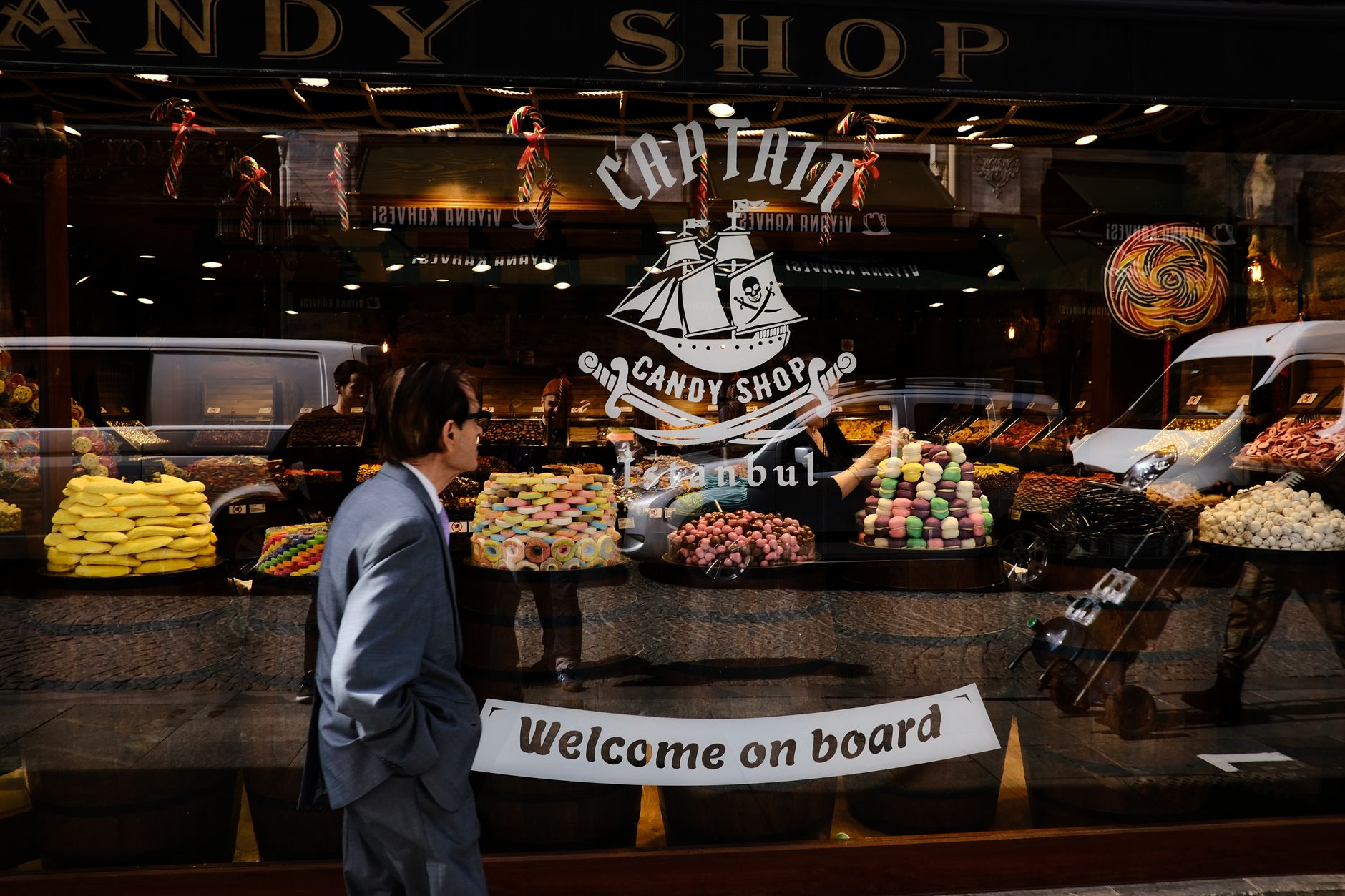
Turkish confectioners are masters of the vertical display. Look at the geometry of a good festival window and you can decode what the shop takes pride in. A tall, sharply edged cube of lokum dusted in powdered sugar signals that it was cut fresh that week. Cascading piles of wrapped akide şekeri — the boiled, hard, glossy candy that gave Şeker Bayramı its name — signal that the shop does volume for gifting. A tray of helva pressed into a decorative mould, with whole pistachios pressed into the surface, signals a shop with a serious kitchen behind it.
Festival windows also fill with secondary cues. Tins are stacked in towers, ribbon spools sit on the counter, and in the days just before the holiday you will see boxes pre-assembled and labelled with prices. Some shops flip their whole identity: the bakery adds sweets, the nut seller adds sweets, even the pharmacy window gets a small display of candy. City municipalities hang garlands and lights across the street, and the effect at dusk — warm light, sugar dust in the air, music drifting from somewhere — is genuinely festive.
Do not be shy about looking closely. Shopkeepers are used to people admiring the windows, and if you catch their eye and point, they will often scoop a small sample of something for you to try. In a smaller town, a sweet-shop window in the last week before a bayram is one of the best free cultural experiences available to you. Consider timing your trip around one by checking the route suggestions for itineraries that include market-heavy towns.
What to Buy: A Field Guide to Festival Sweets
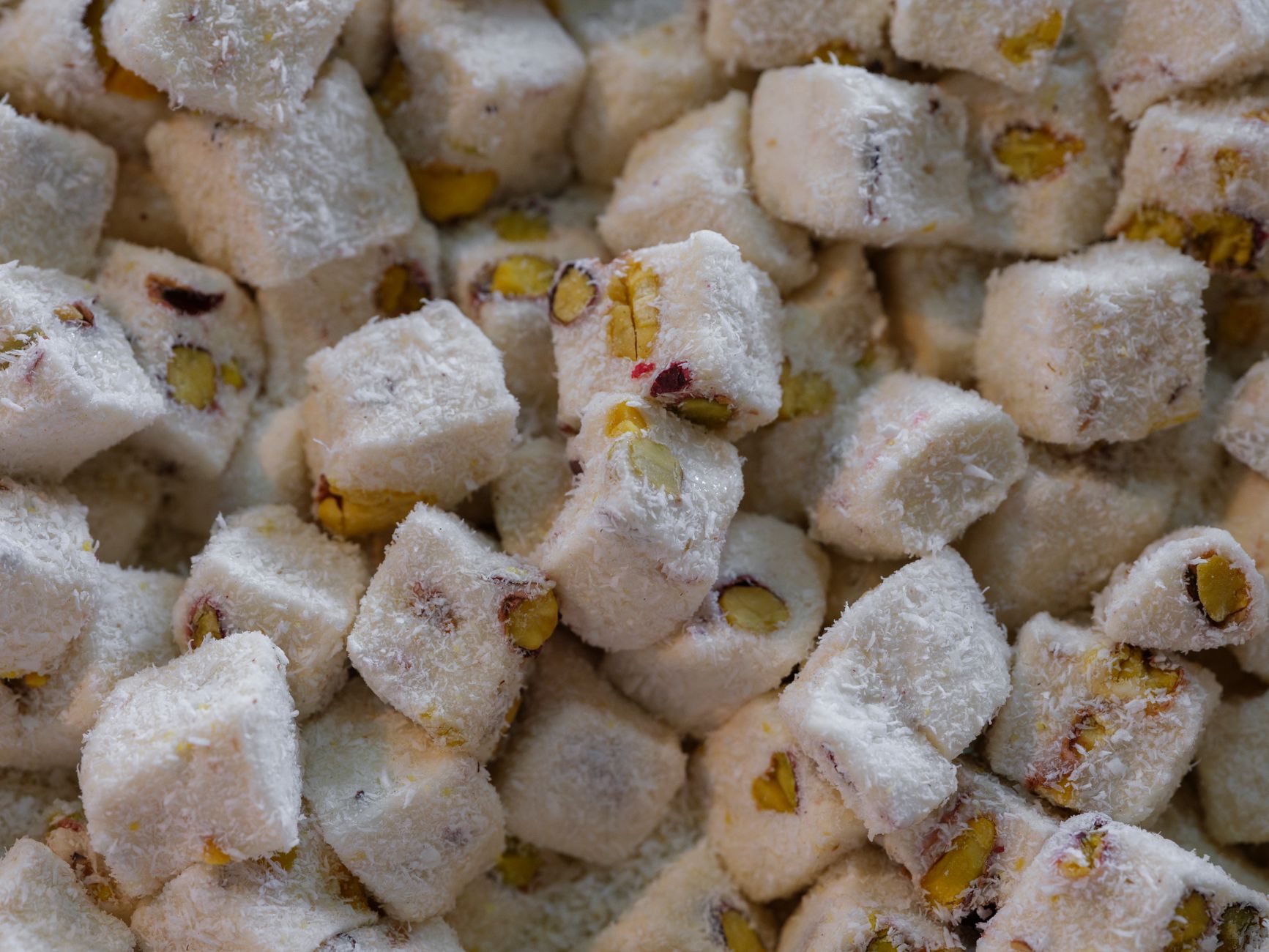
Turkish delight (lokum) is the obvious purchase and the one most visitors get wrong. Buy it from a shop that cuts it in front of you, not from a pre-sealed tourist box. The classics — rose, lemon, mastic — are excellent, but festival windows tempt you with double-roasted pistachio, sour cherry, and the long nut-filled rolls called sucuk lokum. Ask for sade (plain), çifte kavrulmuş (double roasted pistachio) or narlı (pomegranate).
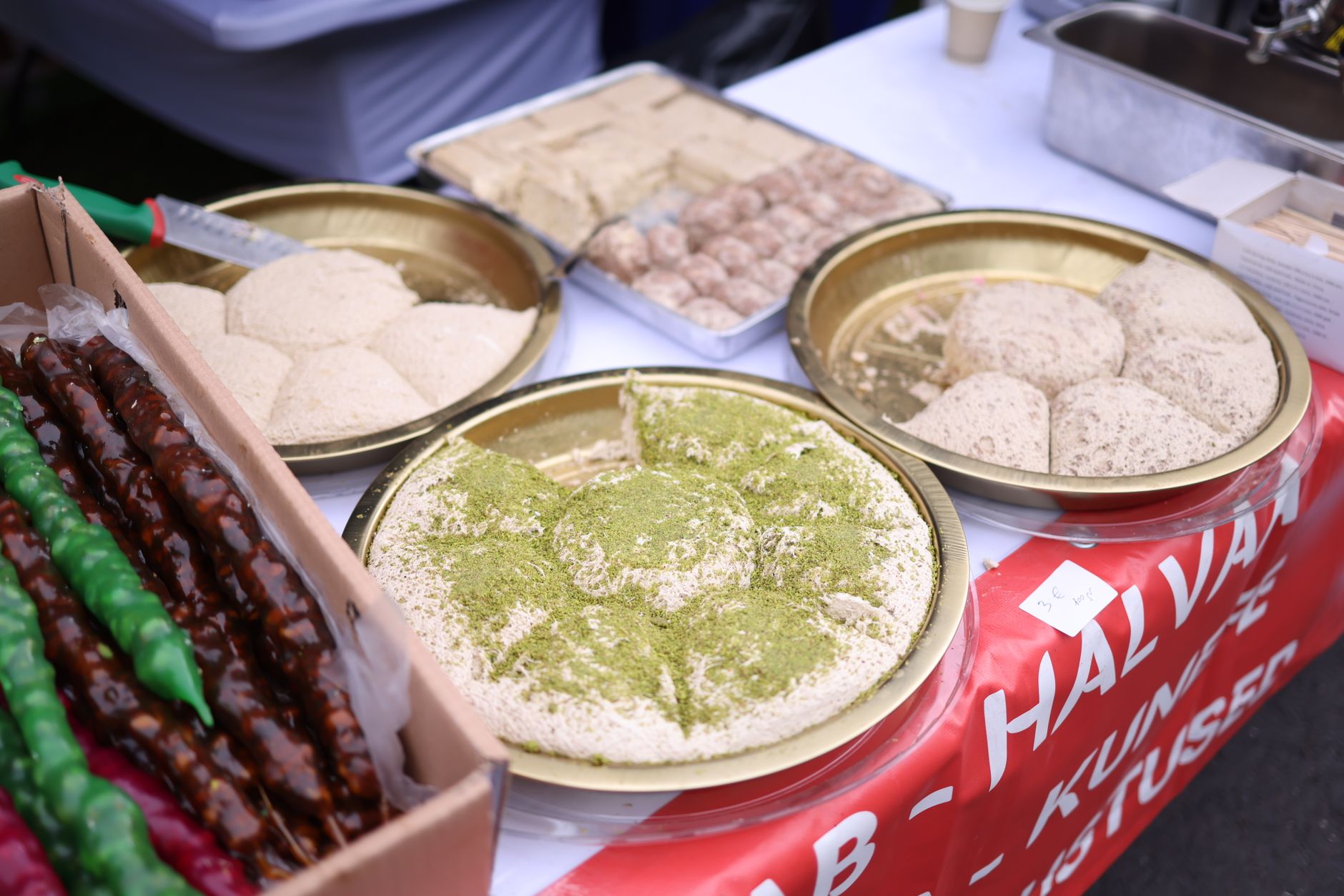
Akide şekeri is the holiday's signature: hard, boiled sugar candy in bright colours, often flavoured with rose, clove, lemon or bergamot and wrapped in clear cellophane. It is inexpensive, travels supremely well, and is the most traditional thing you can hand to a Turkish friend at bayram. Next comes helva — the dense, crumbly sesame or semolina confection. Look for tahin helvası (sesame) in plain or pistachio-flecked slabs, and the fluffier irmik helvası sold ready to eat. Cezerye, squares of carrot paste rolled in pistachio, and pestil, sheets of pressed fruit, are also classic gift-shop items.
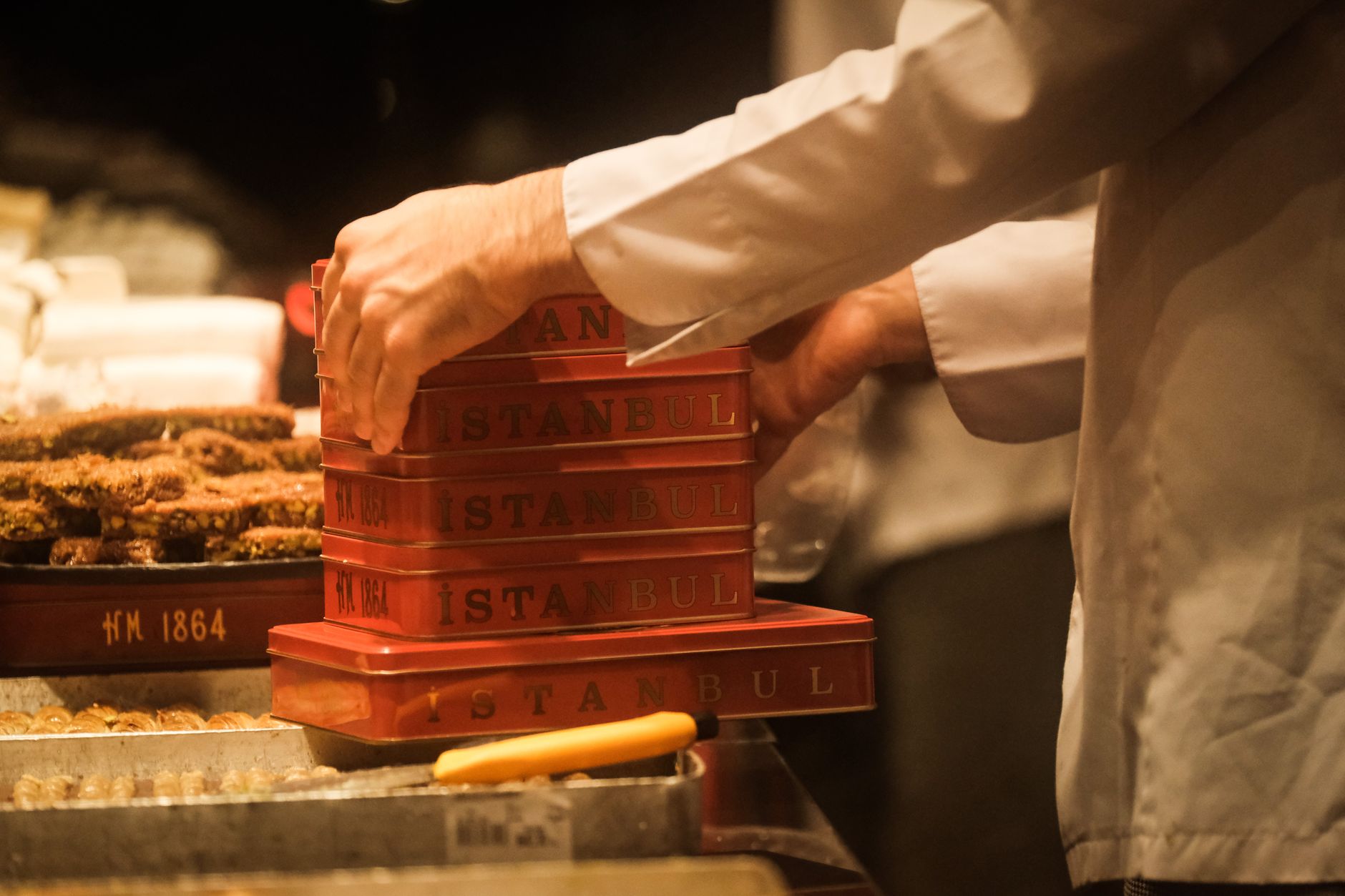
Beyond the sweets, festival shop windows are full of chocolate-coated nuts, fig and walnut confections, and lokum in gift tins. The tins matter: they are the packaging of giving. A small decorative tin of lokum is a perfectly calibrated present — generous, not extravagant, and it says "I thought of you." If you have limited luggage space, prioritise tins over loose sweets.
Prices rise and queues lengthen as the holiday approaches, so shop two or three days ahead of the peak. You can compare seasonal shopkeeping with the rest of the year in our travel blog archives.
A box of lokum is never really about the sugar. It is a small, portable way of saying: you were in my thoughts, and I brought you something from the street where I was happy.
The Bustle: Joining the Gift-Buying Ritual Without Getting in the Way
The few days before a bayram are a citywide choreography. People finish work early, families pile into shops, and the counter becomes a negotiation of half-kilos and ribbon colours. Lines form; the assistant wraps faster than you can think. This is the moment to adopt Turkish shopping manners: say merhaba on entering, wait to be served, and let the regulars ahead of you at the counter. And expect a certain beautiful chaos — nobody minds if the shop is noisy.
If you want gentle guidance on ingredients and local food culture before you shop, our local experts can point you to the confectioners and bazaars worth the detour. And if you would simply like a human to plan the days around a holiday, the trip planner is built for exactly that.
Storing and Carrying Sweets Home: Practical Rules
Lokum is heavier than it looks and it does not love heat. In summer, choose a shop that will vacuum-seal your purchase — most good ones will, often for free — and keep the box flat in hand luggage. Powdered sugar settles into everything, so double-bag it. Helva is far more forgiving: firm, dense and stable, it can ride in a checked bag wrapped in clothes, though it will crumble if crushed, so pack it in a rigid tin.
Hard candies such as akide şekeri are the easiest travellers and make excellent small gifts. Chocolate-coated items are the riskiest: they melt and they bloom, so buy them last and keep them cool. Stored properly — sealed, away from direct sun, at room temperature — lokum keeps for several weeks; helva keeps for months. If you are assembling gifts on the road, buy the tin first and the sweets second.
Power and packing realities vary by season and route; our travel tools page has practical checklists you can adapt before you fly.
Gifting Etiquette: How to Give Sweets in Türkiye
Bring sweets when you are invited to someone's home, and bring more than you think you need — a box is shared with tea, neighbours and unexpected visitors. Offer the box with both hands if possible, and expect it to be opened immediately, not shelved. When you receive sweets, a sincere teşekkür ederim is enough; refusing outright is awkward, so take a small piece even if you are full.
At bayram, sweets travel in both directions: you give and you receive, often the same afternoon. If you are a guest in a Turkish household during Ramazan Bayramı, a tin of lokum or akide şekeri is the ideal contribution. For colleagues or hosts you barely know, a small wrapped box of hard candy is faultless. Avoid oversized, over-luxurious boxes with strangers — they can feel like an obligation rather than a kindness.
One last point of etiquette: sweets are for sharing, not for display. Open the box. Put them on a plate. Pass them around. That, more than any particular flavour, is the custom the festival windows are selling.
Where the Windows Are Best: A Short Field List
The densest concentration of festival sweet windows is in the historic bazaar districts of the big cities, where confectioners have traded for generations, and in the market streets of midsize Anatolian towns, where the whole high street becomes one long display. Go at dusk, when the lights come on and the sugar dust catches the glow. Combine a sweet-shop crawl with a broader wander using the destination pages and the sample itineraries; the photo gallery will give you a preview of the palette you are walking into.
Finally, if the holiday calendar is what drew you, confirm the practical side — closures, transport and timings — against our frequently asked questions before you book. Then go, look, buy something small and beautiful, and give it away. That is the whole ritual, and it is open to everyone.
Thinking about a trip to Turkey?
Share your contact details and a vetted local expert will follow up with a plan built around you — free, no obligation.