

A Land Where Continents and Creatures Converge
Türkiye sits at the crossroads of Europe, Asia, and the Middle East, and its wildlife reflects that extraordinary position. Three of the world's 36 biodiversity hotspots intersect here — the Caucasus, the Irano-Anatolian, and the Mediterranean — making this country one of the most biologically rich places on Earth. Over 13,000 species of plants, nearly 500 bird species, and hundreds of mammals, reptiles, and marine creatures call Anatolia home.
For wildlife lovers, this is a paradise hiding in plain sight. You can watch a 100-kilogram loggerhead sea turtle haul herself onto a golden beach at dusk, then drive a few hours inland and spot wild goats silhouetted against jagged limestone peaks. You can drift past flamingo flocks in a quiet Aegean lagoon and hear wolves howl in the Pontic Mountains — all within a single, unforgettable journey.
This guide explores Türkiye's signature wildlife encounters, the best seasons to experience them, and how to watch responsibly. Conservation is not a footnote here; it is the story. Local communities, rangers, and volunteers have turned several of these sites into global models of community-led protection, and your visit — done right — directly supports that work. If you're mapping out your trip, our best time to visit guide helps you align your travel dates with nature's calendar.
Caretta Caretta: The Ancient Mariners of Dalyan and İztuzu
On Türkiye's southwestern coast, where the Dalyan River winds through reed beds toward the Mediterranean, lies İztuzu Beach — a 4.5-kilometer ribbon of sand that ranks among the most important loggerhead turtle (Caretta caretta) nesting grounds in the entire Mediterranean. Every summer, between May and September, female turtles that may be 60 years old or more emerge from the sea after dark, dig deep chambers with their rear flippers, and lay clutches of 70 to 120 eggs.
Roughly six to eight weeks later, the sand begins to shimmer. Hatchlings — each no bigger than a matchbox — erupt from their nests en masse, usually at night or in the cool early morning, and scramble toward the brightest horizon. They imprint on this beach's magnetic signature, and the females among them will return decades later to nest on the very sand where they were born.
İztuzu is also a conservation legend. In the 1980s, plans for a large hotel complex threatened to destroy the beach. A determined campaign led by conservationists and supported by international attention succeeded in halting development, and İztuzu became a protected Special Environmental Protection Area. Today the beach is famously divided: one end serves the public, while the other remains a strict conservation zone. The Dalyan Sea Turtle Research, Rescue and Rehabilitation Center treats injured turtles and educates thousands of visitors each year. Staying in the riverside town of Dalyan, with its Lycian rock tombs glowing above the water, lets you experience this miracle without disturbing it. Our destination guides cover the wider Dalyan region in detail.
The hatchlings that survive the gauntlet of ghost crabs, gulls, and foxes may live for a century. Every one you help protect is a thread in a tapestry stretching back 100 million years.
Wild Goats and Alpine Ghosts of the Taurus Mountains
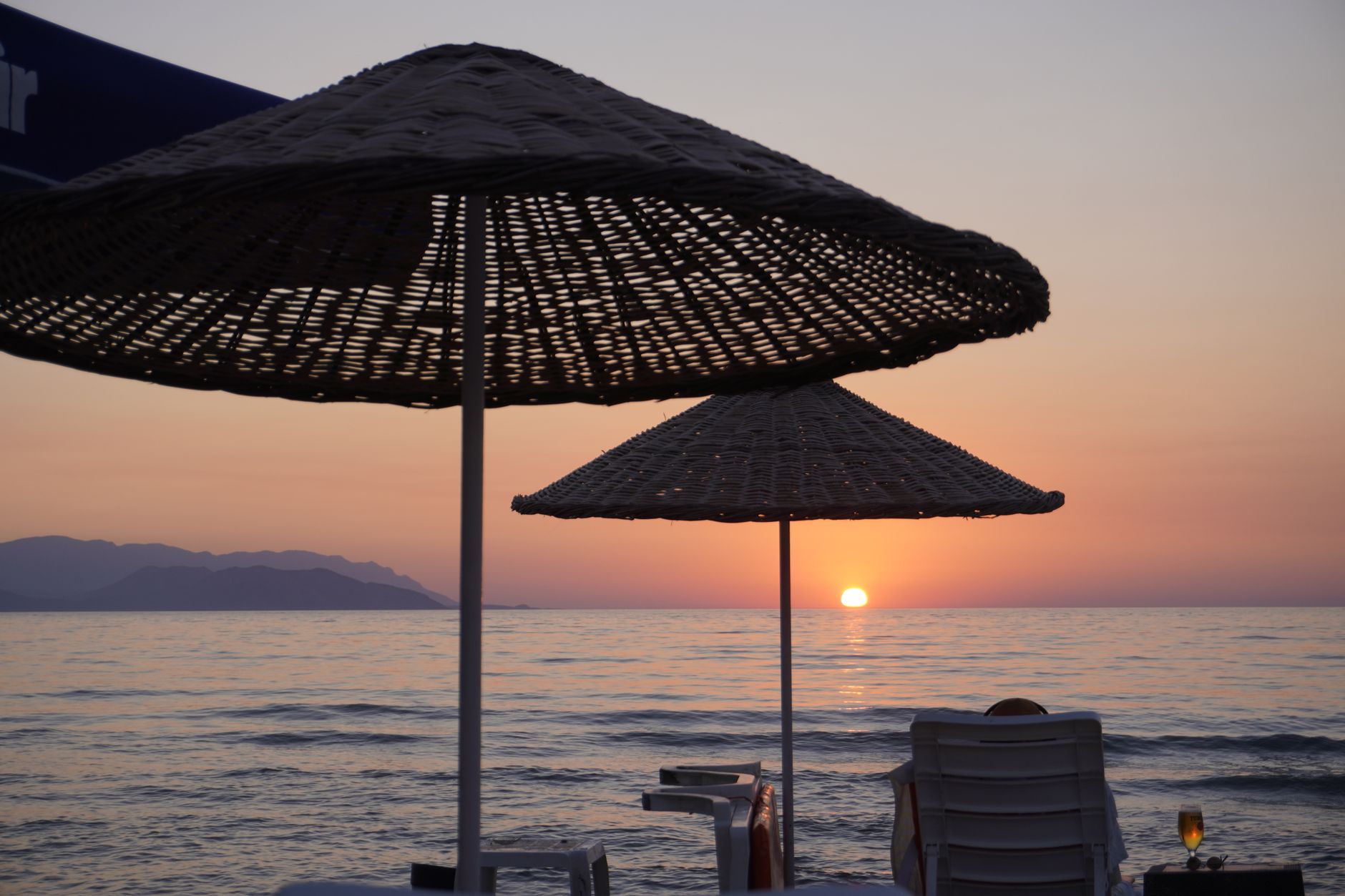
Inland from the turquoise coast, the Taurus Mountains rise like a stone spine across southern Türkiye. These rugged highlands are the domain of the wild goat — known locally as yaban keçisi — a sure-footed animal whose curved horns and tawny coat blend into the cliffs. Anatolian wild goats are the ancestors of domestic goats, and watching a male with sweeping, scimitar-like horns pick his way across a vertical rock face is a humbling sight.
Several national parks offer superb viewing. In the Kızıldağ and Kovada Lake areas, and in the soaring peaks around Aladağlar National Park, herds move between grazing meadows and cliff refuges with the seasons. Early morning and late afternoon are prime times: goats descend to feed, and the low light paints the mountains gold. Bring binoculars and patience — this is a game of stillness and observation, not pursuit.
The Taurus is also home to brown bears, wolves, lynx, and the elusive Anatolian leopard, though sightings of the great predators are rare and rightly celebrated. More commonly encountered are golden eagles riding thermals, griffon vultures patrolling ridgelines, and chukar partridges exploding from scrub. Local mountain guides — many of them former shepherds — know exactly which slopes and springs the herds favour on any given week. Hiring one isn't just practical; it puts money directly into mountain communities that have coexisted with these animals for centuries. For a longer mountain-and-coast route, see our itineraries.
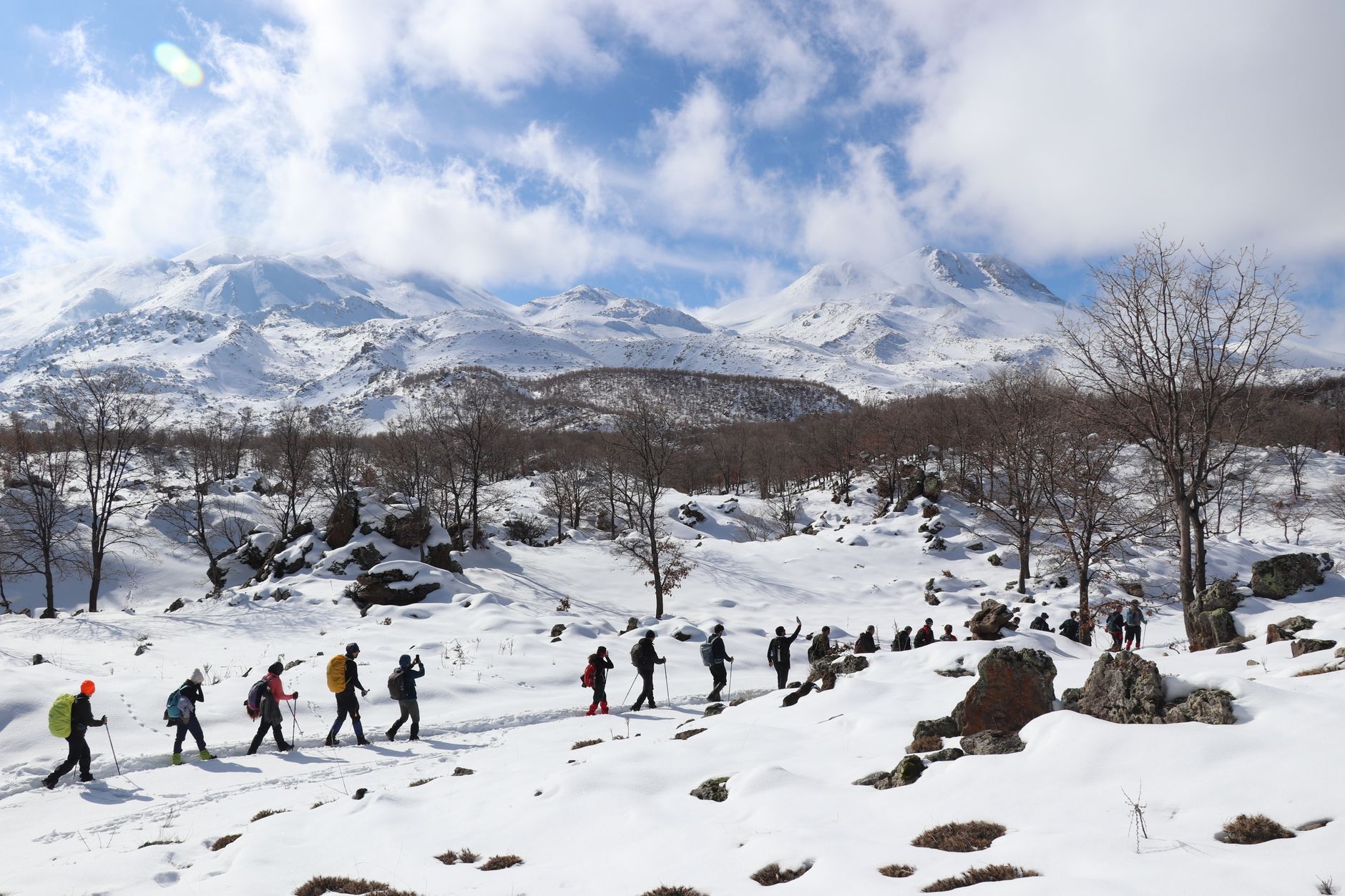
Spring (April to June) is especially rewarding, when snowmelt feeds wildflower meadows and goats gather in large, visible herds. Autumn (September to October) offers stable weather and excellent light. Winter transforms the high passes into snow country and should only be attempted with experienced local guidance.
Wings Over the Aegean: Flamingos, Pelicans, and a Birder's Paradise
The Aegean coast of Türkiye is a flyway of international importance. Each year, millions of birds move between Africa, the Middle East, and Europe, funneling through coastal wetlands, deltas, and lagoons. The result is some of the most accessible and spectacular birdwatching in the Mediterranean basin.
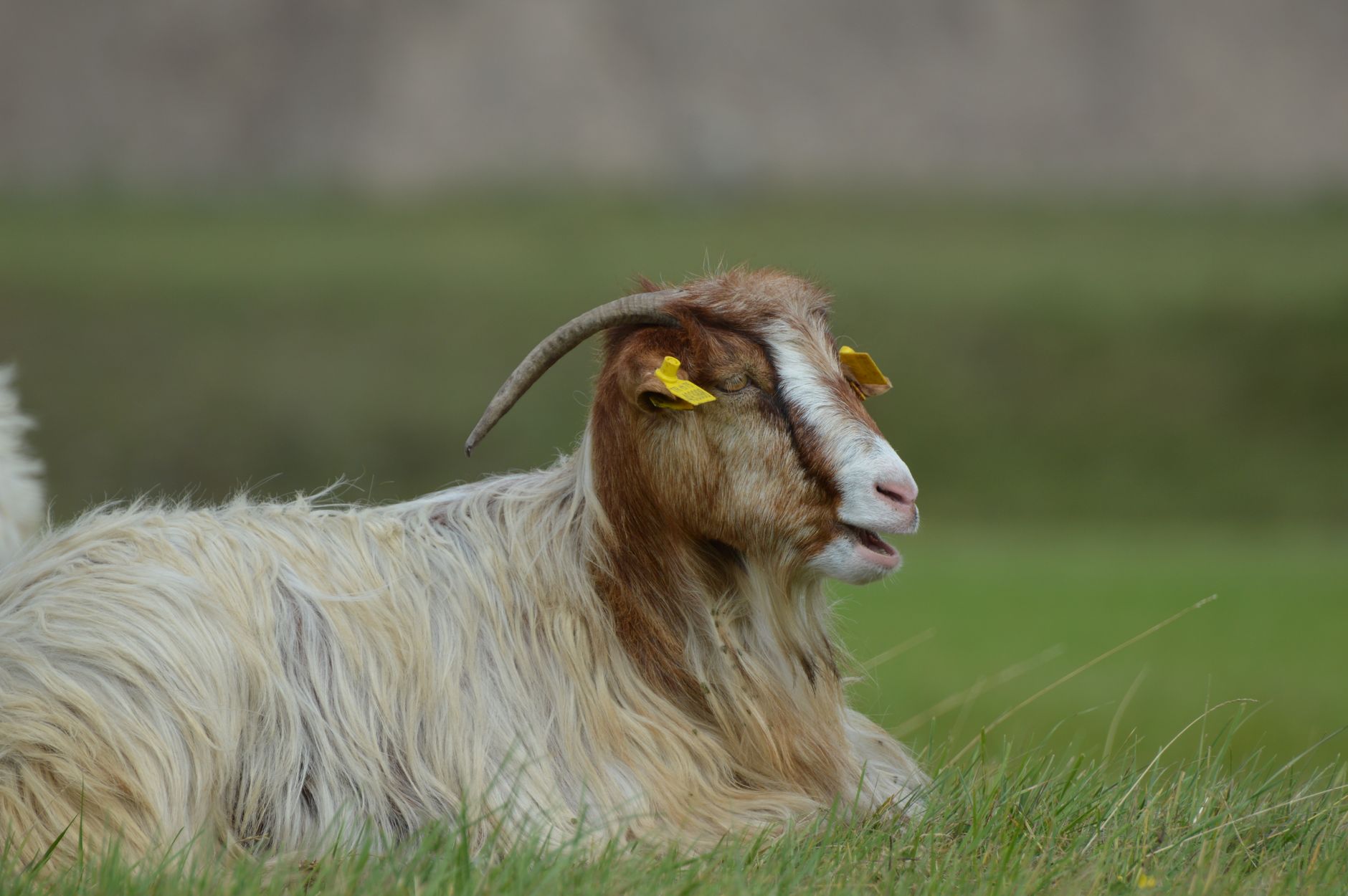
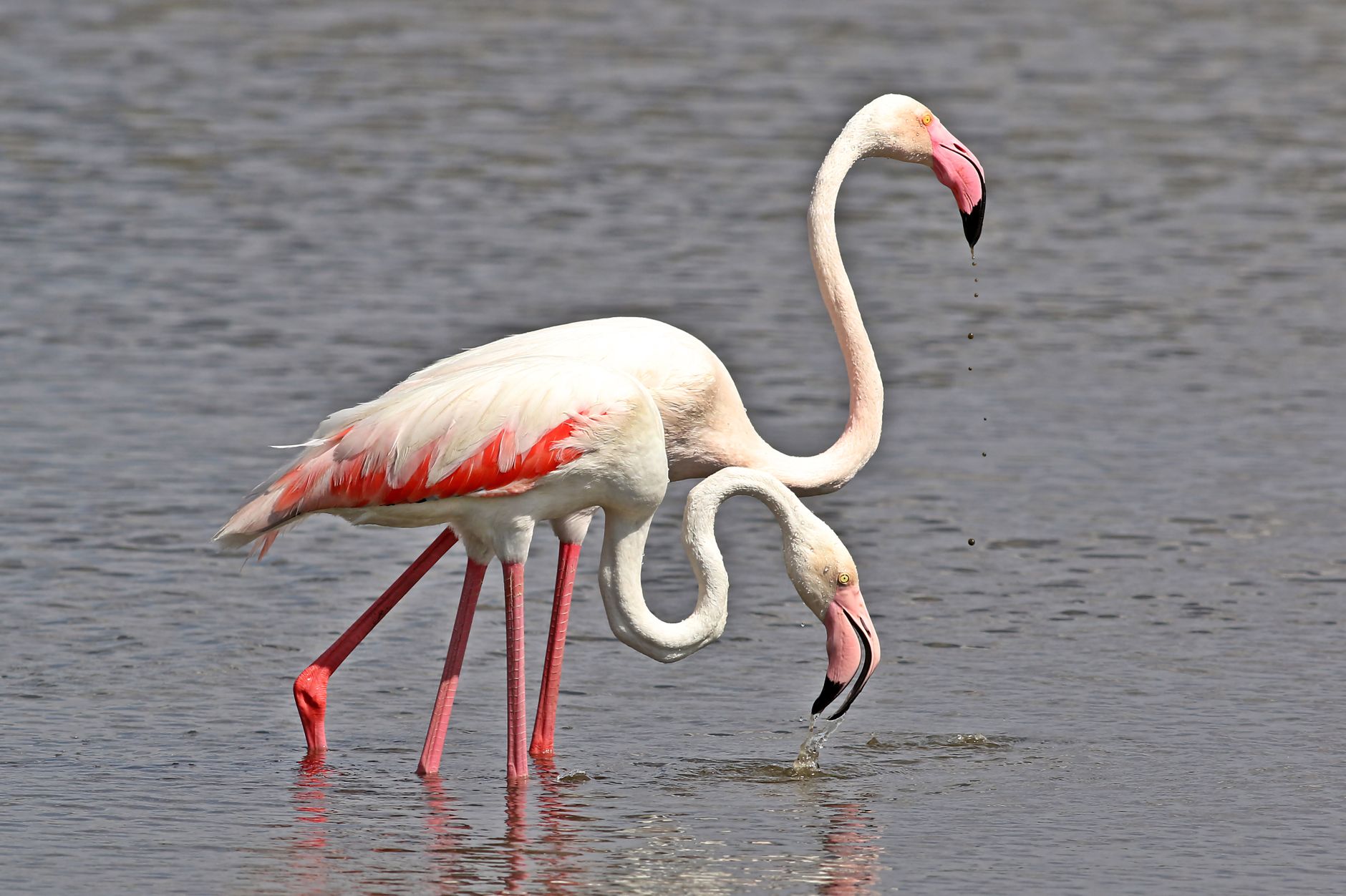
The star attraction is the greater flamingo. In the shallow lagoons around İzmir — particularly the Gediz Delta, a Ramsar-protected wetland of global significance — thousands of flamingos feed and breed. Seen in late afternoon light, a flock of flamingos standing in mirror-still water is one of the most photogenic sights in the country. The delta is also a stronghold for Dalmatian pelicans, spoonbills, and hundreds of other species.
Further south, the Dalyan delta and Lake Köyceğiz, the Bafa Lake area, and the Büyük Menderes Delta host herons, egrets, kingfishers, glossy ibises, and migrating raptors. In spring, the skies above the Aegean coast fill with storks, bee-eaters, and rollers in dazzling colour. Even casual travellers with a pair of binoculars can enjoy extraordinary sightings from a roadside or a boat.
The best seasons for birdlife are spring (March to May) and autumn (August to October), when migration peaks. Winter, however, is superb for waterfowl, when resident and visiting ducks, grebes, and flamingos congregate in enormous numbers. A knowledgeable local birding guide with a spotting scope will multiply what you see tenfold — and will know which farmers' fields are currently hosting a rare vagrant.
How to Watch Wildlife Responsibly in Türkiye
Türkiye's wildlife treasures survive because people chose to protect them. As a visitor, your behaviour matters. Here are the principles that responsible tour operators and park authorities ask you to follow.
- Keep your distance. Use binoculars or a zoom lens rather than approaching animals. For turtles and nesting birds, stay behind marked boundaries — every metre matters.
- Never touch hatchlings. Sea turtle hatchlings should crawl to the sea on their own; handling them can harm their development and orientation.
- Respect the dark. On turtle beaches, avoid bright lights, flash photography, and bonfires at night.
- Leave no trace. Carry out all rubbish, stay on trails, and never remove plants, shells, or rocks from protected areas.
- Choose responsible operators. Book with guides who follow park regulations, cap group sizes, and contribute to local conservation.
- Keep quiet and calm. Loud noise and sudden movement stress wild animals and ruin sightings for others.
- Support local conservation. Donations to turtle rescue centres and wetland protection projects go a long way.
If you're planning a nature-focused trip and want help choosing ethical operators, our local experts can connect you with vetted guides who put wildlife first.
Best Seasons and Where to Base Yourself
Wildlife watching in Türkiye is a year-round pursuit, but each season offers a different cast of characters. Spring is the overall champion: turtles begin nesting, goats graze on flower-filled slopes, and migration floods the skies with birds. Summer is superb for sea turtles and high-mountain hikes, though midday heat demands early starts. Autumn brings stable weather, fewer crowds, and spectacular raptor migration. Winter belongs to waterfowl and the stark beauty of snow-dusted mountains.
For a classic two-week wildlife itinerary, base yourself in Dalyan for turtles and wetlands, İzmir or the Gediz Delta for flamingos, and a mountain town such as Eğirdir or Niğde for the Taurus goat country. Distances are manageable by car, and domestic flights connect the major hubs. Our suggested routes show how to link these regions without rushing.
Practical tips: carry cash for small village guesthouses, learn a few Turkish phrases (merhaba for hello, teşekkürler for thank you), and pack layers — mountain mornings can be cold even in June. A good pair of walking shoes, sunscreen, and a refillable water bottle are essentials. For more planning advice, browse our travel tools.
Awe, Gratitude, and the Future of Türkiye's Wild Places
There is a moment that happens to almost every wildlife traveller in Türkiye: you're standing on a warm beach at dusk, or on a mountain ridge at dawn, and something wild moves through the landscape — a turtle, a goat, a flamingo — completely indifferent to you and utterly magnificent. That moment recalibrates something inside you. It reminds you that the world is older, stranger, and more generous than we usually remember.
Türkiye's biodiversity is not a museum piece. It is alive, fragile, and — crucially — recoverable. Sea turtle numbers on monitored beaches have stabilised and in places increased. Wetlands once drained are being restored. Community guides are building livelihoods around protection rather than extraction. Your visit, done with care, is part of that story. Come with curiosity, leave with gratitude, and travel like the wild things depend on it — because they do.
Ready to plan your wildlife adventure? Start with our destination pages, or let our trip planner help you build an itinerary that balances comfort, adventure, and conservation.
Thinking about a trip to Turkey?
Share your contact details and a vetted local expert will follow up with a plan built around you — free, no obligation.