

Yozgat
Why Yozgat Deserves a Place on Your Turkey Itinerary
Yozgat sits in the heart of Central Anatolia, a province of rolling wheat plains, gentle hills and small towns that most travellers pass straight through on the road between Ankara and Cappadocia. That is precisely why it feels so rewarding. Here you can visit a remarkable rock-cut monastery without a single tour bus in sight, walk through Hittite and Roman ruins in near-total solitude, and be welcomed into a village teahouse like an old friend.
The landscape is the classic Anatolian steppe: vast, quiet and unexpectedly beautiful, especially in spring when the plains turn green and wildflowers appear among the rocks. Summers are golden and dry, autumn brings amber light and harvest scenes, and winter dusts the plateau in snow. Yozgat is not a place of tick-box sights but of slow travel, where the pleasure lies in the journey, the food and the people as much as the monuments.
Its location is a hidden advantage. Yozgat is an easy day trip or overnight stop from Ankara, and it sits close to the UNESCO-listed Hittite capital of Hattuşa at Boğazkale, making it a natural addition to any loop through Central Anatolia. For travellers who want to see the real, unhurried Turkey beyond the postcard trail, Yozgat is a revelation.
The Rock-Cut Monastery of Aziz Theodore
The standout sight of the region is the rock-cut monastery associated with Saint Theodore (Aziz Theodoros), carved into the soft volcanic rock of a hillside in a secluded valley. Chapels, chambers and living spaces are hollowed out of the stone, with traces of frescoes and architectural details that hint at centuries of monastic life and pilgrimage.
Legend and local tradition connect the site with Saint Theodore, a soldier-saint venerated across the Orthodox world, and the atmosphere of the place still carries a contemplative hush. Standing inside the carved chambers, with wind moving through the valley below and no crowds around you, is one of those travel moments that stays with you long after the trip.
Because the monastery is not yet on the mainstream tourist circuit, visiting feels like a small expedition. Bring sturdy shoes, water and a spirit of curiosity, and take your time exploring the rock-hewn rooms and the surrounding cliffs. Local guides and villagers are often happy to share stories about the site, adding a layer of living heritage to the stones.
Hittite Traces and Ancient Anatolian Layers
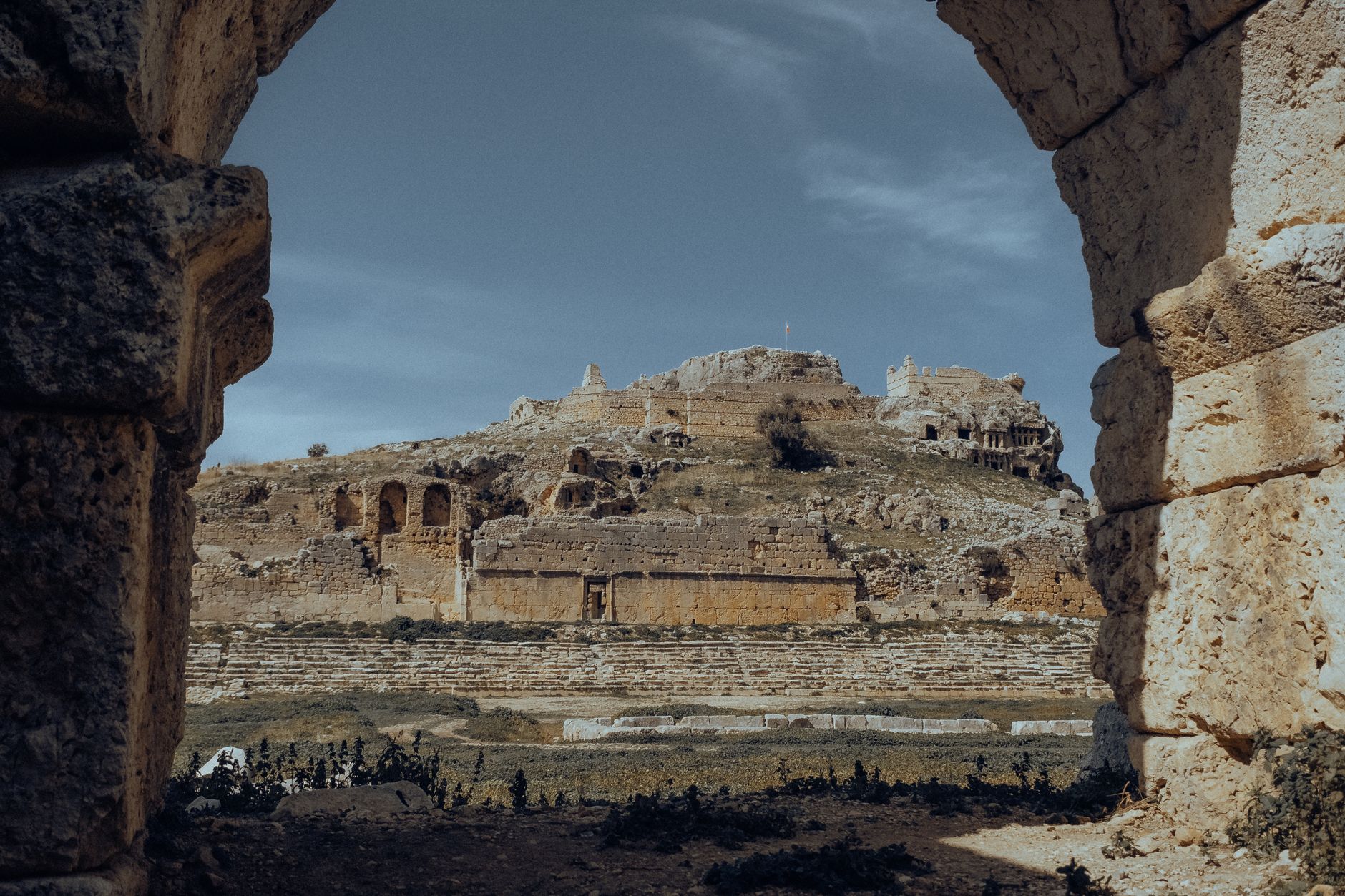
Long before the Byzantines carved their monasteries, this plateau was part of the heartland of the Hittite Empire. Around Yozgat you can find Hittite rock reliefs, inscriptions and settlement mounds that speak of a civilisation that once rivalled Egypt. The nearby site of Kerkenes Dağ, a vast Iron Age city on a mountain ridge, is among the most intriguing archaeological landscapes in Anatolia.
The region's story continues through Phrygian, Roman and Byzantine times, and later into the Seljuk and Ottoman eras, leaving a layered heritage of caravanserais, mosques, tombs and bridges scattered across the countryside. The Ottoman clock tower and old streets of Yozgat city itself give a gentle introduction to this long history.
The best way to appreciate these traces is with a car and an open schedule, stopping at village mounds, roadside inscriptions and panoramic viewpoints. Even without specialist knowledge, the sense of deep time on this steppe is powerful and easy to feel.
Steppe Landscapes, Villages and Warm Hospitality
Yozgat's greatest asset may be its sheer openness. The steppe stretches to the horizon in waves of gold and green, dotted with grazing sheep, solitary trees and distant ridges. Sunrises and sunsets here are spectacular, painting the plains in soft pinks and oranges, and the night sky, far from city lights, is thick with stars.
In the villages, hospitality is not a performance but a way of life. You may be invited for tea, offered fresh bread and cheese, or drawn into conversation with a farmer proud to explain the rhythms of the harvest. This warmth, offered without expectation, is the memory most visitors carry home.
The pace is slow and the rewards are simple: a walk along a country lane, a picnic by a spring, a chat with a shepherd. Yozgat is a reminder that travel does not always need to be spectacular to be deeply satisfying.
Traditional Cuisine of the Yozgat Plateau
Yozgat's food is honest, hearty Central Anatolian cooking built on wheat, lamb, yoghurt and vegetables from the garden. Look for testi kebabı, meat slow-cooked in a sealed clay jar, and arabaşı, a warming soup of shredded chicken and dough often served at weddings and gatherings. Stuffed vine leaves, mantı and home-made börek are staples of family tables.
One local speciality worth seeking out is Yozgat çirlemesi, a simple, comforting dish of dough pieces cooked with chickpeas and yoghurt, and the region's own version of kuru bamya, dried okra stewed with tomatoes. Desserts lean on honey, walnuts and dried fruit, and a glass of strong tea or Turkish coffee rounds off every meal.
Eating here is often an informal affair in small lokantas and family-run restaurants, where the menu changes with the season and the welcome is as important as the recipe. Come hungry and be prepared to be fed generously.
Day Trips from Ankara and Combining with Hattuşa
Yozgat is roughly a two-and-a-half to three-hour drive from Ankara, making it feasible as a long day trip, though an overnight stay is far more rewarding. From Ankara, take the road towards Sungurlu and Boğazkale, then continue east to Yozgat, linking the Hittite capital of Hattuşa with the province's own sites in a single loop.
Hattuşa, with its massive city walls, Lion Gate and Yazılıkaya sanctuary, is one of Turkey's most important archaeological treasures and pairs beautifully with Yozgat's rock monastery and steppe landscapes. A two- or three-day itinerary can comfortably cover Hattuşa, Kerkenes Dağ, the Aziz Theodore monastery and the old town of Yozgat, with time left for unhurried meals and scenic drives.
Further afield, the historic town of Boğazkale, the Alacahöyük ruins and the crater lake of Nar Gölü make excellent add-ons. Renting a car is the most flexible option; otherwise, local buses and dolmuşes connect the main towns, and a hired driver for the day is a good compromise for reaching the more remote sites.
Best Time to Visit and Practical Advice
The ideal seasons are late spring (May to June), when the steppe is green and wildflowers are out, and early autumn (September to October), with mild days and golden light for photography. July and August are hot and dry, so plan sightseeing for the early morning and evening, and carry plenty of water.
Winter can be cold, with snow on the plateau, but if you are dressed for it, the landscapes are starkly beautiful and the sites are utterly empty. Whatever the season, bring sun protection, a hat and sturdy walking shoes, as paths around the rock monastery and archaeological sites can be rough.
Allow at least two days to do the region justice, and three if you want to combine it with Hattuşa. Check opening hours for smaller sites in advance, carry some cash for village shops and tea houses, and keep your schedule flexible. Yozgat rewards those who slow down and let the steppe set the pace.
"In Yozgat, the greatest luxury is silence: a rock-cut chapel to yourself, a horizon without end and a glass of tea offered by a stranger who quickly becomes a friend."
Top Highlights
Popular Activities
Thinking about a trip to Turkey?
Share your contact details and a vetted local expert will follow up with a plan built around you — free, no obligation.
