
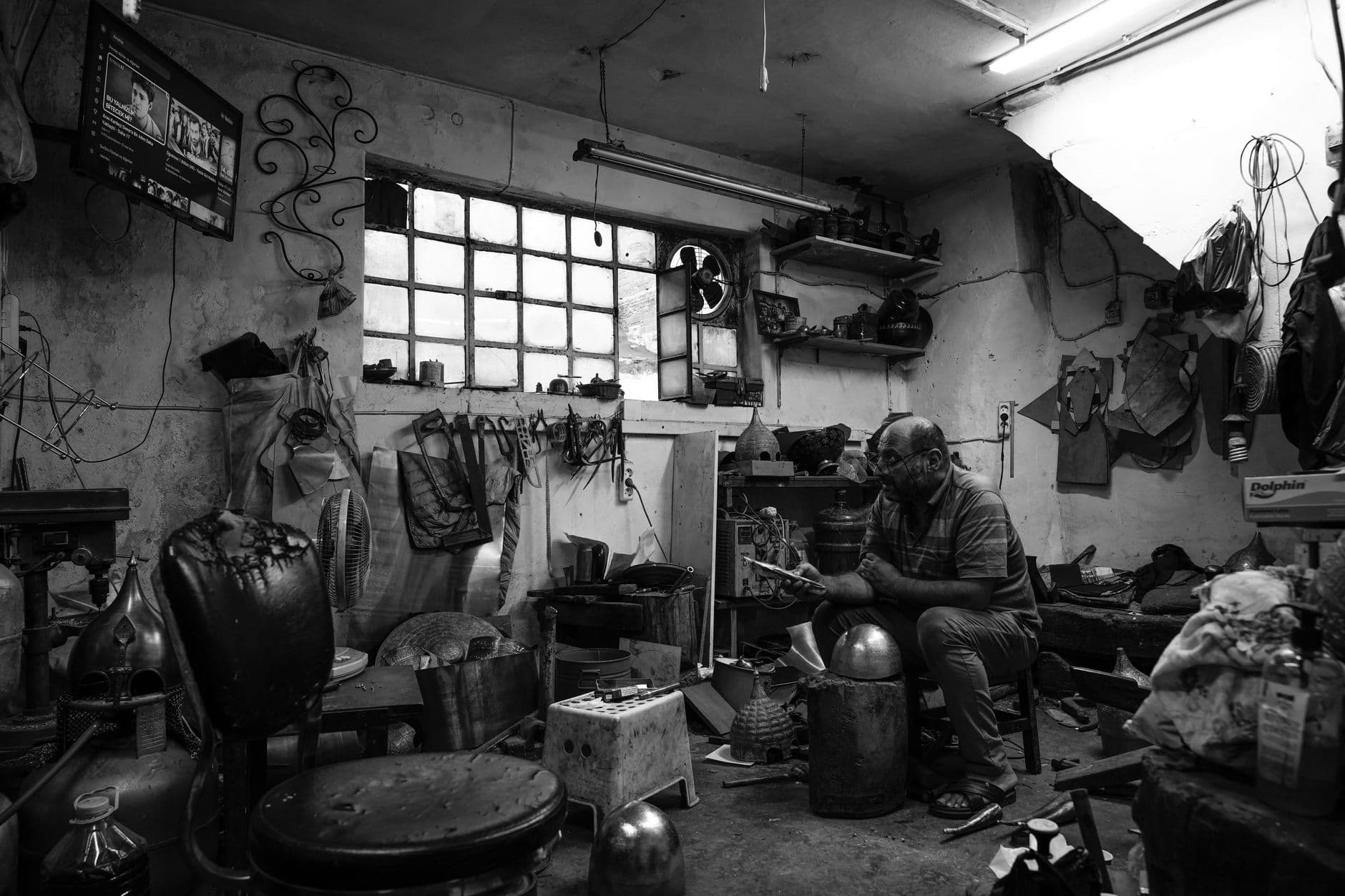
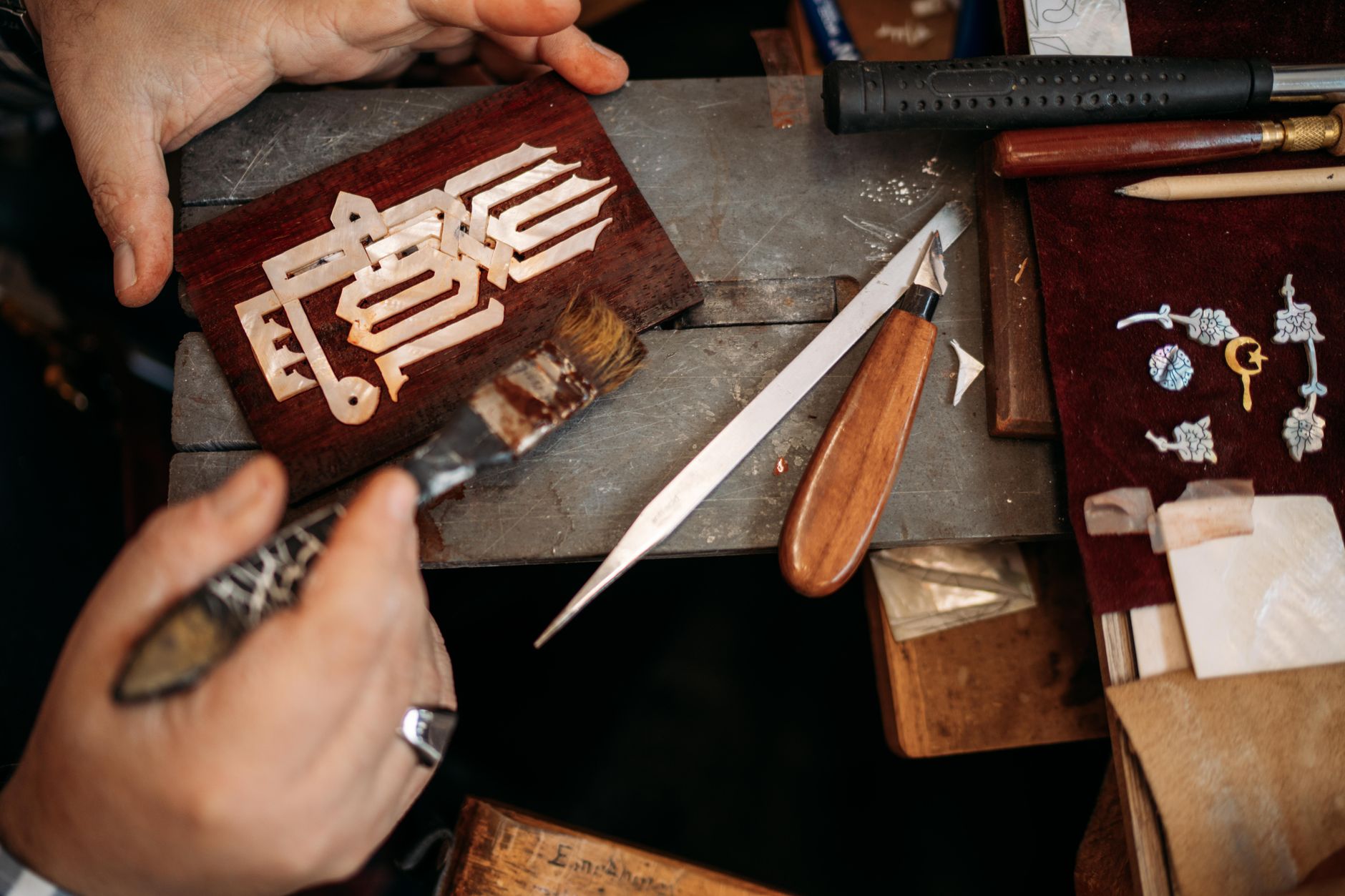
Somewhere in a quiet side street of Selçuk, a man in a dusty apron is holding a pair of nippers the way a surgeon holds a scalpel. He positions a sliver of glass no bigger than a grain of rice, checks it against a drawing, and presses it into lime mortar. Around it, thousands of its neighbours already form the wing of a peacock. The whole panel is barely the size of a book, and yet it has taken three weeks. This is the quiet arithmetic of Aegean mosaic work: centimetres bought with patience, colour assembled one tessera at a time.
Türkiye's Aegean coast has been a stone-working country for a very long time. Ephesus, Sardis, Pergamon, Halicarnassus — these cities floored their villas and temples in opus tessellatum and cut their façades from marble so pure it glows at dusk. The crafts you can watch today in İzmir, Selçuk, and Bodrum are not museum reconstructions. They are living workshops where the same gestures, the same tools, sometimes the same quarries, are still in use. Visiting them is one of the most rewarding cultural experiences on the coast — provided you go with the right curiosity and the right manners.
Why the Aegean Still Cuts Stone
Walk through the terrace houses of Ephesus and you will see what this region once did at scale: floor mosaics with geometric borders so fine the eye cannot follow individual stones, wall marbles sliced thin enough to bend and book-matched like butterfly wings. The raw materials were local. Marble came from quarries around Afyon and the marble-rich hills of western Anatolia, and the Aegean's glass and stone workshops supplied the palette of blacks, ochres, reds, and greens.
What survived the centuries was not just the material but the method. Cutting hard stone into consistent cubes, sorting colour by colour, bedding pieces into lime mortar or setting them on a net backing — these techniques passed down through Byzantine mosaicists, Ottoman taş işçiliği (stonework) masters, and modern restoration studios attached to the big archaeological projects. Many of today's workshop owners trained in conservation or fine art before opening their own ateliers.
In İzmir — and especially in the old bazaar lanes of Kemeraltı and the artisan streets around it — you will find studios that sit between craft and restoration. Some supply conservation teams. Some make jewellery. Some do both, and the boundary is blurrier than you might expect.
There is also a straightforward economic reason the tradition survives: buyers. A small mosaic panel or a hand-cut marble pendant is portable, legally clean, and carries the unmistakable fingerprint of a human hand. In a world of identical souvenirs, that counts for a great deal.
İzmir: Urban Workshops and the Kemeraltı Bazaar
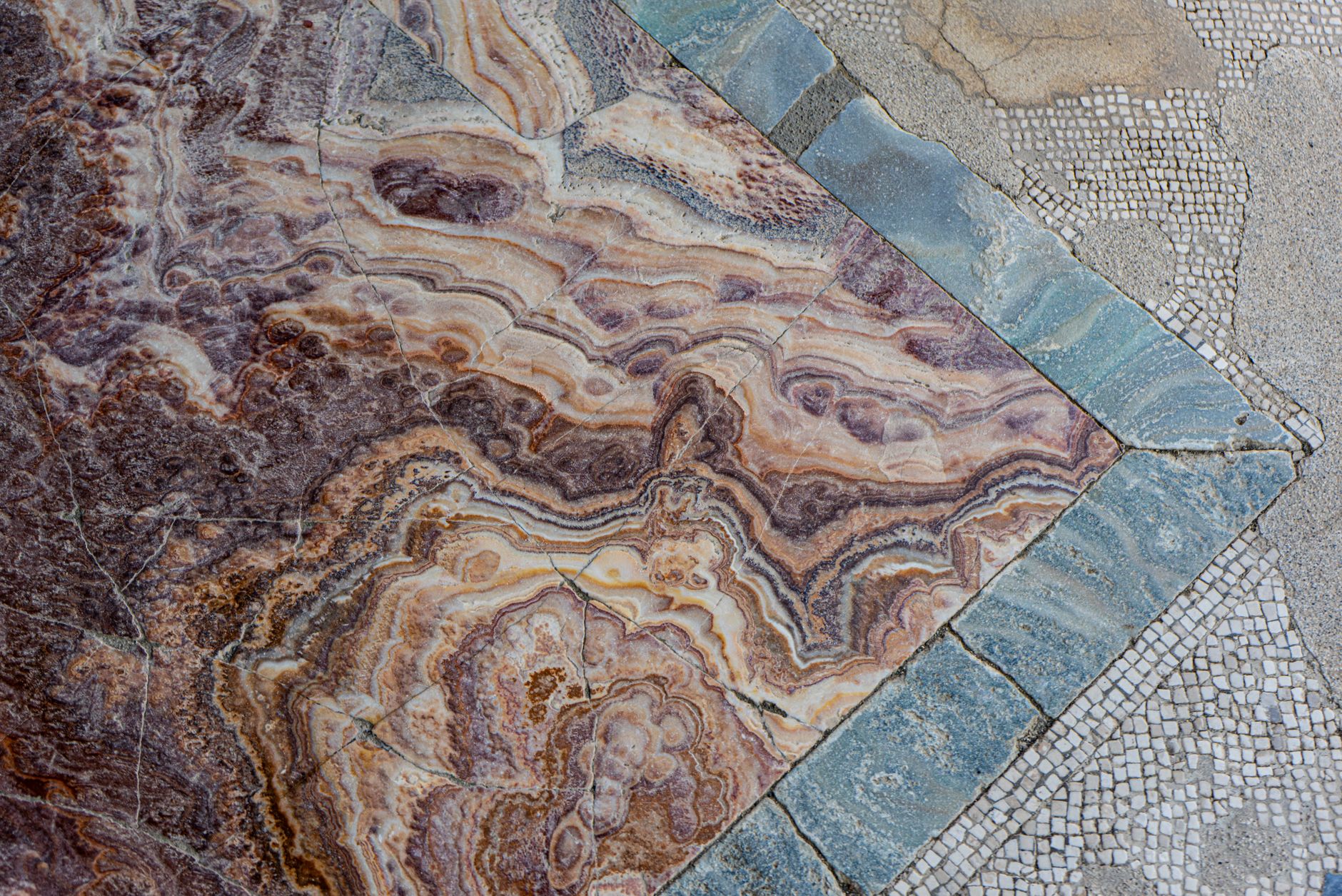
İzmir is the best place to start, because the widest range of ateliers is concentrated here. In and around Kemeraltı, you'll find mosaic studios working in the Roman-Byzantine idiom — geometric borders, fish, pomegranates, peacocks — alongside marble carvers producing small vessels, bookends, and architectural fragments for designers and restorers. Silver- and goldsmiths nearby often set micro-mosaic or polished marble cabochons into rings.
What surprises most visitors is the sandbox quality of the work. Ask a mosaicist how the colours are chosen and you may watch them sift through shallow trays of smalti (glass paste from the Venetian tradition, beloved of Byzantine workshops) and local stone, testing pieces against a background before committing. Ask about nippers and they may hand you a pair — harder and heavier than you expect, with a rhythm that takes months to master.
It's worth budgeting two or three hours for a proper visit rather than treating it as a shopping stop. If you want to plan your days around craft rather than ruins, our guides are a good place to sketch an itinerary, and the destination overviews on destinations help you cluster workshops with nearby sites.
Selçuk: Mosaics Beside the Ruins They Echo
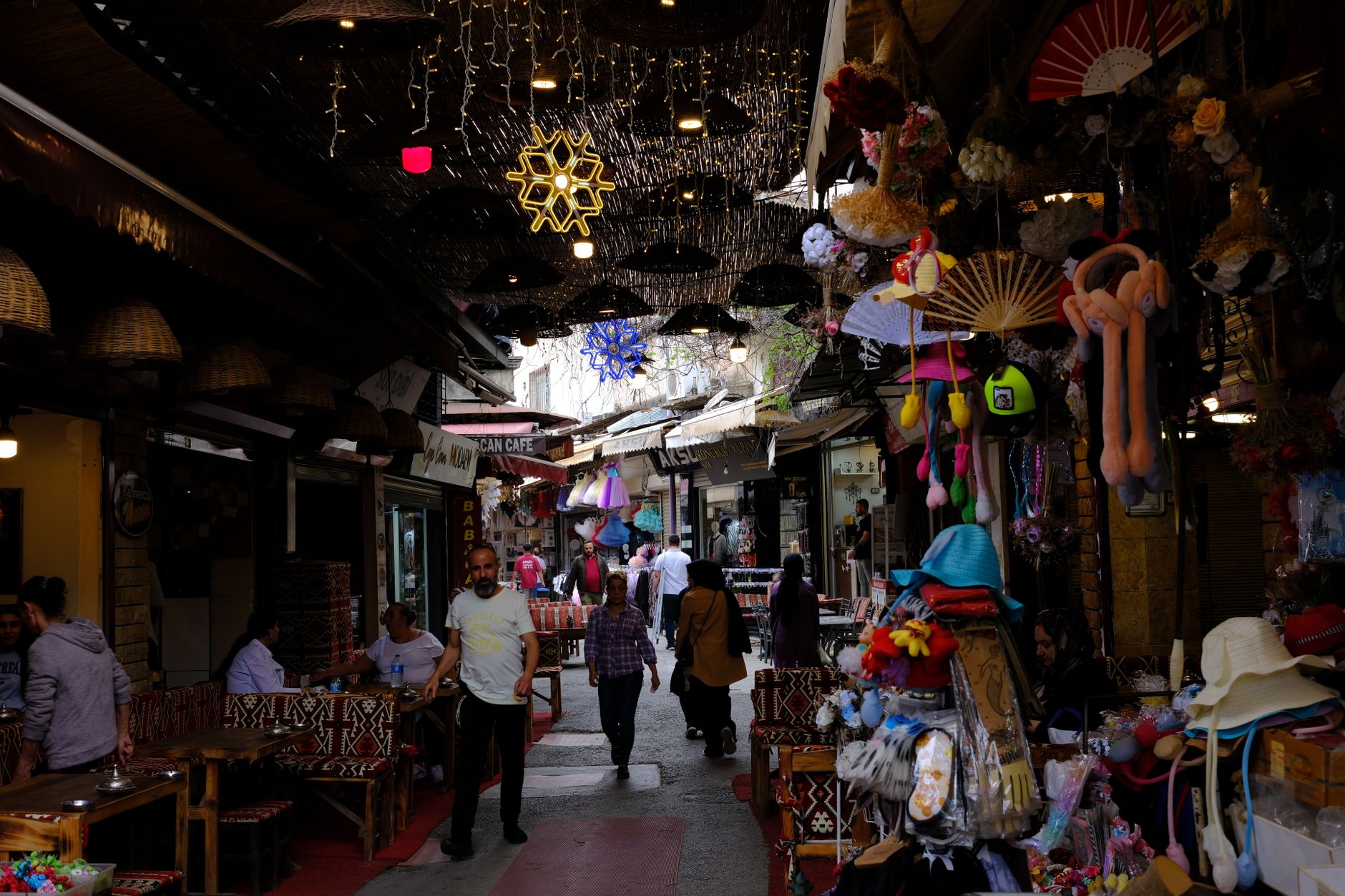
Selçuk has an intimacy that İzmir's bazaar can't match. The town sits at the gate of Ephesus, and its workshops often feel like extensions of the archaeology. Many artisans here have worked on excavation or restoration projects; their reproductions of Ephesian floor motifs can be startlingly close to the originals you'll see an hour later in the terrace houses.
A visit pairs beautifully with the site itself. See the mosaics in the morning — the terrace houses of Ephesus are the essential viewing, along with the Basilica of St John and the çarşı around the Selçuk Artemision — then spend an afternoon in a workshop and watch those patterns come back to life under a craftsperson's hands. Stone cut in Selçuk often comes from regional quarries; ask, and you may learn exactly which hill your marble came from.
The Selçuk ateliers are also where commissions are easiest to arrange in a short stay. A small commission — a 15 or 20 cm mosaic panel, a set of coasters in the Ephesian geometric style, a marble plaque with a house sign — needs a design conversation; execution typically takes weeks, so plan on having it shipped. Serious buyers often ask for a written sketch and a photo record at intervals.
If ancient stone is your main motivation, the archaeology pages throughout our blog and the themed routes on routes will help you build days around places like Ephesus without over-scheduling.
Bodrum: Whitewashed Light and Marble Simplicity
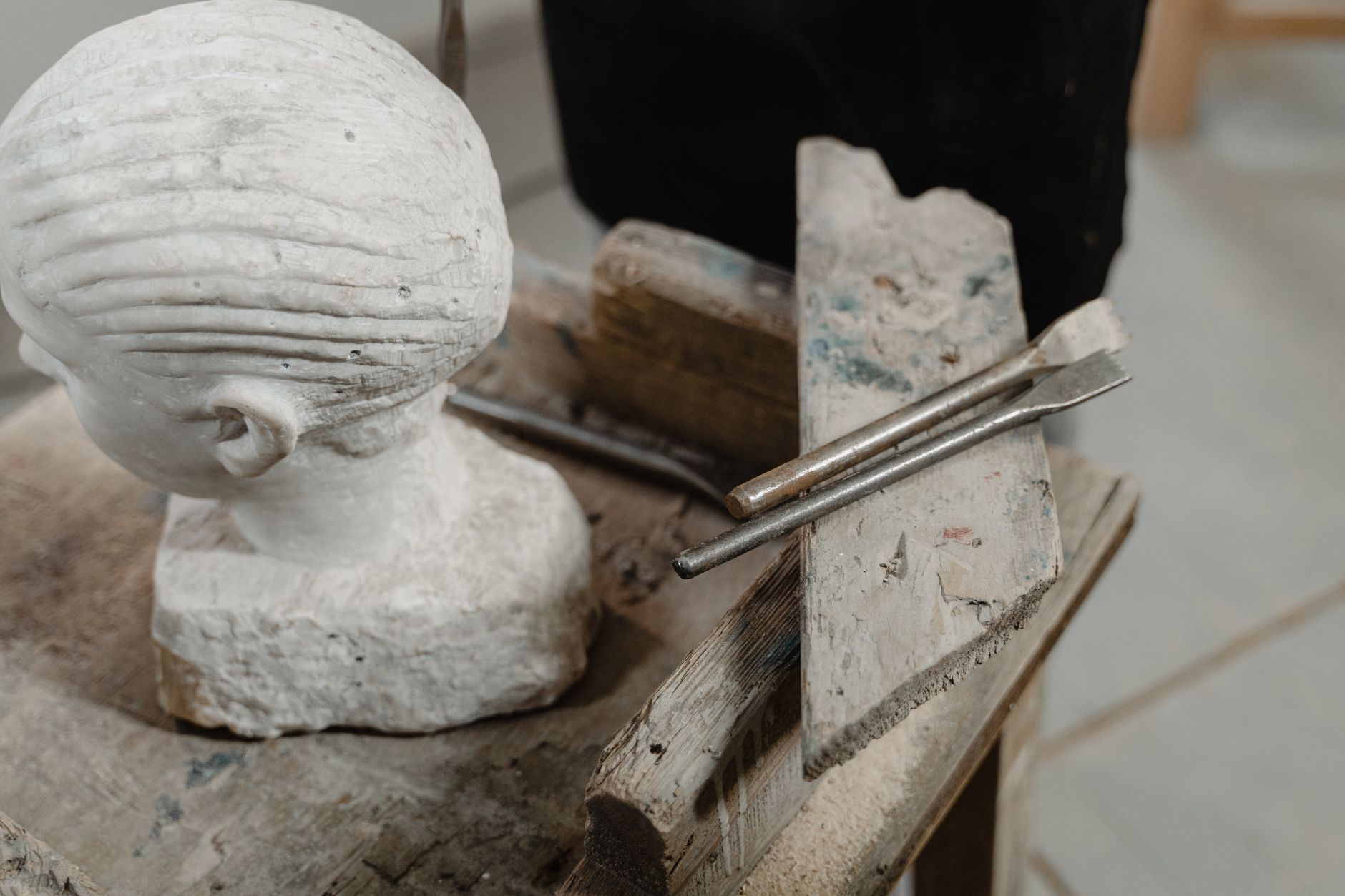
Bodrum has its own aesthetic. The town's whitewashed houses, bougainvillea, and the Crusader castle walls make it look Mediterranean rather than Roman — and the workshops here lean into simplicity. You'll find marble carvers working vessels and mortars with softly chamfered rims, artisans making donutın-like form objects, and a small but respected scene of mosaic makers producing framed panels in a modern idiom with clean geometry.
The light in Bodrum flatters stone. Local craftsmen know it; they polish marble to a soft sheen rather than a mirror, and they like to show you how a piece looks in shade and in sun. Mausoleum-era Halicarnassus was literally built on fine marble and stone carving, so the town's craft revival has deep roots.
Bodrum work tends to be a little more design-forward and a little pricier than Selçuk's; it sells to hoteliers, yacht owners, and Istanbul interior designers. That's useful if you want a piece that stands on its own as sculpture. But it's equally possible to spend modest money on a tiny marble pendant or an olive-wood-and-marble cheese board that will genuinely earn its place in your kitchen.
How to Visit Respectfully
These are working studios, not showrooms. The single most important rule is to ask first: bakabilir miyim? (may I look?) works wonders, and usually gets you a chair, a glass of tea, and a far better conversation than you would have had otherwise. Never touch finished work or pieces set out to dry; mosaic tesserae are only held by mortar, and a curious fingertip can shift a piece that a craftsman will spend twenty minutes repositioning.
Ask before photographing. Many artisans welcome it, some find it distracting, and a few are protective of original designs. If a sign at the entrance disputes your assumption, believe the sign. If you're curious about tools or techniques, ask — the trick of Aegean craft is that artisans are usually delighted to explain what they do. Just keep an eye on the time you're consuming; their work is paid for by commissions, not by your visit.
Buy deliberately. A hand-made piece needs to be paid for, and haggling a mosaicist down from a price that already reflects three days' work is not a game. It is also worth being honest about your budget: most studios have small items priced reasonably, and the owner would rather show you something affordable than watch you leave. And expect the making to be told to you — this marble, this quarry, this design from a Ephesus mosaic — because provenance is part of the object.
Look for the cheapest way to end up with something real. In these workshops, cheapest often means small: a pendant, a tiny framed bird, a pair of coasters. Small is also the way the craft has always been learned.
Time a visit for a weekday morning if you can. Shops in İzmir and Selçuk are calmer then, and you'll see production at full tilt rather than a show-and-tell. The best-time guide helps you slot craft mornings into the bigger seasonal picture, and our travel tools page at travel tools can help with the logistics of getting between towns.
What to Commission — and What It Will Cost You
The most satisfying commission in this region is a small mosaic panel: a geometric border with a central motif, sized to fit a bookshelf or a hallway. These are made in the Byzantine-Roman technique with lime mortar and cut stone or smalti, and a 20 x 30 cm piece typically takes two to four weeks of intermittent work. Price depends on density of tesserae and the maker's reputation; ask for a written design, a deposit, and a shipping quote up front.
Second, consider jewellery. Micro-mosaics and polished marble cabochons set into silver are a Bodrum and İzmir speciality, and they're the most portable way to own the craft. A pendant or ring can be made to size within days, making it the easiest commission on a normal holiday timetable.
Third, small functional marble pieces — mortar and pestle, a cheese board, a candle holder, a house-number plaque. These are heavy, so confirm shipping or accept the luggage space they take. Fourth, consider restorations and lessons: some studios accept guests for a half-day mosaic workshop, where you cut your own tesserae and leave with a small piece. It isn't a souvenir — it's the best possible education in how hard this work is.
Expect to pay for skill, not weight. A modest piece made slowly costs more than a heavy piece made quickly. Ask what the price includes (design, materials, packing), and whether a certificate or maker's note is provided — many artisans are happy to sign and describe a piece, which makes it a better heirloom. For anyone assembling a longer trip around craft collecting, the itineraries at itineraries give you a workable spine, and the planner at planner can hold the whole shape of the journey together.
Why These Pieces Matter
You will take home other things from Türkiye — memories of light on the Aegean, a dozen photographs of ruins. But a small stone panel from a Selçuk atelier is different in kind: it is an object made by a named person, from materials dug out of this soil, using techniques this coast has used for two thousand years. It carries the place in a way a magnet never will.
There is also the quieter value of having watched it being made. When you look at that peacock's wing at home, you'll remember the sound of nippers on glass and the careful checking of a drawing, and the slightly absurd patience of it all. That is the real souvenir: a renewed sense of how much human attention it takes to make something beautiful out of the ground beneath our feet.
Before you go, check practicalities on the FAQ, and if you'd like to build a craft-focused trip with local context, our experts can connect you with trustworthy studios. Visiting these workshops isn't just shopping. It is watching a very old tradition refuse to disappear.
Thinking about a trip to Turkey?
Share your contact details and a vetted local expert will follow up with a plan built around you — free, no obligation.