

The Aegean Table: A Celebration of Freshness
There’s a reason travelers return from Türkiye’s Aegean coast with a glow — and it’s not just the sunshine. The region’s cuisine is a vibrant, healthy celebration of the sea, the soil, and the olive tree. Here, meals are built around what’s fresh that day: just-caught fish, sun-ripened vegetables, wild greens gathered from hillsides, and generous glugs of golden olive oil. The Aegean table is simple, honest, and profoundly delicious.
Unlike the heavier kebabs of central Anatolia, Aegean cooking leans on herbs, lemon, and olive oil. It’s a Mediterranean diet in its purest form, and it’s one of the great joys of traveling through this coast. Whether you’re sitting at a plastic table in a fishing harbor or a white-tablecloth terrace overlooking the sea, the philosophy is the same: let the ingredients shine.
This guide will help you navigate the Aegean food scene with confidence — from decoding a balık (fish) restaurant menu to knowing what’s in season each month. You’ll also discover how to find the family-run lokantas that serve the most authentic, affordable meals in Bodrum, Çeşme, Ayvalık, and Datça.
How to Order at a Balık Restaurant Like a Local
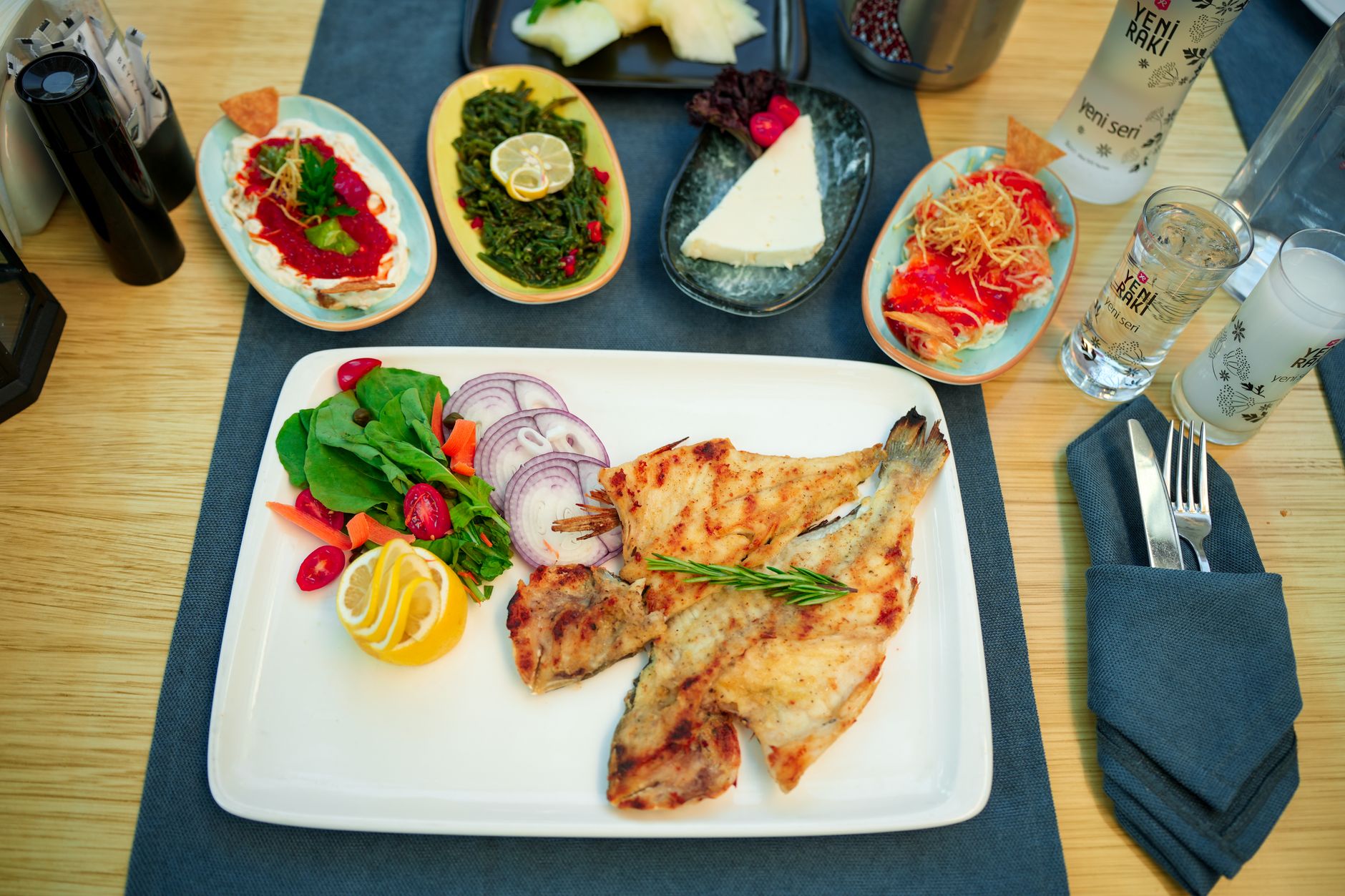
A balık restaurant is a seafood restaurant, often found along the coast, where the daily catch is displayed on ice. The ritual is part of the pleasure. When you arrive, you’ll typically be invited to inspect the fish — don’t be shy, this is your chance to choose. Ask the price per kilogram (kilosu ne kadar?) before committing, as prices vary by species and season.
Once you’ve selected your fish, it’s usually grilled simply with olive oil, lemon, and maybe a sprinkle of salt — the Aegean way. While it cooks, you’ll be served a parade of mezes (small appetizers): deniz börülcesi (samphire) with garlic and olive oil, lakerda (cured bonito), ahtapot salatası (octopus salad), ezine peyniri (a local white cheese), and haydari (thick yogurt with herbs). These are not just starters — they’re an integral part of the meal.
To drink, locals often prefer rakı, an anise-flavored spirit mixed with water, or a crisp white wine from the nearby vineyards. If you’re not drinking alcohol, ask for şalgam (fermented turnip juice) or fresh lemonade. The meal ends with fresh fruit or a simple dessert like kabak tatlısı (candied pumpkin).
“In a good balık restaurant, the fish is so fresh it tastes of the sea — you need nothing more than olive oil and lemon.” — A local chef in Bodrum
Price Expectations: Eating Well Without Breaking the Bank
One of the great pleasures of the Aegean coast is that you can eat like royalty for surprisingly little — if you know where to go. A casual lokanta (family-run eatery) might serve a hearty plate of grilled fish, a few mezes, and bread for 150–250 TL per person (about $5–9). A mid-range seafood restaurant will charge 300–600 TL per person, depending on the fish you choose.
At the high end, a fashionable beach club in Bodrum or Çeşme might charge 800–1,500 TL per person or more, especially for lobster or imported wine. But you don’t need to spend a fortune to eat beautifully. Look for places slightly off the main promenade, where the menu is handwritten and the clientele is local.
Street food is another bargain: midye dolma (stuffed mussels with rice and herbs) sold from carts for a few lira each, gözleme (flatbread with cheese or spinach) cooked on a griddle, and fresh simit (sesame bread rings) for breakfast. For the best value, order the daily lokanta special: a home-style stew, a grain, and a vegetable, all for a fixed, low price.
Wine is where budgets can escalate. A glass of local Aegean wine might cost 80–150 TL, a bottle 300–800 TL. Ask for the house wine (ev şarabı) — often a perfectly drinkable local blend at a fraction of the cost.
Seasonal Specialties: What to Eat Month by Month
The Aegean kitchen follows the calendar. Eating in season is not a trend here — it’s tradition. Here’s a rough guide to what’s at its peak each month.
- Spring (March–May): Wild greens like şevketi bostan (golden thistle), kuzu kulağı (sorrel), and radika (dandelion) appear in markets and on meze plates. Artichokes (enginar) are heavenly, often braised with peas and carrots in olive oil. Fresh sardines and anchovies are abundant.
- Early Summer (June): The first tomatoes, cucumbers, and green beans arrive. Look for bakla (fava beans) stewed with dill, and enginar still going strong. Sea bass and sea bream are at their best.
- High Summer (July–August): Peaches, melons, figs, and peppers flood the markets. Fish like çipura (sea bream) and levrek (sea bass) are grilled simply. Octopus is tender and perfect for salads. This is also the season for karpuz (watermelon) with white cheese — a classic Aegean snack.
- Autumn (September–November): The sea is warm, and so is the welcome. Bonito (palamut) runs, often grilled or cured as lakerda. Mushrooms like mantar appear after the first rains. Pomegranates, quinces, and grapes are everywhere. Olive harvest begins in late October — a magical time to visit.
- Winter (December–February): Hearty greens like kara lahana (black cabbage) and pırasa (leeks) are cooked with olive oil and rice. Fish like hamsi (anchovy) from the Black Sea is popular, but Aegean waters yield istavrit (horse mackerel) and mezgit (whiting). Citrus fruits are at their peak — perfect for fresh juices.
No matter when you visit, ask your server what’s fresh that day. The best meals are often unplanned, based on a fisherman’s morning catch or a farmer’s harvest.
Wild Greens and Olive Oil Dishes: The Heart of the Aegean Kitchen
If there’s one thing that defines Aegean cooking, it’s the marriage of wild greens and olive oil. Known as ot yemekleri (herb dishes), these are the soul of the region. They’re not just side dishes — they’re main events, served at room temperature with a wedge of lemon and crusty bread.
Common wild greens include deniz börülcesi (samphire, a salty marsh plant), kuzu kulağı (sorrel), ege otu (Aegean greens), and turşu (pickled greens). They’re typically blanched, then dressed with olive oil, lemon, and garlic. Some are cooked with rice or bulgur to make a satisfying pilaf.
Olive oil is the liquid gold of the Aegean. The region produces some of Türkiye’s finest — peppery, grassy, and vibrant. You’ll find it drizzled over everything: grilled fish, salads, cooked vegetables, even desserts. A classic dish is zeytinyağlı taze fasulye (green beans in olive oil), slow-cooked with tomatoes and onions until silky. Another is imam bayıldı (stuffed eggplant), where the eggplant is fried, then baked with a tomato-onion mixture — it’s so good it allegedly made an imam faint.
To truly appreciate this cuisine, visit a local market (pazar) in Bodrum, Çeşme, or Ayvalık. You’ll see piles of wild greens, barrels of olives, and vendors eager to share cooking tips. It’s a sensory feast and a window into the Aegean way of life.
Finding Family-Run Lokantas in Bodrum, Çeşme, Ayvalık, and Datça
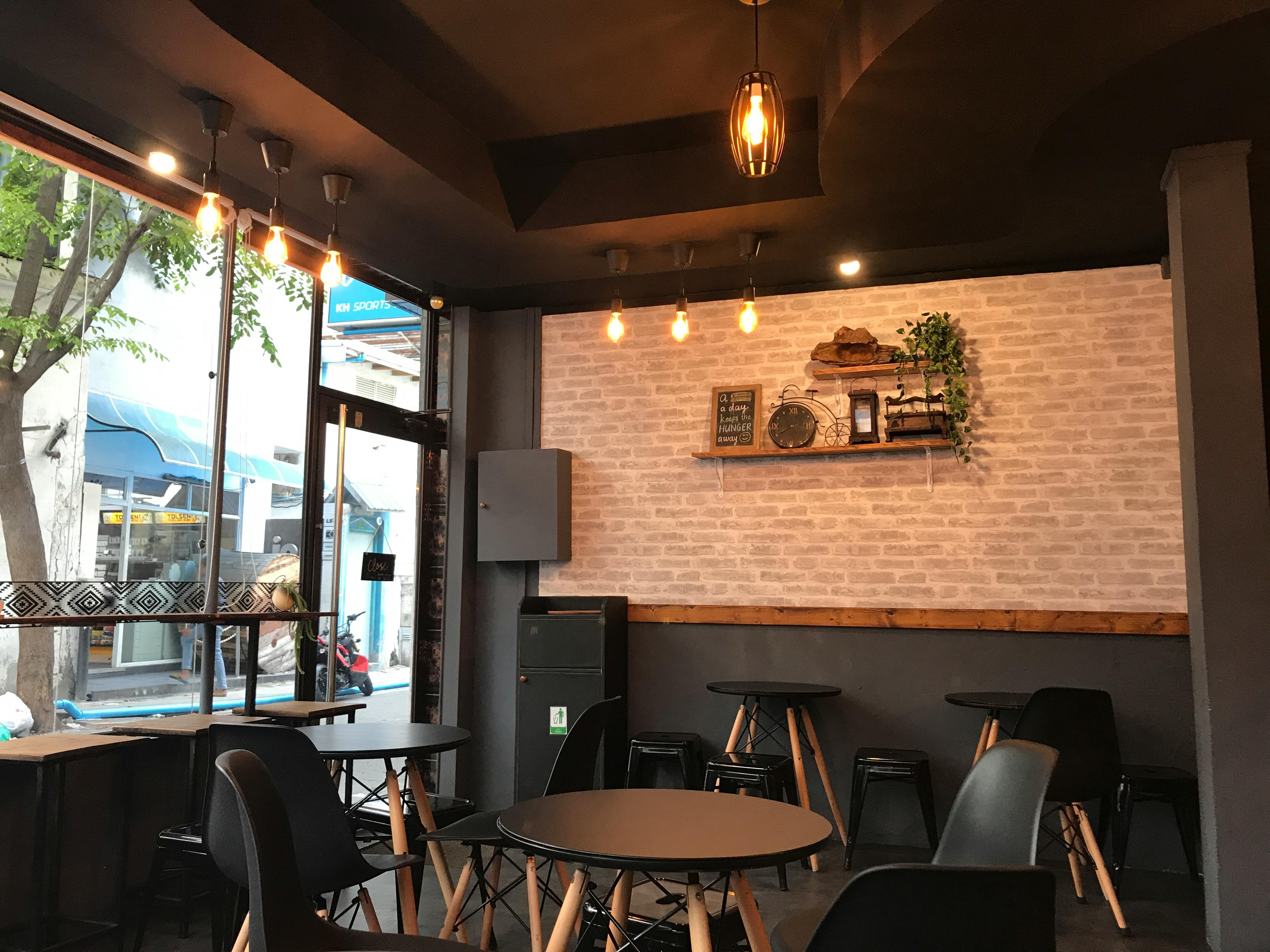
The best meals on the Aegean coast are often found in lokantas — modest, family-run restaurants where the day’s dishes are displayed in a glass counter. You point at what you want, and it’s piled onto a plate. These places are affordable, welcoming, and utterly delicious.
Here’s how to find them in four of the coast’s most beloved towns.
Bodrum
Bodrum’s culinary scene spans from upscale marina dining to hidden gems in the back streets. For an authentic lokanta experience, head away from the waterfront to the neighborhood of Tepecik or the streets behind the Bodrum Castle. Look for places with handwritten menus and a crowd of locals at lunchtime. Try Bodrum mantısı (tiny dumplings) or a plate of deniz börülcesi. The weekly market (Tuesday) is a great place to stock up on olives, cheese, and spices.
Çeşme
Çeşme is famous for its clear waters and its sakızlı dondurma (mastic ice cream), but its savory food is equally impressive. The town’s lokantas often specialize in kokoreç (grilled lamb intestines) and midye dolma, but you’ll also find excellent seafood. For a family-run spot, explore the side streets near the Çeşme Castle. Ask for the daily fish — often çipura or levrek — grilled and served with a simple salad. Don’t miss the local olive oil, which is peppery and robust.
Ayvalık
Ayvalık is a food lover’s paradise, known for its olive oil, seafood, and Greek-influenced cuisine. The town’s lokantas are concentrated around the old market area. Look for signs advertising ev yemekleri (home cooking). Try Ayvalık tostu (a hefty sandwich), papalina (small fried fish), and deniz börülcesi. The annual olive harvest festival in October is a wonderful time to visit. For the best experience, choose a place with a few tables on the sidewalk and order whatever the owner recommends.
Datça
Datça is a relaxed peninsula known for its almonds, honey, and pristine bays. The main town has a charming harbor lined with lokantas and fish restaurants. For a family-run feel, walk along the back streets behind the harbor — you’ll find places where the menu changes daily. Try datça bademi (almonds), kekik (thyme honey), and fresh fish like sargoz (white seabream). The Datça market on Saturday is a must for local produce and homemade jams.
In all these towns, the key is to follow the locals. If a place is full of Turkish families at 1 p.m., you’re in the right spot. Don’t be afraid to peek into the kitchen or ask what’s good — hospitality is sacred here, and you’ll likely be greeted with a smile and a sample.
Wine and Raki: Drinking on the Aegean
No Aegean meal is complete without a drink to match. The region’s wines have improved dramatically in recent years, with boutique wineries producing excellent whites from grapes like Narince, Bornova Misketi, and Sultaniye. Red varieties include Öküzgözü and Boğazkere, though these are more common inland. On the coast, crisp, mineral-driven whites pair perfectly with seafood.
Rakı is the traditional accompaniment to mezes and fish. It’s a clear, anise-flavored spirit that turns milky white when mixed with water — hence its nickname, aslan sütü (lion’s milk). Drinking rakı is a ritual: pour a little into a tall glass, add water, and sip slowly between bites. It’s strong, so pace yourself.
For non-drinkers, the Aegean offers plenty of refreshing options: ayran (yogurt drink), şalgam (turnip juice), fresh lemonade, and demirhindi (tamarind sherbet). Turkish coffee or tea ends the meal, often with a piece of lokum (Turkish delight).
Wine prices vary widely. A glass of local wine at a casual restaurant costs around 80–120 TL, while a bottle at a fine-dining spot can run 500 TL or more. To save money, buy a bottle from a local shop and enjoy it at your hotel — or ask if the restaurant allows corkage (many do, for a fee).

Final Bites: Embracing Turkish Hospitality
What makes eating on the Aegean coast so memorable isn’t just the food — it’s the warmth of the people who serve it. You’ll be welcomed like a friend, offered tea while you wait, and sent off with a smile. Meals are leisurely, often lasting hours, with conversation flowing as freely as the olive oil.
Don’t rush. Savor the grilled fish, the wild greens, the sun-ripened tomatoes. Let the owner recommend a wine. Accept the extra meze they bring “on the house.” This is Turkish hospitality at its finest — generous, genuine, and deeply satisfying.
So come hungry, stay curious, and let the Aegean table work its magic. Whether you’re in Bodrum, Çeşme, Ayvalık, or Datça, you’ll find that the simplest meals are often the most extraordinary.
Afiyet olsun! — May it be good for you.
Thinking about a trip to Turkey?
Share your contact details and a vetted local expert will follow up with a plan built around you — free, no obligation.