
Why Ottoman Clocks Deserve a Place on Your Itinerary
Ottoman cities were never silent places, but they were rhythmically organized. Time was called out by muezzins, regulated by sundials on mosque courtyards, and measured by water clocks and sandglasses long before mechanical escapements became common. When public mechanical clocks arrived in the 19th century, they were civic statements as much as instruments: a clock tower in a town square announced that the town had joined a new, standardized, industrial age — and that its administration could afford a monument.
The result is a scattered but wonderfully rewarding landscape of clock towers, turret clocks, and museum-held movements. Some stand in tidy squares in Anatolian towns; some crown gates in bazaars; others survive only as dismantled mechanisms behind glass. What ties them together is the Ottoman habit of borrowing, commissioning, and improvising: French movements, German dials, local stone and local craftsmen, all assembled into something unmistakably of this place.
This guide is for travelers who enjoy looking up, peering at dials, and asking how things work — but who also understand that these are historic artifacts, often fragile and usually off-limits inside. Much of what you'll see is exterior only, and the mechanisms you can study closely are generally in museums. Treat that as part of the pleasure: the discipline of observation, not the thrill of touching.
How Ottoman Public Clocks Came to Be
For centuries, Ottoman timekeeping was prayer-driven. The five daily prayers set the day's structure, and timekeeping instruments — sundials in mosque courtyards, mechanical alarm clocks, and later pocket watches — served that framework. The great mosques, especially those of Mimar Sinan's era, feature sundials and timekeeping rooms whose purpose was to help caretakers track the hours for worship and for the charitable soup kitchens that ran on schedule.
The 19th-century Tanzimat reforms brought a push toward standardized civic time. Telegraph lines, railway timetables, and steamship schedules made a shared clock necessary. Municipalities began commissioning clock towers, often marking a central square, a government building, or an anniversary — the most famous being the towers celebrating the 25th anniversary of Sultan Abdülhamid II's accession in 1901. Not every tower had a grand political reason; many were simply the pride of a provincial governor or a merchant guild.
Mechanisms typically came from Europe. French makers such as the firm of Collin, and later Swiss and German workshops, supplied movements and dials, which were installed in locally built towers. This hybrid craft — imported precision inside, regional masonry and ornament outside — is one reason Ottoman clock towers feel distinct from the European tradition they borrowed from.
Equally important were the public timekeepers who maintained them. Clock caretakers climbed narrow staircases to oil, wind, and adjust the movements, sometimes correcting for temperature and always keeping an eye on the weights. Their jobs vanished with electrification, and much of the local knowledge of these mechanisms went with them.
Clock Towers You Can Admire From the Square
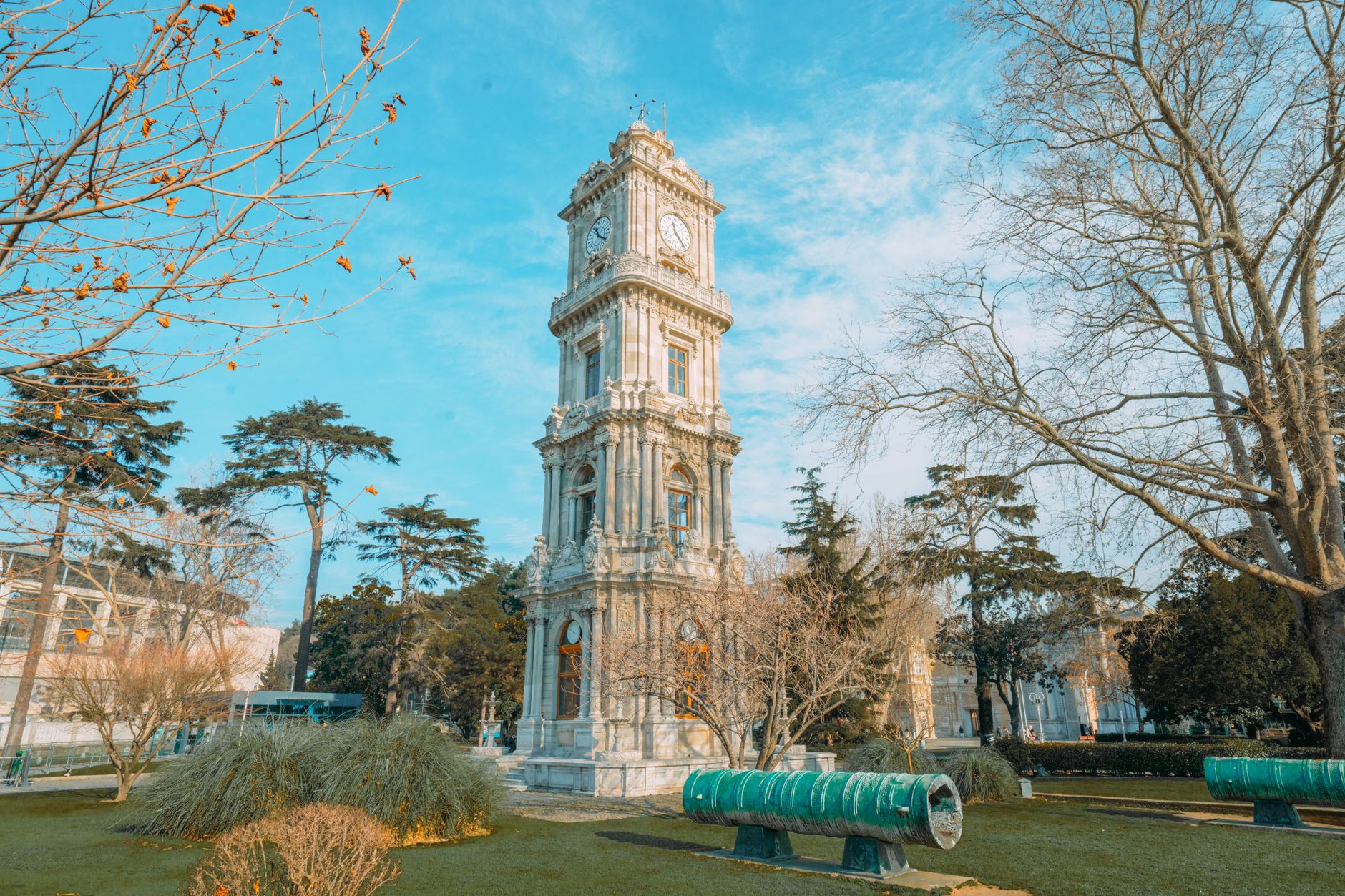
Istanbul's most photographed clock tower is the Dolmabahçe Clock Tower, a slender neo-Baroque structure in the palace gardens, commissioned by Sultan Abdülhamid II and completed in the early 1890s. The tower and its dial are visible from the palace grounds, though access to the internal mechanism is not part of the standard visit; the pleasure is in the proportions, the carved stone and the way it punctuates the waterfront.
In the historic bazaar district, the Tophane Clock Tower near the First Bosphorus Bridge end of the old city — not to be confused with the Tophane-i Amire complex — is a modest but charming Ottoman-era clock tower rising beside a mosque courtyard. It is an exterior stop, best paired with a walk through Karaköy and the surrounding streets. Nearby, the Büyük Saat in the Beyoğlu area (a name used for several Ottoman public clocks) rewards a slow look at how municipal timekeeping was integrated into dense urban fabric.
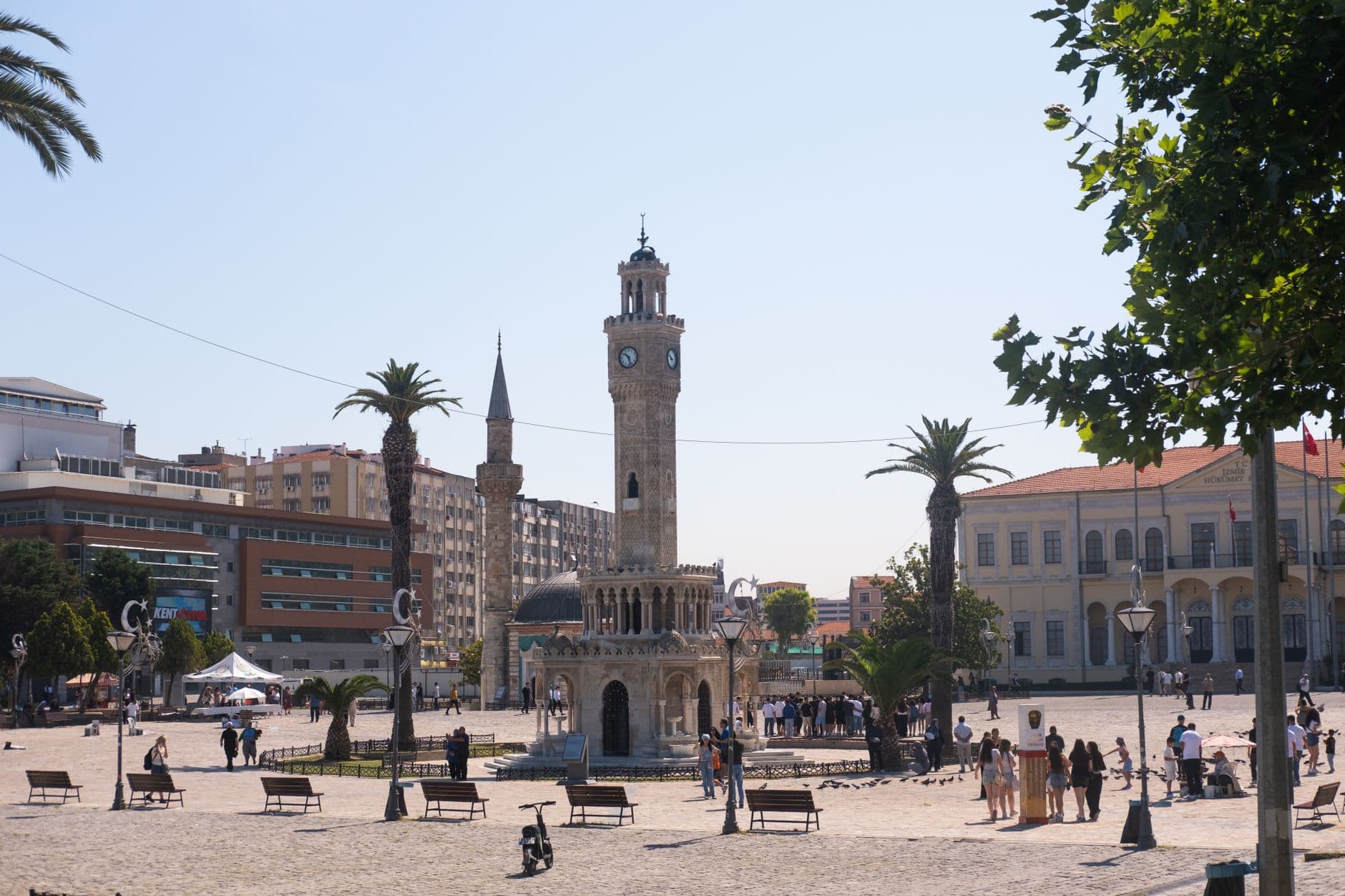
Outside Istanbul, the tradition is even richer. Izmir's Konak Square clock tower, designed by the architect Raymond Charles Père and completed in 1901, is the city's emblem, with its ornate stone base and slender minaret-like columns. Its dials and decorative elements are best studied from the square, especially in late afternoon light. In Adana, the Büyük Saat (Great Clock) tower stands over a busy market area, and in Çorum, Amasya, and Tokat you'll find sturdy stone towers marking old administrative centers.
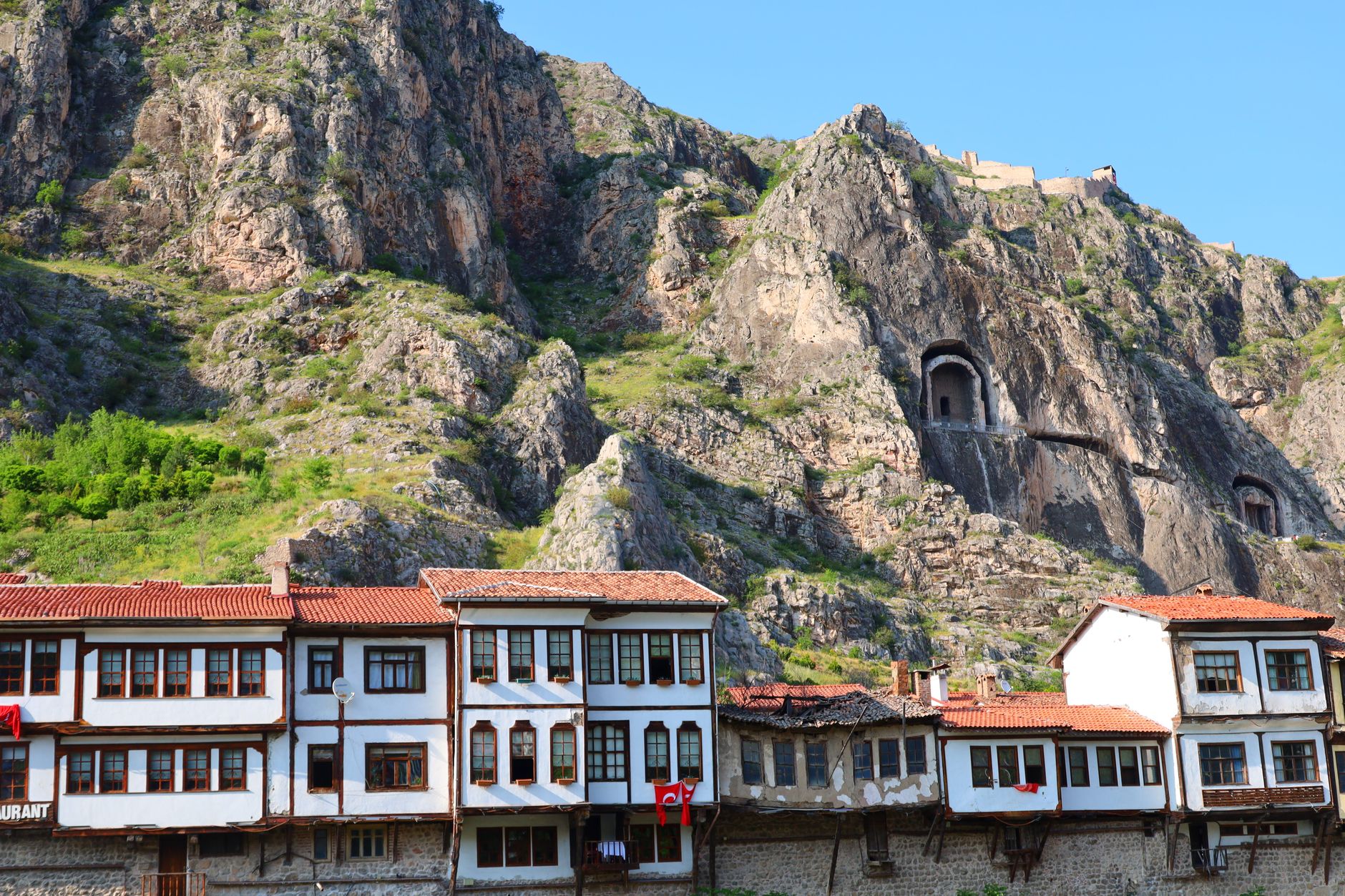
Amasya's clock tower sits below the rock tombs, giving you a remarkable pairing of ancient and industrial timekeeping in one view. Tokat's clock tower anchors a square near historic buildings, and Samsun's and Trabzon's towers each reflect a Black Sea port-town pride in civic improvement. None of these are theme-park attractions; they are living parts of town squares, often surrounded by tea gardens, and that is exactly how to enjoy them.
Look up first, then walk the square slowly. The tower's placement — how it faces the street, the mosque, or the government building — tells you what its builders wanted it to mean.
Bazaar Turret Clocks and Courtyard Timekeeping
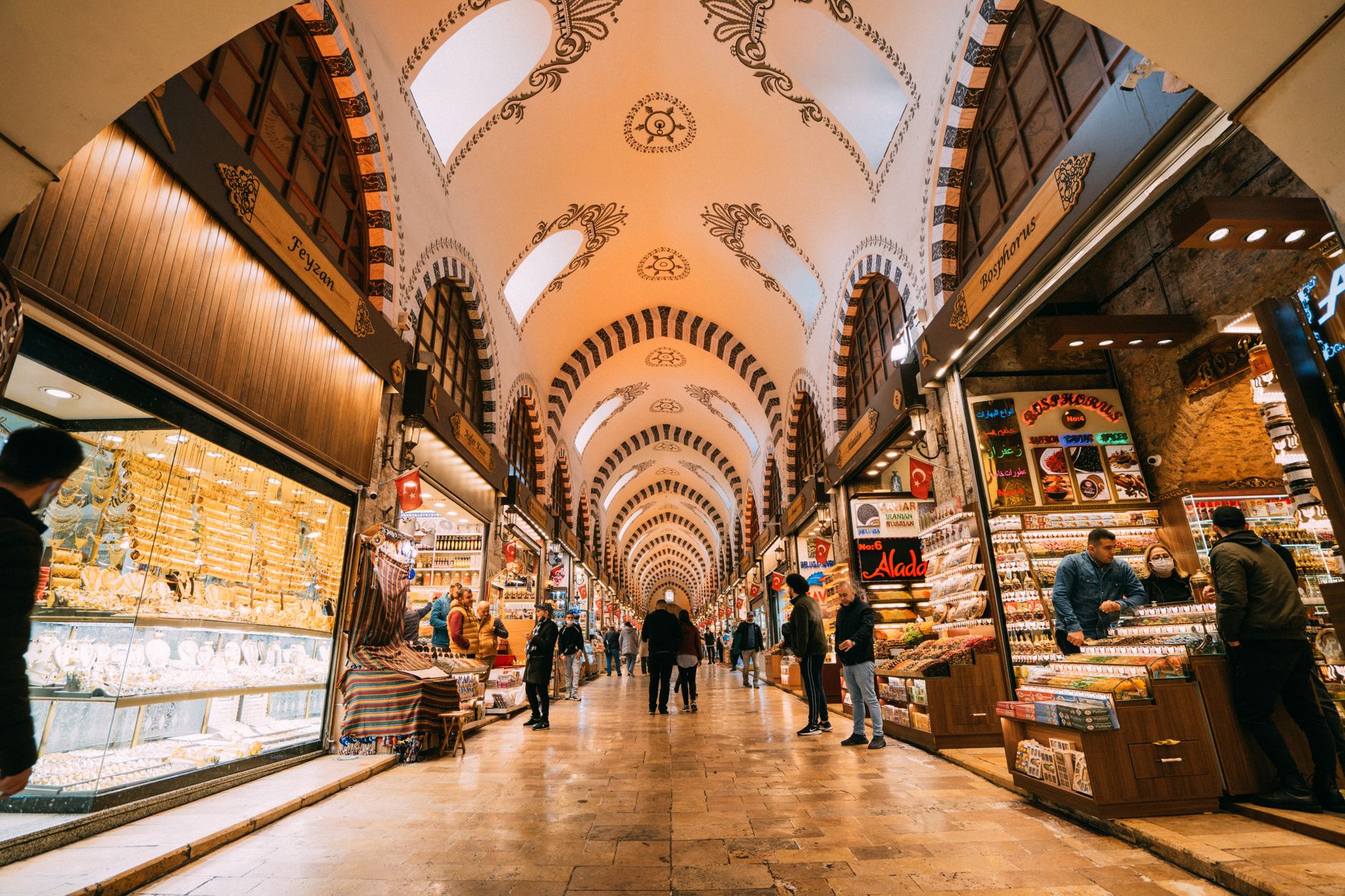
Bazaars had their own temporal rhythms. Opening and closing, the arrival of caravans, and the timing of auctions and guild meetings all depended on human timekeepers and, increasingly, on a clock mounted at a gate or on a turret. In covered markets, a clock above a gate served as a coordinating point: merchants and porters could see it from a distance, and the toll of a bell or the strike of the hour marked the day's transitions.
These bazaar clocks are often small, high up, and easy to miss. In Istanbul's Grand Bazaar and the surrounding hans, look for clock faces above entrances and in inner courtyards; in the Spice Bazaar area, examine the facades of older commercial buildings for dials. In Anatolian market towns such as Şanlıurfa, Gaziantep, and Kayseri, clocks on the walls of bedestens and hans were part of the commercial infrastructure, not decoration.
Turret mechanisms — the compact movements and gearing housed in small rooftop turrets — are rarely accessible. They sit behind locked doors at the top of narrow stairs, exposed to weather and to the risk of curious hands. Appreciate them from below: the dial, the hands, the small ventilation louvres, the mounting bracket. If a caretaker or local guide offers information, ask questions rather than asking for access.
Courtyard timekeeping is another delight. Mosque courtyards across Anatolia preserve sundials and, occasionally, older timekeeping devices or their stone mounts. The Süleymaniye and Selimiye complexes are good places to look for sundials, and many smaller mosques have them tucked beside entrances. These are quiet, scholarly objects, and they reward the traveler who looks at the ground as much as the skyline.
Museum Pairings for Mechanism Lovers
The best way to understand what you're seeing on towers is to study movements in museums, where conservators can protect them and labels can explain them. In Istanbul, the Museum of the History of Science and Technology in Islam in Gülhane Park holds a celebrated collection of reconstructed astronomical and timekeeping instruments, including mechanical clocks and automata based on historical designs. It is the single best place in the city to spend an hour learning how escapements, gears, and celestial models worked in the Islamic world, including Ottoman contexts.
Pair that with the Istanbul Archaeological Museums, where broader material culture — metalwork, inscriptions, and everyday objects — gives context for the artisans who built and maintained these devices. For a different angle, the Dolmabahçe Palace visit lets you see the clock tower from outside and, inside, the European-influenced interiors and objects that made imported precision fashionable at court.
Outside Istanbul, city museums are your friends. The Amasya Museum and the Tokat Museum hold regional collections where you can encounter local metalwork and civic objects, while the Izmir Archaeological and Ethnography museums help frame the Aegean port world that produced Konak's tower. In Konya, the Mevlana Museum and nearby city collections offer a reminder that timekeeping also served ritual and astronomical purposes. Expect variety: not every museum has a clock section, and access to internal mechanisms is rare.
Practical pairing advice: do the museum in the morning when your attention is fresh, then visit the tower or square in the afternoon when the light flatters stone and dials. Bring binoculars for tall dials, and a notebook for details you'll want to look up later. Photography is usually fine outdoors; indoors, follow posted rules and never use flash near delicate instruments.
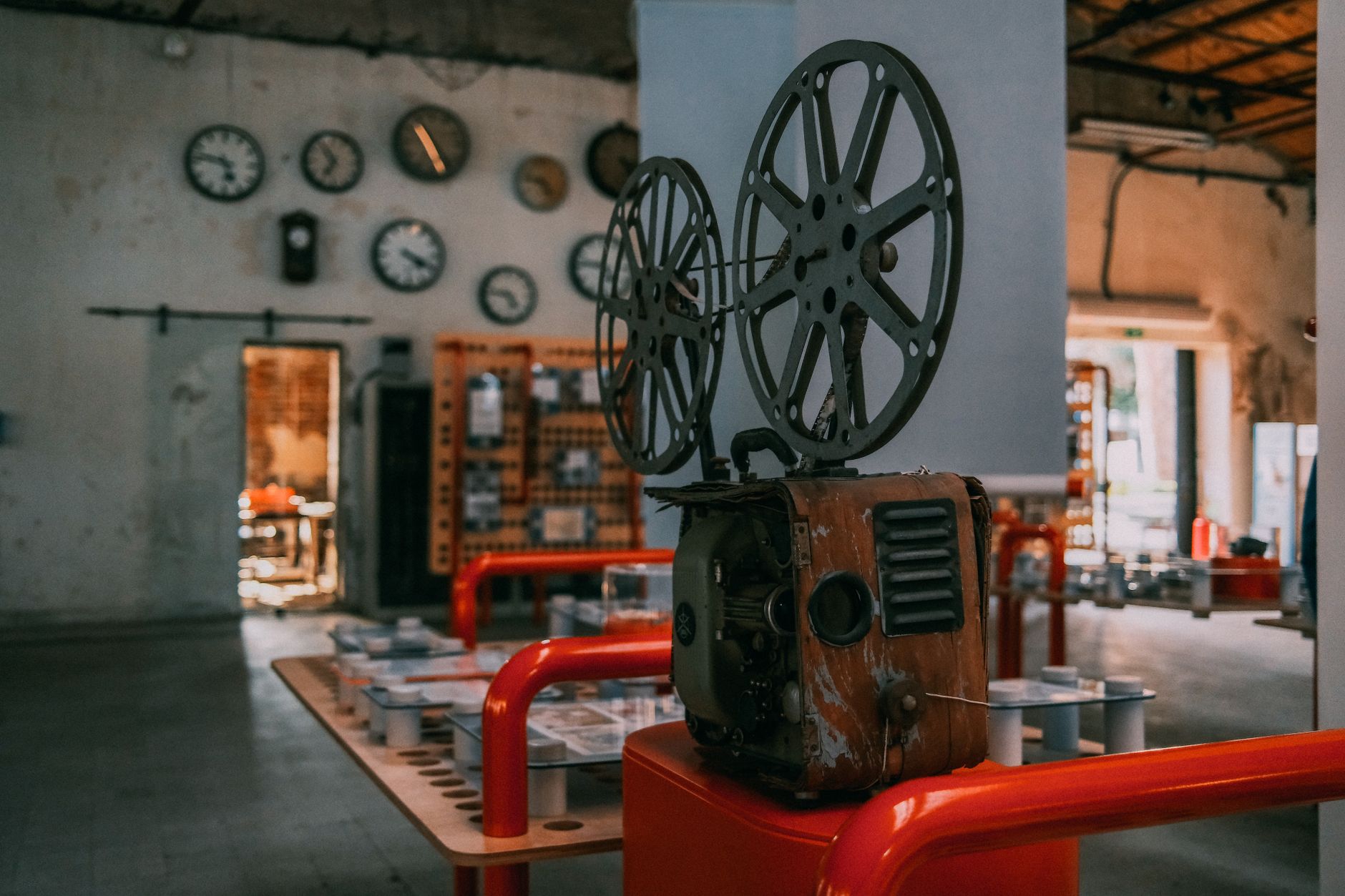
How to Look Without Touching or Climbing
Resist the urge to test the mechanism, turn a dial, or climb into a turret. Historic clock movements are precisely tuned and easily damaged; a single nudge can throw a strike train out of sequence or break a fragile pivot. Towers are also workplaces and, sometimes, private property. When a door is open, ask before entering, and accept a polite no gracefully.
Instead, build an observation practice. Start with the dial: numerals (Arabic, Ottoman Turkish, or Roman), hand style, and any maker's signature. Then the case: stone type, ornament, and how the tower meets the ground. Then the sound, if it strikes — note the interval and tone. Finally, the setting: what buildings share the square, where the tea house sits, how people use the space. This four-step habit turns a two-minute photo stop into a twenty-minute education.
Use binoculars or a zoom lens from a respectful distance. Stand clear of doorways, don't block traffic in busy market streets, and never lean on or climb decorative elements for a better angle. If you want a closer look at a mechanism, ask a museum curator or a local heritage association rather than a caretaker on the street. Many towns have active cultural associations that welcome genuine interest.
Children respond wonderfully to these objects, so make it a game: find the oldest-looking dial, count the numerals, guess how the weights worked. Explain, gently, why we look with our eyes and not our hands. That small lesson travels well to the next monument.
Building a Clock-and-Mechanism Route
For a compact city break, base yourself in Istanbul and spend one day on the Historic Peninsula: the Museum of the History of Science and Technology in Islam in the morning, the Archaeological Museums in the early afternoon, and the Dolmabahçe Clock Tower and palace grounds later, finishing with a walk through Karaköy to see the Tophane clock tower in evening light. The next day, explore bazaar clocks and courtyard sundials, moving slowly and looking up.
For a wider loop, consider an Aegean and central Anatolian itinerary: Izmir for Konak Square, then inland to Amasya and Tokat for riverside and market-square towers, with museum stops along the way. Add Çorum and Kayseri for commercial architecture and hans. A Black Sea extension to Samsun and Trabzon shows how port towns expressed civic ambition through clock towers, and how those towers still organize their squares.
Timing matters. Late afternoon and early evening give the best raking light for dials and stonework, and squares are livelier then. Avoid midday glare for photography and for your own patience. Check local museum hours before you go, since regional museums often close earlier than you expect, and note that access to tower interiors is the exception rather than the rule.
Plan the practical side with our itineraries and check seasonal advice on best time to travel. If you want a hand shaping a route around heritage stops, our trip planner and the local experts page can help. Browse our guides for neighboring topics, and our gallery for visual inspiration before you go.
Etiquette, Access and What to Expect
Access to clock-tower interiors varies enormously. Some municipal towers are occasionally opened for heritage days; most are not. Where a caretaker or guard is present, greet them and ask about the tower's history — curiosity is usually welcome even when entry is not. Never force a door, and never attempt a rooftop or turret climb, even if a staircase looks inviting.
Dress and behave as you would in any historic quarter: modestly, quietly, and with awareness of worshippers if a tower sits beside a mosque. During prayer times, keep your distance from entrances and avoid photographing people at prayer. In bazaars, ask before photographing shopkeepers or their wares.
Expect signage to be limited and sometimes only in Turkish. Learn a few words — saat kulesi for clock tower, mekanizma for mechanism, müze for museum — and you'll find doors open more easily in conversation. A small notebook with sketches is a charming way to show sincere interest.
Finally, temper expectations. These are not animatronic displays; many towers are silent, some dials are restored rather than original, and museum collections vary in depth. The reward is in the accumulation of details — a maker's mark here, a reused stone there, a sundial half-hidden in a courtyard — and in the realization that Ottoman towns were thinking hard about time long before the railway age made it urgent. For logistics, safety notes, and common questions, see our FAQ and how we research pages, and if you'd like to share a find, contact us.
Thinking about a trip to Turkey?
Share your contact details and a vetted local expert will follow up with a plan built around you — free, no obligation.