

The Thrill of Crossing an Ancient Threshold
There is a moment at every ancient site in Türkiye when the modern world falls away: you step through a gate that has stood for two thousand years, and suddenly you are walking the same stone pavement as Roman emperors, Greek philosophers, and early Christian pilgrims. Türkiye is uniquely blessed with these thresholds. From the marble grandeur of Ephesus to the highland sanctuaries of Hierapolis and the Pamphylian plains of Perge, the country preserves some of the ancient world's most spectacular city gates and colonnaded processional streets.
These were not mere entrances. In antiquity, a city gate was a statement of power, wealth, and civic identity. It marked the boundary between the wild outside and the civilized inside, between the profane and the sacred. Passing through it was a ritual as much as a physical act. Processional streets—often lined with marble columns, statues, and fountains—guided visitors toward temples, agoras, theaters, and sanctuaries, choreographing the experience of the city like a stage set.
This guide celebrates those thresholds. We'll explore the most iconic gates and colonnaded streets in Türkiye, unpack the engineering genius behind them, and offer practical advice so you can navigate these sites comfortably and meaningfully. Whether you're a first-time visitor or a seasoned archaeology enthusiast, walking these paths is one of the most visceral ways to connect with the ancient past.
Ephesus: The Marble Avenue of Emperors
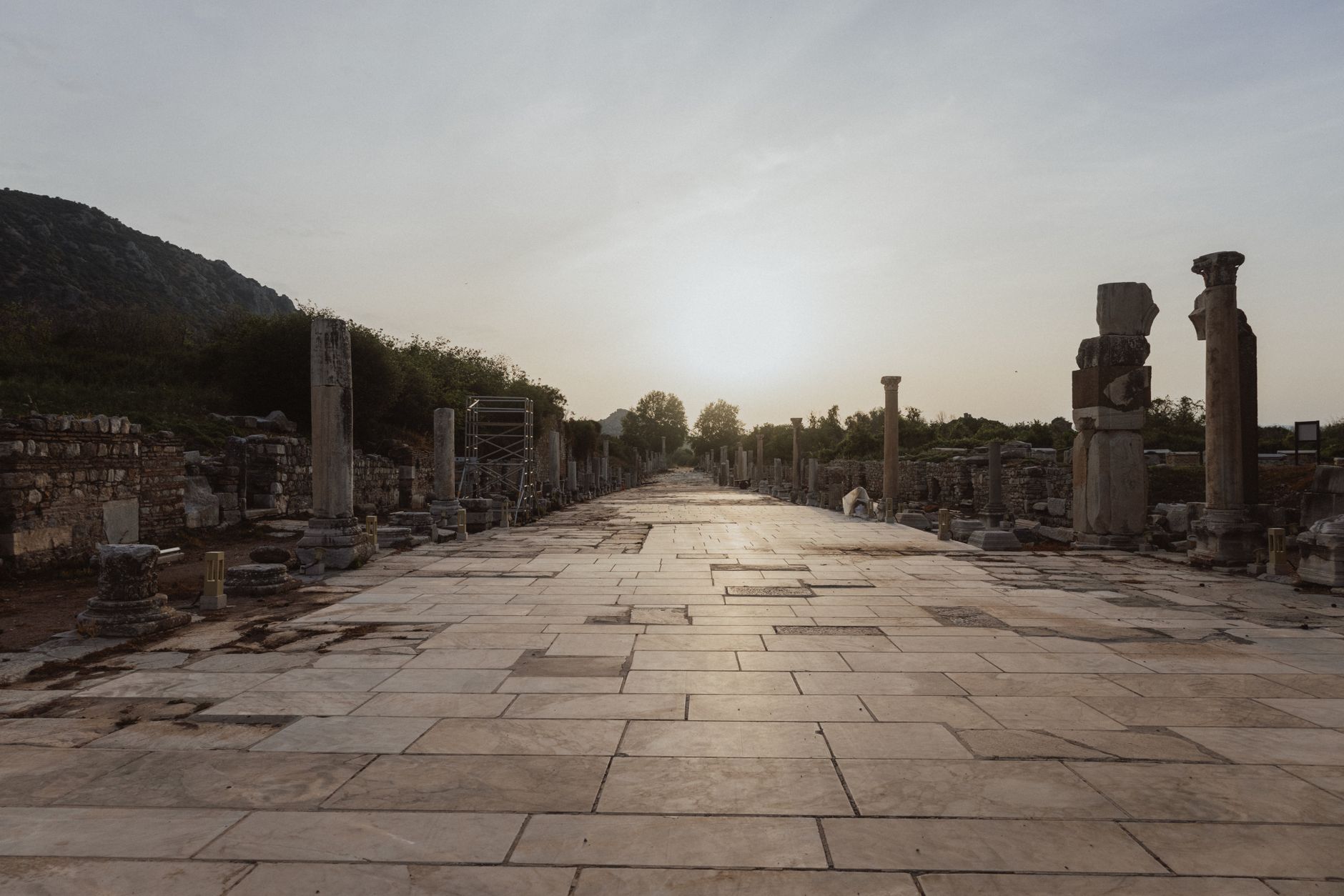
No site in Türkiye captures the drama of ancient urban design like Ephesus. The city's heart is the Kuretes Street, a majestic colonnaded avenue that runs from the Library of Celsus toward the Great Theater. Flanked by two-story stoas, fountains, and statues of emperors and benefactors, this was Ephesus's main processional route. Walking down its polished marble slabs—still grooved by ancient chariot wheels—you can almost hear the bustle of a city that once numbered a quarter of a million people.
At the upper end of the street stands the Gate of Hercules, a monumental two-columned gateway adorned with reliefs of the hero Heracles. It was likely built in the 4th century AD to honor an emperor or a local benefactor, and it marked the transition from the civic center to the residential slopes. Just beyond, the Magnesian Gate and the Coressian Gate defined the city's outer boundaries, while the Gate of Augustus connected the upper agora to the processional way.
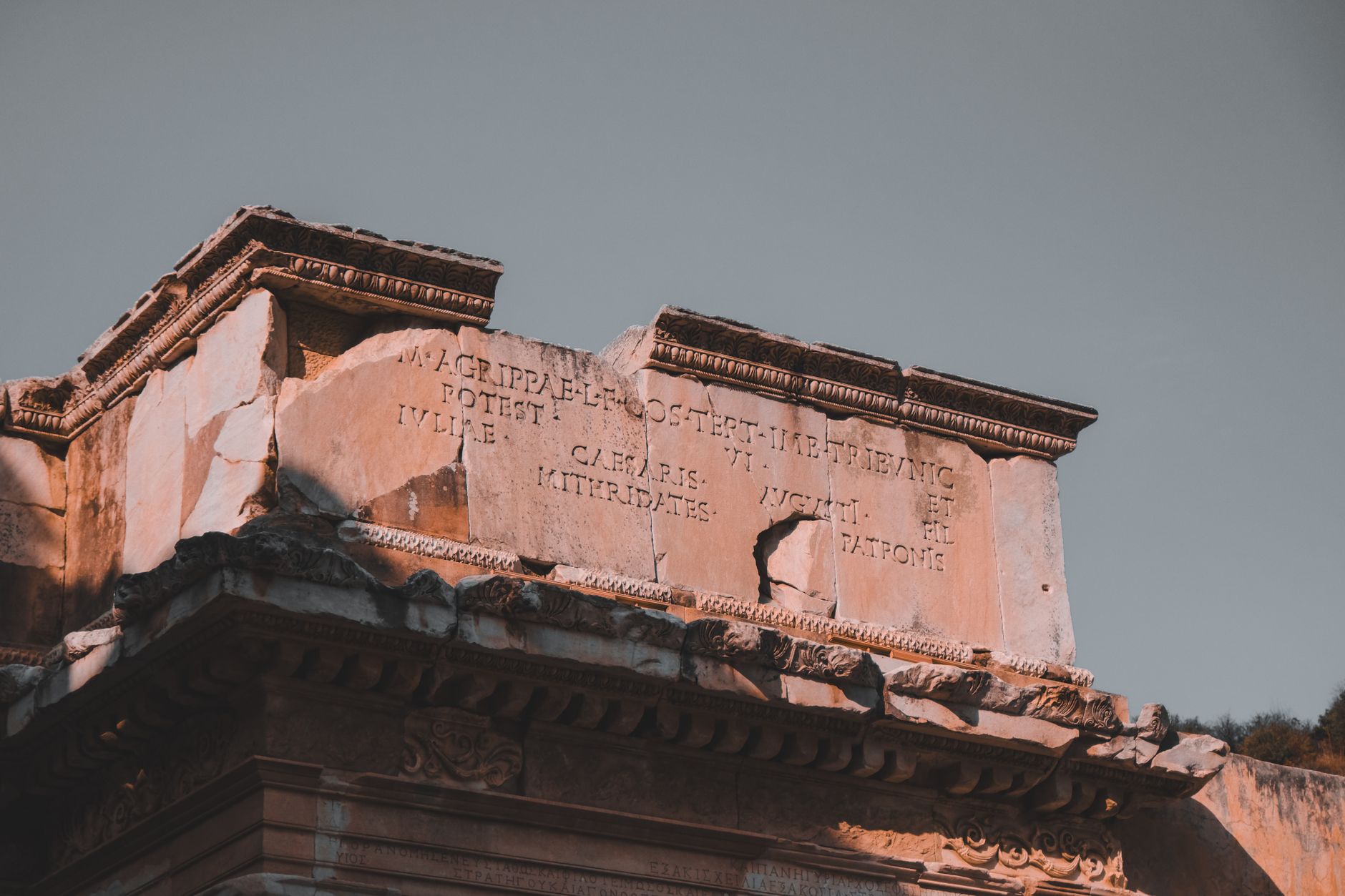
The Library of Celsus, one of antiquity's most beautiful buildings, served as a grand backdrop to the street. Its façade—re-erected from original fragments—features statues representing Wisdom, Knowledge, Intelligence, and Virtue. Nearby, the Gate of Mazeus and Mithridates, a triple-arched passage built by two freed slaves, opens into the Commercial Agora. Each of these gates was more than a passage: they were monuments in their own right, celebrating civic generosity and imperial favor.
To appreciate the engineering, notice how the street drains were integrated beneath the marble paving, channeling rainwater away from the thoroughfare. The colonnades provided shade and defined pedestrian space, while the slight upward slope toward the theater created a natural processional ascent. Ephesus was a masterpiece of urban planning, and its streets were its bloodstream.
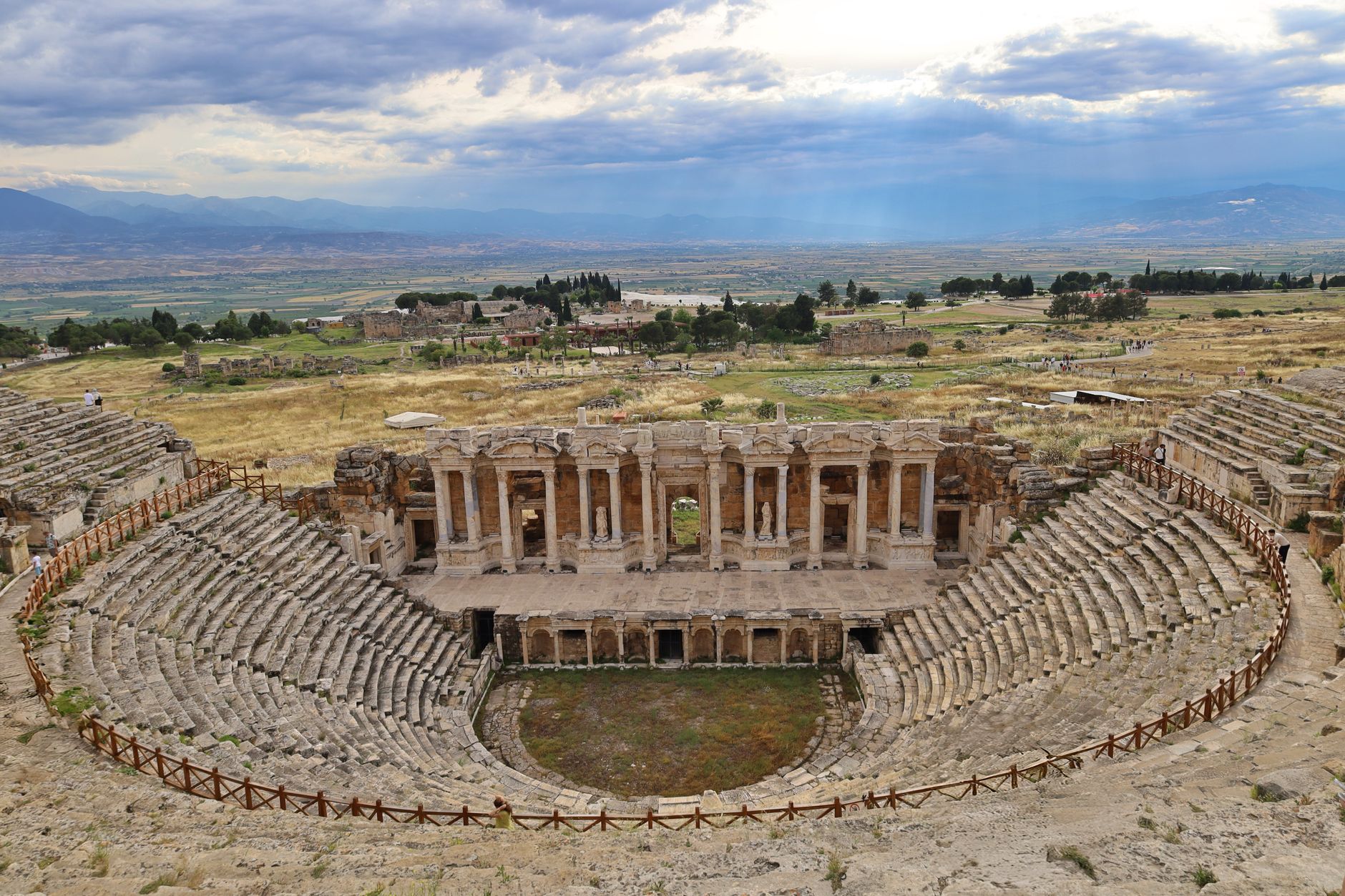
Hierapolis: The Sacred Processional Way of Pamukkale
Perched above the blinding white travertine terraces of Pamukkale, Hierapolis was a sacred city famed for its therapeutic hot springs. Its Frontinus Gate, a massive triple-arched structure, served as the main entrance from the south. Built in 86 AD by the proconsul Sextus Julius Frontinus, it was flanked by round towers and opened onto a wide, colonnaded street that ran straight through the city.
This Main Street (also called the Plateia) stretched for over a kilometer, lined with columns, shops, and fountains. It connected the Frontinus Gate to the Gate of Domitian at the northern end, passing the Nymphaeum of the Tritons and the Latrine—a communal toilet that was a social hub in its own right. The street was paved with massive limestone blocks and had a covered portico on each side, offering shade and shelter.
What makes Hierapolis special is its integration with the natural landscape. The hot springs, rich in calcium carbonate, created the surreal white terraces that cascade down the hillside. The city's architects harnessed these waters, building baths, temples, and the Plutonium—a cave shrine to the god Pluto, where toxic gases were believed to be the breath of the underworld. Walking the processional street here, you're following in the footsteps of pilgrims who came for healing and worship.
The Gate of Domitian, a triple-arched gateway with a monumental fountain, marked the northern entrance. It was built in 82–83 AD and dedicated to the emperor Domitian. Its arches were once adorned with statues, and its design influenced gateways throughout the region. Together with the Frontinus Gate, it framed the city's sacred axis, turning the entire urban space into a stage for ritual movement.
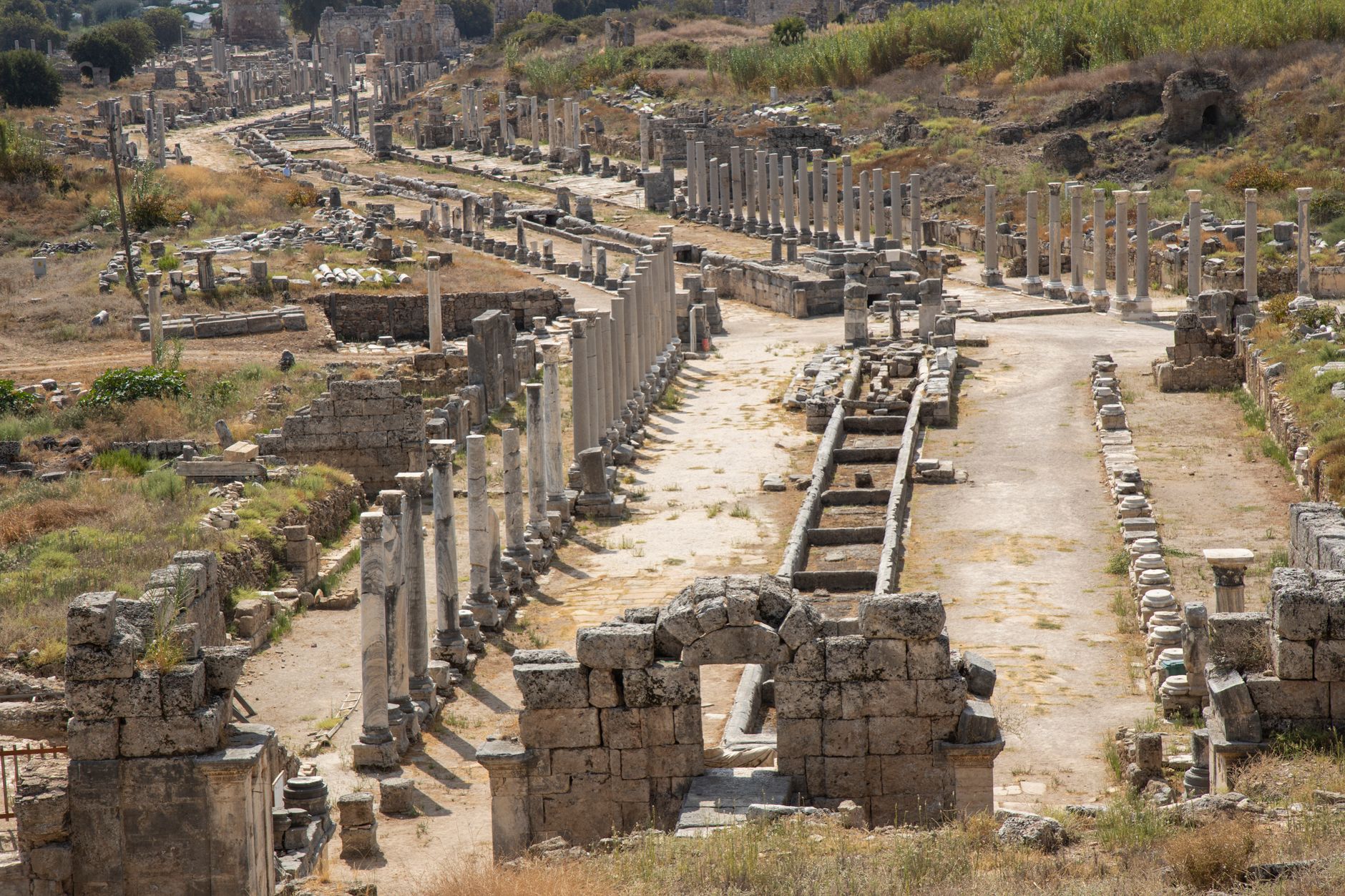
Perge: The Colonnaded Splendor of Pamphylia
Just east of Antalya, Perge was one of the great cities of Pamphylia. Its Hellenistic Gate, built in the 3rd century BC, is one of the best-preserved city gates in Türkiye. Two massive round towers flank a courtyard that once held statues of the city's founders—including the legendary Calchas and Mopsus. The gate led into a colonnaded street that ran north to the acropolis, lined with shops and porticoes.
But Perge's most impressive feature is its Roman Gate and the Colonnaded Street that follows. The street, nearly 300 meters long, was flanked by Corinthian columns and a central water channel—an elegant solution for both drainage and aesthetics. At its center stood a nymphaeum (monumental fountain), and at the far end, the Gate of Septimius Severus marked the entrance to the city's commercial agora.
Perge was also the home of the mathematician Apollonius, and its streets reflect a love of geometry and order. The grid plan, the precise alignment of columns, and the sophisticated water management system all speak to a city that valued both beauty and function. The site is less crowded than Ephesus, making it an ideal place to appreciate the engineering without the crush of tour groups.
Don't miss the stadium, one of the best-preserved in Anatolia, and the theater with its finely carved reliefs. Together with the gates and streets, they paint a vivid picture of life in a prosperous Roman city.
Other Iconic Gates and Streets Across Türkiye
Aphrodisias: The Gate of Zoilos, a monumental gateway dedicated to a local benefactor, opens onto a stunning colonnaded street leading to the Sanctuary of Aphrodite. The city's marble quarries made it a center of sculpture, and the streets are lined with exquisite reliefs.
Miletus: The Lion Harbor Monument and the South Agora Gate are part of a grand processional route that led from the harbor to the theater. The Sacred Way to Didyma, lined with statues of the Branchidae, was one of antiquity's most famous pilgrimage routes.
Pergamon: The Sanctuary of Athena and the Trajaneum were accessed via steep processional streets. The Great Altar, now in Berlin, once dominated the acropolis. The Gate of Eumenes and the Library of Pergamon are highlights.
Laodicea: The Syrian Gate and the Ephesus Gate frame a colonnaded street that connected the city's theaters and agoras. Recent excavations have revealed stunning frescoes and mosaics.
Side: The Great Gate and the colonnaded street leading to the harbor are beautifully preserved. The Temple of Apollo at the harbor's edge is a sunset must.
Termessos: This mountain-top city has a dramatic Hadrian's Gate and a processional street that clings to the cliffs, offering breathtaking views.
Practical Navigation: Making the Most of Your Visit
Best times to avoid heat: Türkiye's ancient sites can be brutally hot in summer. Visit early in the morning (right at opening, usually 8:00 or 8:30 AM) or late afternoon (after 4:00 PM). The midday sun reflects off marble and stone, making temperatures feel even higher. Spring (April–May) and autumn (September–October) are ideal, with mild weather and fewer crowds.
What to wear: Comfortable, closed-toe shoes with good grip are essential—ancient paving is uneven, polished, and often slippery. Bring a hat, sunglasses, high-SPF sunscreen, and a refillable water bottle. Many sites have fountains or taps, but not all, so carry enough water.
Navigating the sites: Most sites have a recommended route, often following the processional streets. At Ephesus, enter from the Upper Gate (Magnesian Gate) and walk downhill to the Lower Gate—this avoids a steep climb. At Hierapolis, enter from the south (Frontinus Gate) and walk north. At Perge, the main street runs from the Hellenistic Gate to the Roman Gate, so start at the south.
Tickets and guides: The Museum Pass Türkiye (available online or at major sites) covers many attractions and saves time. Consider hiring a licensed guide or using a good audio guide—context transforms rubble into a living city. For Ephesus, the Terrace Houses require a separate ticket but are worth it.
Accessibility: While many sites have uneven terrain, Ephesus and Hierapolis have wheelchair-accessible paths at the main entrances. Check ahead for specific routes.
Appreciating the Engineering: Drains, Columns, and Water
Ancient engineers were masters of hydraulics and urban planning. Under the marble streets of Ephesus, you'll find sophisticated drainage channels that carried rainwater and sewage away from the city center. The Great Theater could hold 25,000 spectators, and its acoustics were so precise that a whisper on stage can be heard in the top row—achieved through careful calculation of slope and seating.
The colonnades were not just decorative. They provided shade, supported upper walkways, and created a microclimate that kept the streets cooler. The columns themselves were often monolithic or made of drums joined with lead and dowels, allowing them to flex during earthquakes. In Hierapolis, the Nymphaeum of the Tritons was a monumental fountain that distributed water throughout the city via a network of terracotta pipes.
At Perge, the central water channel in the colonnaded street served both practical and aesthetic purposes: it drained the street and provided a soothing soundscape. The Hellenistic Gate at Perge was designed with a courtyard that could be flooded to create a reflecting pool, adding to the drama of entry.
When you walk these streets, take a moment to look down at the paving stones. You'll see grooves from chariot wheels, repair patches, and sometimes even ancient graffiti. These are the fingerprints of daily life. Look up at the archways and column capitals—each is a testament to the skill of craftsmen who worked without modern machinery.
"The past is not dead. It is not even past." — William Faulkner. In Türkiye's ancient streets, the past is palpable, and every threshold is an invitation to step into another world.
So go. Walk through the gates. Let the stones speak. And remember: you are not just a tourist—you are a pilgrim on a path trodden by emperors, philosophers, and ordinary people who lived, loved, and dreamed beneath these very columns.
Thinking about a trip to Turkey?
Share your contact details and a vetted local expert will follow up with a plan built around you — free, no obligation.