

Where Türkiye's Wooden Boats Are Born
Along Türkiye's southwestern coast, the scent of sawdust and saltwater mixes in the air. In sheltered harbors like Bozburun, Bodrum, and Ayvalık, wooden boats still rise from the stocks the old way—rib by rib, plank by plank, shaped by calloused hands and generations of knowledge. These aren't museum pieces; they're working boatyards where gulets, tirhandils, and other traditional wooden vessels are built, repaired, and launched for another season on the Aegean and Mediterranean.
For travelers, few experiences offer such an intimate look at living heritage. The boatyards are open-air workshops, and the builders—often families who have been at it for decades—are famously welcoming. You can watch a master carpenter run his thumb along a plank to feel its curve, see caulking hammered into seams with cotton and putty, and smell the pine and mahogany that give these boats their soul. It's a slow craft in a fast world, and that's exactly why it's worth your time.
This guide covers what makes each boatbuilding town special, when the yards are most active, how to visit respectfully, and how to combine a boatyard visit with a day sail so you can feel the result of all that craftsmanship under your feet.
Bodrum: The Cradle of the Gulet
Bodrum is the name most synonymous with the gulet, and for good reason. For centuries, this peninsula town has been a hub of wooden boatbuilding, and while tourism has transformed its waterfront, the yards still hum with activity. Walk behind the marina and you'll find workshops where usta (master craftsmen) shape hulls that will eventually carry travelers along the Turquoise Coast.
The classic Bodrum gulet is a broad-beamed, two-masted vessel with a rounded stern, originally designed for sponge divers and fishermen. Today's versions are built for comfort, with spacious decks, shaded seating, and cabins below, but the construction methods remain rooted in tradition. Many builders still use steam-bent oak ribs and mahogany or pine planking, fastened with stainless steel or galvanized nails and sealed with caulking that must be renewed each year.
In Bodrum, you can also visit the Bodrum Maritime Museum, which documents the region's boatbuilding history and displays models, tools, and photographs. It's a good primer before you head to the yards. If you're lucky, you'll catch a launch ceremony—a festive occasion with prayers, music, and the whole neighborhood pitching in to slide a new hull into the sea.
Bodrum's boatyards are scattered around the peninsula, with concentrations in Bodrum center, Gümüşlük, and Turgutreis. The smaller yards in Gümüşlük are particularly atmospheric, set against the backdrop of ancient Myndos ruins.
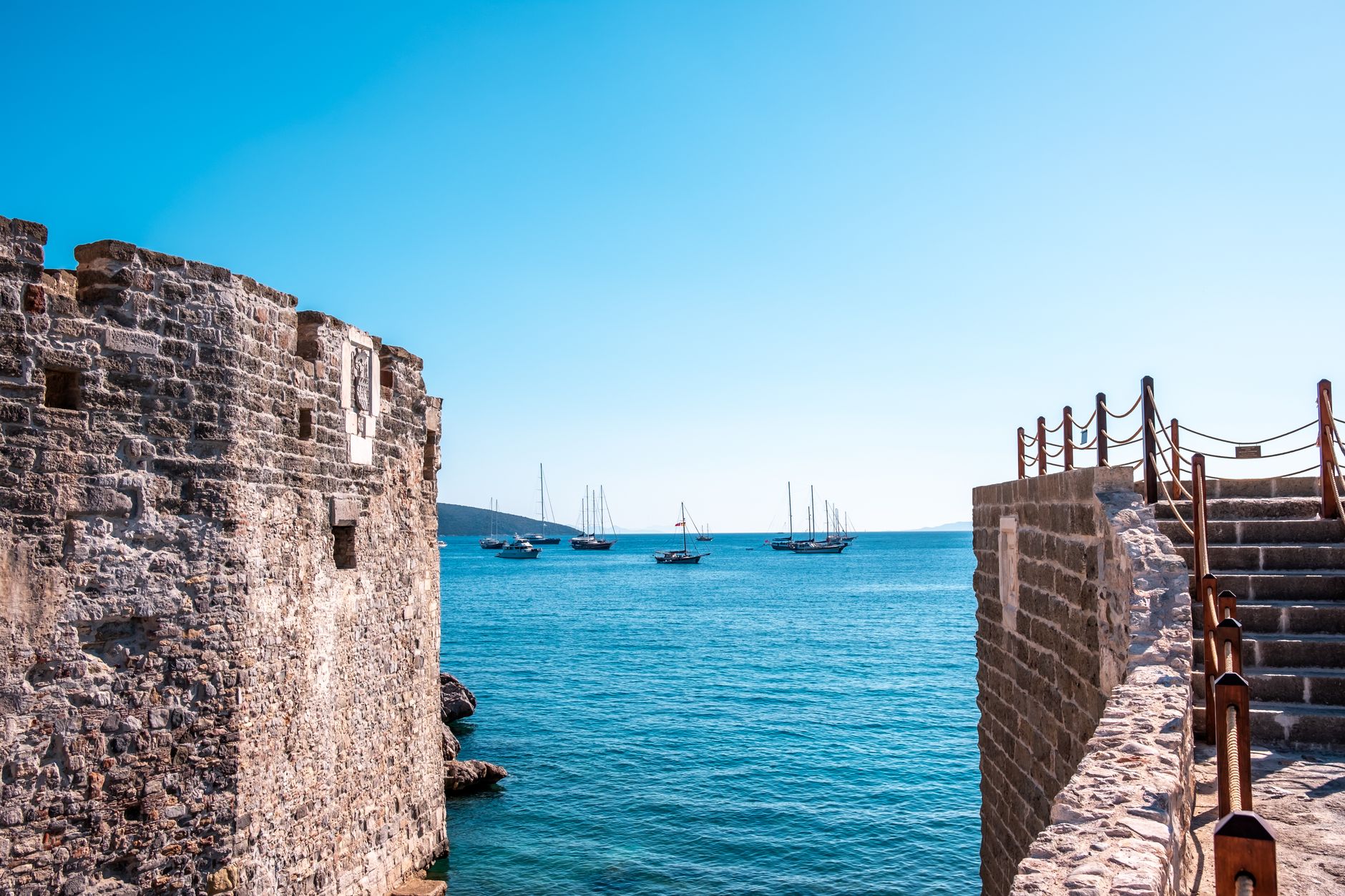
Bozburun: The Quiet Heart of Gulet Building
If Bodrum is the famous cousin, Bozburun is the artisan's secret. This sleepy village on the Datça Peninsula has become one of the most important centers for gulet construction in Türkiye, with dozens of yards lining the inlet. Here, the pace is slower, the water clearer, and the craftsmanship just as serious—perhaps even more so.
Bozburun's builders are known for their attention to detail and willingness to experiment with traditional designs. You'll see tirhandils—sleeker, single-masted boats with a pointed stern—alongside gulets. The tirhandil is a classic Aegean fishing and sponge-diving boat, and its elegant lines make it a favorite among sailors who value performance as much as beauty.
What sets Bozburun apart is the intimacy of the experience. Because the village is small, you can wander from yard to yard on foot, chatting with builders who are happy to explain what they're doing. Many speak some English, and even if they don't, a shared appreciation for the work bridges the gap. The yards here often build boats for private owners who will sail them for decades, so the pressure to cut corners is low.
Bozburun is also a great base for a day sail. Several gulets and tirhandils offer trips to nearby bays like Selimiye and Bencik, where you can swim in pine-fringed coves and enjoy a lunch cooked on board. Seeing a boat you watched being built underway is a special kind of satisfaction.
Ayvalık: Where Wooden Boats Meet the Aegean
On the northern Aegean coast, Ayvalık offers a different flavor of boatbuilding heritage. This former Greek town, with its neoclassical houses and olive groves, has a strong maritime tradition. The boatyards here are smaller and more scattered than in Bodrum or Bozburun, but they're no less authentic.
Ayvalık is particularly known for restoration work. Many of the boats in its yards are older vessels being brought back to life—rotted planks replaced, engines rebuilt, varnish stripped and reapplied. Watching a tired hull transform into a gleaming, seaworthy craft is a powerful reminder that wooden boats are not disposable; they're heirlooms.
The town's connection to the sea is celebrated each year during the Ayvalık International Music Festival and other maritime events, but even on an ordinary day, the waterfront is alive with activity. Fishermen mend nets, builders plane wood, and the smell of fresh paint drifts from the yards.
Nearby Cunda Island (Alibey Island) is home to a few yards and is easily reached by bridge or ferry. A day sail from Ayvalık might take you to the Ayvalık Islands archipelago, where you can anchor in quiet bays and see the coastline from the perspective of the boatbuilders who have worked these waters for generations.
When to Visit: Timing Your Boatyard Experience
The boatbuilding season in Türkiye generally runs from spring through autumn, but the rhythm varies. The yards are busiest in the months leading up to summer, as boats are prepared for the charter season. If you want to see active construction and repair, aim for April, May, and June, and again in September and October when boats return from the season for maintenance.
Mid-summer (July and August) can be quieter in the yards, as many boats are out on charter and the heat makes heavy work difficult. Some builders take their own holidays then. Winter is the off-season for sailing but a time for major refits; if you don't mind cool weather and occasional rain, you'll see the most substantial work being done.
It's always worth asking before you visit. A quick call or message to a yard can confirm whether they're accepting visitors. Many are happy to show you around, but they're also working—so flexibility is key.
How to Visit Respectfully
Boatyards are workplaces, not tourist attractions. The builders are generous with their time, but that generosity should be met with respect. Here are some guidelines to ensure your visit is welcome:
- Ask permission first. Never wander into a yard unannounced. A polite greeting and a request to look around goes a long way. If someone says no, accept it gracefully.
- Mind your step. Yards are full of tools, cables, and uneven surfaces. Wear closed shoes and watch where you walk. Don't touch tools or materials without asking.
- Be curious, not intrusive. Questions about the boat, the wood, or the process are usually welcome. Avoid interrupting during delicate tasks, and don't distract workers who are using power tools.
- Dress modestly. This is a conservative part of the world; shorts and tank tops may be fine on the beach but can feel out of place in a yard.
- Support the craft. If you're in the market, consider commissioning a piece—even a small wooden model or a hand-carved item. Buying directly from builders helps keep the tradition alive.
- Photography: Always ask before taking photos, especially of people. A smile and a gesture toward your camera usually gets a yes.
Remember that many of these families have been building boats for generations. Your interest is a compliment, but their work is their livelihood. Treat the yard as you would a master craftsman's studio: with admiration and care.
Combining a Boatyard Visit with a Day Sail
One of the best ways to appreciate wooden boat craftsmanship is to experience it on the water. After a morning in the yards, book an afternoon day sail on a gulet or tirhandil. Many boats depart from Bodrum, Bozburun, and Ayvalık for half- or full-day trips.
A typical day sail includes swimming stops in secluded bays, a lunch of grilled fish, mezze, and salads, and plenty of time to relax on deck. But for the boat enthusiast, it's also a chance to feel how a wooden hull moves through the water—the gentle motion, the creak of the rigging, the warmth of the sun on varnished wood. You'll notice details you saw in the yard: the caulking between planks, the joinery of the cabin, the curve of the stern.
Some operators offer specialized craft tours that combine a boatyard visit with a sail, often led by someone with knowledge of the local building tradition. These can be arranged through local tour agencies or directly with boat owners. If you're lucky, you might even sail on a boat that was launched just weeks before.
For a truly memorable experience, consider a multi-day gulet cruise. Routes like Bodrum to Göcek or Bozburun to Marmaris take you through some of the most beautiful coastline in the world, and you'll have time to visit yards along the way. It's the ultimate immersion in Türkiye's wooden boat culture.
The Future of Wooden Boatbuilding in Türkiye
Wooden boatbuilding in Türkiye faces challenges: rising costs of materials, competition from fiberglass, and the difficulty of attracting young people to a demanding trade. Yet there's also a renaissance of interest, driven by heritage tourism and a growing appreciation for handmade objects.
Organizations like the Bodrum Gulet Builders Association and various cultural foundations work to preserve skills and promote standards. Some yards now offer apprenticeships, and a few universities have programs in traditional boatbuilding. Travelers play a role too: by visiting, asking questions, and choosing to sail on wooden boats, you signal that this craft matters.
So come to Bozburun, Bodrum, or Ayvalık. Stand in the shade of a hull under construction, listen to the rhythm of the adze and the plane, and breathe in the scent of pine and salt. You'll leave with a deeper understanding of Türkiye's maritime soul—and perhaps a longing to return for a sail on the very boat you watched being born.
Thinking about a trip to Turkey?
Share your contact details and a vetted local expert will follow up with a plan built around you — free, no obligation.