

Why the Silk Road Still Beats in Anatolia
Türkiye has always been the bridge. For millennia, caravans laden with silk, spices, gems and ideas crossed the Anatolian plateau between China and Europe, and the towns that grew up along those routes still carry the scent of saffron and the clatter of trade. Today's traveler can trace that East-West artery by car or bus, stopping at caravanserais, hans and bazaars where merchants still pour tea and haggle over carpets.
This guide follows a practical west-to-east arc from Istanbul toward the Iranian border, focusing on the trading-post towns that made the Silk Road work: Bursa, Eskişehir, Konya, Kayseri, Sivas, Erzurum and the far-eastern hub of Doğubayazıt. Along the way you'll meet traders, taste regional specialties, and photograph Ottoman-era hans that have stood for centuries.
Best of all, many of the most atmospheric sites are free to enter — bazaars, hans and open-air caravanserais rarely charge admission. A handful of museums and UNESCO-listed sites have modest tickets, which we flag clearly below.
Bursa: The Silk Capital of the Ottoman World
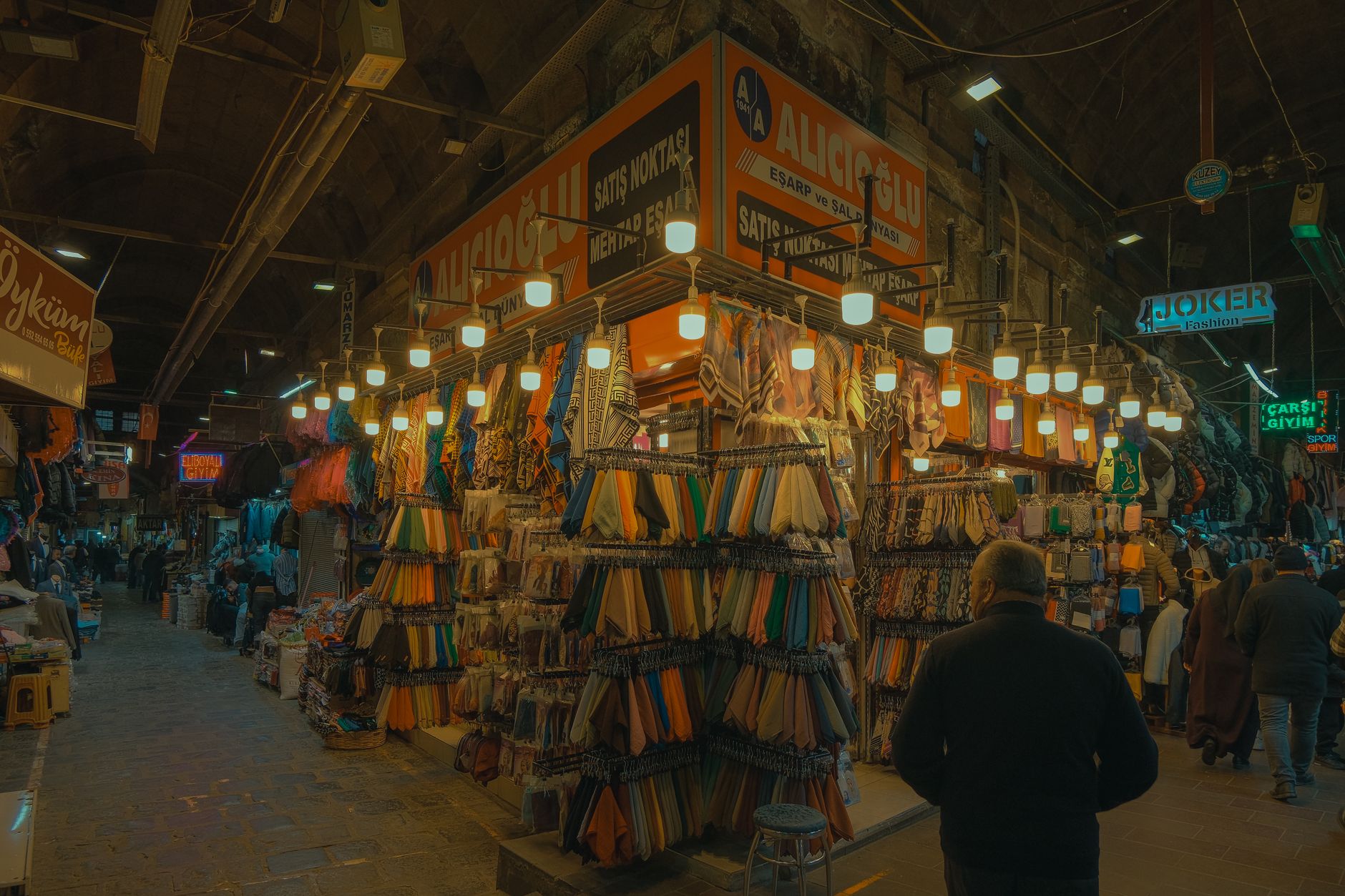
Start in Bursa, the first Ottoman capital and for centuries the empire's silk-weaving heart. The city's Koza Han (Silk Cocoon Han), built in 1491, is a two-story courtyard of small shops where traders once sold silkworm cocoons and where you can still buy silk scarves and drink tea under the plane trees. Entry to the han is free; the tea is cheap and the people-watching is priceless.
Wander the nearby Kapalı Çarşı (Covered Bazaar) and the Uzun Çarşı (Long Market), both free to explore, then visit the Bursa Cumalıkızık village — a UNESCO World Heritage site — with its preserved Ottoman houses and cobbled lanes. The wider area is recognized by UNESCO as the Birth of the Ottoman Empire, and Cumalıkızık is part of that listing.
Practical: Istanbul to Bursa is about 2.5 hours by car via the Osmangazi Bridge, or 2 hours by ferry plus bus. Don't leave without trying İskender kebap, Bursa's signature dish of sliced lamb over pide bread with tomato sauce and yogurt.
Eskişehir and the Phrygian Valleys: Hidden Caravan Stops
Heading southeast, Eskişehir is a lively university city on the Ankara-Istanbul rail line, and a convenient base for the Phrygian highlands. The Yazılıkaya (Midas City) monument and the Phrygian Valley rock-cut tombs are open-air sites; some areas charge a small fee (around 20-40 TL), while many rock formations and villages are free to visit.
Eskişehir itself is a trading town reborn: the Odunpazarı district's Ottoman houses now host artisan shops and cafés, and the Atlıhan and Kurşunlu Han (a 16th-century complex) show how hans were adapted into cultural centers. Entry to the hans is generally free; museum sections may have a small ticket.
Practical: Bursa to Eskişehir is roughly 2.5 hours by car (about 200 km). The city is also a major rail hub, with high-speed trains from Istanbul and Ankara, making it an easy car-free stop. Try çibörek, a Tatar pastry filled with minced meat, fried fresh at street stalls.
Konya: Caravan City of the Whirling Dervishes
South across the plateau lies Konya, the Seljuk capital and a major Silk Road junction. The Mevlana Museum (ticket required, roughly 100 TL) houses the tomb of Rumi and is a pilgrimage site for Sufis worldwide. Nearby, the Selimiye Mosque and the Karatay Medrese (Museum of Tile Art, small fee) reveal Seljuk craftsmanship.
For Silk Road atmosphere, head to the Konya Archaeological Museum (small fee) and the surrounding Bedesten bazaar, free to wander. Konya is also the gateway to Sultanhanı Caravanserai, about 40 km west on the Aksaray road — one of the finest surviving Seljuk caravanserais, built in 1229. Entry is free, and the massive stone portal is a photographer's dream.
Practical: Eskişehir to Konya is about 4 hours by car (roughly 400 km). High-speed trains connect Konya with Istanbul and Ankara. Konya's cuisine is hearty: try etli ekmek (flatbread with minced meat) and fırın kebab.
Kayseri and Sivas: Hans, Bazaars and the Seljuk Spine
East of Konya, the route splits; the northern branch runs through Kayseri, an ancient trade city beneath Mount Erciyes. The Kayseri Bazaar and the Hunat Hatun Complex (13th century) are free to explore, and the Gevher Nesibe Medrese (a Seljuk hospital, now a museum with a small fee) offers insight into medieval medicine.
Continue to Sivas, a key stop on the Silk Road where the Gök Medrese, Buruciye Medrese and Şifaiye Medrese still stand. These Seljuk monuments charge small entry fees (20-50 TL), but walking the surrounding historic bazaar is free. Sivas is also close to the Yıldızeli area and several caravanserais along the old route.
Practical: Konya to Kayseri is about 3.5 hours (300 km); Kayseri to Sivas another 3 hours (250 km). Both cities have airports and train connections. In Kayseri, don't miss mantı, tiny dumplings served with yogurt and butter.
Erzurum and Doğubayazıt: The High Pass to the East
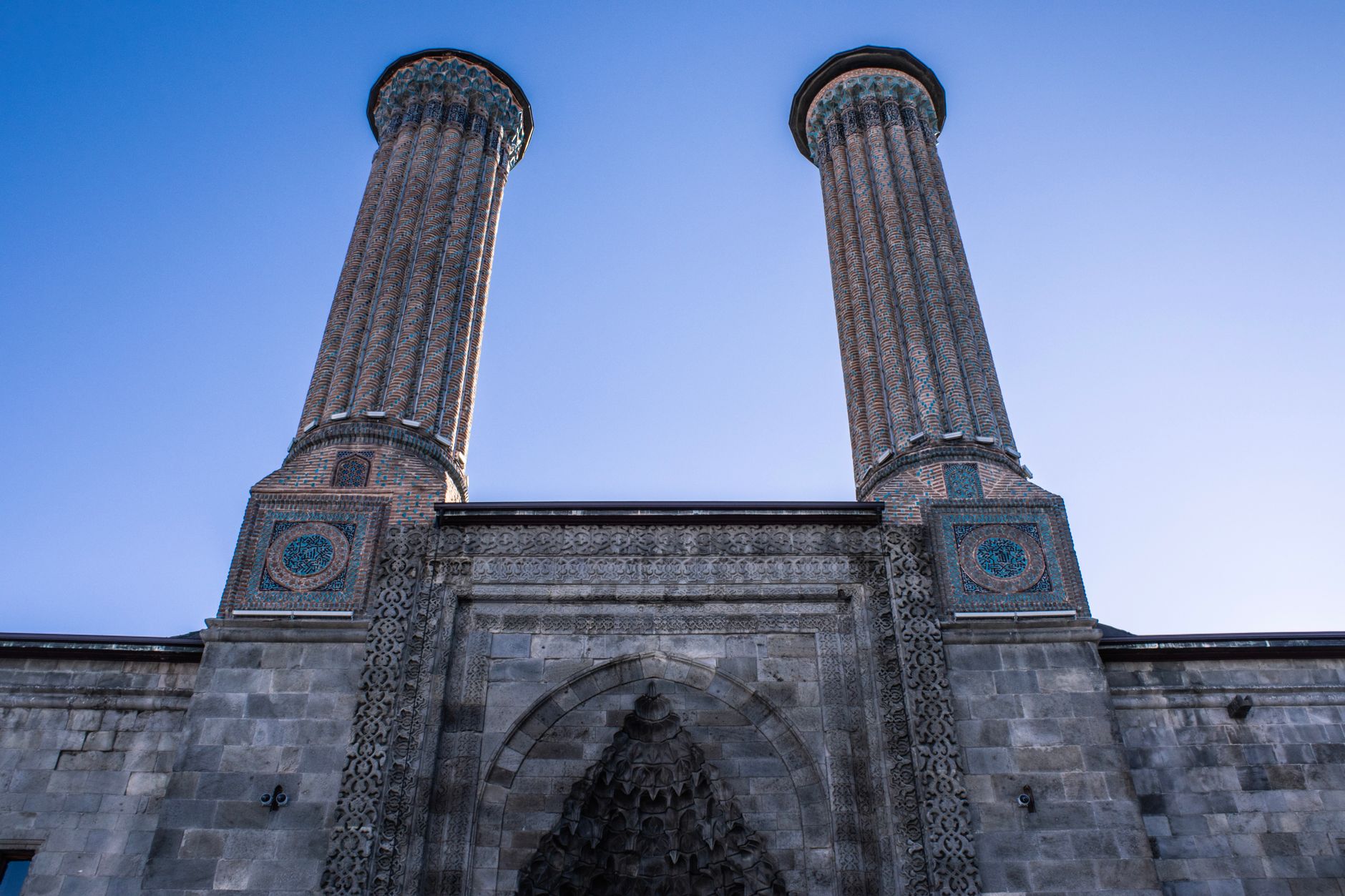
The eastern leg climbs into the mountains. Erzurum is a cold, proud city with a Seljuk core: the Çifte Minareli Medrese, Yakutiye Medrese and the Erzurum Castle (small fees) overlook bustling bazaars. The Rüstem Paşa Caravanserai (also called Rüstem Paşa Kervansarayı) is a restored Ottoman han now housing shops and cafés — free to enter and perfect for photos.
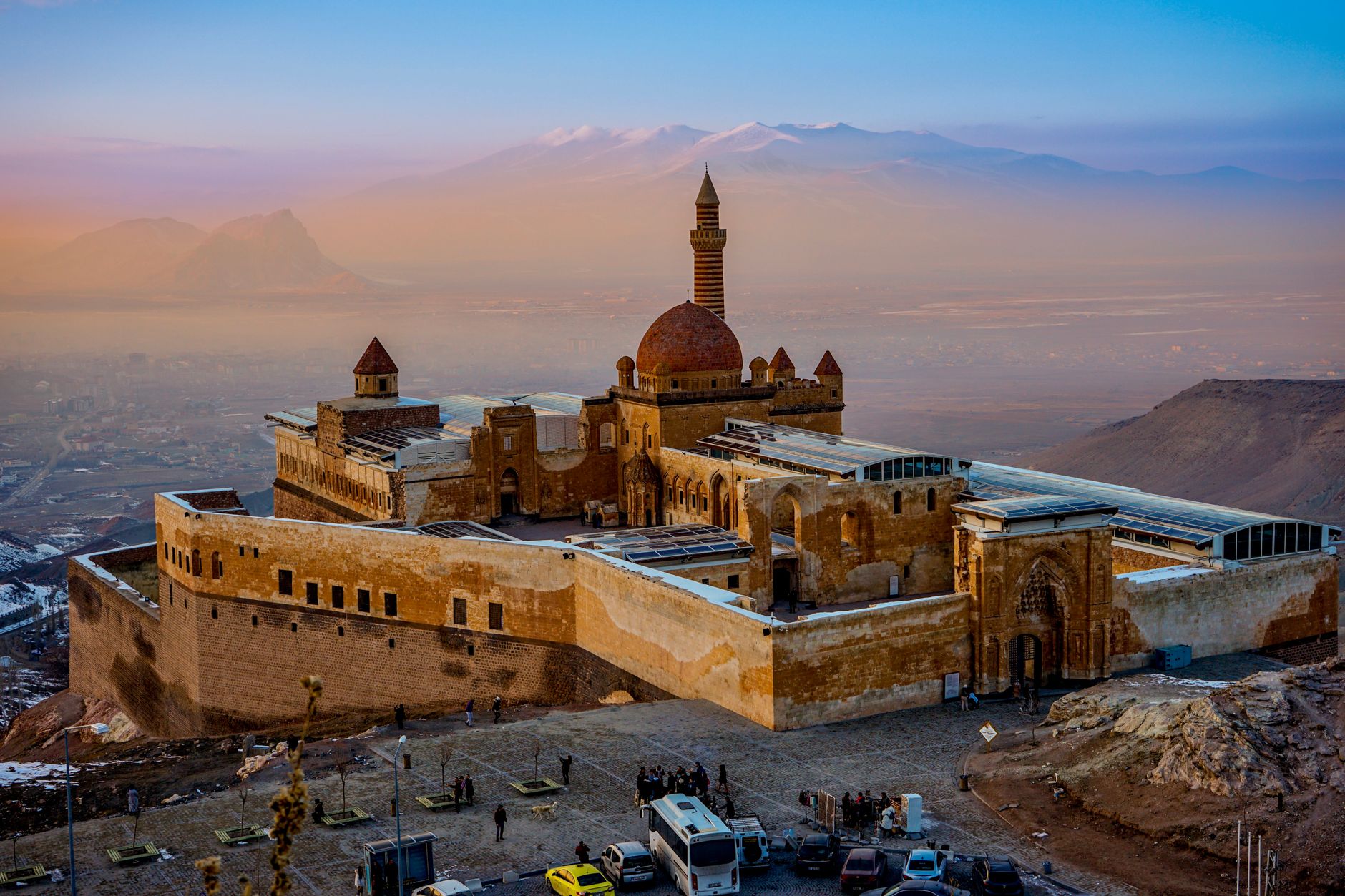
Further east, Doğubayazıt sits near the Iranian border, dominated by the dramatic İshak Paşa Palace (UNESCO World Heritage, ticket around 100 TL), an 18th-century Ottoman palace blending Seljuk, Ottoman, Georgian and Persian styles. The nearby Noah's Ark legend site and the Mount Ararat views make this a memorable finale.
Practical: Sivas to Erzurum is about 6 hours by car (500 km); Erzurum to Doğubayazıt another 4 hours (300 km). Buses run regularly, and Erzurum has an airport. Dress warmly — winters are severe.
Market Days, Tastes and Practical Driving Tips
To really feel the Silk Road, time your visit to a market day. In Bursa, the Tuesday market in Cumalıkızık village is small and local; in Konya, the Wednesday market and the Bedesten buzz daily. Erzurum's Friday bazaar and Doğubayazıt's Saturday market are lively with spices, cheese and textiles. Bring cash (Turkish lira) and a willingness to chat — traders often offer tea before business.
Regional specialties to seek out: Bursa İskender kebap, Eskişehir çibörek, Konya etli ekmek, Kayseri mantı, Erzurum cağ kebab and kadayıf dolması. Vegetarians will find plenty of meze, gözleme and fresh produce in bazaars.
Driving is the most flexible way to follow the route. Major roads are good, but winter conditions in the east can be challenging. Distances are long — plan 3-6 hours between hubs — and consider domestic flights for the Erzurum-Doğubayazıt leg if time is short. High-speed trains link Istanbul, Eskişehir, Konya and Ankara comfortably.
Finally, remember that the Silk Road was never just a road; it was a network of trust, hospitality and exchange. Accept the tea, ask about the family trade, and you'll leave with more than photographs.
Thinking about a trip to Turkey?
Share your contact details and a vetted local expert will follow up with a plan built around you — free, no obligation.