

An Invitation into Ottoman Genius
There are few experiences in travel as quietly overwhelming as stepping through the courtyard gate of a great Ottoman mosque. The noise of the city falls away, cool air wraps around you, and a vast dome seems to float overhead on a ring of light. For more than four centuries, these buildings have welcomed travelers, merchants, pilgrims, and curious visitors — and they still do, free of charge, every day.
The Ottomans were not only conquerors but master builders. Between the 15th and 17th centuries, they perfected a new architectural language: cascading domes, slender pencil minarets, and interiors bathed in stained glass, Iznik tile, and gold-flecked calligraphy. At the heart of this achievement stands Mimar Sinan, the chief architect to three sultans, who designed or supervised more than 300 structures. His masterpieces — the Süleymaniye in Istanbul and the Selimiye in Edirne — are among the most perfect buildings ever raised.
This guide is an invitation to visit them with appreciation and confidence. You will learn where to go, when to find quiet, how to dress respectfully, when to take photos (and when to put the camera down), and where to get nose-to-nose with the tilework and calligraphy that make these mosques sing.
The Big Three: Süleymaniye, Selimiye, and Sultanahmet
Süleymaniye Mosque, Istanbul
Crowning the Third Hill above the Golden Horn, the Süleymaniye (1550–1557) is Mimar Sinan's own favorite among his works. He called it his "apprentice piece," yet many architects consider it the finest mosque in Istanbul. The dome — 26.5 meters in diameter, rising 53 meters high — rests on a system of half-domes that step down like a mountain range. The acoustics are legendary: a whisper near the mihrab can be heard across the hall.
Visit in the late afternoon when sunlight pours through the 138 windows, turning the stone to honey. The courtyard offers one of the best free views of the Golden Horn and the Bosphorus. Behind the mosque, the türbe (mausoleum) of Sultan Süleyman the Magnificent and his beloved wife Hürrem Sultan are quietly moving — simple, dignified, and often overlooked.
Selimiye Mosque, Edirne
If you have time for one day trip from Istanbul, make it Edirne. The Selimiye (1568–1575) was Sinan's masterpiece, built when he was in his eighties. He called it "my masterpiece" — and he was right. The dome, 31.5 meters in diameter, is larger than Hagia Sophia's and rests on eight elegant piers, creating an interior of astonishing openness. The four minarets, each with three balconies, are the tallest in Turkey.
Edirne is a two-hour drive or a scenic train ride from Istanbul. The mosque sits in a lively bazaar district, so you can combine a visit with shopping for Edirne's famous fruit soaps and almond sweets. The light is best in the morning, when the sun rises behind the mosque and floods the courtyard.
Sultanahmet Mosque (Blue Mosque), Istanbul
The Sultanahmet, built between 1609 and 1616 by Sedefkâr Mehmed Ağa, is the most visited mosque in Turkey — and for good reason. Its interior is lined with more than 20,000 hand-made Iznik tiles in shades of blue and green, giving it the nickname "Blue Mosque." The six minarets were scandalous in their day (only the Kaaba in Mecca had six), but they have become an icon of Istanbul's skyline.
Because of its fame, Sultanahmet can feel crowded. Go early — right at opening — or in the last hour before closing. Avoid Friday midday, when the mosque is full for weekly prayers. The adjacent Hippodrome and Topkapı Palace make this a full day of Ottoman history.
Architecture Made Simple: What You're Looking At
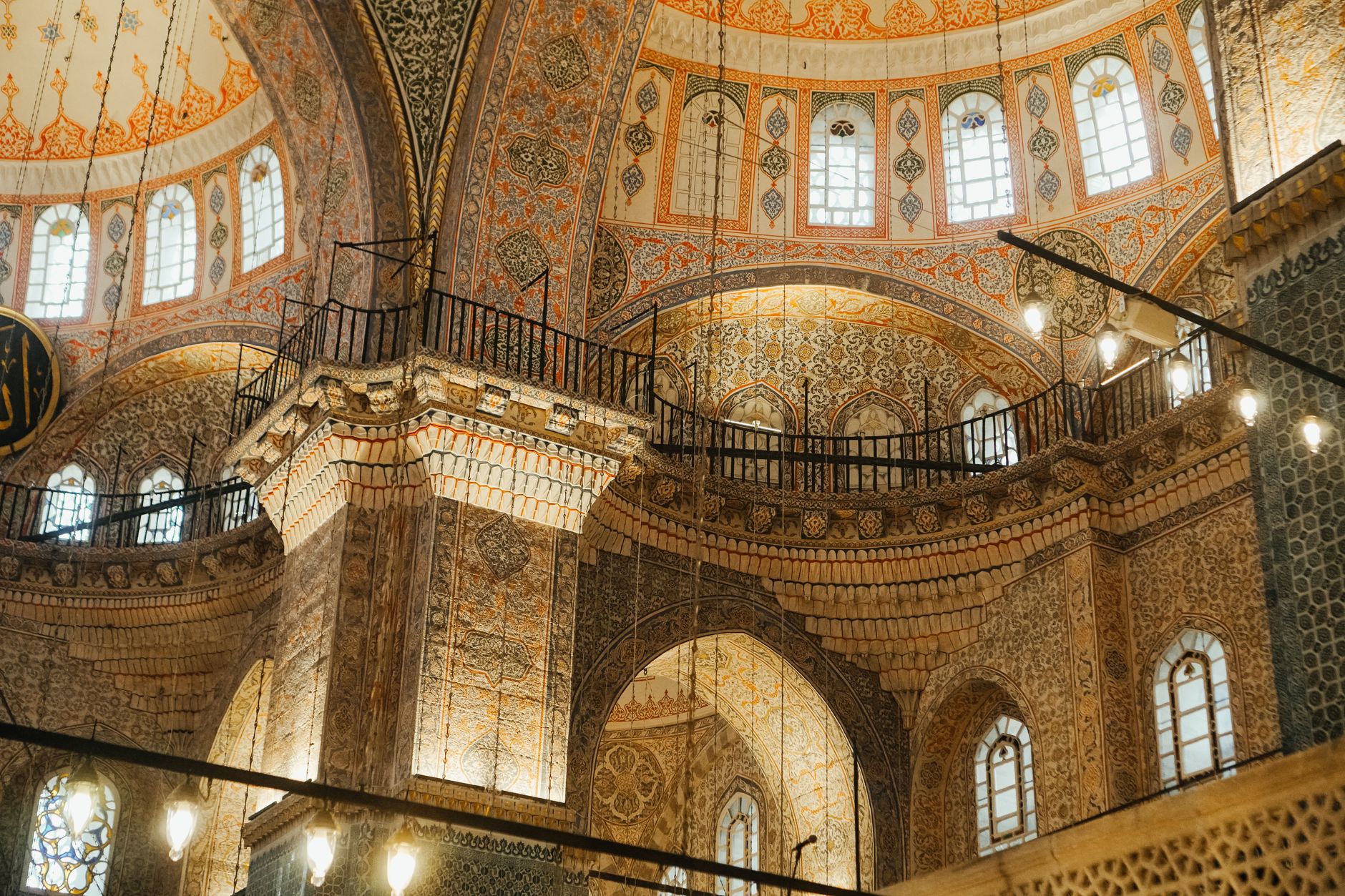
Ottoman mosques follow a recognizable plan. At the center is the central dome, symbolizing the heavens. It is supported by pendentives — triangular curved sections that transition from a circular dome to a square base — and often by a series of half-domes that cascade outward. This creates a sense of weightlessness, as if the dome is floating.
The minaret is the slender tower from which the muezzin calls the faithful to prayer. Ottoman minarets are unusually thin, often with multiple balconies. The mihrab is the niche indicating the direction of Mecca; the minbar is the stepped pulpit where the imam delivers the sermon. The kürsü is a raised platform for teaching.
Look up at the calligraphy: large round medallions often bear the names of Allah, Muhammad, and the first four caliphs. The tilework — especially Iznik tiles — covers walls, arches, and sometimes the mihrab itself. Colors evolved over time: deep blue and turquoise in the 16th century, then green, then the famous tomato red of the 17th century.
Finally, notice the courtyard with its arcades and central fountain (şadırvan), used for ritual ablutions. The courtyard is a place of gathering, conversation, and cool shade — a social space as much as a religious one.
Practical Visitor Guide: Free Entry, Quiet Hours, and Etiquette
Entry and costs
All working mosques in Turkey are free to enter. You do not need a ticket. Some historic mosques have a separate visitor entrance and may ask for a donation, but it is never required. The Hagia Sophia is the exception: it is now a mosque, and while entry is free, expect long security lines.
Best quiet hours
Mosques are busiest from mid-morning to mid-afternoon, especially during tourist season. For calm and contemplation, visit:
- Right at opening (usually 30–60 minutes after the first call to prayer, around 7:00–8:00 AM).
- Late afternoon (2 hours before sunset), when light is golden and crowds thinner.
- Avoid Friday midday (roughly 11:30 AM–2:00 PM), when weekly congregational prayers fill the mosque.
- Avoid the five daily prayer times (especially sunset and night prayers), when visitors are asked to wait outside.
Modest dress tips
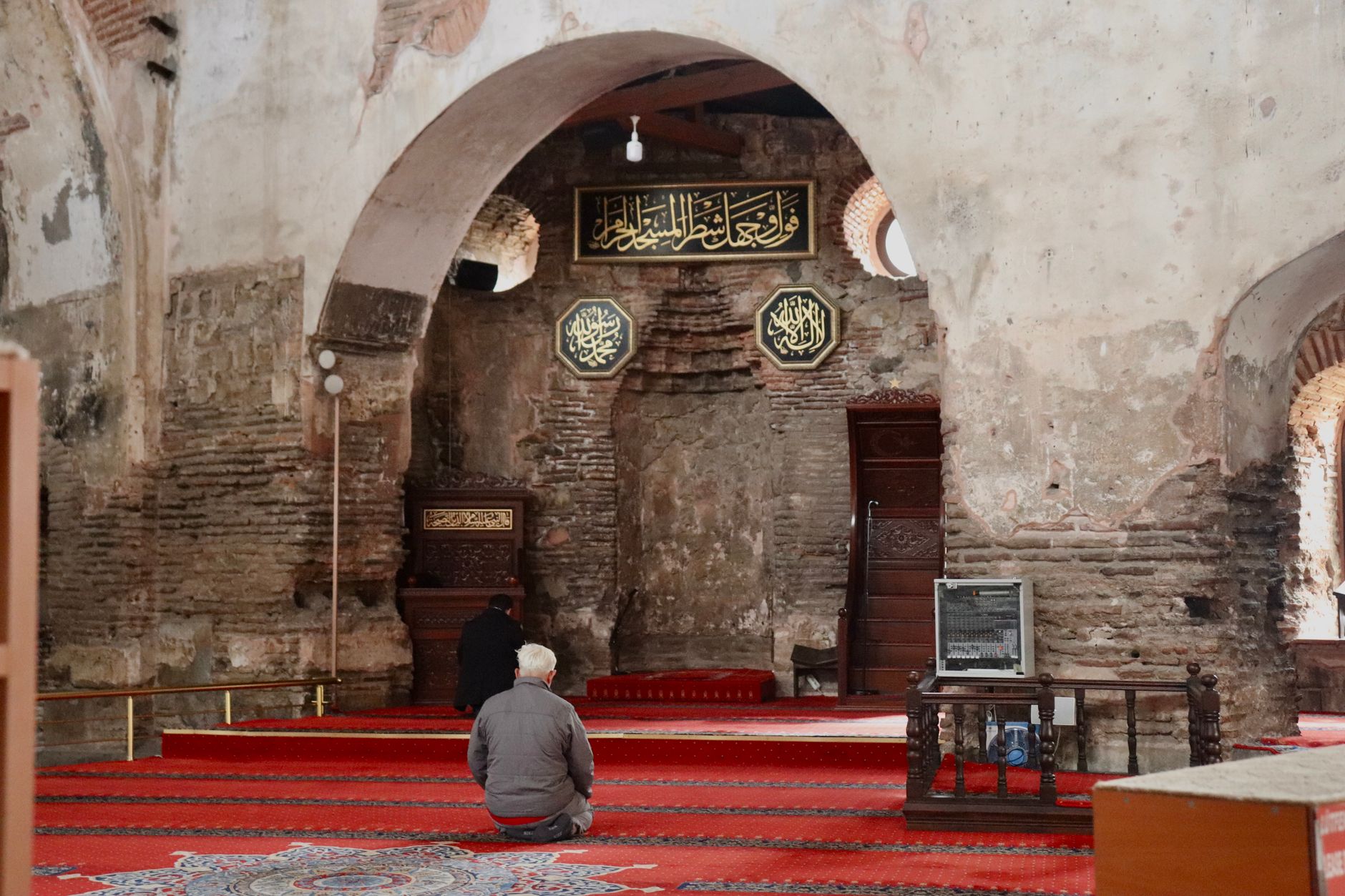
Both men and women should dress modestly. Women should cover their hair, shoulders, and knees; men should avoid shorts and sleeveless shirts. Most major mosques provide free headscarves and wrap-around skirts at the entrance, but bringing your own scarf is easier and more respectful. Remove your shoes before entering the prayer hall — carry a bag or use the plastic bags provided. Wear socks, as floors can be cold.
Photography etiquette
Photography is generally allowed, but be discreet.
- Never photograph people while they are praying.
- Avoid flash, which disturbs worshippers and damages fragile tiles.
- Do not use selfie sticks or tripods without permission.
- If you want to photograph individuals, ask first — a smile and a gesture works wonders.
- Respect signs that say "No photography" in specific areas.
Remember: these are active places of worship, not museums. Keep your voice low, avoid pointing, and step aside if someone needs to pass.
Where to Admire Tilework and Calligraphy Up Close
The best tilework in Turkey is found in Istanbul and Edirne. In Istanbul, head to the Sultanahmet Mosque for its blue Iznik tiles, but also visit the Rüstem Pasha Mosque near the Spice Bazaar. This small mosque, also by Sinan, is covered in some of the finest Iznik tiles ever made — deep cobalt, turquoise, and coral red. It is less crowded and free.
For calligraphy, the Süleymaniye Mosque has stunning examples by the master calligrapher Ahmed Karahisari. The large medallions and the marble mihrab are masterpieces. In Edirne, the Selimiye Mosque has exceptional calligraphy panels and a marble mihrab that is a work of art in itself.
Don't miss the türbe (mausoleums) attached to many mosques. The Süleymaniye türbes contain beautiful tile panels and calligraphy. The Topkapı Palace also houses a remarkable collection of Ottoman calligraphy and tiles, though it charges admission.
For a deep dive, consider a guided tour focused on Islamic art. Local guides can point out details you'd otherwise miss — like the subtle color shifts in 16th-century tiles or the hidden signatures of calligraphers.
Beyond the Big Three: Hidden Gems and Regional Marvels
While Istanbul and Edirne get the spotlight, Ottoman mosques are scattered across Turkey. In Bursa, the first Ottoman capital, the Ulu Cami (Grand Mosque) features 20 domes and a stunning fountain. In Manisa, the Muradiye Mosque has exquisite tiles. In Konya, the Selimiye Mosque (not to be confused with Edirne's) is a fine example of classical Ottoman style.
Further east, in Diyarbakır, the Ulu Cami is one of the oldest mosques in Anatolia, with a unique blend of Seljuk and Ottoman elements. In Mardin, the Great Mosque offers panoramic views and intricate stonework. These regional mosques are often quieter and more intimate than their Istanbul cousins.
For a truly off-the-beaten-path experience, visit the Eski Cami in Edirne, the oldest Ottoman mosque in the city, with beautiful calligraphy. Or the Üç Şerefeli Mosque, also in Edirne, which has a unique T-shaped plan and four minarets of different heights.
Mosque Visits as a Highlight of Turkish Hospitality
In Turkey, a mosque is not just a monument — it is a living community center. You will often see children playing in the courtyard, elders chatting on benches, and volunteers offering free tea or water. This is Turkish hospitality at its best: warm, unpretentious, and open to all.
If you are invited to sit and share a glass of çay after prayer, accept. It is a gesture of friendship. If someone offers to show you a special corner or explain a detail, say yes. These small interactions will make your visit memorable.
Remember that you are a guest in a sacred space. Be curious, be respectful, and be present. The Ottomans built these mosques to inspire awe and to serve the community — and they still do both, beautifully.
Whether you spend an hour in the Süleymaniye or a day exploring Edirne, you will carry with you the image of that floating dome, the scent of old stone and carpet, and the quiet hum of prayer. That is the genius of Mimar Sinan — and the enduring gift of Türkiye.
Thinking about a trip to Turkey?
Share your contact details and a vetted local expert will follow up with a plan built around you — free, no obligation.