

There is a moment—whether you're in the upper tiers of Aspendos at golden hour or tracing the carved seats of Hierapolis—when the ancient world feels startlingly close. Türkiye holds more Greco-Roman theaters than any other country on earth. Many are so well preserved that you can still sit where a Roman citizen once sat, and hear a whisper from the stage carried by stone acoustics perfected over two millennia. As of September 2026, years of meticulous restoration have made three of the most extraordinary theaters—Aspendos, Tlos, and Hierapolis—more visitor-ready than ever. This guide explores their stories, their recently completed restoration work, and how to pair each visit with the beaches, thermal springs, and cultural treasures nearby.
Aspendos: The Most Perfect Theater in the Ancient World
When the architect Zenon built the theater at Aspendos around 160 AD, he solved a problem that had puzzled builders for centuries: how to create a massive audience space that was structurally sound and acoustically brilliant. The result is often described as the best-preserved ancient theater anywhere in the Mediterranean. The cavea (seating area) rises in 41 tiers, capable of holding up to 15,000 spectators, yet a single actor on the stage can be heard without amplification in the highest row. The stage building (scaenae frons) still stands nearly to its original height, adorned with columns and niches that once held statues.
What makes Aspendos magical today is that it is not just a ruin—it is a living venue. Each summer, the Aspendos International Opera and Ballet Festival fills the theater with music once again. But even on an ordinary day, you can walk the vaulted corridors under the stage, climb to the top of the cavea, and test the acoustics for yourself by dropping a coin or whispering toward the stage. The recent restoration, completed in 2025, focused on cleaning and stabilizing the stage building's marble and applying non-invasive monitoring to ensure the structure remains safe for performances and visitors. New informational panels and a small visitor center now explain the theater's history and the conservation process.
Getting there is straightforward: Aspendos lies about 40 kilometers east of Antalya, near the town of Serik. Buses and dolmuşes run regularly from Antalya's bus terminal, and many tour companies combine a visit with the nearby Roman aqueduct and the ancient city of Side. For the best photos, arrive in the late afternoon when the sun bathes the stage in warm light. Remember that the theater faces north, so morning light is softer and less crowded—ideal if you want the place to yourself.
Tlos: A Lycian Treasure Newly Restored for Visitors
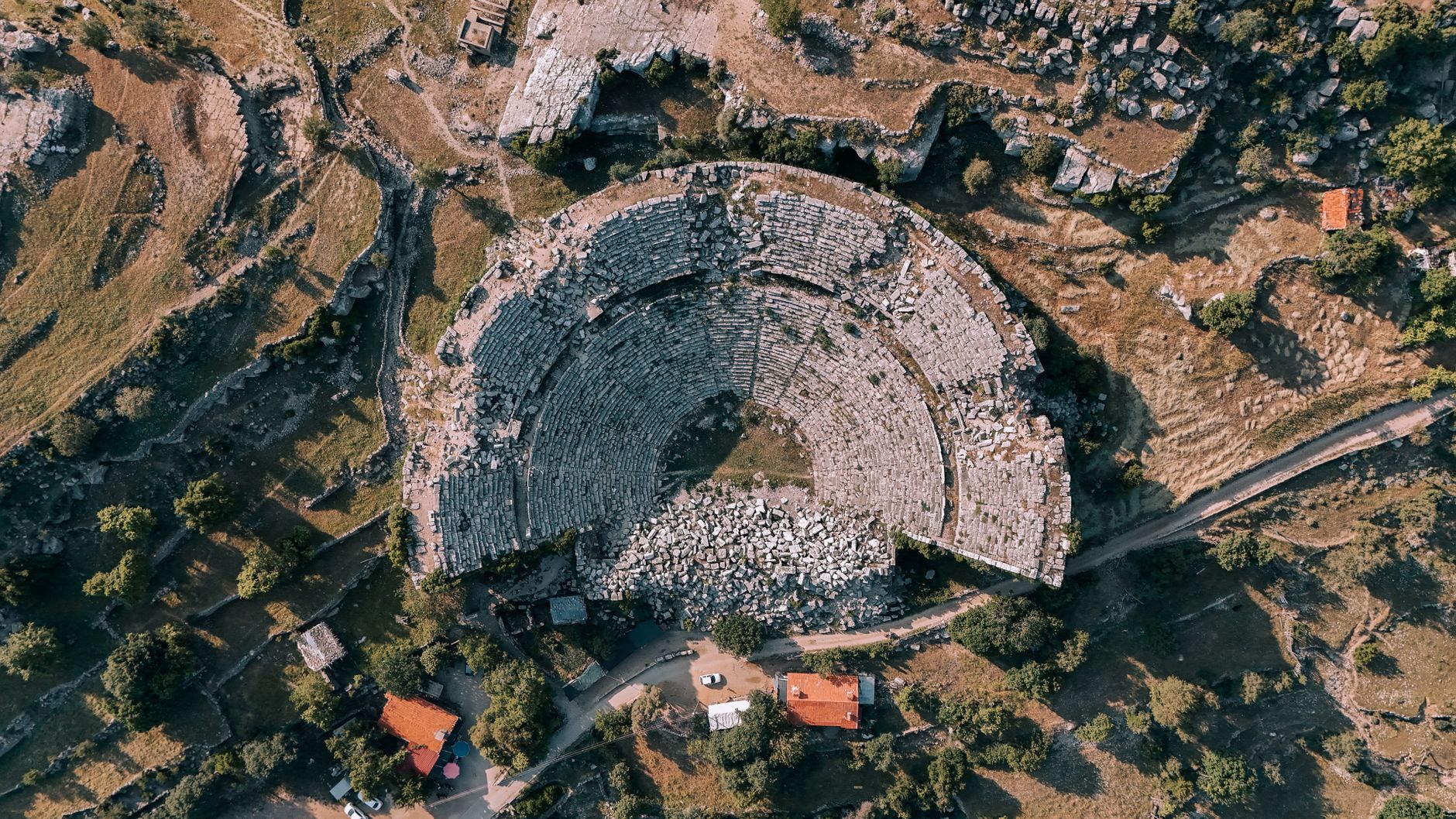
Perched high in the mountains above the Xanthos Valley, Tlos is one of the oldest and most important cities of ancient Lycia. Its theater, built in the Hellenistic period and later remodeled by the Romans, is dramatic not only for its architecture but for its setting: the seats look out over a fertile plain toward the Taurus Mountains. For years, the theater was overgrown and partially unstable, but a major restoration project completed in 2025 has brought it back to life. The cavea has been carefully cleared, and a new wooden stage platform has been installed to allow performances and events, echoing how the theater was used in antiquity.
The restoration at Tlos is part of a broader Turkish initiative to make its ancient heritage accessible while preserving it. The project included drainage work to protect the structure from winter rains, consolidation of the stone tiers, and the addition of discreet pathways and railings so visitors can safely explore the entire theater. The site also features rock-cut Lycian tombs, including the striking Tomb of Bellerophon, and a Byzantine basilica, making it a rich historical package.
To reach Tlos, base yourself in the charming town of Saklıkent or the larger resort of Fethiye, about 45 kilometers away. From Fethiye, dolmuşes run to the nearby village of Yakaköy, from which it's a short taxi ride or a pleasant hike to the site. Combine your visit with a trip to the Saklıkent Gorge, a spectacular canyon where you can wade through icy mountain water—a refreshing contrast to the hot, dusty ruins. The theater is best visited in the early morning or late afternoon, when the sun is not directly overhead and the mountain breeze cools the seats.
Hierapolis: Theater of the Underworld
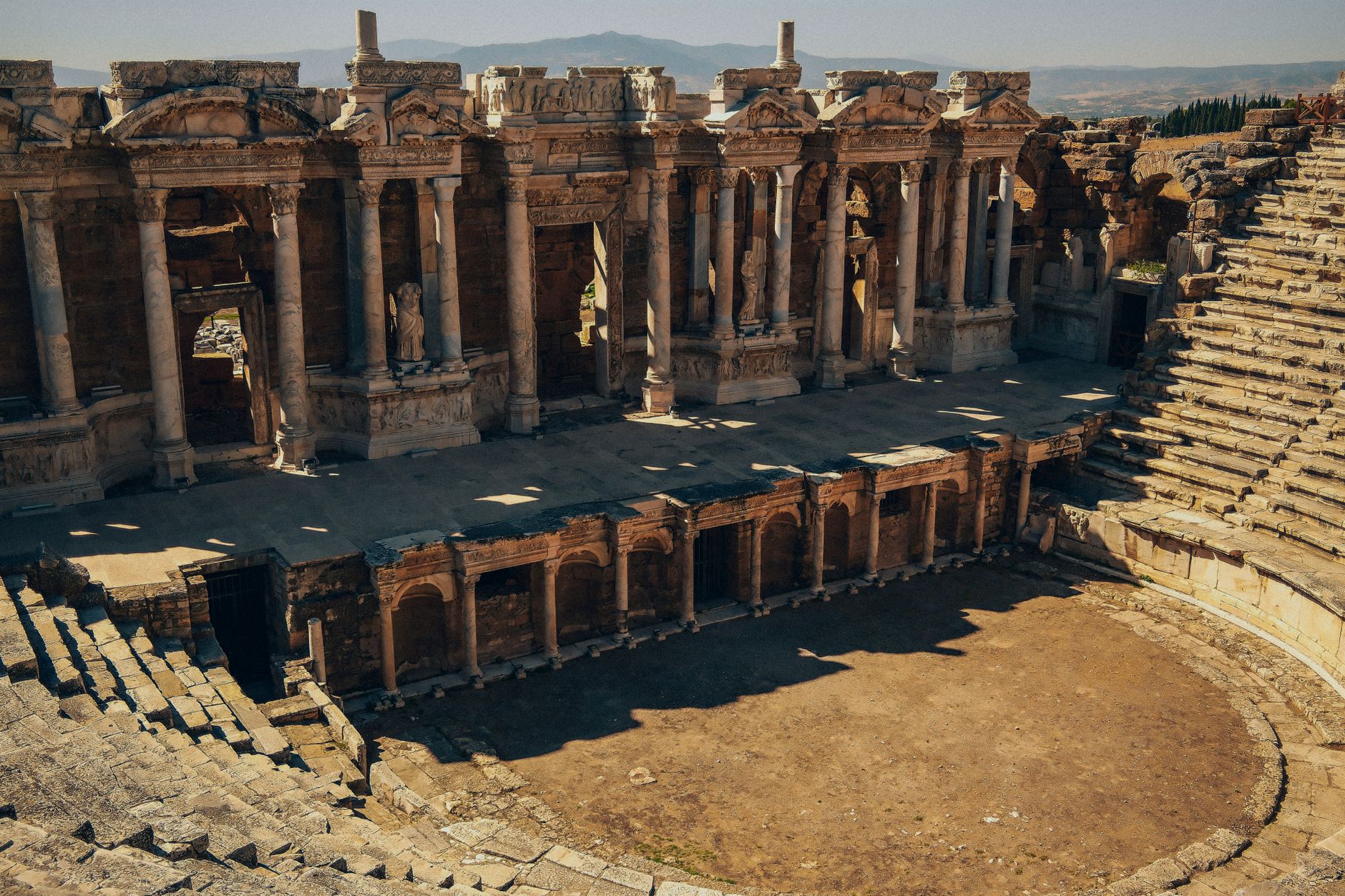
Hierapolis, near the modern town of Pamukkale, is a city built around a geological wonder: the white travertine terraces and thermal springs that have drawn visitors for millennia. Its theater, constructed under Emperor Hadrian and expanded by Septimius Severus, is one of the largest in Türkiye, with a seating capacity of about 15,000. What sets it apart is not just its size but its setting—the theater is built into the hillside, and from the upper rows you can see the white cascades of Pamukkale below and the ancient city stretching out.
The theater's scaenae frons was decorated with elaborate friezes depicting mythological scenes, including the birth of Apollo and Artemis and the punishment of Niobe. Many of these reliefs are now in the Hierapolis Archaeological Museum on site, but the theater itself has undergone extensive restoration, with missing columns re-erected and the seating tiers stabilized. The latest phase, completed in 2025, focused on the stage area and the underground passageways used by actors and gladiators, which are now partially accessible with a guide.
Hierapolis is also home to the Plutonium, a cave believed to be an entrance to the underworld, where toxic gases once killed animals—and priests miraculously survived. The theater is just a short walk from the Plutonium and the thermal pools. The nearby Antique Pool, where you can swim among submerged Roman columns, is a perfect way to cool off after exploring the ruins. The site is open daily, but the best time to visit is early morning when the travertine terraces are less crowded and the light is soft. Be sure to wear sturdy shoes; the white travertine can be slippery.
The Acoustics: Why You Can Hear a Whisper from the Stage
The ancient architects understood something about sound that modern engineers still admire. The seating of a Greco-Roman theater is not a simple semicircle but a carefully calculated curve that reflects sound waves evenly. The tiered rows, often made of limestone or marble, act as a series of acoustic baffles, while the slope of the cavea helps amplify high frequencies. In many theaters, a person speaking in a normal voice on the stage can be heard clearly in the highest row—no microphone needed.
At Aspendos, the effect is almost eerie. Stand in the center of the orchestra (the circular area at the base of the stage) and speak; your voice seems to surround you. This is due to the shape of the stage building, which acts as a reflector, and the natural resonance of the stone. At Hierapolis, the theater's size means the acoustics are best in the middle rows; the sound can get lost in the upper tiers if there is wind. Tlos, being smaller, has a more intimate acoustic, ideal for the spoken word.
To experience the acoustics yourself, visit when the site is quiet—early morning or just before closing. Clap your hands, recite a line of poetry, or simply whisper. It's a thrilling connection to the ancient world.
Best Times of Day and Practical Visiting Tips
All three theaters are outdoors, so timing your visit can make the difference between a pleasant experience and a sweltering one. In summer (June–August), temperatures can soar above 35°C (95°F). The best times are from opening (usually 8:00 or 8:30 AM) until about 11:00 AM, and then again after 4:00 PM until closing (often 7:00 PM or later in summer). The midday sun is intense, and there is little shade in the theaters themselves. Bring a hat, sunscreen, and plenty of water.
Spring (April–May) and autumn (September–October) are ideal, with mild temperatures and fewer crowds. Winter can be cool and rainy, but the sites are often empty, and the light is dramatic. Note that some theaters, like Aspendos, may have reduced hours in winter; check locally. Also, be aware that restoration work may occasionally restrict access to certain areas—respect all barriers and signage.
For photography, the golden hour (an hour after sunrise and an hour before sunset) provides the best light. Theaters face different directions: Aspendos faces north, so it is backlit in the morning; Tlos faces east, so morning light is ideal; Hierapolis faces southwest, so late afternoon is best. If you want to avoid crowds, weekdays are quieter than weekends, and cruise ship days can bring surges to Hierapolis and nearby Pamukkale.
Pairing Theater Visits with Coast and Thermal Attractions
One of the joys of touring Türkiye's ancient theaters is that they are rarely isolated. Each is within easy reach of either the turquoise coast or relaxing thermal springs, making it simple to combine culture with leisure.
Aspendos is a short drive from the Mediterranean beaches of Side and Belek. After a morning at the theater, spend the afternoon swimming at Side's ancient harbor or lounging on the sandy beaches of Konyaaltı in Antalya. For a more luxurious pause, the thermal springs at nearby Serik offer a soothing soak. Tlos pairs perfectly with the Saklıkent Gorge and the resort town of Fethiye, where you can take a boat trip to the Ölüdeniz Blue Lagoon or hike the Lycian Way. The region is also known for its thermal springs, such as those at Pamukkale—though that's a longer drive. Hierapolis is, of course, inseparable from Pamukkale's thermal travertines. After exploring the theater, swim in the Antique Pool or simply relax in the warm mineral waters. The nearby town of Karahayıt has additional thermal hotels.
If you're feeling adventurous, you can create a multi-day itinerary that links all three theaters. Start in Antalya, visit Aspendos, then drive along the coast to Fethiye for Tlos, and finally head inland to Pamukkale for Hierapolis. The journey takes you through stunning landscapes, from coastal plains to mountain passes, and offers a cross-section of Lycian, Roman, and Byzantine history.
Preservation Triumphs: How Türkiye is Saving Its Theaters
The restoration work at Aspendos, Tlos, and Hierapolis is part of a broader national effort to protect Türkiye's cultural heritage. The Ministry of Culture and Tourism, often in partnership with local universities and international organizations, has undertaken dozens of theater restoration projects in recent years. These projects balance the need for visitor access with the imperative to preserve original fabric. Techniques include laser cleaning of stone, 3D scanning to document every block, and the use of reversible materials for any new additions.
At Tlos, the restoration was particularly delicate because the theater sits on a slope with unstable ground. Engineers installed micro-piles and drainage channels to prevent landslides, while archaeologists carefully recorded every stone before moving it. At Hierapolis, the restoration of the stage building involved re-assembling fallen columns using original fragments and new marble that matches the ancient quarry. At Aspendos, the focus has been on monitoring and minimal intervention—because the theater is so well preserved, the goal is to keep it that way.
These efforts are not just about stones. They are about keeping alive the performances, the ceremonies, and the community gatherings that once filled these spaces. Today, visitors can attend concerts, festivals, and even theatrical performances in some of these theaters, just as ancient audiences did. It's a remarkable achievement—and a reason to celebrate Türkiye's commitment to its past.
Plan Your Journey: A Sample Itinerary
To help you experience all three theaters, here's a suggested 5-day itinerary. Day 1: Arrive in Antalya, explore the old town (Kaleiçi), and relax on the beach. Day 2: Morning visit to Aspendos, then continue to Side for lunch and an afternoon at the beach or exploring the Temple of Apollo. Day 3: Drive to Fethiye (about 3 hours); en route, stop at Tlos for a late morning tour. Afternoon at Saklıkent Gorge or Ölüdeniz. Day 4: Drive to Pamukkale (about 3.5 hours); visit Hierapolis theater and the travertines in the late afternoon. Day 5: Morning swim in the Antique Pool, then explore the Hierapolis museum and Plutonium before departing. This itinerary can be reversed or adapted based on your starting point.
For those relying on public transport, buses connect Antalya to Fethiye and Denizli (near Pamukkale) frequently. From Denizli, dolmuşes run to Pamukkale. Local tours are available from all major towns. Renting a car gives you the most flexibility, especially for Tlos, which is not as well served by public transport.
Wherever you go, take your time. Sit in the seats, close your eyes, and imagine the roar of the crowd, the music of the chorus, the speeches of orators. These theaters are not just monuments; they are time machines. And thanks to Türkiye's preservation efforts, they are ready to carry you back two thousand years.
Thinking about a trip to Turkey?
Share your contact details and a vetted local expert will follow up with a plan built around you — free, no obligation.