

Why Türkiye's Rock Reliefs Are the Country's Best-Kept Secrets
Most travelers come to Türkiye for the mosques of Istanbul, the fairy chimneys of Cappadocia, or the travertines of Pamukkale. But scattered across the Anatolian plateau and the pine-covered mountains of the south and west lie something far more mysterious: ancient reliefs carved directly into living rock by Hittites, Phrygians, Urartians, and Romans. These open-air monuments were never buried by earthquakes or built over by later cities. They have stood in the same spot for two to three thousand years, exposed to wind, sun, and snow — and they are almost always free to visit.
Unlike museum pieces behind glass, these carvings demand a small effort. Sometimes it's a fifteen-minute walk from a parked car; sometimes it's a steep thirty-minute scramble up a mountainside. That mild exertion is precisely what keeps the crowds away and makes the experience feel like a personal discovery. You round a corner, push aside a pine branch, and suddenly a Hittite warrior god is staring back at you, chiseled into a limestone face at eye level.
This guide covers the most rewarding rock reliefs and mountain carvings in Türkiye, with practical driving directions, walking distances, best times to visit, and the historical context that brings each carving to life. Bring sturdy shoes, water, and a sense of adventure — and leave the tour buses behind.
Yazılıkaya: The Hittite Pantheon in Stone
Near the village of Boğazkale, about 200 kilometers east of Ankara, lies the undisputed masterpiece of Anatolian rock carving. Yazılıkaya — "Inscribed Rock" in Turkish — was the sacred sanctuary of Hattuša, the capital of the Hittite Empire. Two open-air chambers were carved into a natural limestone outcrop around the 13th century BCE, and they contain the most complete surviving depiction of the Hittite pantheon anywhere in the world.
In the larger chamber, more than sixty deities march in two converging processions along the walls. On the left, goddesses; on the right, gods — all carved in high relief, each labeled in Luwian hieroglyphs. At the far end, the great sun goddess Hepat and the storm god Teshub meet. In the smaller chamber, a monumental relief of King Tudhaliya IV stands under the protection of his patron deity, with a sword-shaped carving that scholars believe represents the underworld. Standing there at golden hour, with no fence between you and the 3,300-year-old figures, is one of the most quietly powerful experiences in all of archaeology.
Practical details: Yazılıkaya is a 10-minute drive from the Hattuša visitor center and a short 200-meter walk on a paved path from the parking area. There is a small entrance fee (approximately 50 TL) since it sits within the Hattuša archaeological site, which also includes the Lion Gate and the Great Temple. The site is open daily from roughly 8:00 to 17:00 in winter and until 19:00 in summer. Visit in late afternoon when the low sun rakes across the reliefs and reveals details invisible at midday.
Tip: Combine Yazılıkaya with the nearby Hattuša ruins and the Alacahöyük site for a full Hittite day. The small museum in Boğazkale village provides crucial context before you see the carvings in situ.
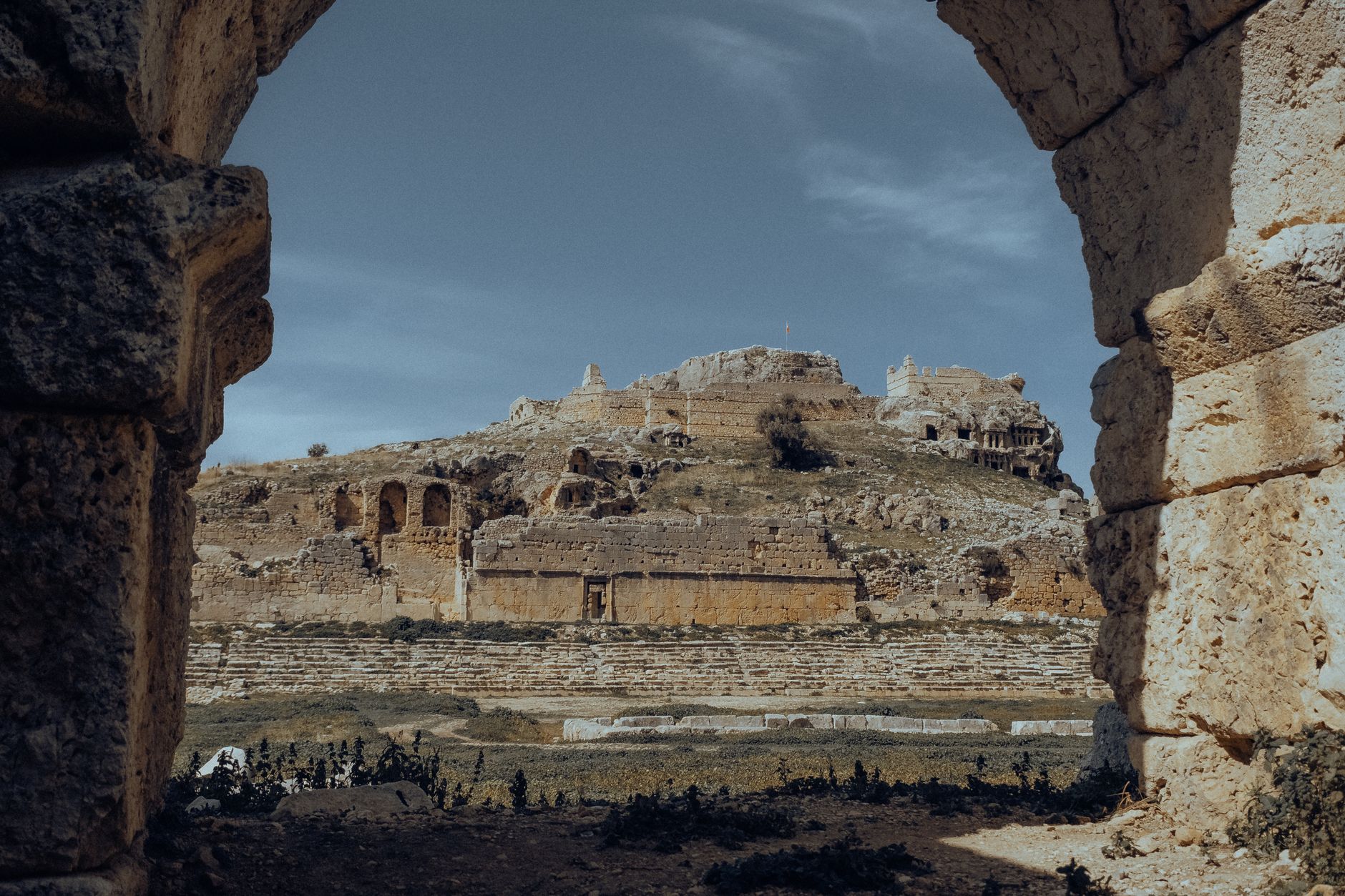
The Karabel Relief: A Hittite King on a Mountain Pass
Most visitors have never heard of Karabel, yet it is one of the most historically significant rock reliefs in western Anatolia. Located in a mountain pass above the Torbalı plain, about 40 kilometers southeast of İzmir, this relief depicts a Hittite king — often identified as Tarkasnawa of Mira — holding a bow and spear. For centuries, travelers on the road between Ephesus and Sardis passed beneath it, and the ancient Greeks later believed it portrayed the legendary Egyptian king Sesostris.
The relief is carved into a dark volcanic boulder at the side of the old Karabel Pass, at an elevation of about 400 meters. The figure is roughly 1.5 meters tall and weathered but still legible: a bearded warrior with a curved bow, a sword at his waist, and a pointed cap. What makes Karabel special is its setting — it marks the ancient border between the Hittite sphere of influence and the Arzawa lands, literally carved into the frontier.
Practical details: The relief is accessible by car on the old road between Torbalı and Kemalpaşa (follow signs for "Karabel Anıtı"). From the small parking area, it's a 5-minute uphill walk of about 150 meters on a rough path. There is no entrance fee and no facilities. Wear shoes with grip, as the path can be loose and dusty. Best visited in spring (April–May) when the surrounding hills are green and wildflowers bloom, or in October when the heat has broken.
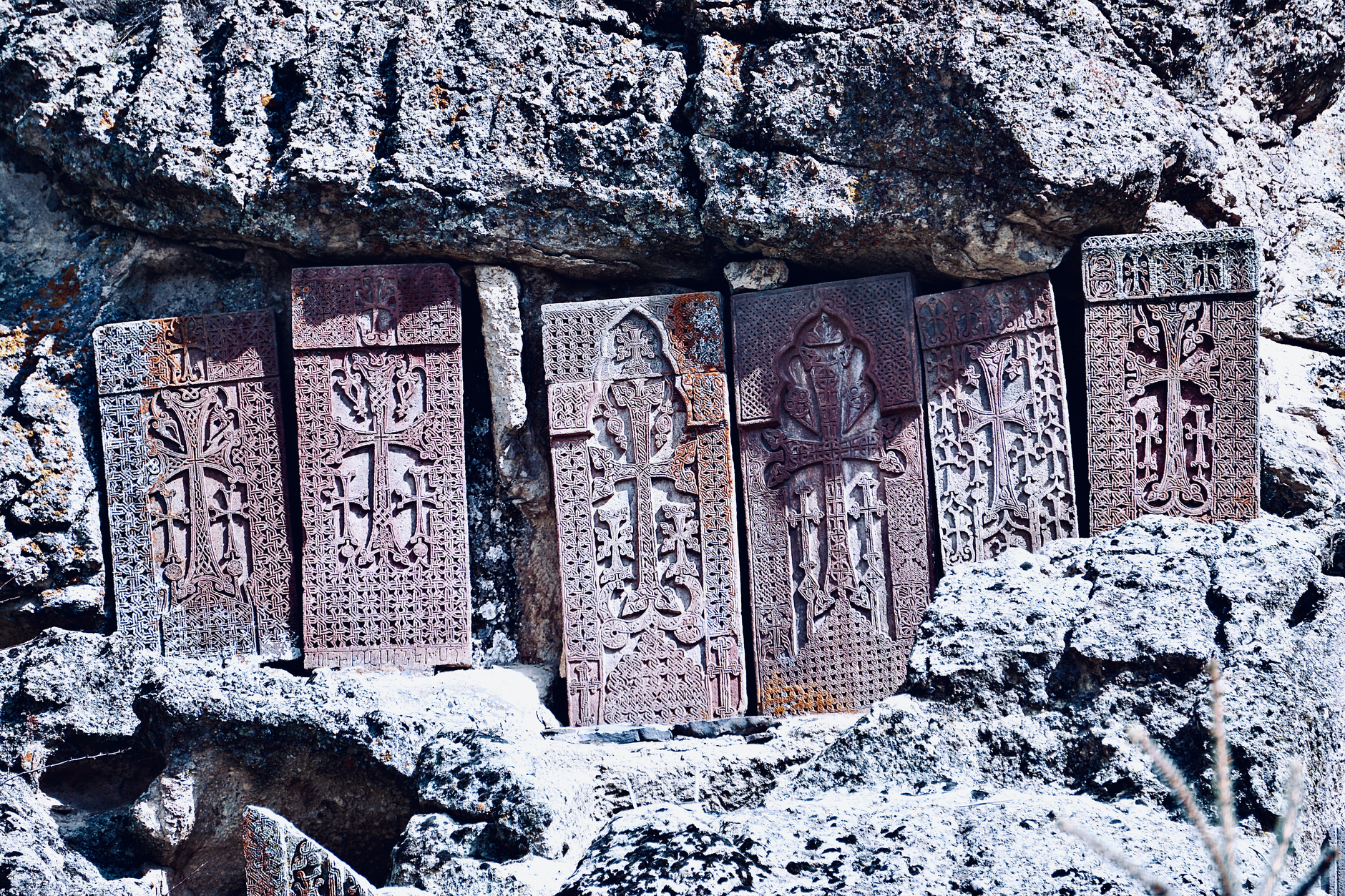
Mount Sipylus: The Weeping Rock and the Mother Goddess
Rising above the city of Manisa, Mount Sipylus (Spil Dağı) is a treasure trove of rock carvings that most tourists miss entirely. The most famous is the "Weeping Rock" or Niobe Monument, a 3,000-year-old relief of a seated female figure carved into a cliff face. According to Greek myth, Niobe wept so bitterly after the loss of her children that Zeus turned her to stone and her tears formed a spring — and indeed, even today, water seeps through the rock beneath the carving.
The figure is usually identified as a Hittite mother goddess, possibly Kubaba, carved around 1300 BCE. It sits about 8 meters above the road, protected by a small fence but clearly visible. A short drive further up the mountain brings you to a rock altar with a niche, also Hittite, overlooking the plain — a place where ancient offerings may have been made to the gods of the mountain.
Practical details: The Niobe Monument is about 7 kilometers from Manisa center, reached by a winding paved road. The carving is visible from the roadside; a short set of steps leads up for a closer look. No fee. The mountain itself is a national park with picnic areas, hiking trails, and a cable car (Spil Teleferik) that operates in summer. Combine the reliefs with a hike to the summit for panoramic views over the Gediz valley.
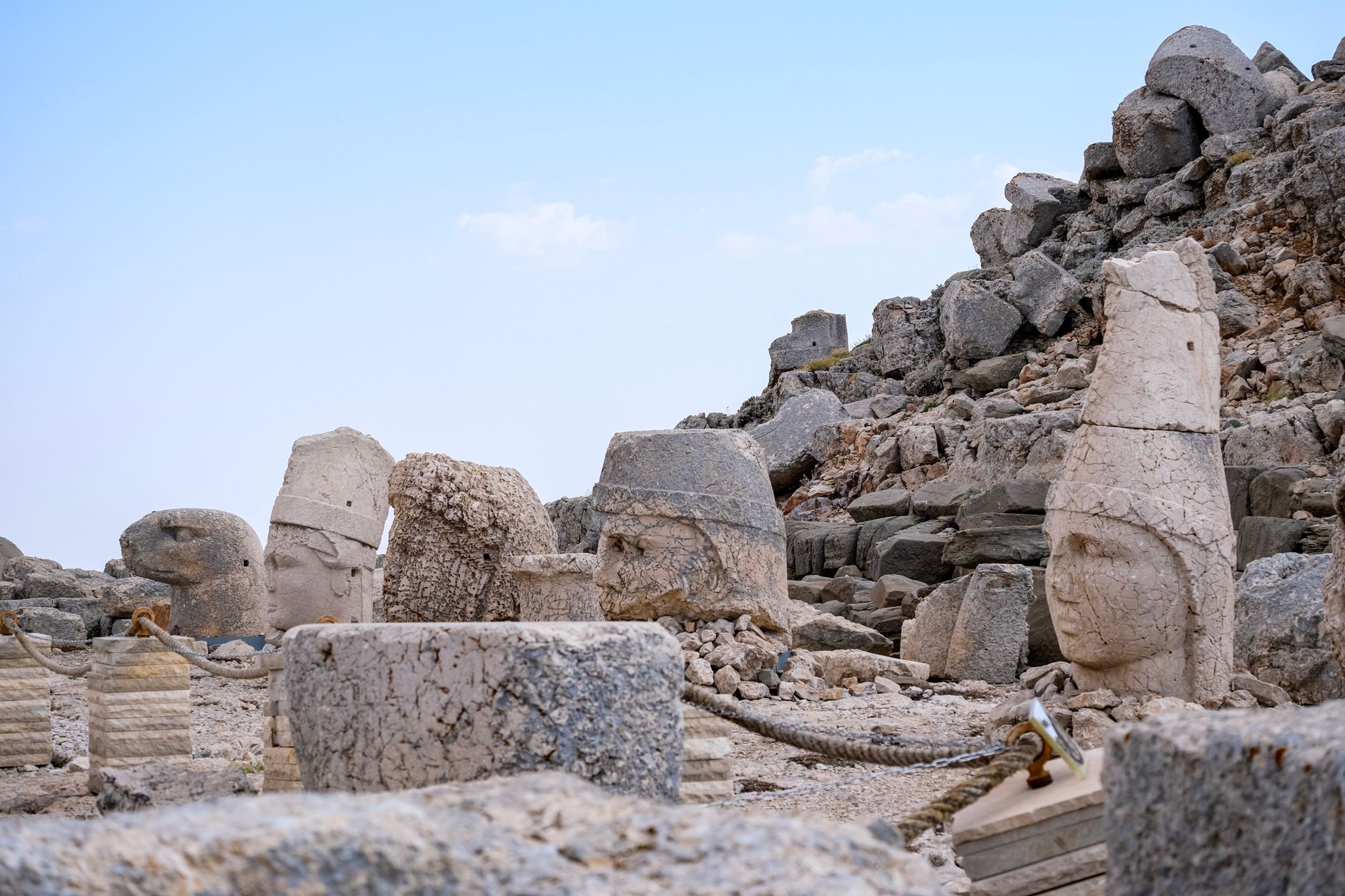
The Phrygian Yazılıkaya: Midas City and Its Rock Altars
Not to be confused with the Hittite Yazılıkaya near Boğazkale, the Phrygian Yazılıkaya — also called Midas City — sits on a high plateau in the Phrygian Valley, about 70 kilometers south of Eskişehir. This was a major Phrygian religious center from the 8th to 6th centuries BCE, and its rock-cut monuments are among the most striking in Anatolia.
The star attraction is the Midas Monument, a massive facade 17 meters wide and 16 meters high carved into the bedrock, decorated with geometric patterns and an inscription dedicated to King Midas. Nearby, smaller altars, stepped thrones, and niches dot the plateau. The site is entirely open-air, with no barriers, and you can walk right up to and even climb around the monuments — a rare privilege in an age of velvet ropes.
Practical details: The site is reached from the village of Yazılıkaya (Han) via a rough but drivable road, then a 15–20-minute walk up a gentle slope. There is a small entrance fee (around 30 TL). The terrain is rocky; wear proper shoes. The Phrygian Valley as a whole is best explored by car over a full day, combining Midas City with the nearby Aslantaş, Yılantaş, and Arslankaya monuments — the latter featuring a 7-meter-high relief of the mother goddess Cybele in a rock niche.
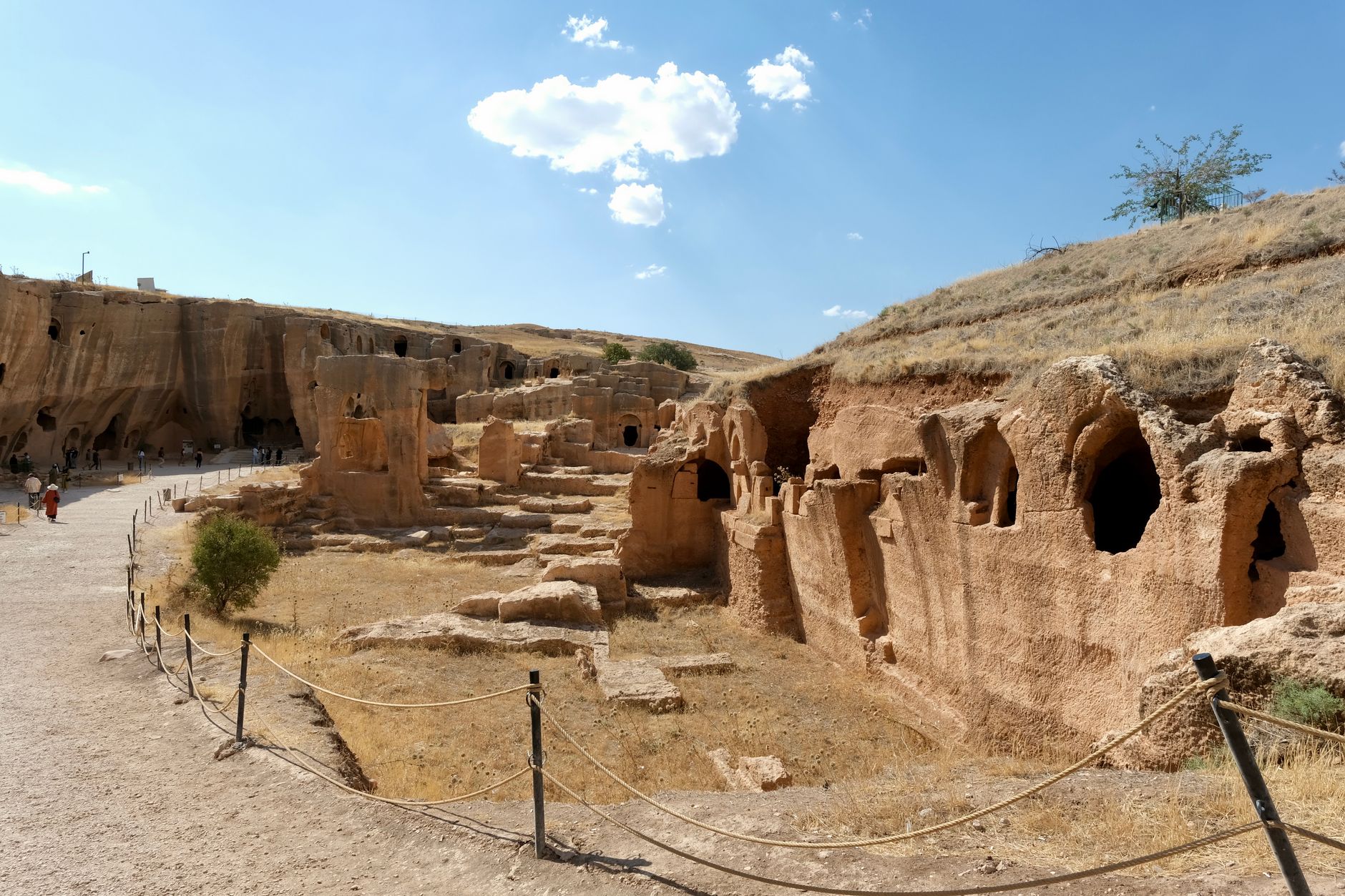
Urartian Rock Carvings in the East: Van and Beyond
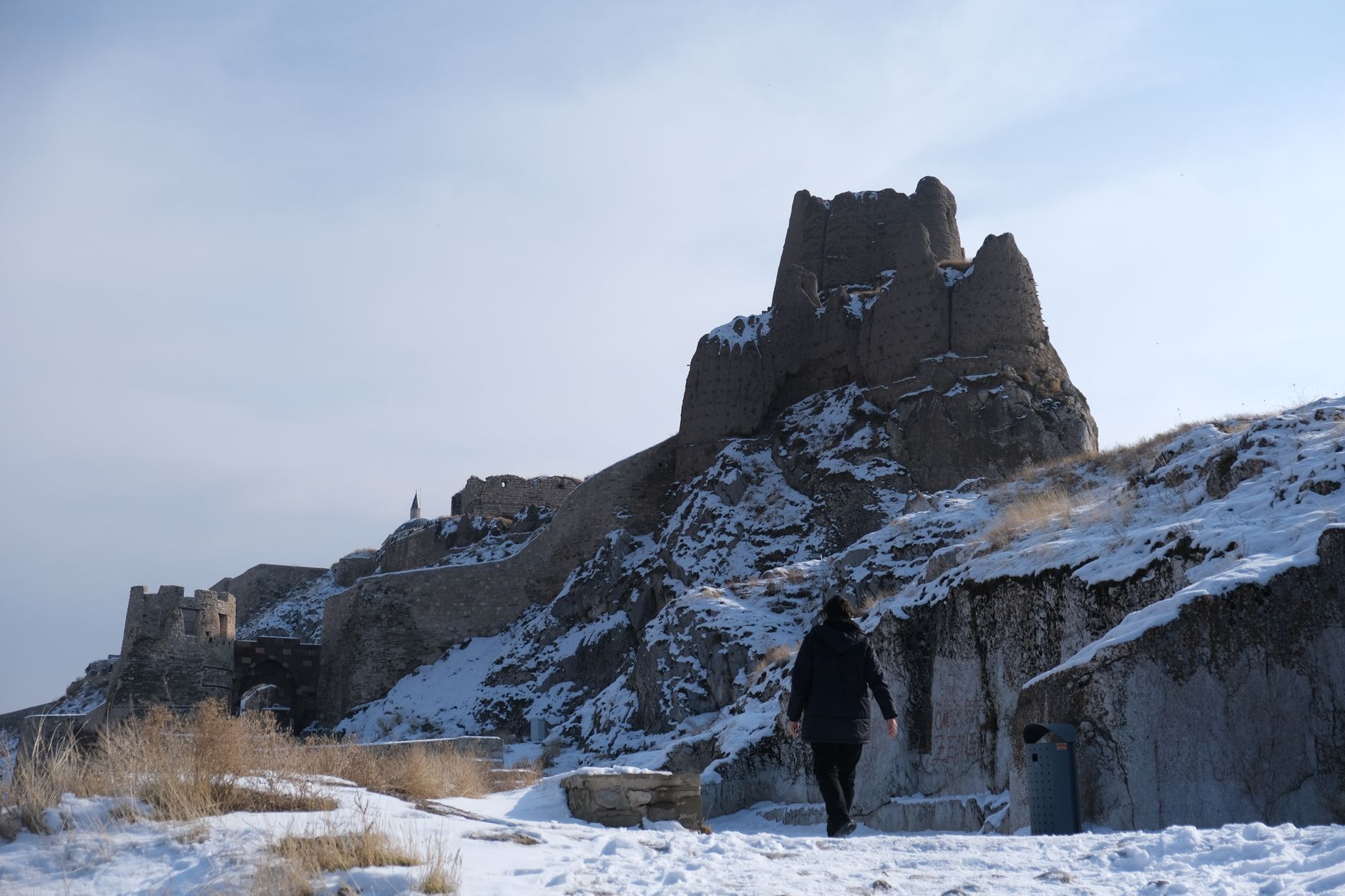
Far to the east, around Lake Van, the Urartian kingdom left a legacy of rock inscriptions and carvings that few travelers ever see. The most accessible is the Rock of Van (Van Kalesi), a dramatic limestone ridge rising from the lake plain, where Urartian kings carved inscriptions in cuneiform between the 9th and 7th centuries BCE. The tombs of the kings are cut into the rock face, and a climb to the summit rewards you with sweeping views over Lake Van and the surrounding mountains.
Further afield, near the town of Çavuştepe and at the Urartian site of Ayanis, more carvings and inscriptions await. These sites are remote and infrastructure is basic, but for the dedicated traveler, they offer a glimpse of a civilization that once rivaled Assyria.
Practical details: Van is reachable by flights from Istanbul and Ankara, and the rock fortress is a short taxi ride from the city center. The climb to the summit takes 20–30 minutes on a steep, uneven path. Visit in late spring or early autumn to avoid extreme heat or snow. Bring water and sun protection — there is little shade.
Practical Tips for Visiting Türkiye's Rock Reliefs
Getting there: Most of these sites are not served by public transport. Renting a car is by far the easiest way to reach them. Roads are generally good, but some final approaches are gravel or dirt tracks. A GPS or offline maps app is essential, as signage can be sparse.
Walking distances: Expect anything from a 5-minute stroll (Karabel, Niobe) to a 30-minute uphill hike (Van Kalesi, parts of the Phrygian Valley). None require technical climbing, but sturdy footwear is a must. Paths are often rocky, dusty, or slippery after rain.
Best times to visit: Spring (April–May) and autumn (September–October) offer the most comfortable temperatures and the best light for photography. Summer can be brutally hot on exposed rock faces, and winter may bring snow or closed access roads in the east. Early morning and late afternoon provide the raking light that makes carvings pop.
Costs and crowds: Most open-air reliefs are free or cost only a token entrance fee (20–50 TL). Crowds are minimal to nonexistent, especially on weekdays. You may well have a 3,000-year-old monument entirely to yourself.
Respect and preservation: These carvings are irreplaceable. Do not touch the surfaces (oils from skin damage the stone), do not climb on the figures, and never use chalk or paint to enhance photographs. Take only pictures and leave only footprints.
Final Thoughts: The Reward of the Uncrowded Wonder
Türkiye's rock reliefs are not just archaeological curiosities — they are portals into the minds of ancient people who looked at a cliff and saw a god, a king, or a story worth telling forever. They ask a little of you: a drive down a back road, a walk up a hill, a willingness to trade the comfort of a museum for the raw presence of the past. In return, they give you something increasingly rare in modern travel: silence, solitude, and the feeling that you have discovered something the world has forgotten.
So pack a day bag, charge your camera, and set out for the mountains. The Hittites, Phrygians, and Urartians are waiting — carved in stone, under the open sky, exactly where they left them.
Thinking about a trip to Turkey?
Share your contact details and a vetted local expert will follow up with a plan built around you — free, no obligation.