

Introduction: Türkiye's Sacred Christian Legacy
Türkiye, a land where continents meet and empires have risen and fallen, holds an extraordinary treasure trove of Byzantine monasteries and rock-hewn chapels. From the fairy chimneys of Göreme to the dramatic cliffs of Sumela and the ancient Tur Abdin plateau, these sacred sites bear witness to centuries of Christian devotion, artistic brilliance, and monastic resilience. As the guardian of this world heritage, Türkiye invites travelers to explore a spiritual landscape that shaped early Christianity and continues to inspire awe today.
The Byzantine era, spanning from the 4th to the 15th century, left an indelible mark on Anatolia. Monks and hermits carved dwellings, churches, and monasteries into the region's soft volcanic rock or built them atop inaccessible peaks, seeking solitude and communion with the divine. Their legacy is a network of sites that rival any in the Christian world, yet remain relatively undiscovered by mainstream tourism. This guide takes you through three remarkable regions: Cappadocia's Göreme Open Air Museum, the Black Sea's Sumela Monastery, and the Tur Abdin Trail in southeastern Türkiye.
Whether you are a pilgrim, a history enthusiast, or a curious traveler, these sites offer a profound journey into the past. You'll marvel at vibrant frescoes, wander through ancient refectories, and stand in chapels where early Christians prayed. Practical details, from dress codes to opening seasons, are included to help you plan a respectful and enriching visit.
Göreme Open Air Museum: A Cave City of Faith
At the heart of Cappadocia lies Göreme Open Air Museum, a UNESCO World Heritage Site since 1985. This sprawling complex of rock-cut churches and monasteries was a thriving monastic settlement from the 4th to the 13th centuries. Here, Byzantine artisans carved churches directly into the soft tuff rock, decorating interiors with vivid frescoes that depict scenes from the Bible and the lives of saints. The museum is a testament to the region's importance as a center of Christian monasticism.
The highlight of Göreme is its remarkable frescoes, many of which remain astonishingly well-preserved. The Dark Church (Karanlık Kilise) is a must-see, its name derived from the lack of light that has protected its vibrant 11th-century paintings. Scenes of the Annunciation, Nativity, and Crucifixion are rendered in rich colors, offering a glimpse into Byzantine artistic mastery. Other notable churches include the Buckle Church (Tokalı Kilise) with its extensive narrative cycles, the Apple Church (Elmalı Kilise), and the Snake Church (Yılanlı Kilise).
Visiting Göreme requires a ticket, and it's advisable to arrive early to avoid crowds and heat. The museum is open daily, typically from 8:00 AM to 7:00 PM in summer and until 5:00 PM in winter, though hours can vary. Wear comfortable shoes as paths are uneven, and be prepared for some climbing. Dress modestly, as these are active religious sites; shoulders and knees should be covered. Guided tours are available and highly recommended to fully appreciate the historical and theological context.
Beyond Göreme: Hidden Chapels and Monastic Valleys
While Göreme Open Air Museum is the most famous, Cappadocia is dotted with lesser-known rock chapels and monasteries that offer a more intimate experience. The Zelve Open Air Museum, once a monastic retreat, features churches and dwellings carved into a dramatic valley. The Rose Valley and Red Valley are home to numerous chapels, some with frescoes fading into the rock, accessible via hiking trails that wind through vineyards and fairy chimneys.
For a deeper dive, explore the Ihlara Valley, a canyon where early Christians built dozens of churches along the Melendiz River. The valley's lush greenery contrasts with the arid plateau, and churches like the Ağaçaltı Church (Daniel Pantanassa) and the Yılanlı Church (Snake Church) boast frescoes dating from the 9th to the 11th centuries. Hiking here is a serene way to connect with the monastic past.
Another gem is the Monastery of Keşlik, near Ürgüp, a rock-cut complex with a large refectory and church. These sites are often free or require a small fee, and they see fewer visitors. When visiting, remember that many are fragile and unsupervised; do not touch the frescoes, and carry out all trash. Local guides can help you navigate these hidden treasures and share stories that bring the stones to life.
Sumela Monastery: The Cliffside Wonder of the Black Sea
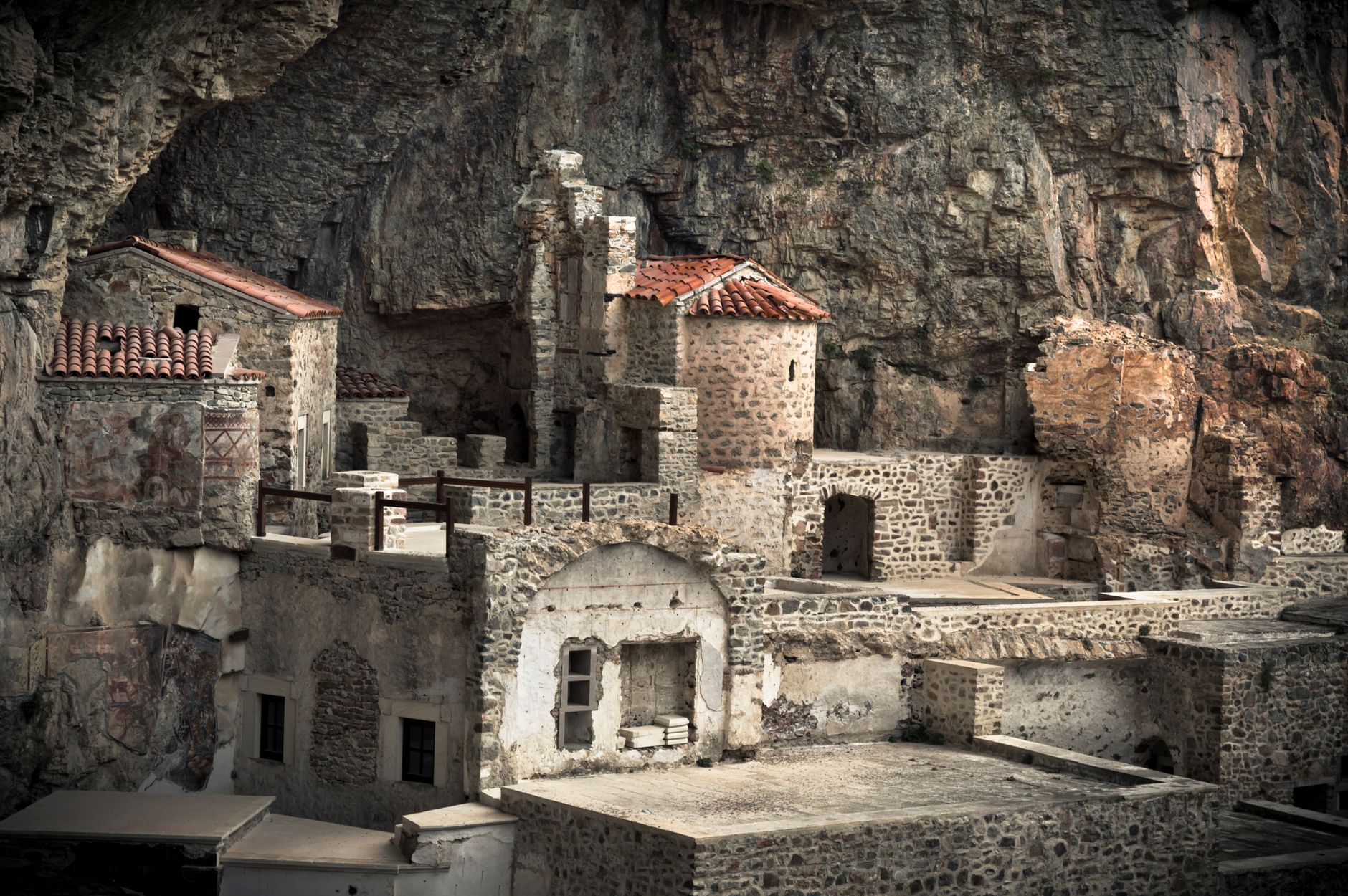
Perched dramatically on a sheer cliff face in the Altındere Valley, Sumela Monastery is one of Türkiye's most iconic religious sites. Founded in 386 AD during the reign of Byzantine Emperor Theodosius I, legend says it was established by two Athenian monks, Barnabas and Sophronios, who discovered a miraculous icon of the Virgin Mary in a cave. The monastery grew over centuries, becoming a major pilgrimage site and a center of Orthodox monasticism.
The complex includes a rock church, chapels, a kitchen, a library, and living quarters, all clinging to the cliff at an altitude of about 1,200 meters. The main church is adorned with stunning frescoes, some dating to the 18th century, depicting the Virgin Mary, Christ, and various saints. The panoramic views of the valley below are breathtaking, adding to the spiritual atmosphere.
Sumela is located near the city of Trabzon in the Black Sea region. It underwent extensive restoration and reopened to visitors in 2021. The monastery is typically open from April to October, with visiting hours from 9:00 AM to 7:00 PM, though it's wise to check current schedules as they can change. Access involves a steep walk or a shuttle from the parking area; the path is paved but uphill. Dress modestly, and be aware that the site can be crowded in summer. Guided tours from Trabzon are available and provide valuable historical context.
Tur Abdin Trail: The Cradle of Syriac Christianity
In southeastern Türkiye, near the Syrian border, lies Tur Abdin, meaning "Mountain of the Servants of God." This region is the heartland of Syriac Orthodox Christianity, with a history stretching back to the 4th century. The Tur Abdin Trail is a network of ancient monasteries and churches scattered across a rugged limestone plateau, offering a deeply off-the-beaten-path experience.
Key sites include the Monastery of Mor Gabriel (Deyrulumur), founded in 397 AD, one of the oldest surviving Syriac Orthodox monasteries. It remains an active religious community and welcomes visitors. The Monastery of Mor Hananyo (Deir ez-Zaferan) near Mardin, with its distinctive honey-colored stone, is another highlight. The trail also encompasses dozens of villages with historic churches, some still used by the dwindling Syriac Christian community.
Visiting Tur Abdin requires more planning than Göreme or Sumela. The region is best explored by car, with Mardin or Midyat as a base. Many monasteries have specific visiting hours and may require prior permission, especially those that are active. Dress conservatively, as this is a conservative area. The best time to visit is spring or autumn, avoiding the scorching summer heat. Guides specializing in Syriac heritage can arrange access and explain the rich liturgical and architectural traditions.
Practical Tips for Visiting Religious Sites in Türkiye
When visiting monasteries and chapels, respect is paramount. Dress modestly: cover shoulders, knees, and for women, consider carrying a scarf to cover your head when entering churches. Avoid loud conversations and maintain a contemplative demeanor. Photography is often allowed but may be restricted in certain areas; always look for signs or ask. Flash photography can damage frescoes, so it's usually prohibited.
Check opening seasons and hours in advance, as many sites have reduced hours in winter or may close for restoration. Entrance fees vary; some sites accept Museum Pass Türkiye, which can save money if you plan to visit multiple museums. Guided tours are invaluable for understanding the deep history and symbolism. For Sumela and Tur Abdin, consider hiring a local guide; their knowledge enhances the experience and supports the community.
Finally, remember that these are living heritage sites for some communities. Be mindful of your impact: stay on designated paths, do not touch the art, and respect any areas marked private. By visiting responsibly, you contribute to the preservation of Türkiye's extraordinary Byzantine and Syriac Christian legacy for future generations.
Thinking about a trip to Turkey?
Share your contact details and a vetted local expert will follow up with a plan built around you — free, no obligation.