

Introduction: The Soul of Turkish Coastal Life
There are few experiences more quintessentially Turkish than settling into a plastic chair at a seaside çay bahçesi (tea garden), cradling a tulip-shaped glass of steaming çay, and watching the sun melt into the Aegean or Black Sea. These humble establishments—found in every coastal town from Çeşme in the west to Sinop in the north—are more than just cafés; they are living rooms for the community, where retirees debate politics, teenagers flirt, and travelers are welcomed like old friends. And the best part? A glass of tea rarely costs more than a few lira, making it the most affordable luxury in the country.
This guide takes you on a journey along Türkiye's coastline, exploring the coastal çay bahçesis that define daily life in these towns. We'll cover the etiquette of ordering çay, the unspoken rules of seaside tea culture, and how to find the spots where locals actually go—not just the tourist traps. By the end, you'll be ready to grab a glass, pull up a chair, and experience Türkiye the way it's meant to be experienced: slowly, sociably, and with a view of the sea.
What Is a Çay Bahçesi? More Than Just a Tea Garden
A çay bahçesi is a tea garden, but that simple translation barely scratches the surface. Traditionally, it's an open-air or partially covered space—often nestled under trees, clinging to a cliffside, or stretching along a promenade—where tea is the main event. Unlike a café or restaurant, a çay bahçesi is unpretentious: mismatched tables, plastic chairs, and a constant hum of conversation. Many are family-run, passed down through generations, and have been serving the same strong, amber-colored tea for decades.
Along Türkiye's coast, these gardens take on a special character. In the Aegean and Mediterranean, you'll find them perched above turquoise bays, shaded by bougainvillea and olive trees. In the Black Sea region, they're often built on wooden platforms over the water or tucked into lush, misty hillsides. The common thread is the tea itself: brewed in a double teapot (çaydanlık), served in small tulip glasses, and accompanied by sugar cubes—never milk. It's a ritual that transcends geography.
Historically, çay bahçesis became popular in the mid-20th century as tea production expanded in Rize and social life moved outdoors. Today, they remain one of the few public spaces where people of all ages and backgrounds mix freely. For a traveler, they offer an authentic slice of Turkish daily life that no museum or guided tour can replicate.
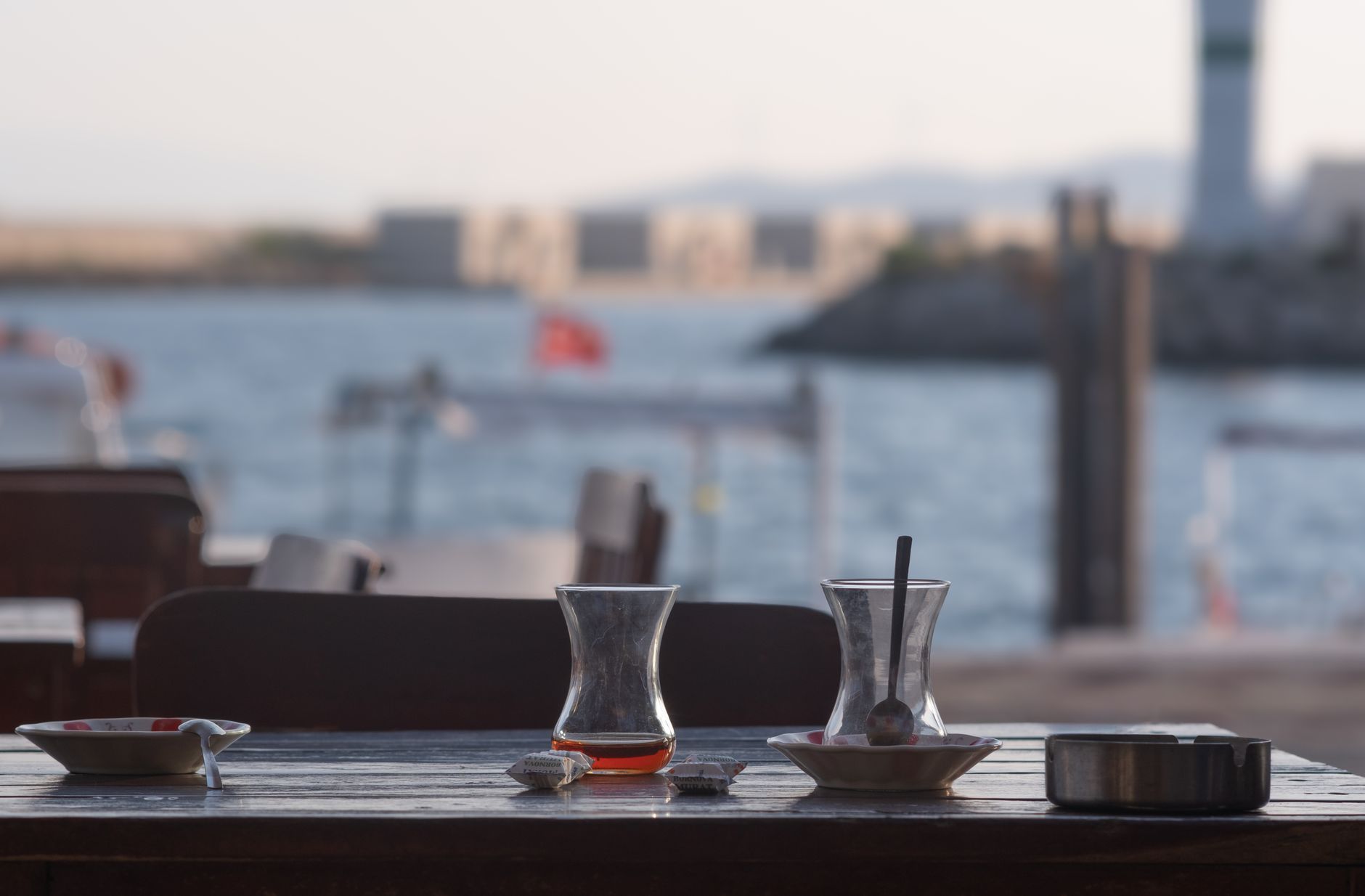
How to Order Çay Like a Local: Etiquette and Rituals
Ordering tea in a Turkish çay bahçesi is simple, but there are a few unwritten rules that will make you feel like a regular. First, when you sit down, a waiter will usually appear within moments—no need to flag anyone down. Simply say "bir çay, lütfen" (one tea, please), and it will arrive shortly, often before you've finished your sentence. If you want more, just catch the waiter's eye and raise your glass slightly; they'll bring a refill without you needing to ask verbally.
The tea itself is served in a small, curvaceous glass called an ince belli bardağı. It's hot—hold it by the rim or the small saucer. Sugar cubes are offered on the side; purists take it unsweetened (sade), but adding one or two cubes is perfectly normal. Stir gently, then place the spoon on the saucer, not back in the glass. Don't blow on your tea; instead, wait a moment or sip carefully. And never, ever drink it through a straw.
Payment is often made at the end, and cash is still king in many smaller gardens, though larger ones may accept cards. Tipping isn't obligatory, but rounding up is appreciated. The most important etiquette, however, is to linger. A çay bahçesi is not a place to rush. Order a second glass, watch the seagulls, and let the afternoon drift by—that's the whole point.

Coastal Gems: From Çeşme to Sinop
Çeşme and the Aegean Delights
Start your journey in Çeşme, a breezy resort town on the Aegean coast known for its crystal-clear waters and thermal springs. The çay bahçesis here line the marina and the Kordon (promenade), offering views of sailboats and the Greek island of Chios on the horizon. One local favorite is the garden near Çeşme Castle, where you can sip tea while watching the sunset paint the sky in shades of pink and orange. The tea is strong, the sea breeze is constant, and the vibe is effortlessly relaxed.
Further south, in the small town of Alaçatı, the tea gardens are tucked into cobblestone streets lined with bougainvillea. Here, you'll find a mix of locals and in-the-know travelers, all enjoying çay alongside plates of fresh almonds and olives. It's a slower, more intimate scene—perfect for a quiet afternoon.
The Turquoise Coast: Bodrum, Marmaris, and Beyond
As you move east along the Aegean, Bodrum offers a more cosmopolitan take on the çay bahçesi. The marina is packed with stylish spots, but for a genuine experience, head to the tea gardens near the Bodrum Amphitheater or along the back streets of the bazaar. Here, you'll sit shoulder-to-shoulder with fishermen and shopkeepers, all taking a break from the heat. The tea is often served with a piece of lokum (Turkish delight) or a few roasted chickpeas.
In Marmaris, the palm-lined promenade is home to numerous tea gardens where you can watch the ferries come and go. Further east, in Fethiye and Kaş, the gardens become more rustic, sometimes just a few tables on a pebbly beach. The tea, however, remains consistently excellent—strong, fresh, and endlessly refillable.
The Black Sea Beauty: Sinop and the North
Now jump to the opposite end of the country: Sinop, a historic port town on the Black Sea. The tea gardens here have a different flavor—literally and figuratively. The climate is cooler and mistier, and the tea is often served with a side of simit (sesame bagel) or a slice of sharp, salty cheese. The most famous çay bahçesi in Sinop is near the ancient city walls, overlooking the harbor. On a clear day, you can see the Crimean coast in the distance. The locals here are famously friendly, and it won't be long before someone strikes up a conversation.
Other Black Sea towns like Amasra, Trabzon, and Rize (the heart of Turkish tea production) also boast wonderful coastal tea gardens. In Rize, you can visit a tea plantation and then enjoy a glass of the freshest çay you'll ever taste, all while looking out over the lush, green hills that tumble down to the sea.
Sunset Rituals: Watching the Day End with Locals
As the sun begins its descent, çay bahçesis along the coast come alive. This is the golden hour, when families, friends, and couples gather to watch the sky transform. In Çeşme, the sunset is a communal event; people clap softly as the sun disappears, and someone always orders another round of tea. In Sinop, the sunset is more subdued, often accompanied by the call to prayer echoing from a nearby mosque, adding a layer of spiritual beauty to the scene.
What makes these moments special is the shared silence—the way everyone pauses their conversations to watch the horizon. It's a ritual that reminds you that despite the modern world's distractions, some pleasures remain timeless. And because tea is so cheap, you can afford to stay for hours, ordering glass after glass as the stars appear.
Don't be surprised if a stranger offers you a piece of their simit or a sugar cube. Hospitality is deeply ingrained in Turkish culture, and a çay bahçesi is one of the easiest places to experience it. Accept graciously, say "teşekkürler" (thank you), and you'll have made a friend for life.
Practical Tips for Tea Garden Adventures
When to go: Late afternoon to early evening is the best time to visit a coastal çay bahçesi. The heat has subsided, the light is beautiful, and the locals are out in force. Avoid midday in summer, when the sun is harsh and the gardens are empty.
What to order: Besides çay, many gardens offer Turkish coffee, fresh orange juice, and light snacks like toasted sandwiches or gözleme (stuffed flatbread). But tea is the star—stick with it.
How much to pay: A glass of tea typically costs between 5 and 15 Turkish Lira (less than a dollar) depending on the location. Even in touristy areas, it's a bargain. Carry small bills for convenience.
Etiquette reminders: Don't rush, don't complain about the wait (there rarely is one), and don't ask for milk. If you want to leave, simply place your empty glass on the table and pay at the counter. A nod and a smile go a long way.
Finding the best spots: Ask a local for their favorite çay bahçesi—they'll often point you to a hidden gem rather than the busiest tourist spot. Look for gardens with a mix of ages and a view of the water. If you see mostly locals, you're in the right place.
Conclusion: A Simple Pleasure That Connects Us All
Türkiye's coastal çay bahçesis are more than just places to drink tea; they are windows into the Turkish soul. They offer a chance to slow down, connect with others, and savor the beauty of the sea—all for the price of a few coins. Whether you're watching the sunset in Çeşme, chatting with fishermen in Sinop, or simply enjoying a quiet moment in Bodrum, these gardens will leave you with memories far richer than any luxury resort could provide.
So next time you find yourself on Türkiye's coast, do as the locals do: find a plastic chair, order a çay, and let the world drift by. You'll discover that the simplest pleasures are often the most profound.
Thinking about a trip to Turkey?
Share your contact details and a vetted local expert will follow up with a plan built around you — free, no obligation.