

Why Türkiye Is a Dream for Readers, Remote Workers and Long-Stay Travelers
Türkiye has one of the deepest reading cultures in the region. Ottoman manuscript libraries, Republican-era halk kütüphaneleri (public libraries), bustling university campuses and a nationwide network of belediye (municipal) libraries together create thousands of calm, free places to sit, read and work. Add strong fiber internet in the cities, affordable long-stay rentals and a café culture that never rushes you off a table, and you have an unexpectedly perfect country for the digital nomad who likes quiet over hype.
Hospitality is the invisible ingredient. Turkish librarians will often walk you to a free desk, plug in a charger for you or unlock a study room without being asked. Café owners rarely mind a laptop and a single çay for two hours. The assumption, in most public spaces, is that you are welcome — and that generosity makes long study days feel light.
This guide focuses on the places where long-stay travelers actually settle in: the municipal and public libraries of Istanbul, İzmir and Ankara, the campus cafés of major universities, and the bookish neighborhoods that surround them. We cover practical access, unspoken etiquette and realistic wifi expectations so you can plan a productive week, not just a productive afternoon. For broader route planning around these cities, see our destinations pages and our itineraries.
Istanbul: Grand Libraries, Small Reading Rooms and Campus Coffee
Istanbul rewards the patient. The Atatürk Kitaplığı in Taksim, run by the Istanbul Metropolitan Municipality, is the classic starting point: a modern, well-lit research library tucked beside the Taksim mosque complex, with quiet reading halls, power sockets and dependable wifi. Nearby, the Beyazıt Devlet Kütüphanesi — one of the oldest state libraries in the country — offers a hushed, historic reading room that feels like stepping into a different century, ideal for analog study days when you want zero distractions.
On the Anatolian side, Kadıköy and Üsküdar municipality libraries (search for the local belediye kütüphanesi) are smaller, friendlier and often less crowded. They are perfect if you rent an apartment in Kadıköy for a month and want a daily walk-to-work routine. The Istanbul Metropolitan Municipality's newer branches, sometimes called "İstanbul Kitapçısı" cultural spaces and the growing network of 7/24 study halls, are worth checking locally, since new branches open regularly.
The university quarter around Beyazıt and Vezneciler is a world of its own. Istanbul University's historic campus sits at the heart of the city's second-hand book bazaar (Sahaflar Çarşısı), and the surrounding streets are lined with student cafés where a çay costs very little and nobody hurries you. For a calmer café day, head toward Moda in Kadıköy, where independent coffee shops combine good espresso with quiet corners and reliable wifi. If you are still deciding where to base yourself, our guides and best-time advice can help you match neighborhood to season.
Access tip: many municipal libraries in Istanbul require only a passport or residence permit number to register for a membership card (üyelik kartı), which then gives you book borrowing and sometimes reserved desk access. Ask at the front desk — staff are used to foreign visitors and generally happy to help.
Ankara: The Student Capital's Study Cafés and Campus Libraries
Ankara is where Türkiye's student culture is most concentrated. The Kızılay and Bahçelievler neighborhoods, home to METU (ODTÜ), Hacettepe and Ankara University campuses, are packed with cafés designed for studying: long tables, soft lighting, power strips and quiet-please signs in Turkish and English. These "study cafés" (often branded as kütüphane-kafe or sessiz kafe) are a genuinely useful category of workspace — you buy a coffee or a tost, and you get a calm desk for hours.
The National Library of Türkiye (Millî Kütüphane) near Bahçelievler is the heavyweight: vast reading rooms, serious wifi, and a formal atmosphere that suits deep work. Nearby, the Ankara Metropolitan Municipality libraries and the newer Millet Kütüphanesi branches offer friendlier, more casual environments, often with young families and students sharing space. The ODTÜ campus cafés, when accessible to visitors, are leafy and calm, especially in spring and autumn.
Ankara's advantage for long-stay travelers is rhythm. The city is less touristy than Istanbul, so cafés are built around regulars: students, civil servants and researchers. That means stable wifi, predictable opening hours and less pressure to keep ordering. If you plan to spend a month or more in Türkiye, spending a week in Ankara between Istanbul and İzmir makes for a productive and affordable interlude — see our routes for how to link the three cities by train and bus.

İzmir: Seaside Reading, Kültürpark and University Cafés
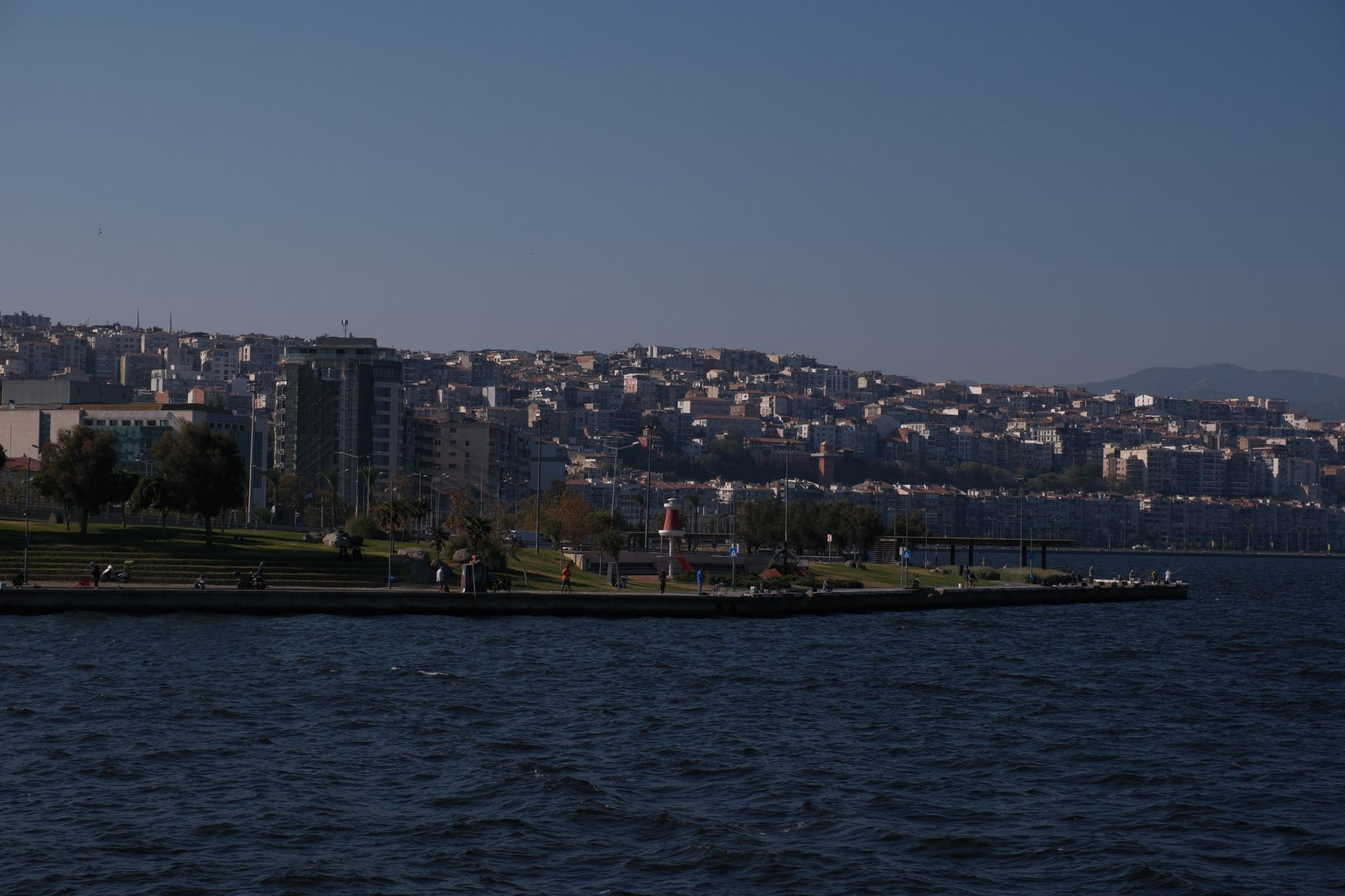
İzmir combines the calm of a smaller city with the energy of a big university town. The İzmir Milli Kütüphane, in the historic center near Konak, is one of the oldest libraries in the country and still functions as a working public library — its reading rooms are quieter than the surrounding bazaar streets. A short walk away, the İzmir Metropolitan Municipality's central library branches and the Kültürpark area offer green space, study halls and the easy pleasure of reading outdoors on a bench.
The university quarters around Ege University and Dokuz Eylül University again produce a student café ecosystem: cafés with strong wifi, all-day breakfast menus and the famous İzmir habit of lingering. The neighborhood of Alsancak is the most comfortable for remote workers, with bookshops (look for the independent ones along Kıbrıs Şehitleri Caddesi) and cafés that welcome laptops in the mornings.
İzmir is also a good base for travelers who want calm but still want the Aegean nearby. A morning of library work and an afternoon of reading by the Kordon define a good day here. Pair it with a side trip to the coast covered in our blog when you need a screen-free day.
Beyond the Big Three: Bursa, Eskişehir, Trabzon and Antalya
Eskişehir is the student-city archetype: a compact, walkable center built around Anadolu University, with coffee shops full of textbooks and a strong reading culture. It is one of the most pleasant places in Türkiye to spend a quiet week of focused work.
Bursa pairs its historic Setbaşı and Uludağ University districts with municipal libraries that are calm and well kept. Trabzon and the Black Sea coast have grown their public library networks in recent years, and Antalya's municipal libraries and the university district around Akdeniz University offer the same mix of quiet rooms and wifi-friendly cafés. Even in smaller cities, the pattern holds: look for the belediye kütüphanesi, the city's kültür merkezi (culture center) and the streets around the university. Our experts can help you find locally recommended spots if you are staying somewhere off the main tourist trail.
Practical Etiquette: How to Study Like a Local
Turkish library and café culture has a few gentle unspoken rules. In libraries, silence is expected in reading halls, and phones should be silent; small study rooms are often booked at the desk or via the municipality's app. In cafés, ordering something — even just a çay or a Türk kahvesi — every couple of hours is polite, and staff will happily refill your water. Keep your table tidy, and ask before moving to a table with a "reserved" sign.
Academic libraries may limit access for non-students. If you are not enrolled, prioritize public and municipal libraries, which are open to everyone, and student cafés, which are businesses and welcome anyone spending money. Bring your passport (and residence permit if you have one) — it speeds up membership registration and sometimes campus entry.
Other practical notes: many libraries close on Sundays or have shorter weekend hours, so check the local belediye website or ask at the desk. Power sockets are common but not guaranteed in older buildings, so carry a small power bank. Turkish keyboard layouts and Turkish-language catalogues can be unfamiliar, but staff are quick to help — simply say "merhaba" and show your question on your phone if needed. For an overview of connectivity, payments and other traveler basics, see our travel tools and FAQ.
Where to Find Quiet Corners and How to Build a Reading Day
The easiest strategy is to alternate: a library morning for deep work, a café afternoon for calls and lighter tasks, and an evening of reading at home or in a park. In Istanbul, pair the Atatürk Kitaplığı with a Kadıköy café; in Ankara, the National Library with a Kızılay study café; in İzmir, the Milli Kütüphane with an Alsancak bookshop café. This rhythm keeps you productive without exhausting the social energy of café work.
Bookshops are another underrated refuge. Türkiye has strong independent booksellers, especially in Istanbul's Beyoğlu and Kadıköy, İzmir's Alsancak and Ankara's Kızılay. Many have in-store reading corners and small cafés, and staff are often happy to recommend Turkish authors — a great way to deepen your trip. If you want a curated version of this reading-and-studying itinerary, our planner can help you arrange it around the rest of your travels.
Finally, remember that calm is the point. Türkiye's librarians and café owners have built a culture where learning is respected and visitors are welcome. Settle in, order a tea, open your book — and let the country's hospitality do the rest.
Thinking about a trip to Turkey?
Share your contact details and a vetted local expert will follow up with a plan built around you — free, no obligation.