

Why Türkiye Does Evening Strolling So Well
There is a word for it in Turkish — akşam yürüyüşü, the after-dinner walk — and in Türkiye it is practically a civic institution. As the sun drops and the call to prayer drifts across tiled rooftops, city squares (meydanlar) fill with families pushing strollers, teenagers sharing simit, retirees arguing gently over backgammon and couples hunting for the best künefe in town. The heat of the day lifts, the fountains switch on, and the stone facades glow amber under old-fashioned lamps and new LED uplighting alike.
For visitors, this is the golden hour that never quite ends: the two or three hours after dinner when a city becomes simultaneously calmer and livelier. Petty commerce quiets down, but çay houses, dondurma carts, dessert cafés and street musicians take over. Squares in Türkiye are generally well-lit, busy with locals and police-adjacent in the sense that there is always someone watching — a shopkeeper, a tea boy, a locked-in nargile waiter — so you are never really alone, even at 11 p.m.
This guide covers four very different cities — Istanbul, İzmir, Antalya and Gaziantep — with concrete routes, timing advice, transport back to your hotel and, most importantly, where to find late çay or something sweet. The tone is deliberately unhurried: the point of an evening walk is not to tick off monuments but to let the square do its work on you.
Istanbul: Fountains, Trams and the Bosphorus Glow
Istanbul's evening life clusters around a handful of brilliantly lit public spaces that are easy to chain together. Start at Sultanahmet Square, where the Hippodrome's obelisks and the Blue Mosque's minarets are floodlit against a deep blue sky. It is touristy and touts linger near the tram stop, but from 9 p.m. onward it becomes genuinely pleasant: vendors pack up, and the square belongs to strollers and stray cats. Walk downhill through the Gülhane Park gates if they are still open, or cut toward Eminönü for the bridge.
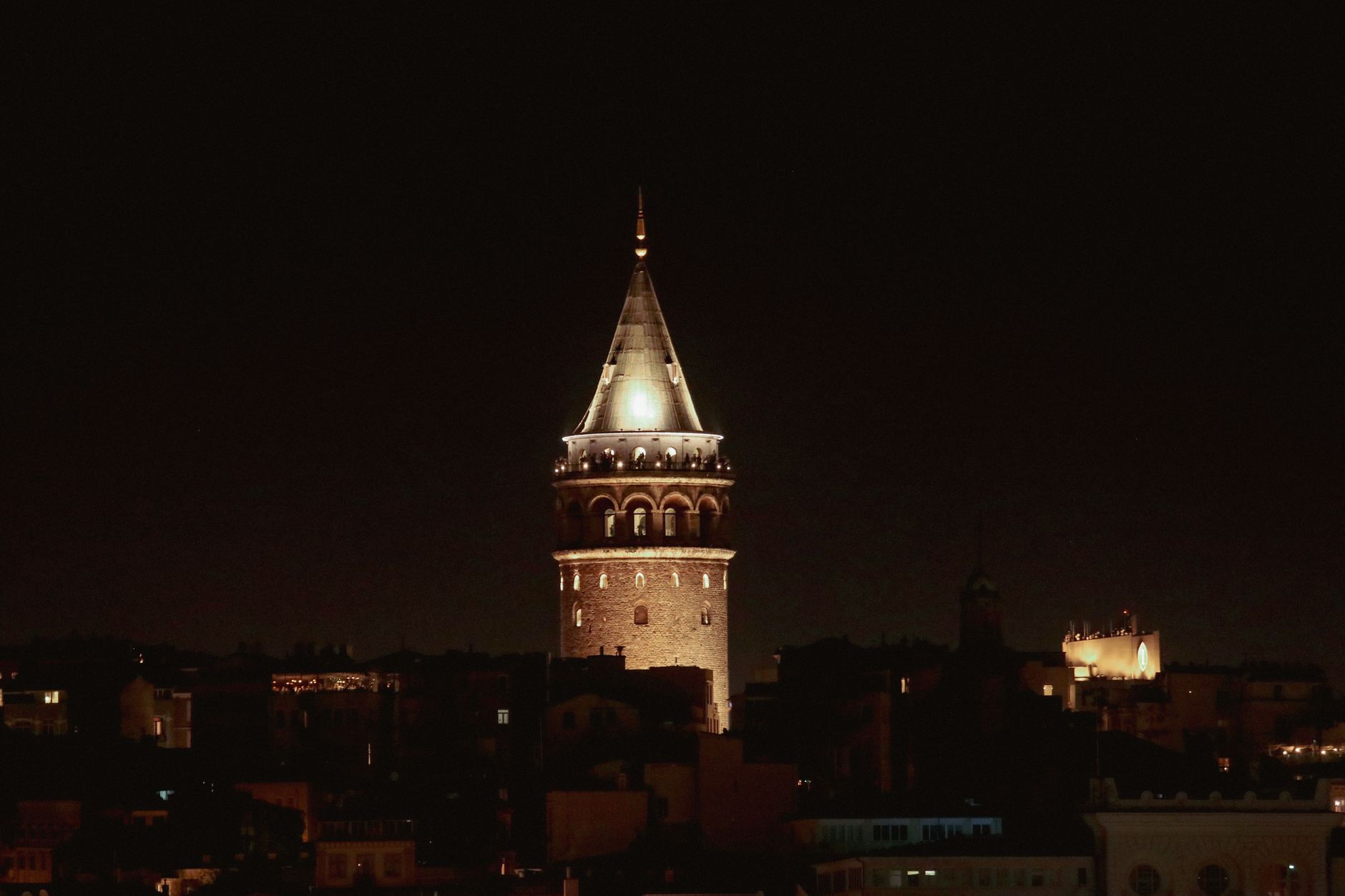
The star of the modern city is Taksim Square and its continuation, İstiklal Caddesi — a 1.4 km pedestrian spine that stays awake until 1 a.m. The nostalgic red tram clangs past bookshops, churches, mosques and consulates, all washed in warm light. Duck into the Galata Tower district via Yüksek Kaldırım or Serdar-ı Ekrem Sokak for steep, cobbled lanes lined with small galleries and meyhanes. The tower itself, lit like a lighthouse, is visible from half the city.
My favourite evening square, though, is the Maiden's Tower (Kız Kulesi) viewpoint area in Salacak, on the Asian side — technically a waterfront promenade rather than a square, but the tower glowing offshore on its tiny islet is pure Istanbul. On the European side, Ortaköy Square under the Bosphorus Bridge mixes mosque silhouette, kumpir stalls and the lit bridge overhead; it stays busy and safe well into the night.
Timing: aim for 20:30–23:30. Summer evenings run late, but in winter darkness falls by 17:30 and the squares empty sooner. A good route: Sultanahmet → Eminönü (spice bazaar vicinity) → tram to Karaköy → walk up to Galata → İstiklal → Taksim. Or, for a gentler night: ferry from Eminönü to Kadıköy and stroll the Kadıköy iskele square and Moda seaside path.
İzmir: Kordon Breezes and Alsancak Lights
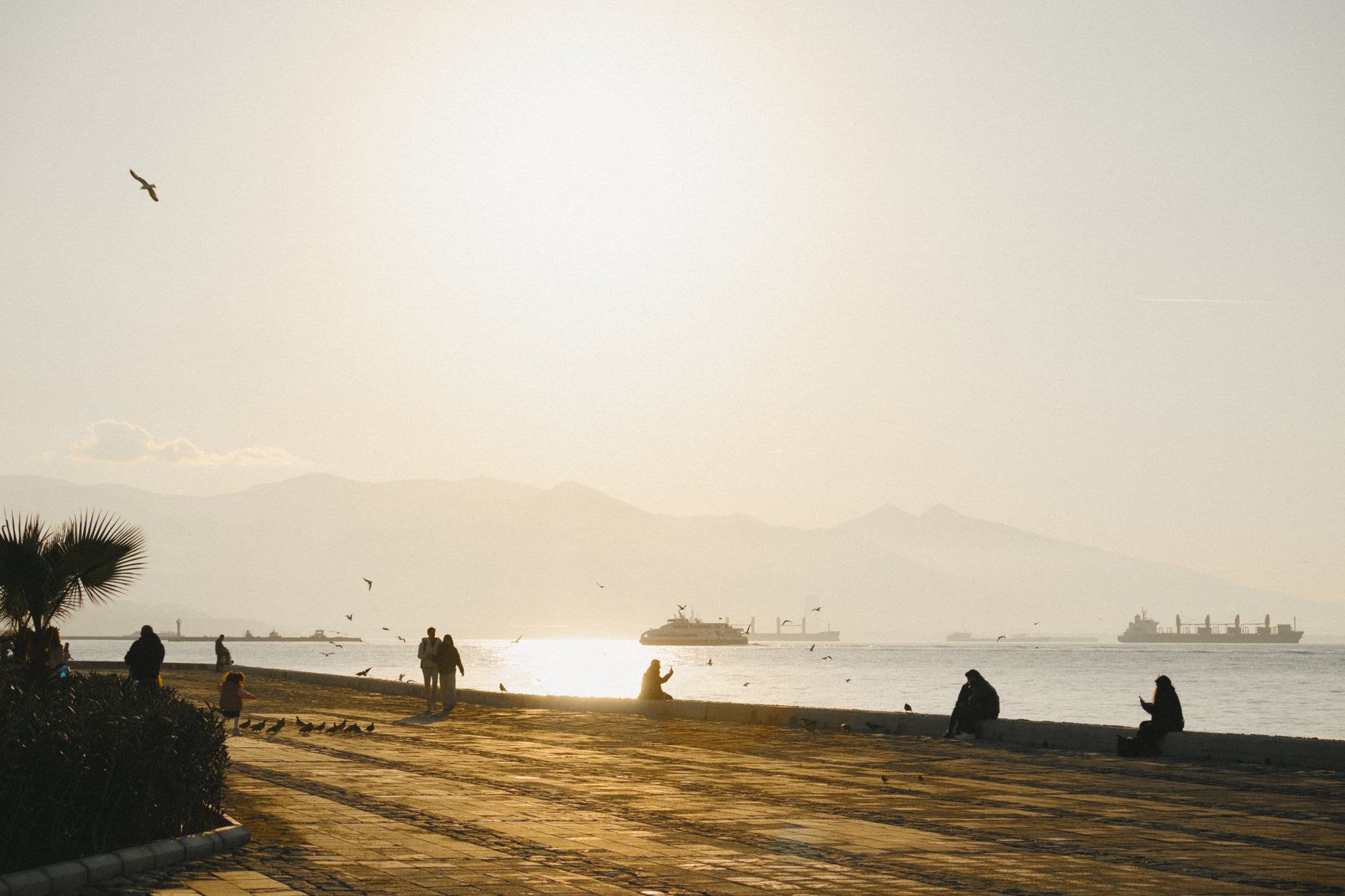
İzmir is a seaside city, and its evening heart is the Kordon — the palm-lined waterfront promenade stretching from Alsancak to Konak. After sunset the bay mirrors the city lights, joggers and couples share the path and the giant Konak Square area, with its iconic clock tower, becomes a soft-lit meeting point. The Kemeraltı Bazaar adjacent to it is quieter after dark, but its lit stone arches and historic hans make for a moody detour.
For a more local, family feel, head to Gündoğdu Square (Cumhuriyet Meydanı) in Alsancak, where the Atatürk monument faces the sea and the surrounding streets brim with cafés, pubs and dessert shops. It is well-lit, patrolled and full of people until midnight on weekends. The nearby Kıbrıs Şehitleri Caddesi is İzmir's pedestrian shopping and nightlife artery — loud, energetic and safe if you keep your wits about you in the bar-heavy side streets.
A quieter alternative is Bostanlı on the Karşıyaka side, reached by ferry, where the waterfront square and market street have a distinctly neighborhood feel. Ferries run late and the view back across the bay to İzmir's glow is one of the city's best free shows.
Timing: 20:00–00:00. İzmir is warm well into autumn, and the Kordon is at its best between 21:00 and 23:00. The İzmir metro and the ferry (vapur) are your easiest rides home; taxis line up at Gündoğdu and Konak. If you are staying in Alsancak or Konak, most of this route is walkable in one long, flat loop of about 1.5 hours.
Antalya: Kaleiçi Alleys and the Lit Harbour
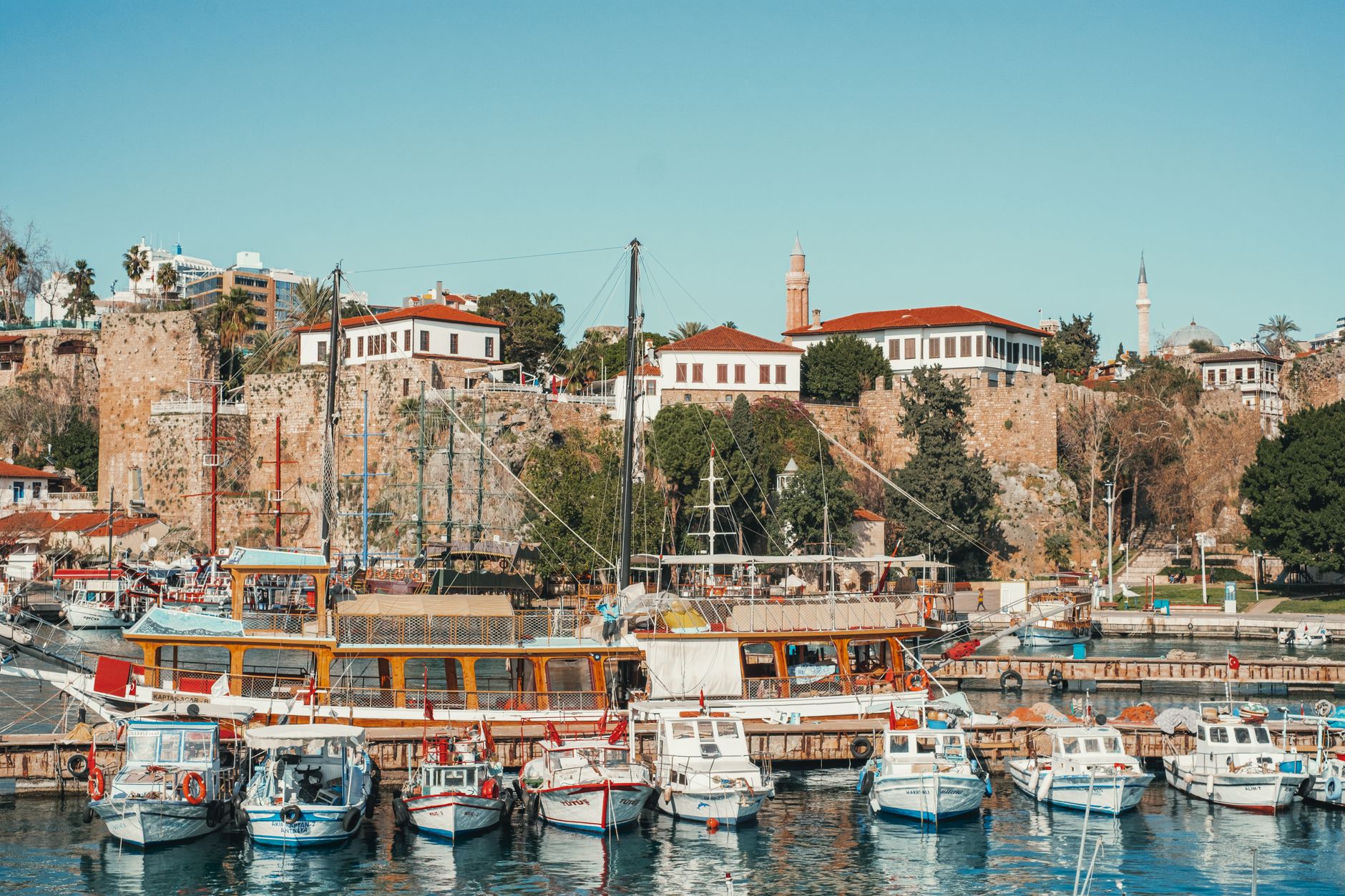
Antalya's evening charm is concentrated in Kaleiçi, the old town whose narrow streets tumble down to a Roman-era harbour. The Kaleiçi Marina is floodlit, with boats bobbing and the cliffs behind the old city glowing ochre; the Hadrian's Gate and the Yivli Minare mosque flue are beautifully uplit and make natural photo stops on a self-guided walk.
The main public square, Cumhuriyet Meydanı, sits at the top of the old town near the clock tower and is a lively, well-lit hub in the evenings, with fountains and frequent events. From there, walk down to the harbour, then along the palm-lined Konyaaltı or Lara promenades if you want a longer seaside stretch — Konyaaltı Beach Park has a lit promenade and bike path that stays active late.
Antalya is a resort city, so evening life is seasonal and stretched along the coast; the old town is the safest bet for atmosphere at any time of year. The restored Karaalioğlu Park, perched above the cliffs, offers a quieter, pleasantly lit walk with sea views and is popular with local families after dark.
Timing: 20:00–23:30 in summer; in winter, the harbour lights come on by 18:00 and things wind down earlier. The Antray tram and the nostalgic tram through Kaleiçi are handy, but the old town itself is a pedestrian maze best done on foot. Taxis and ride-hailing are abundant; agree on the fare or ensure the meter is on.
Gaziantep: Baklava Nights and Coppersmith Squares
Gaziantep, in southeastern Türkiye, is a food city first and foremost — and its evening life reflects that. The Gaziantep Castle and the surrounding Kastel area are dramatically lit at night, and the restored Bakırcılar Çarşısı (Coppersmiths' Bazaar) glows warmly through its arched passages. The historic Zincirli Bedesten and the lanes around Emine Göğüş Mutfak Müzesi make for a pleasant, compact and well-illuminated walk.
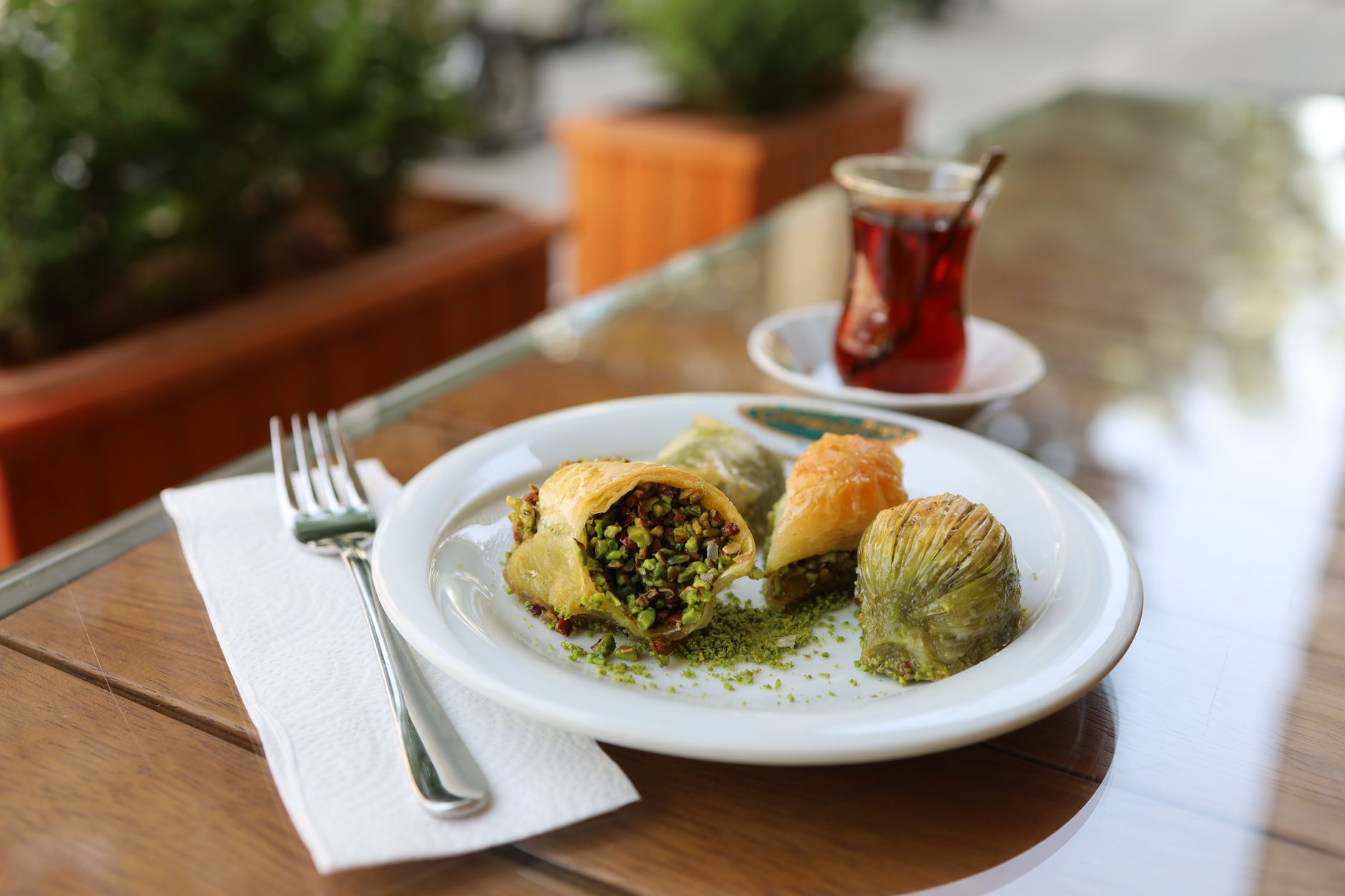
The city's social heart is the 15 Temmuz Demokrasi Meydanı and the pedestrianized streets around Atatürk Bulvarı, where families stroll, kids play and vendors sell menengiç kahvesi and fıstıklı treats. This is baklava country: the square and its surrounding cafés are where you sample pistachio baklava, künefe (Gaziantep's own version) and katmer late into the evening. Gaziantep is conservative in feel, so dress modestly and expect many venues to be family-oriented — which also makes it feel safe and welcoming.
The city is generally well-lit and has a strong café culture; the main squares are busy until around midnight on weekends, especially during Ramadan when the iftar crowds transform the streets. Note that Gaziantep is farther east and closer to the Syrian border; stick to central, well-populated areas at night, which is exactly where this route keeps you.
Timing: 20:00–23:00. The Gaziantep tram (Gaziantep Tramvayı) and frequent taxis connect the center with most hotels. English is less common than in Istanbul or Antalya, so have your hotel address written in Turkish.
Practical Advice: Timing, Safety and Getting Back to Your Hotel
Timing. In summer (June–September), the sweet spot for a square stroll is 20:30 to 23:30; sun sets late and locals eat late. Spring and autumn push the window earlier and shorter. In winter (December–February), darkness arrives by 17:30 and squares quiet down by 21:00 — go early, dress warmly, and plan a shorter loop. Friday and Saturday nights are liveliest; Sunday evenings are calmer.
Safety. Türkiye's central squares and pedestrian streets are, in my experience, among the safer-feeling public spaces in the region. Still, take normal precautions: keep bags zipped in crowded İstiklal or Kemeraltı, ignore the "friendly" man who insists on taking you to his carpet shop, and avoid unlit side alleys and isolated parks after midnight. Women traveling alone are generally fine in busy squares and on public transport; a firm "hayır, teşekkürler" (no, thank you) handles most unsolicited attention.
Getting home. Istanbul's Metro runs until roughly 00:00, and İstiklal is served by the Şişhane and Taksim stations; trams and ferries stop earlier, so check the last departure. In İzmir, the metro runs late and ferries stop around 23:00 — after that, taxi. Antalya's trams and buses wind down by 23:00–00:00; taxis are reliable and metered. In Gaziantep, trams and taxis cover the center but service ends earlier than in the big western cities. In all cities, ride-hailing apps (BiTaksi, Uber in Istanbul) work; save your hotel's name and address in Turkish, and keep the front desk's number in your phone. If you are out late, note that many hotels have night reception — call ahead if you will return after 01:00.
Where to Grab Late Çay or Something Sweet
No Turkish evening is complete without a glass of çay — tulip-shaped, strong, absurdly cheap. In Istanbul, the tea gardens under the Galata Bridge and the cafes of İstiklal keep serving late; in summer, the Pierre Loti hill café above Eyüp offers tea with a panoramic lit-city view. For dessert, nothing beats a late stop for künefe (hot cheese pastry soaked in syrup) or baklava — try the classic shops around Karaköy, Sultanahmet and, of course, Gaziantep's own famous establishments.
In İzmir, the Kordon cafes and Alsancak's dessert shops serve İzmir bomba and kumru (a hearty sandwich, oddly perfect after midnight) into the small hours. Antalya's old town is dotted with dessert cafés offering dondurma and kabak tatlısı (pumpkin dessert with tahini) — a traditional Turkish sweet worth trying. Gaziantep, self-evidently, is the place to end with fıstıklı baklava, katmer and menengiç coffee.
A few gentle etiquette notes: tea is often offered on the house; accept with a smile. Nargile (hookah) is common in some squares — check local norms, as some venues are smoke-free. Tipping is modest and appreciated. And if an evening walk turns into a second dinner of kebab, meze and ayran, that is not a detour — that is the whole point of a Turkish akşam yürüyüşü. Take your time, follow the lights, and let the square set the pace.
Thinking about a trip to Turkey?
Share your contact details and a vetted local expert will follow up with a plan built around you — free, no obligation.