

Why Turkish Menus Feel Like a Friendly Puzzle
Walk into almost any restaurant in Türkiye and you will be greeted with a warm smile and often a quick "Hoş geldiniz!" (welcome). The menu that follows can look intimidating at first—pages of unfamiliar words, a separate drinks list, maybe a handwritten sheet of daily specials. But here is the good news: Turkish menus are actually organized around a few simple families of dishes, and once you recognize them, ordering becomes a joy rather than a guessing game.
Most restaurants follow a similar rhythm: cold starters (soğuk mezeler), hot starters (sıcak mezeler), salads, grilled meats (mangal), seafood, and desserts. Knowing this structure lets you scan a menu in seconds and spot exactly what you are in the mood for. And if you get stuck, staff are famously helpful—pointing at what looks good and asking "Bu ne?" (What is this?) is perfectly normal and never rude.
This guide will walk you through the dish families, typical portion sizes, spice levels, and vegetarian options so you can order with confidence. Think of it as your pocket translator and culinary compass.
Mezeler: The Small Plates That Start Everything
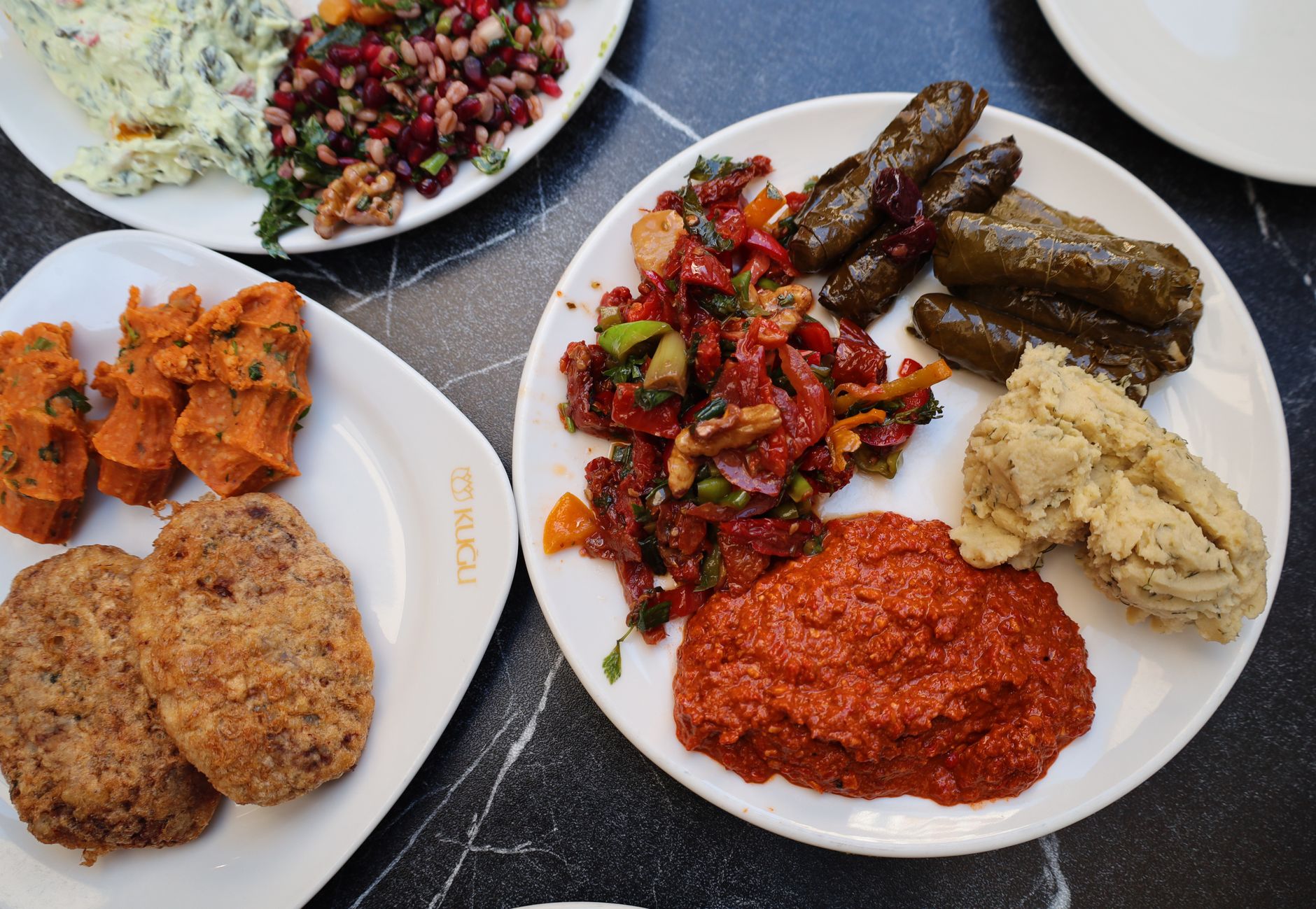
Meze are the heart of Turkish dining. These small plates arrive first, often before you have even decided on a main course. Cold mezes (soğuk mezeler) might include haydari (thick garlicky yogurt with herbs), hummus, ezme (spicy tomato and pepper dip), yaprak sarma (stuffed grape leaves), and patlıcan salatası (smoky eggplant salad). Hot mezes (sıcak mezeler) bring crispy sigara böreği (cheese cigars), kalamar tava (fried calamari), and arnavut ciğeri (Albanian-style liver).
Portions are small—usually a few bites per person—so sharing is the norm. Order two to three mezes per person if you are making a meal of them, or one or two if they are just a prelude to a main. Many restaurants display mezes on a tray so you can see them; just point and nod.
Vegetarian travelers will find meze heaven: the majority of cold mezes are meat-free, and many hot ones are vegetable-based too. Just watch out for dishes with yogurt if you are avoiding dairy, and ask about hidden anchovies in some salads.
Mangal and Ana Yemekler: The Main Event
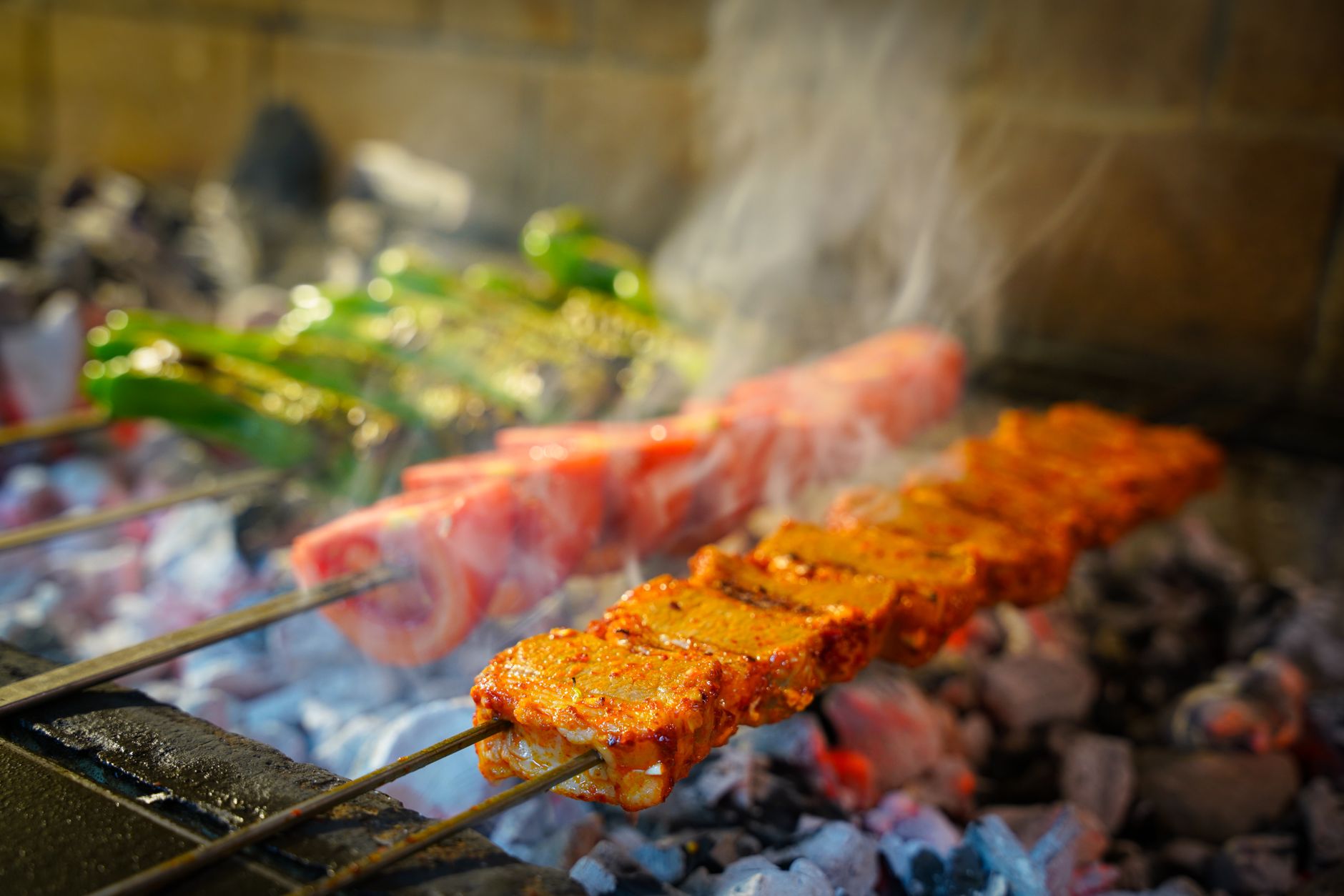
The grill—mangal—is where Türkiye's carnivorous reputation is earned. Look for headings like "Izgara" (grill), "Kebap," or "Ana Yemekler" (main courses). Common stars include şiş kebap (skewered meat), Adana kebap (spicy minced lamb), urfa kebap (mild version), döner, and köfte (meatballs). Chicken appears as tavuk şiş or tavuk kanat (wings). Portions are generous: a typical kebab plate comes with grilled vegetables, rice or bulgur pilaf, and sometimes lavash bread.
If you are dining by the coast, the seafood section (Deniz Ürünleri) will feature grilled sea bass (levrek) or sea bream (çipura) by weight—the waiter will often show you the fish before cooking. It is priced per kilogram, so ask for the price if you are watching your budget.
Vegetarians need not despair. Many grills offer sebze şiş (vegetable skewers), grilled halloumi-like cheese (hellim), and patlıcan kebap (eggplant kebab). Even a simple plate of grilled vegetables with pilaf can be a satisfying main.
Ekmek, Pilav, and the Supporting Cast
No Turkish meal is complete without bread (ekmek), which often arrives warm and free. It is perfect for scooping up meze or soaking up juices from the grill. Rice (pilav) is another staple, usually served as a side—but it can also be the star in dishes like iç pilav (rice with currants and pine nuts) or mussel rice (midye dolma).
Salads are simple and fresh: çoban salata (shepherd's salad) is chopped tomato, cucumber, onion, and parsley with olive oil and lemon. Piyaz is a white bean salad, often topped with egg and onions. These are almost always vegetarian and a great way to balance the richness of grilled meats.
If you see the word "pilav" next to a dish, it usually means the price includes rice. If you want extra, just ask for "bir pilav daha" (one more rice).
Spice Levels and How to Tame the Heat
Turkish food is not uniformly spicy, but some dishes pack a punch. Adana kebap and ezme are famously hot; urfa kebap is milder. The heat often comes from pul biber (flaky red pepper) and isot (smoky dried pepper). If you are sensitive, ask for "az acı" (a little spicy) or "acısız" (not spicy).
To cool your palate, reach for yogurt—it is served alongside many grilled dishes for exactly this reason. Ayran, a salty yogurt drink, is the classic companion. And if you accidentally bite into a whole hot pepper, a piece of bread or a spoonful of yogurt will help more than water.
Remember that "acı" means hot/spicy, while "tatlı" means sweet. So "acı mı?" (Is it spicy?) is a useful phrase to memorize.
Vegetarian and Vegan Options: More Than Just Salad
Vegetarians will eat very well in Türkiye, especially in Istanbul, Izmir, and along the Aegean coast. The key is to look for the meze section and vegetable mains. Classic dishes include imam bayıldı (eggplant stuffed with vegetables), karnıyarık (eggplant with minced meat—not vegetarian, so ask), zeytinyağlılar (vegetables cooked in olive oil, served cold), and mercimek köftesi (lentil balls).
Vegans should watch out for yogurt, butter, and cheese, which appear in many dishes. "Yoğurt var mı?" (Is there yogurt?) is a handy question. Lentil soup (mercimek çorbası) is usually vegan, as are most zeytinyağlı dishes. Beans (kuru fasulye) are often cooked with meat, so ask first.
Many restaurants are happy to adapt—grilled vegetables, rice, and salad make a reliable vegan plate. Do not hesitate to explain your needs; Turkish hospitality means staff will often go out of their way to help.
Drinks and Desserts: The Sweet Finish
Drinks are simple: water (su), ayran, tea (çay), Turkish coffee (Türk kahvesi), and refreshing sodas. Alcohol is available in many restaurants but not all, especially in more conservative areas. If you want wine, look for "şarap" on the menu; local wines are increasingly excellent.
Desserts (tatlılar) are a highlight. Baklava, künefe (hot cheese pastry), sütlaç (rice pudding), and dondurma (Turkish ice cream) are all worth saving room for. Many restaurants offer a complimentary tea or small sweet at the end—a gesture of hospitality you should accept with a smile.
If you are too full, ask for "çay" and linger. Meals in Türkiye are meant to be savored, not rushed.
Practical Tips for Ordering with Confidence
First, do not be afraid to ask for recommendations. "Ne tavsiye edersiniz?" (What do you recommend?) is a magic phrase. Staff are proud of their food and will gladly guide you. Pointing at another table's dish is also perfectly acceptable, often met with a thumbs-up.
Second, understand portion sizes. Mezes are small, mains are large, and sharing is common. If you are unsure, order a few mezes and one main to share, then add more if needed. "Az" means little, "çok" means a lot—useful for portion requests.
Third, learn a few words: "hesap" (bill), "afiyet olsun" (bon appetit), and "teşekkürler" (thank you). These small efforts are warmly received and often lead to extra treats.
Finally, embrace the experience. Turkish meals are social, leisurely, and generous. Whether you are at a humble lokanta (canteen-style restaurant) or a fancy ocakbaşı (grill house), the goal is the same: good food shared with good company. So relax, order another meze, and enjoy the feast.
Thinking about a trip to Turkey?
Share your contact details and a vetted local expert will follow up with a plan built around you — free, no obligation.