

Why a Village Guesthouse Belongs on Your Türkiye Itinerary
Türkiye has no shortage of grand hotels and restored Ottoman mansions, but some of the country's most memorable nights are spent in a stone house in a village of forty families, eating a dinner that was picked from the garden six hours earlier. Rural guesthouse networks — many of them initiated by women's cooperatives, district municipalities, and development agencies — have quietly turned empty village houses into bookable rooms, and turned grandmothers' kitchens into small businesses.
The model differs from classic Airbnb in important ways. Stays are usually registered with a cooperative that sets basic standards, trains hosts in hygiene and hospitality, and handles bookings and payments. Guests get a real home rather than a stylised one, and hosts get roughly the full room rate rather than a slice of it. Because the cooperative is local, the money stays in a district where the nearest bank branch may be twenty kilometres away.
For travellers, this is also the easiest way to eat well in rural Türkiye without relying on highwayside restaurants. Dinner is included, or offered for a modest fee, and it is almost always the best meal of the day. The pages in our guides section cover regional logistics, but this article focuses on how the guesthouse system works, where to look, what you will eat, and how to behave so that your visit is welcome rather than tolerated.
The Cooperatives and Platforms That Make Village Stays Bookable
Most rural stays in Türkiye are not on the global booking giants, and that is a feature rather than a bug. The backbone is a patchwork of women's cooperatives (kadın kooperatifleri), village development associations, and provincial tourism offices. Many of them are networked under national umbrellas that promote women's cooperatives, and a growing number of district-level projects list rooms, set prices, and take reservations by phone, WhatsApp, or a simple online form.
The most reliable starting point is the cooperative itself. Search for the district name plus kadın kooperatifi konaklama (women's cooperative accommodation), or ask at the local municipality's culture and tourism desk. Provincial tourism directorates often keep lists of registered village guesthouses, and in regions like the Black Sea highlands or the Taurus mountains, the local development agency (kalkınma ajansı) may have an English-language page listing participating villages.
Several platforms now aggregate these small properties. Some are cooperative-run portals that group stays by region; others are village-tourism marketplaces where you can filter by whether dinner is included and whether the host speaks English. Specialised Turkish travel platforms and the booking arms of cooperatives tend to be more reliable than general listing sites, because they verify that the property is actually registered and that someone answers the phone. When in doubt, use our travel tools to keep reservation details, contacts, and offline notes in one place.
Two practical cautions. First, many listings are seasonal — highland villages in the Black Sea open from late spring to early autumn, while Aegean and Mediterranean villages stay open longer. Second, a listing is not a guarantee: confirm by messaging the host directly, in Turkish if possible, and reconfirm a day or two before arrival. Rural phone numbers change, and a host may be in the fields.
Where to Find These Stays Across Türkiye
The strongest networks have taken root in a handful of regions. In the Black Sea highlands above Trabzon, Rize, and Artvin, restored wooden houses and stone serander granaries have become guest rooms, and hosts often lead walks through tea terraces and beech forests. In the Taurus Mountains behind Antalya and Mersin, yayla (highland pasture) villages offer cool summer nights and a cuisine built on wild greens, bulgur, and goat's milk.
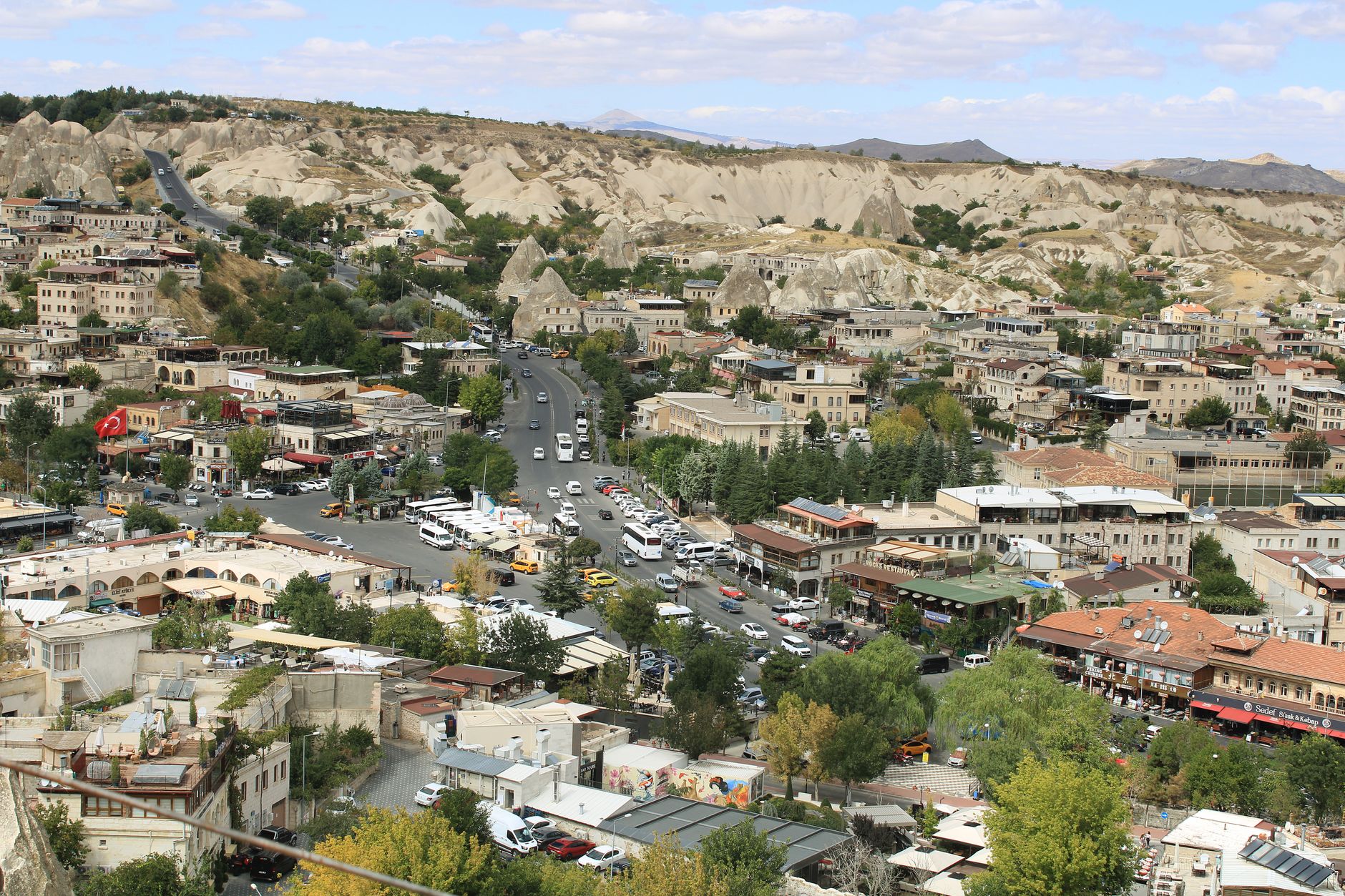
Cappadocia gets the crowds, but the villages just beyond the hot-air balloon corridor — in valleys around Ürgüp, Mustafapaşa, and the Soğanlı area — have quieter guesthouses run by families whose grandparents carved the same rock. In the Aegean hinterland, villages between İzmir and Muğla combine olive oil, herbs, and stone architecture, and several cooperatives there specifically train and employ women as hosts.
In the east and southeast, community tourism is newer but growing: restored village houses near Mardin, Gaziantep's food villages, and homestays around Van and Kars that focus on pastoral life and local cheese. These are the places where a guesthouse dinner can genuinely be the only restaurant in town. When you are choosing where to base yourself, cross-check our destinations pages and regional routes to see how a village stay can slot into a bigger loop.
What Dinner Actually Looks Like: A Typical Evening at a Village Guesthouse
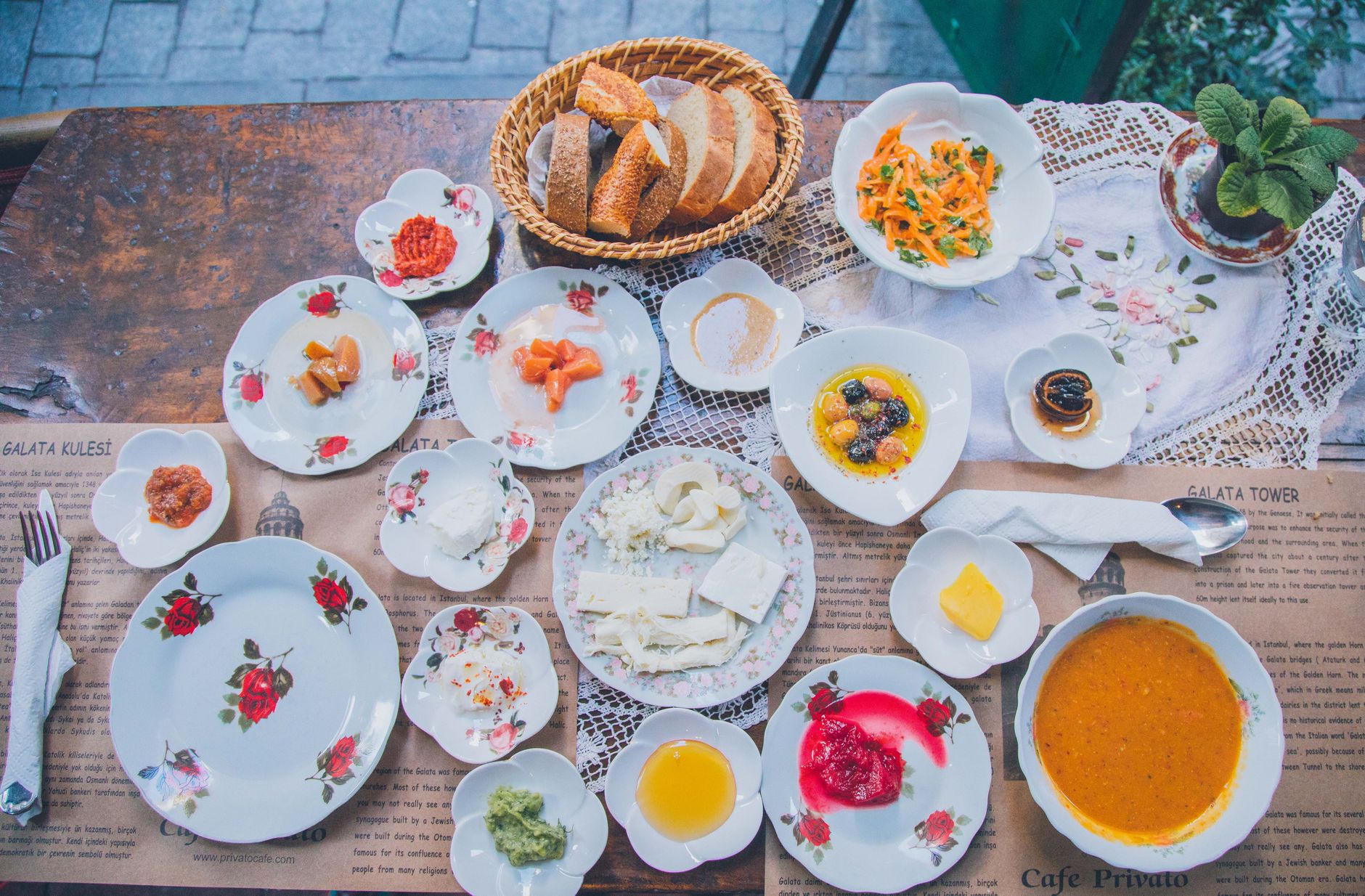
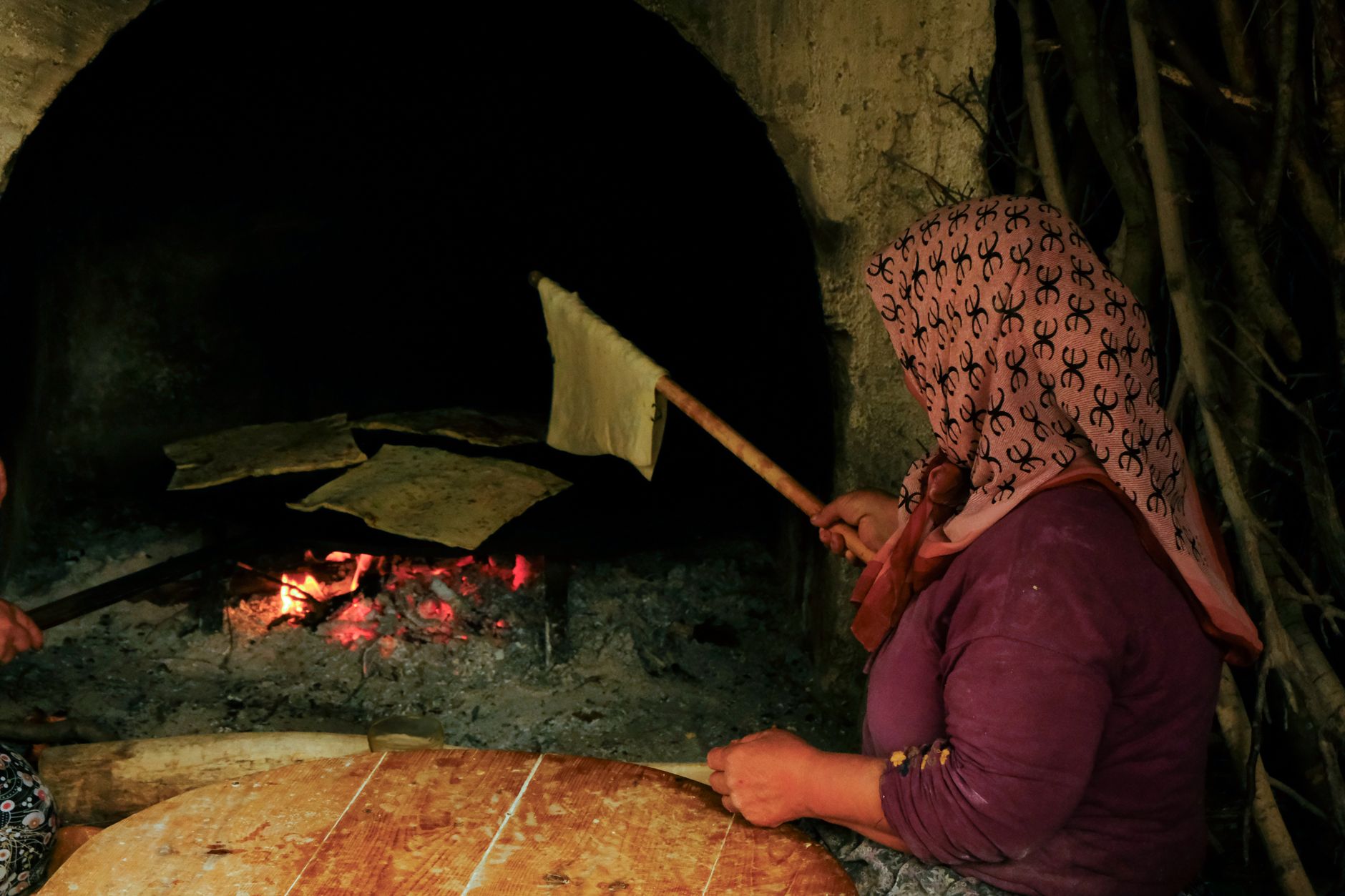
The evening meal is the heart of the experience, and it follows a rhythm that will feel familiar across most of Anatolia. You will be called to the table around dusk, usually into the main room, a covered terrace, or a sofra laid on a low table. Before anyone sits, the host will bring out a jug of ayran or sour cherry juice, a basket of bread — often baked that morning in the village tandır or sent from a neighbour — and a series of small plates that appear and disappear without ceremony.
Expect four to six dishes rather than a formal menu: a soup such as tarhana or yogurt-and-mint çorbası; a bulgur pilaf with tomato and pepper; a bean or chickpea stew slow-cooked with olive oil; a plate of wild greens gathered that day, dressed with lemon and crushed garlic; and something from the dairy — fresh white cheese, çökelek, or thick village yogurt. If the family keeps chickens, there may be eggs with herbs; if it is autumn, there may be stuffed vine leaves, dolma, or a tray of börek made from thin yufka.
Meat appears less often than first-time visitors expect. Rural households eat seasonally, and a chicken or lamb dish is reserved for guests, weddings, or the feast after a harvest. If you are served meat, it is a genuine compliment. Dessert is usually fruit from the orchard, a spoon sweet, or a simple milk pudding. Tea arrives in tulip glasses, then more tea, and the conversation continues long after the plates are cleared — this is the part of the evening you cannot book anywhere else.
Dietary needs are best raised when you book, not at the table. Turkish village kitchens are flexible about vegetarian food but unfamiliar with vegan, gluten-free, or nut-allergy protocols; explain clearly and simply, and consider carrying a translated card. If a host offers rakı or homemade wine, it is fine to decline politely — many village households in conservative regions do not drink at all.
How Booking a Village Stay Spreads Income to Small Communities
The economic argument for these stays is straightforward, and it is worth understanding before you book. A village guesthouse typically employs the host family, buys vegetables and dairy from neighbours, hires local women to clean and cook, and commissions bread from the village oven. A cooperative layer adds training, marketing, and a small administrative fee, but the bulk of what you pay stays within a few kilometres of the bed you sleep in.
Compare that with a resort on the coast: the money flows to a city-based company and an international booking platform, and the village nearby may see surprisingly little of it. Rural tourism also creates an incentive to maintain old houses and terraces rather than abandon them for city work, which is why so many guesthouses are restored stone or timber buildings rather than new construction.
Women-run homestays have an additional effect. In many villages, women have limited access to paid work outside the home; hosting turns skills they already have — cooking, gardening, textile work, childcare — into income they control. Several cooperatives report that hosting has given women their first independent bank account. That is a quiet revolution, and it is funded by travellers who choose a farmhouse table over a hotel breakfast buffet.
You can amplify the effect by buying directly: honey, cheese, walnuts, woven cloth, or a jar of the jam you had at breakfast. Ask your host where to buy it, and pay in cash in Turkish lira. A modest purchase often matters more than a tip.
How to Be a Considerate Guest in a Turkish Village
Village hospitality in Türkiye is genuine and often overwhelming — the best room, the extra helping, the insistence that you take the jar of honey home. Receiving it well means respecting a few unwritten rules. Dress modestly, especially in conservative regions; cover shoulders and knees, and remove your shoes at the door without being asked. Accept tea the first time it is offered, even if you only sip it, and do not refuse food outright — take a small portion and praise it.
Learn a handful of Turkish phrases. Teşekkür ederim (thank you), çok lezzetli (very delicious), and elinize sağlık — literally "health to your hands", the standard compliment to a cook — will do more for your welcome than fluent conversation. Ask before photographing people, especially women and children, and never photograph the inside of a home without permission.
Respect the household's rhythms. Dinner is early, mornings start early, and the household may be busy with animals or fields. Do not treat the kitchen as a hotel buffet, and do not ask for a late breakfast without checking. If children want to practise English, enjoy it; if a host offers to take you to a neighbour's house or a village wedding, accept with care and follow their lead on appropriate behaviour.
Finally, be honest about your expectations in reviews and messages. These are family homes, not boutique hotels: the water may be hot only at certain hours, the wifi may be weak, and the nearest ATM may be in the district town. Bring cash, a small gift from your home country (chocolate, coffee, a postcard book), and patience. For safety nets and emergency contacts, see our trust and safety notes, and if you want help building a village-based route around your dates, our trip planner and local experts can connect you with registered cooperatives rather than unverified listings.
Planning Your Stay: Season, Length, and Logistics
Two nights is the minimum for a village stay to feel like more than a photo stop; three nights lets you join a village walk, help with a harvest, or visit a neighbour's workshop. Check our best-time guide for regional seasons: highland villages are best from June to September, while Aegean and Mediterranean villages are pleasant in spring and autumn.
Transport is the main constraint. Many villages are reachable by minibus (dolmuş) from a district town, but the last service may leave in the early afternoon, and some hosts will pick you up for a small fee. A rental car gives flexibility but can be a liability on narrow village lanes — always ask your host where to park. Build in buffer time, and keep your host's phone number written down as well as saved.
Pay in cash where possible, confirm whether dinner and breakfast are included, and clarify the price per person rather than per room. A short, polite message before arrival — in Turkish if you can manage it, or through the cooperative — sets the tone for everything that follows. Do that, and you will leave with a full stomach, a new phone contact, and the sense that your holiday money did something useful.
Thinking about a trip to Turkey?
Share your contact details and a vetted local expert will follow up with a plan built around you — free, no obligation.