

Why the Lycian Sahil Towns Feel Like a Warm Welcome
The Lycian coast, stretching from Fethiye eastward to Antalya, is dotted with small sahil towns — Turkish for 'coast' — that trade the buzz of larger resorts for something gentler: stone lanes, bougainvillea, and the clink of tea glasses carried on a tray. Kaş and Kalkan are the best-known of these, but the rhythm they share spills into the blue-voyage villages between them, where a harbour is often just a few wooden gulets moored to a stone quay.
What makes these towns so appealing is their walkability. You can arrive by bus, drop your bag at a family-run pension, and spend a week without once needing a car. Distances are short — Kaş harbour to the nearest swimming platform is a five-minute stroll; Kalkan's old quarter tumbles down to the water in a maze of stepped alleys you'll learn in an afternoon.
And everywhere, the hospitality is the point. A çay (tea) appears before you've finished asking for directions. A pension owner remembers how you take your coffee. Fishermen mending nets will point you to the best mezze on the strip. This is the Turkish welcome at its most unhurried, and on the Lycian coast it comes with a view of mountains dropping straight into the sea.
Kaş: The Lively, Laid-Back Harbour Town
Kaş sits on a peninsula about 190 km east of Fethiye and roughly 180 km west of Antalya, making it a comfortable stop on the coastal highway. The town wraps around a small, curved harbour where fishing boats bob beside dive vessels — Kaş is one of Türkiye's top scuba centres, thanks to clear water and sites like the submerged ruins and the nearby canyon dives.
The centre is compact and flat along the waterfront, then rises in narrow streets behind. One of its charms is the ancient theatre carved into the hillside just above town, free to enter and best at sunset. A short walk east brings you to Küçük Çakıl, a pebble beach with sunbeds and a beach club or two, and a little further on, Büyük Çakıl, which is sandier and calmer for swimming.
For day trips, the Greek island of Meis (Kastellorizo) lies just 2 km offshore — a passenger boat crosses in about 20 minutes when the service runs, making it an easy passport stamp and a lovely half-day. Inland, the mountain village of Gökçeören and the ruins at Phellos reward those who rent a scooter or join a small tour.
Dining is a joy. The harbour-front restaurants serve the day's catch grilled simply, but the real finds are a street or two back, where family kitchens turn out mantı, stuffed courgette flowers and smoky aubergine. Look for the Tuesday market, a genuine local affair with produce, olives, cheese and cheap textiles — a perfect place to assemble a picnic for a boat day.
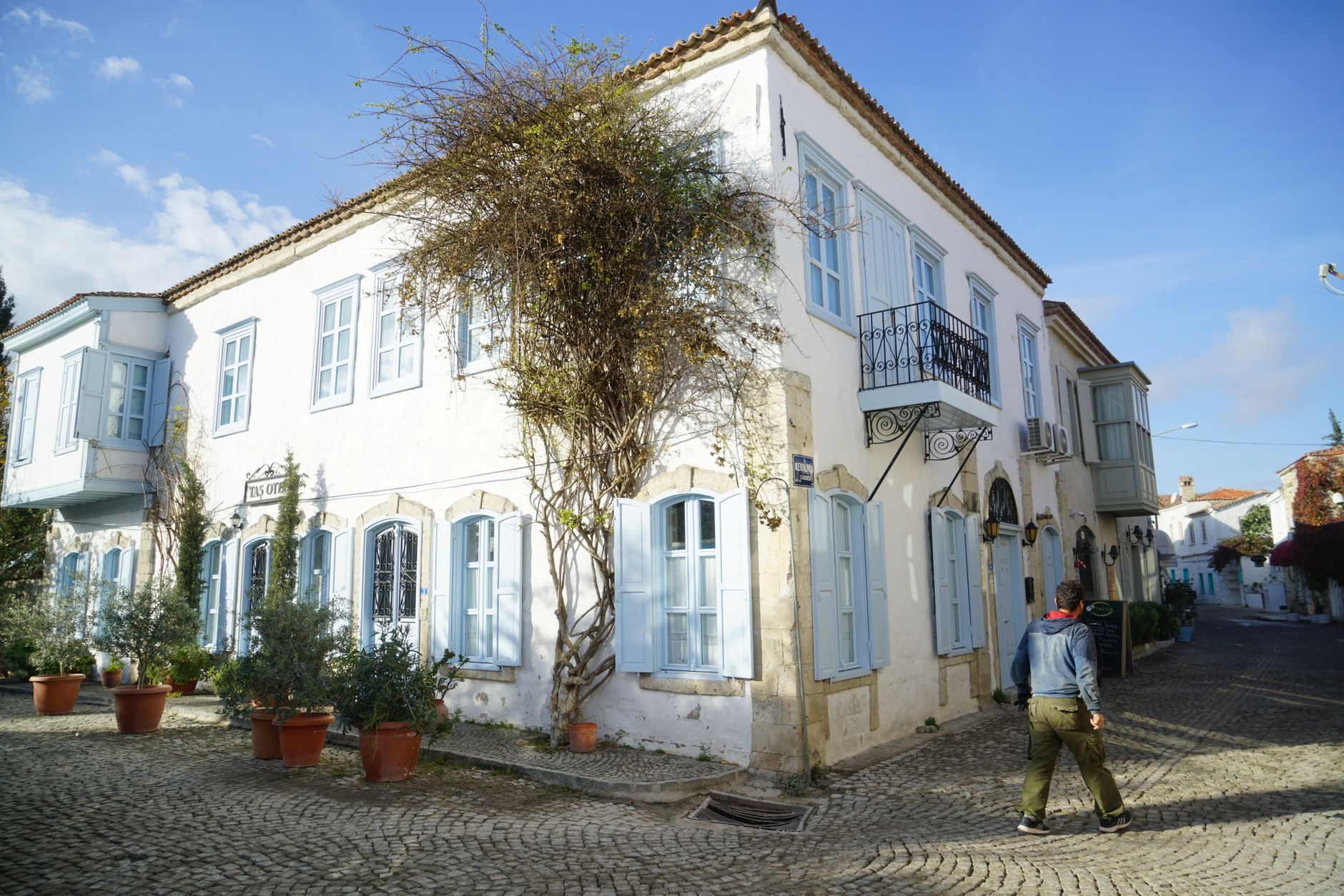
Kalkan: Whitewashed Lanes and a Bougainvillea Harbour
About 27 km west of Kaş along a spectacular cliff-hugging road, Kalkan is smaller and, if anything, even more photogenic. Its old town is a protected area of whitewashed houses with wooden balconies, cascading down to a tiny harbour ringed by rooftop restaurants. The effect at dusk, when the lanterns come on and the sea turns to ink, is unforgettable.
Kalkan is built on a slope, so expect steps — but that's part of its charm. The harbour is the social heart: in the morning it's fishermen and dive boats; by evening it's diners gazing at the bay. Just west, Kalkan Beach Club offers a pebble cove with a restaurant and sunloungers, reachable on foot via a signed path in about 15 minutes from the old town.
For swimming, most visitors take a short dolmuş (minibus) or taxi to Kaputaş Beach, about 7 km east, a dramatically beautiful gorge-mouth beach of pale pebbles and turquoise water. It's famous and can get crowded in high summer, so go early. Closer to town, Palm Beach and Kalamar Bay are quieter alternatives with beach clubs.
Kalkan's dining scene leans upmarket — rooftop terraces serving seafood and Anatolian classics — but you'll still find honest, inexpensive lokantas on the back streets and a couple of traditional tea gardens where locals play backgammon under vines. The town is a member of the Cittaslow network, a nod to its commitment to preserving local character, which shows in its small shops and lack of high-rise development.
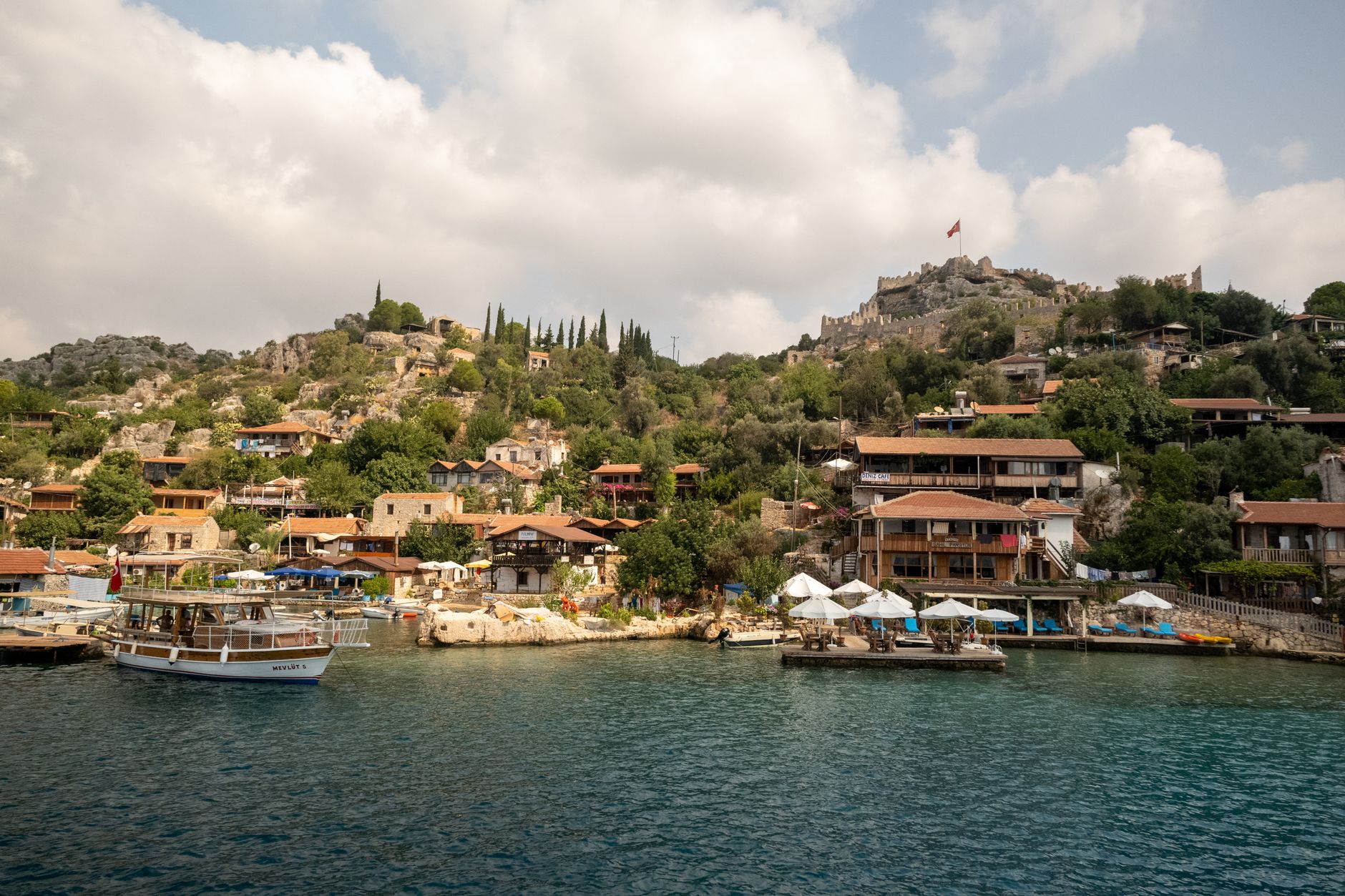
Blue Voyage Villages: Üçağız, Simena and the Sunken City
The stretch of coast between Kaş and Kalkan, and around the Kekova region, is where the blue voyage (mavi yolculuk) — the classic Turkish gulet cruise — feels most magical. The village of Üçağız (ancient Teimiussa) is a tiny hamlet on the edge of Kekova Sound, with a few pensions, a couple of fish restaurants and a sheltered harbour. It's about 35 km from Kaş by road, and many travellers base here for a night to escape the busier towns.
From Üçağız, boats glide over the sunken city of Kekova, where ancient foundations and stairways lie just beneath the surface — swimming and diving are prohibited over the ruins, but viewing from a boat is allowed and unforgettable. Across the water, the village of Kaleköy (Simena) is reachable only by boat or a steep footpath, and is crowned by a small Lycian castle with a theatre and sweeping views. Its tea garden by the shore is the very picture of a coastal welcome.
Other blue-voyage villages worth knowing: Çayağzı (Andriake), the harbour for the ancient city of Myra and its rock-cut tombs near Demre, about 45 km east of Kaş; and Gökkaya Bay, a popular gulet anchorage with calm water. Many travellers join a day boat from Kaş or Kalkan to Kekova, or book a multi-day gulet route between Fethiye and Olympos that threads through these same coves.
The beauty of a blue voyage is its pace: mornings swim, afternoons nap under the awning, evenings moor at a village where the only sound is water against the hull. Even a single day trip gives you a taste of that slower rhythm.
Family-Run Pensions and the Art of Turkish Hospitality
One of the great pleasures of the Lycian coast is staying in a family-run pension (pansiyon) rather than a large hotel. These small guesthouses — often a converted village house with a garden — are where Turkish hospitality shines. Your host may bring breakfast of tomatoes, cucumbers, olives, cheese, eggs and endless tea; they'll advise on boat times, lend you a beach towel, and sometimes invite you to a family barbecue.
Rates are gentle, especially in shoulder season: a simple double with breakfast might cost a fraction of a boutique hotel, and the experience is far warmer. In Kaş, look for pensions tucked into the streets behind the harbour; in Kalkan, many are in the old town or along the Kalamar road; in Üçağız, a handful of small guesthouses sit right by the water.
Booking directly — by phone, email or a quick message — is common and often gets you a better rate and a more personal welcome. English is widely spoken in the tourist towns, but a few words of Turkish (merhaba for hello, teşekkürler for thanks) go a long way and are always appreciated.
Breakfast, incidentally, is a highlight: the Turkish kahvaltı spread is a leisurely affair, and many pensions serve it on a terrace with a sea view. Don't rush it — this is the coast's way of easing you into the day.
Tea Gardens, Harbour Dining and Everyday Pleasures
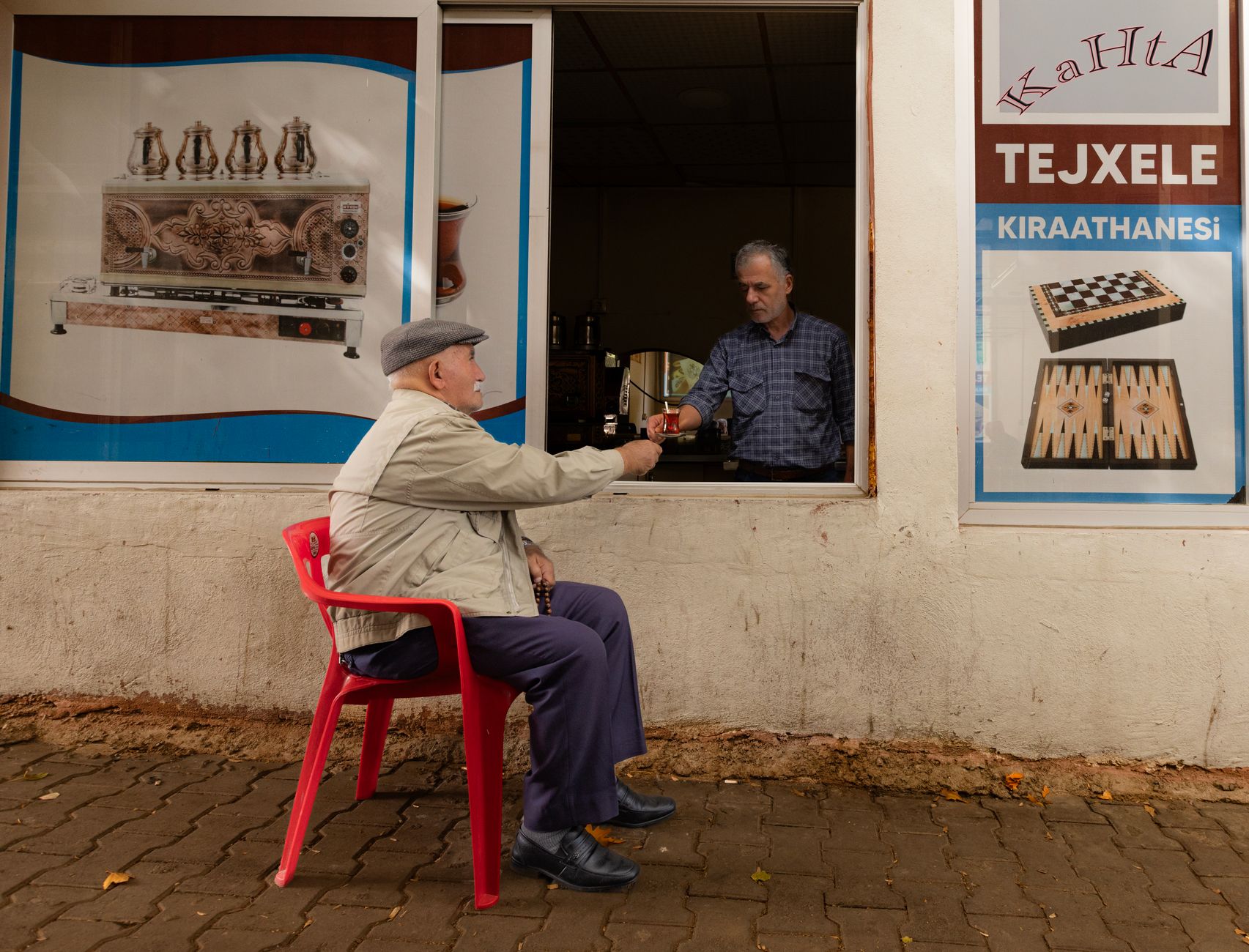
The tea garden (çay bahçesi) is a Lycian institution. Shaded by trees or vines, furnished with low tables and small stools, it's where locals gather to sip tea, play cards or backgammon, and watch the world go by. In Kaş, you'll find them near the harbour and along the seafront; in Kalkan, a few cling to the hillside; in the villages, they're often the only commercial spot in town.
Harbour-front dining is equally central. The formula is simple: choose your fish from the display, agree the price, and let them grill it with olive oil, lemon and herbs. Mezze — small plates of hummus, haydari, stuffed vine leaves, octopus salad — precede the main event, and a glass of rakı or local wine completes the picture. In Kaş, the harbour strip is lively but touristy; wandering one lane inland often yields better value and more local colour.
Beyond the table, everyday pleasures abound: swimming off rocks or a town beach before breakfast, browsing a market for honey and olives, renting a kayak to paddle over the sunken city at Kekova, or simply walking the coast path between coves. The Lycian Way, Türkiye's long-distance trekking route, passes near Kaş and Üçağız, offering day-hike options with big views.
And of course, there's the tea itself: served in tulip-shaped glasses, strong and dark, with sugar cubes on the side. Accepting a glass is the easiest way to say yes to this coast's hospitality.
When to Go, Getting There and Getting Around
The Lycian coast has a long season, but the sweet spots are spring (April–June) and autumn (September–October). In shoulder season the sea is still warm, the light is golden, the crowds thin, and prices soften. July and August are hot and busy — lovely for swimming, but expect fuller harbours and higher rates. Winters are mild and quiet, with many businesses closed in the smaller villages but Kaş and Kalkan remaining open.
Getting there: The nearest airports are Dalaman (DLM), about 2.5 hours by road from Kalkan and 3 hours from Kaş, and Antalya (AYT), roughly 3 hours from Kaş and 4 from Kalkan. Buses and shared shuttles run frequently in season; car hire is easy if you want to explore at will. The coastal road between Kaş and Kalkan is one of Türkiye's most scenic drives, so allow time for photo stops.
Getting around: Within Kaş and Kalkan, you walk. Between towns, dolmuşes (minibuses) and buses are inexpensive and regular. To reach Üçağız and Kekova, take a dolmuş from Kaş or join a boat trip; from Kalkan, boats and tours run to Kekova and Kaputaş. For the blue voyage, book a gulet from Kaş, Kalkan or Fethiye — most trips include meals, swimming stops and a night or two at anchor.
Distances are modest: Kaş to Kalkan is about 27 km (30–40 minutes by car), Kaş to Üçağız about 35 km, Kalkan to Kaputaş about 7 km. That compactness is exactly what makes this coast so walkable and so easy to love — you can see a great deal without ever feeling rushed.
Thinking about a trip to Turkey?
Share your contact details and a vetted local expert will follow up with a plan built around you — free, no obligation.