

The Heart of Anatolian Hospitality: Women-Led Breakfast Tables
Imagine waking up in a village where the morning air smells of woodsmoke and simmering milk. A woman named Ayşe greets you at the gate of a stone house, her hands still dusted with flour from the morning's bread. She leads you to a table already crowded with small bowls: glistening jams in shades of ruby and amber, white cheese in brine, black olives, honeycomb dripping gold, and a dozen other delicacies you cannot yet name. This is not a restaurant. It is a village breakfast cooperative, and you are an honored guest.
Across Türkiye, from the Aegean hills to the Black Sea highlands and the vast plains of Central Anatolia, women have turned their home kitchens into small, proud enterprises. They bake, preserve, pickle, and churn. They set long tables under grapevines or in sunny courtyards. And they welcome travelers with a generosity that is both ancient and thrillingly modern—because every jar of jam is also a small act of economic independence.
These cooperatives and women-run food projects are among the most joyful experiences a traveler can have in Türkiye. They are not staged performances. They are real village life, shared over endless cups of tea. This guide will help you find them, visit respectfully, and understand why your breakfast matters far beyond the plate.
What Exactly Is a Village Breakfast Co-Op?
A köy kahvaltısı (village breakfast) is a beloved Turkish tradition: a spread of small plates, mostly homemade, eaten slowly with family and friends. In recent decades, women in rural areas have organized themselves into cooperatives (kooperatif) or informal collectives to offer this breakfast to visitors. The model varies. Some are official cooperatives with a shared kitchen and a sign by the road. Others are groups of neighbors who take turns hosting in their own homes. Some are attached to a local development project or a women's union.
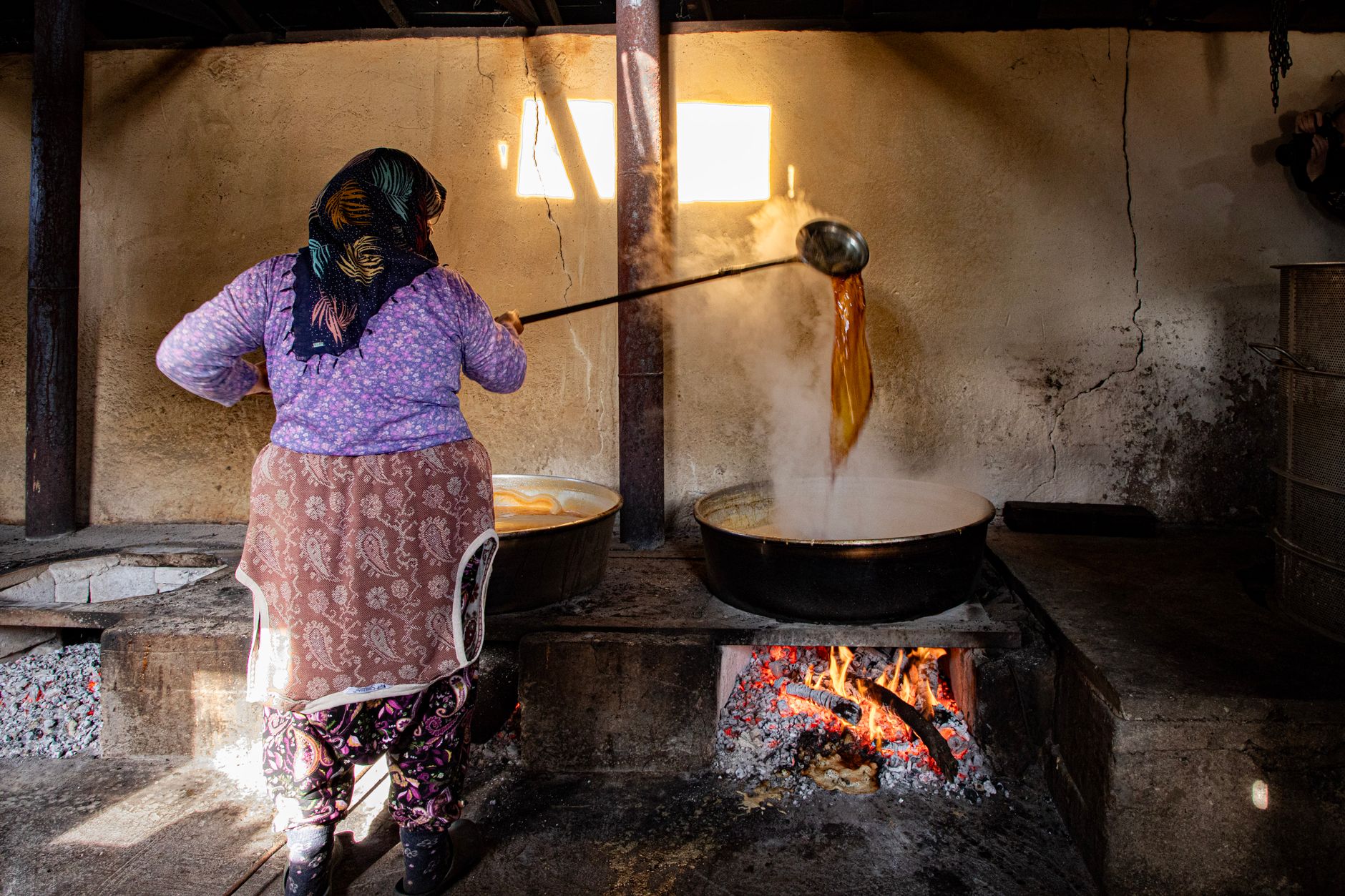
What they share is a philosophy: everything on the table comes from the village. The cheese is from the family's sheep or cows. The jams are made from fruit picked in the garden—sour cherry, fig, quince, rose, eggplant, even green walnut. The bread is baked in a wood-fired tandır or stone oven. The butter is churned by hand. The eggs are from hens scratching in the yard. The honey is from hives on the hillside. Even the tea leaves are brewed strong and served in tulip-shaped glasses, endlessly refilled.
For the women, the cooperative is more than a business. It is a way to earn their own income, preserve culinary heritage, and meet people from around the world without leaving their village. Many will tell you that before the co-op, they rarely spoke to strangers. Now they host guests from Japan, Germany, and Argentina—and they teach them how to fold yufka or identify wild herbs.
Where to Find These Magical Breakfasts
Women-run breakfast projects exist all over Türkiye, but some regions are especially rich. In the Aegean, look around the villages of the Bodrum peninsula, Datça, and the foothills of Mount Ida (Kaz Dağı). In the Black Sea, the highland villages above Trabzon and Rize are famous for their morning tables, often featuring cornbread, kuymak (a gooey cornmeal and cheese dish), and wild berry jams. Central Anatolia—Cappadocia's surrounding villages, the area around Konya, and the Phrygian valleys—has many co-ops supported by local municipalities and NGOs.
The eastern provinces are less visited but extraordinarily rewarding. In Kars, women's cooperatives produce aged kasseri cheese and honey from high meadows. In Mardin and Şanlıurfa, you may find breakfasts with spicy çiğ köfte, dried eggplant, and pistachio spreads. Along the Lycian Way, several pension owners have partnered with village women to offer breakfast to hikers. And near İzmir, the villages of Şirince and Birgi have well-established women's food collectives.
How do you find them? Start with local tourism offices, but also ask at your hotel or pension—many owners know the best co-ops personally. Websites like local municipal tourism portals and the Turkish Women's Union (Türk Kadınlar Birliği) sometimes list projects. Social media is surprisingly effective: search hashtags like #köykahvaltısı or #kadınkooperatifi. Word of mouth remains the most powerful tool. If a village woman invites you to breakfast, say yes.
How to Visit Respectfully: A Traveler's Etiquette
Visiting a women-run breakfast co-op is not like walking into a café. You are entering a home and a community. The first rule is to call ahead or arrive with a local introduction if possible. Many co-ops need time to prepare; they may not have a website, but a phone call through your hotel or a local guide works wonders. If you arrive unannounced, be gracious if they cannot host you—and ask when you might return.
Dress modestly, especially in conservative rural areas. This means covering shoulders and knees, and for women, perhaps carrying a light scarf. Remove your shoes when entering a home. Greet everyone with a smile and a warm merhaba or günaydın (good morning). Accept the tea—always. Refusing food or drink can be seen as a gentle rejection of hospitality. If you have dietary restrictions, explain them kindly and early, and do not expect a separate menu; the spread is fixed, but there is usually something for everyone.
Ask before taking photographs, especially of people. Many women are happy to be photographed, but some prefer not to. A simple fotoğraf çekebilir miyim? (May I take a photo?) shows respect. Do not treat the breakfast as a petting zoo of rural life. Engage in conversation. Ask about the jam, the cheese, the village. Share something of yourself. The women are often as curious about you as you are about them.
"Misafir, Tanrı'nın misafiridir," goes a Turkish saying: "A guest is God's guest." You are not a customer first; you are a guest. Act accordingly, and you will be treated like family.
What to Expect on the Table—and What to Pay
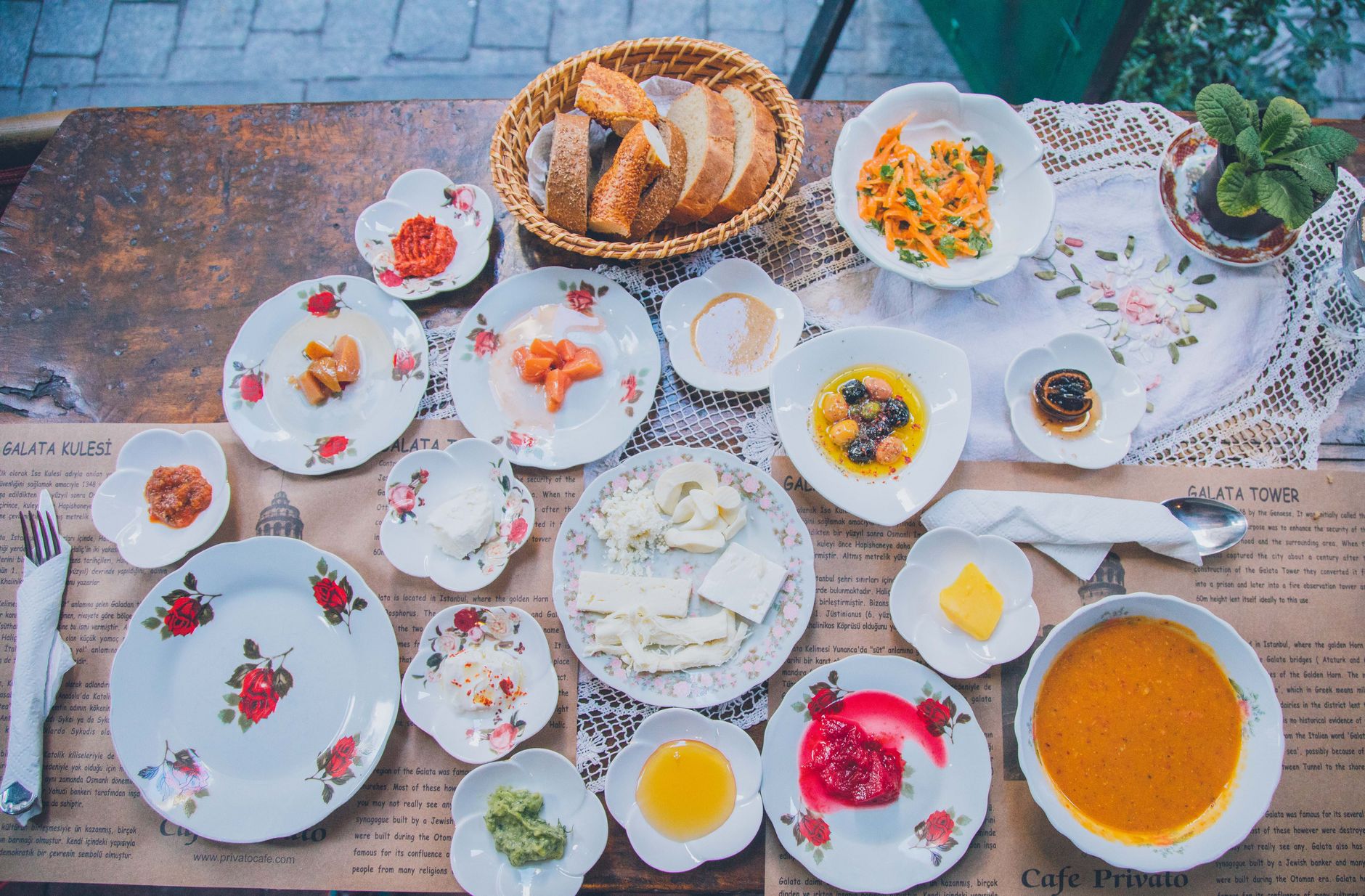
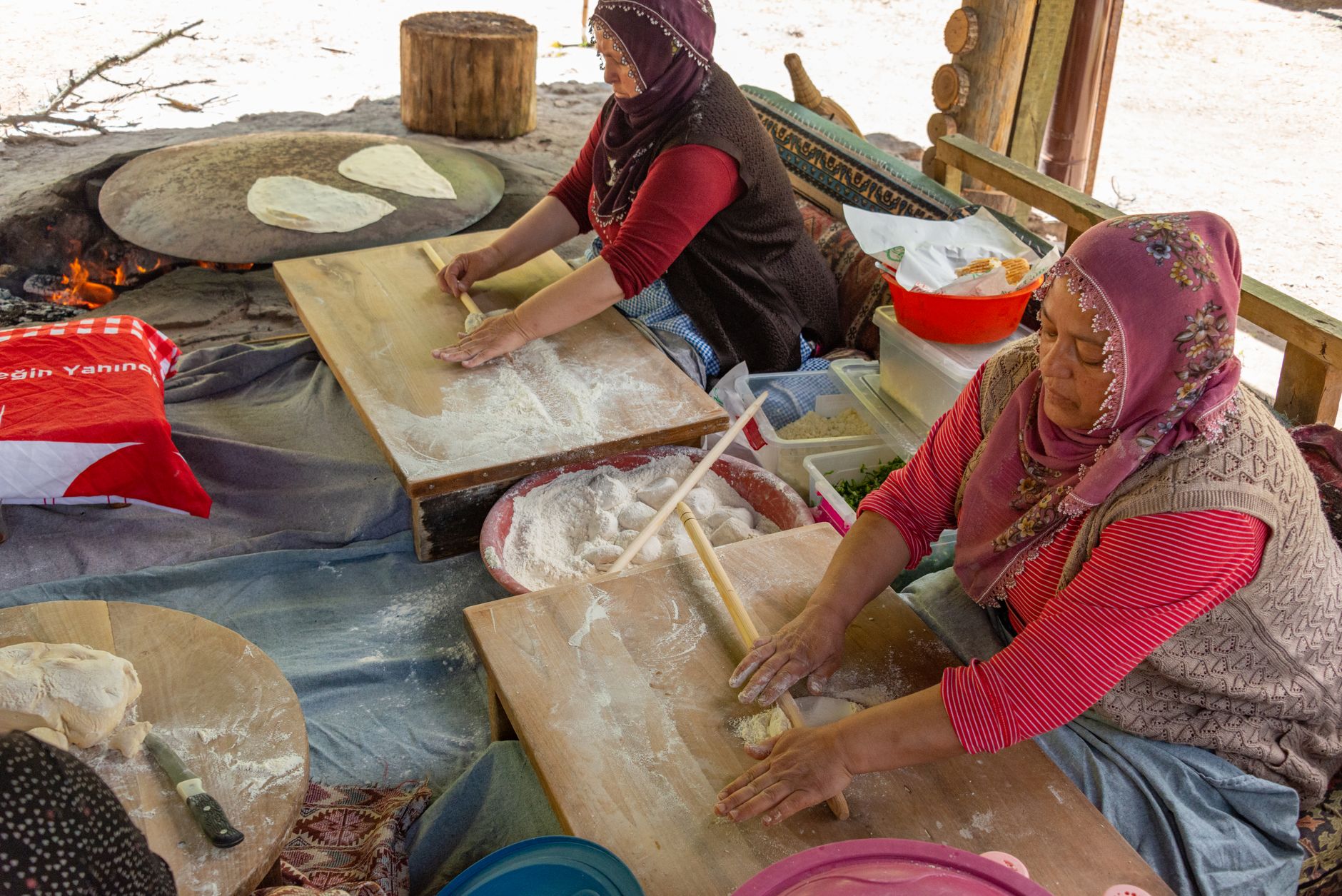
The breakfast spread is typically enormous, and it is considered rude to leave hungry. Expect at least ten small plates, often more. There will be several kinds of cheese: beyaz peynir (white cheese), perhaps çeçil (string cheese), and a local aged variety. Olives, both green and black, often cured with lemon or herbs. Jams and marmalades, sometimes a dozen kinds—sour cherry, fig, apricot, rose, pumpkin, green walnut, and unusual ones like eggplant or tomato. Honey, usually with kaymak (clotted cream). Butter, eggs cooked with sucuk (spicy sausage) or plain. Bread, often homemade, and sometimes gözleme (stuffed flatbread) or simit. Fresh vegetables like tomatoes, cucumbers, and peppers. And always, endless tea.
Some tables include hot dishes: menemen (scrambled eggs with tomatoes and peppers), kuymak in the Black Sea region, or a local soup. In coastal areas, you might get fried hamsi (anchovies) even at breakfast. Dessert might be fresh fruit or a simple cake. Do not be surprised if the women insist you take leftovers home.
As for payment, prices vary widely. In 2026, a typical village breakfast at a women's co-op costs between 250 and 500 Turkish lira per person (roughly $7–15 USD), depending on the region and the spread. Some informal home hosts may refuse payment entirely, in which case you should insist gently or leave a generous gift—perhaps a box of chocolates, a scarf, or a small toy for the children. If there is a cash box, pay in cash (Turkish lira is best) and do not haggle. This is not a bazaar; the price is usually fair and goes directly to the women. Tipping is appreciated but not obligatory; 10% is a kind gesture.

Beyond Breakfast: Other Women-Run Food Projects
Breakfast cooperatives are the most visible face of a broader movement. Across Türkiye, women are leading food projects that preserve traditional techniques and create sustainable incomes. In the Aegean, women's cooperatives produce organic olive oil, soap, and herbs. In Cappadocia, you can visit a women's collective that makes pekmez (grape molasses) and dried fruit. In the Black Sea, women run small workshops for turşu (pickles) and kuşburnu (rosehip) products. In the southeast, women's groups revive ancient recipes for isot pepper, pistachio paste, and künefe.
Many of these projects welcome visitors for tastings, workshops, or short courses. You might learn to make yufka from a master, churn butter in a wooden barrel, or identify wild greens on a village walk. Some co-ops have small shops where you can buy jams, cheeses, and textiles directly. Buying these products is one of the most direct ways to support rural women. Every jar of jam you carry home is a story—and a small victory.
If you are traveling with a group, consider arranging a cooking class or a cooperative visit in advance through a responsible tour operator. Several companies now specialize in women-led food experiences, ensuring that the money stays in the community. But independent travelers can also improvise: ask at a local market who makes the best cheese, and follow the trail.
Why Supporting These Co-Ops Enriches Your Trip
When you sit at a women's breakfast table, you are not just eating. You are participating in a quiet revolution. In many villages, women have historically been confined to the home, their labor unpaid and invisible. The cooperative movement changes that. It gives women a voice, an income, and a place in public life. Your visit helps sustain that change. It also helps preserve culinary traditions that might otherwise vanish as young people move to cities.
For the traveler, the rewards are immense. You taste food that no restaurant can replicate because it is made with ingredients picked hours earlier and recipes passed down through generations. You learn that Turkish hospitality is not a cliché but a lived practice. You make connections that linger long after the trip. Many travelers say that their most memorable moment in Türkiye was not a monument or a beach, but a breakfast in a village courtyard, surrounded by laughing women and bowls of jam.
Moreover, supporting women-run projects keeps money in local communities. It encourages sustainable tourism that respects culture and environment. It creates incentives for villages to protect their heritage. And it builds bridges. In a world often divided, a shared breakfast is a radical act of kindness. So go. Find a cooperative. Sit down. Eat. Listen. And when you leave, carry with you not just the taste of sour cherry jam, but the warmth of a people who opened their home to you.
Thinking about a trip to Turkey?
Share your contact details and a vetted local expert will follow up with a plan built around you — free, no obligation.